Ingredients
Equipment
Method
- Toast the oats. Spread the rolled oats (75 g / ¾ cup) in a dry skillet over medium heat, or on a baking sheet in a 350°F oven, and toast 4-5 minutes, stirring often, until fragrant and lightly golden. Let cool completely.
- Brown the butter. Melt the butter (70 g / 5 Tbsp) in a small saucepan over medium heat. Swirl occasionally as it foams, then browns - you'll see golden-brown flecks and smell a nutty aroma, about 4-5 minutes. Immediately pour into a small bowl to stop the cooking, and cool to room temperature (it should still be pourable, not solid).
- Mix the dough. In a large bowl, whisk the active starter (100 g / ½ cup) into the water (300 g / 1¼ cups) until mostly dissolved. Add the bread flour (450 g / 3¾ cups) and whole wheat flour (50 g / ⅓ cup) and mix until no dry patches remain - the dough will look shaggy. Cover and rest 30 minutes.
- Add the mix-ins. Sprinkle the salt (10 g / 1¾ tsp) over the dough, then add the cooled brown butter, maple syrup (42 g / 2 Tbsp), and 60 g of the toasted oats, reserving the rest for topping. Knead by hand or with a stand mixer's dough hook 6-8 minutes, until smooth, elastic, and only slightly tacky.
- Bulk rise. Cover the bowl and let the dough rise at room temperature 5-6 hours, doing 2-3 sets of stretch-and-folds in the bowl during the first 2 hours. The dough is ready when it looks puffy and has grown by about half.
- Shape. Turn the dough out onto a lightly floured surface and pat into a rough rectangle. Roll or fold it into a log the length of your loaf pan, and settle it seam-side down into a greased 9x5-inch loaf pan.
- Cold retard. Cover the pan and refrigerate overnight, 8-12 hours - this slows the rise so you can bake on your own schedule and deepens the flavor.
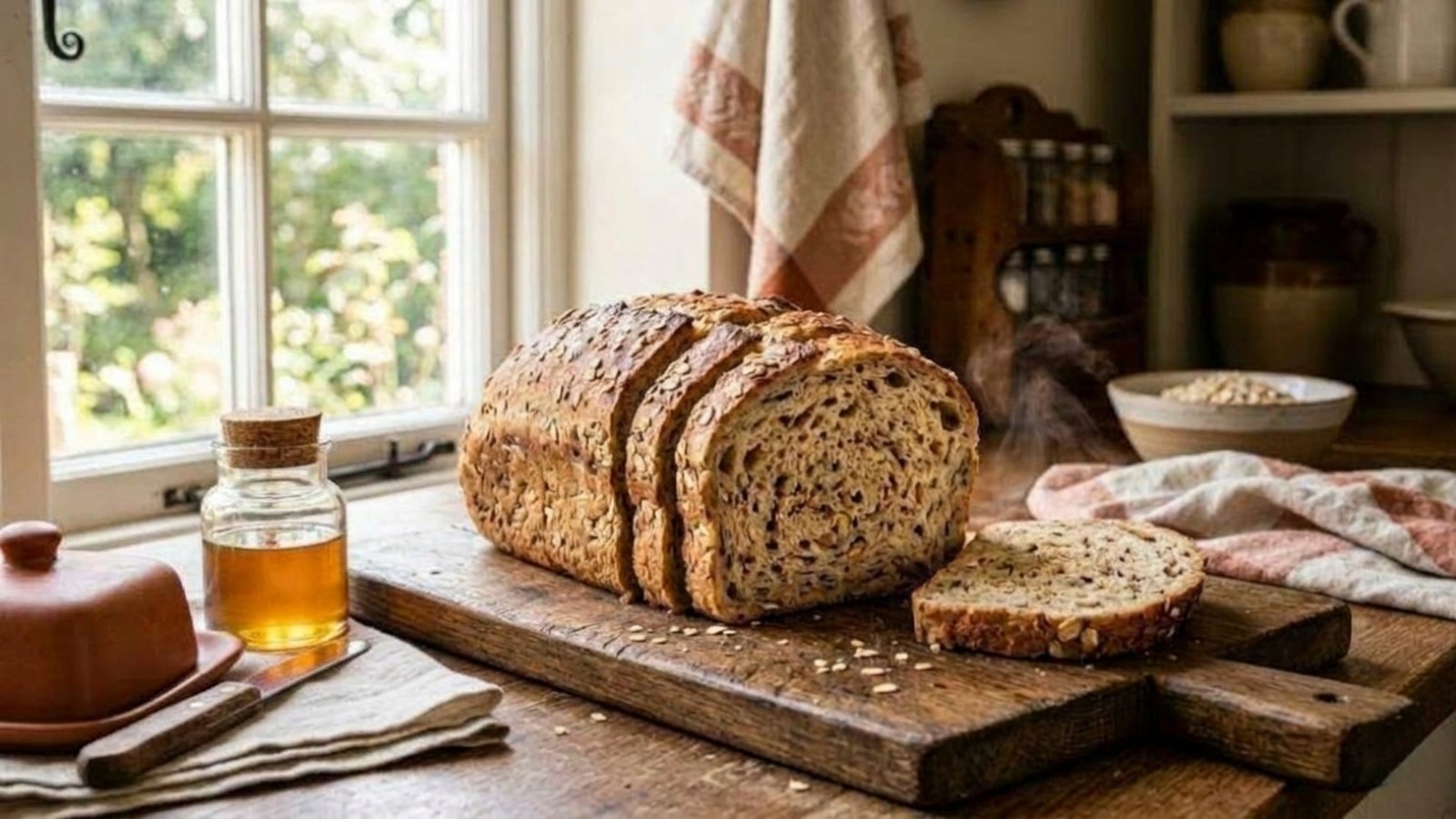
- Bake. The next day, preheat the oven to 375°F (190°C). Brush the top of the cold loaf with a little extra maple syrup and scatter the reserved toasted oats (15 g) over the top. Bake 40-45 minutes, until deeply golden and the internal temperature reads about 200°F (93°C).
- Cool. Let the loaf cool in the pan 10 minutes, then turn it out onto a wire rack. Cool at least 1 hour before slicing, so the crumb has time to set.
Notes
This loaf came out of wanting a beginner bread that still felt like it belonged in fall - not another pumpkin spice everything, just the toasty, buttery flavors I actually crave once the weather turns. Browning the butter takes five extra minutes and changes the whole loaf.
If your kitchen runs warm, keep an eye on the bulk rise starting around the 4-hour mark - you're looking for puffy and about 50% bigger, not doubled. It'll finish the rest of its rising in the fridge overnight.
Don't skip toasting the oats. Raw oats folded into the dough turn gummy; toasted, they stay nutty and a little crisp even after baking.