Ingredients
Equipment
Method
- Combine the wet ingredients. In a large bowl, combine the active starter (120 g), water (59 g / ¼ cup), and sugar (1 Tbsp).
- Add the flour and salt. Add the flour (300 g) and salt (1 tsp), along with the herbs or cheese if you're using either. Mix until you have a shaggy dough.
- Knead. Mix the dough in a stand mixer for 5 to 7 minutes, or knead it by hand for 10 to 15 minutes.
- First rise. Shape the dough into a smooth round and let it rise until it's about 50% bigger. This takes roughly 2.5 hours in a warm kitchen, longer in a cooler one, up to 4 or 6 hours.
- Choose your timing. Cook the same day, or refrigerate the dough overnight. If you refrigerate it, take it out the next day and let it sit on the counter for about 30 minutes to relax before continuing.
- Divide. Divide the dough into 6 to 8 equal pieces, depending on the size you'd like. Six gives you a proper diner-sized muffin, eight runs a bit smaller.
- Shape into balls and rest. Shape each piece into a smooth ball by bringing the outer edges into the center, then flipping it over so the smooth side faces up. Cup it with your hand and pull it toward you to build tension on the surface. Let the shaped balls rest on the counter for 20 to 30 minutes.
- Shape into muffin pucks. Press down gently on each ball to flatten the top into a muffin shape.
- Second proof. Let the shaped muffins proof again until they're puffy, usually 2 to 3 hours, though a hot kitchen can cut that down to about an hour.
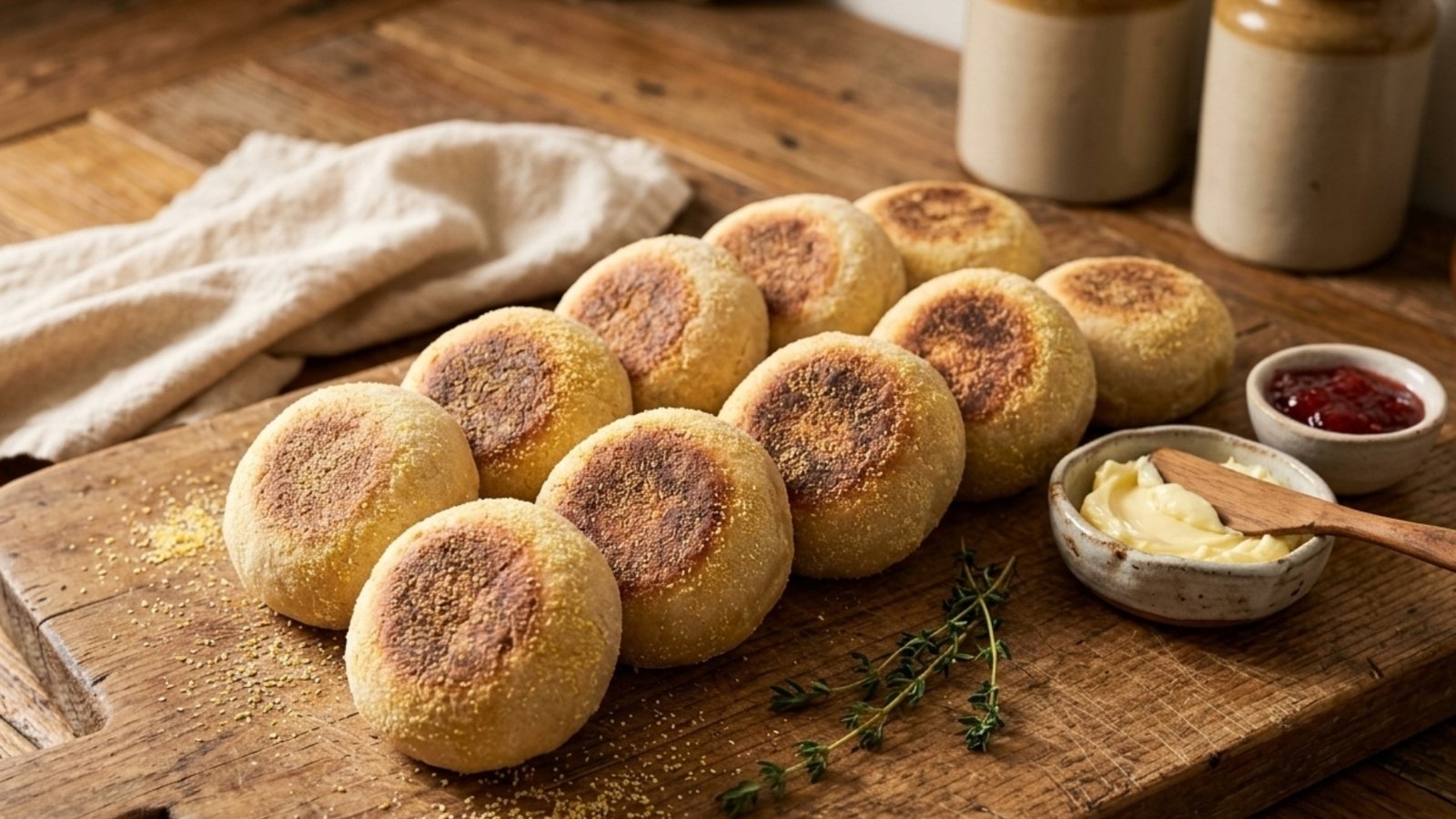
- Cook. Preheat a nonstick skillet, griddle, or cast iron pan over medium heat. Cook each muffin for 4 to 5 minutes per side, until golden brown. When you flip them, the bottom will already be flat from the pan, but the top will have puffed up. Setting something light and food-safe on top after the flip, not a heavy pan, just enough to flatten it without squashing the muffin, will even out both sides.
- Cool and split. Move the cooked muffins to a cooling rack. Once they've cooled, split them open with a fork rather than a knife - that's what gives you the classic nooks and crannies texture.
Notes
I've made these in batches of 8 and batches of 6. Eight came out a little small for my taste, six gives you a proper diner-sized muffin.
This dough is much stiffer than my other doughs, low hydration by design, so if you want to add herbs or cheese, mix them in at the start. Try to fold them in after mixing and they won't distribute evenly.
When you flip these in the skillet, the bottom is already flat from the pan, but the top will have puffed up from the heat and steam inside. A light, food-safe object set on top after the flip, not a heavy pan, just something light, helps that second side flatten out too without squashing the muffin.