Ingredients
Equipment
Method
- In a large bowl, mix the bread flour and water together by hand just until no dry flour remains. Cover and rest (autolyse) for 30 minutes.
- Add the starter and salt. Mix and knead until smooth and elastic, 8–10 minutes by hand or 6–7 minutes with a stand mixer.
- Cover and bulk ferment at room temperature for 4 hours, with 3 sets of stretch-and-folds in the first 2 hours, until puffy and about 50% risen.
- Divide the dough into 3 roughly equal pieces, about 335 g each.
- Mix the beet powder with 1½ teaspoons water to form a paste, then knead it into one piece of dough until the color is even throughout, 2–3 minutes. Repeat with the turmeric powder and a second piece. Leave the third piece plain.
- Cover all three pieces and let them rest for 20 minutes — kneading in the color is itself a mini workout for the gluten, and they need a moment to relax.
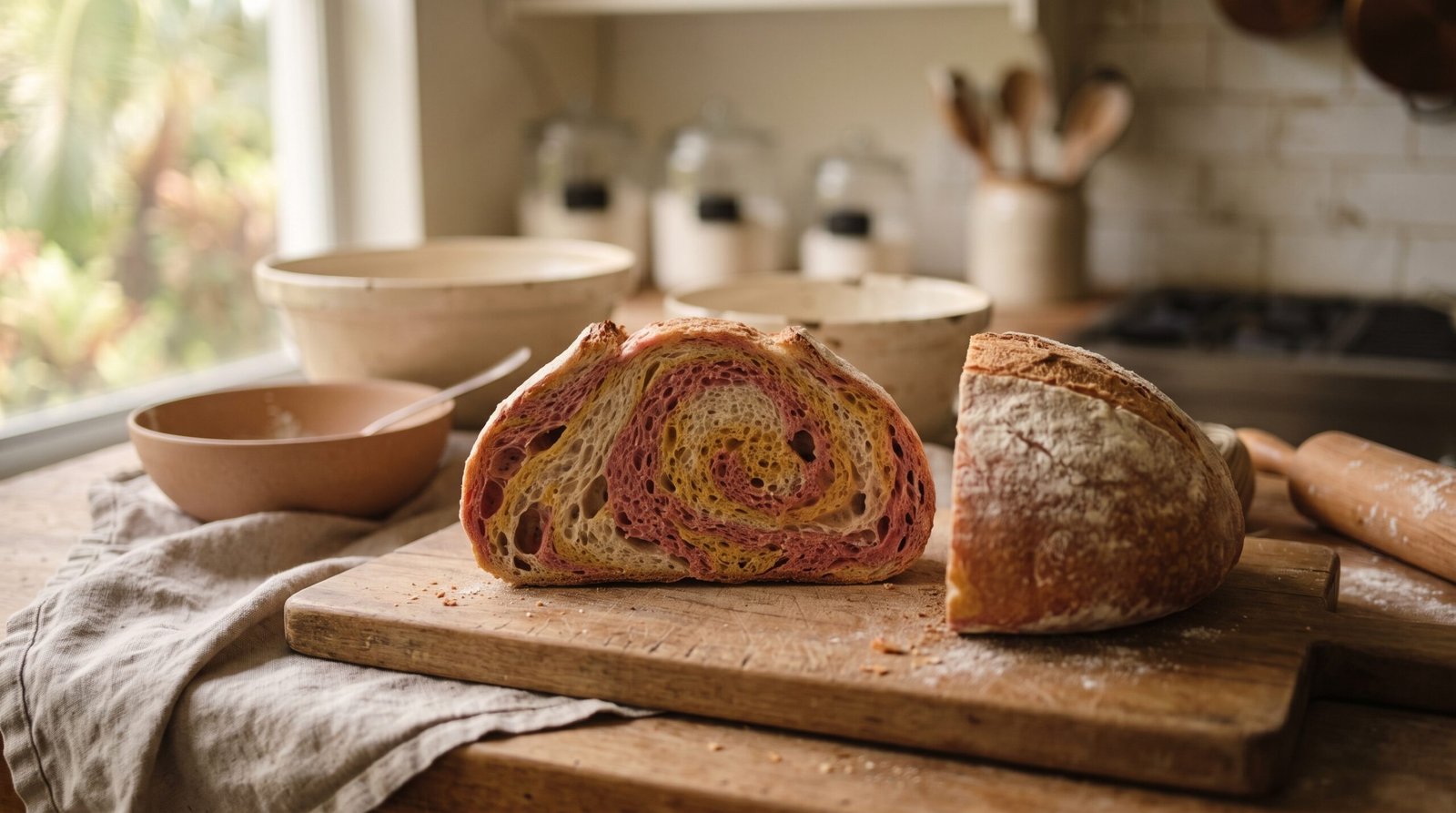
- Flatten each piece into a rough oval. Stack the three on top of each other in any order, then gently fold and roll the stack together just 3–4 times — enough to swirl the colors into distinct layers, not so much that they blend into a single muddy tone.
- Shape gently into a tight round, keeping the swirl pattern intact. Place seam-side up in a well-floured banneton, cover, and refrigerate overnight (12–15 hours).
- The next day, preheat the oven to 475°F (245°C) with the Dutch oven inside for at least 30 minutes.
- Turn the cold dough out onto parchment paper and score with a single simple slash — keep the crust design plain so it doesn't compete with the marbled crumb.
- Lower the dough (on its parchment) into the hot Dutch oven, cover, and bake for 20 minutes.
- Remove the lid and bake another 20–25 minutes, until deeply golden.
- Cool completely on a wire rack, at least 2 hours, before slicing — cutting in too early smears the marbled pattern instead of showing clean swirls.
Notes
This is the one piece of sourdough art on the site where the crust barely matters — the whole point reveals itself when you cut into it. I keep the scoring deliberately plain here so nothing competes with the crumb for attention.
The temptation is to knead the colored and plain pieces together until it's one smooth, even color. Resist it. A genuine marble pattern comes from minimal mixing — a few folds, not a full knead — so the colors stay as distinct swirled layers instead of blending into a flat, muddy tan.
Let this one cool longer than you think you need to. Slicing into a warm marbled loaf smears the colors into each other at the cut edge instead of showing clean, defined swirls.