Ingredients
Equipment
Method
- Dissolve the starter. In a large bowl, dissolve the active starter (120 g / ½ cup) into the water (400 g / 1⅔ cups) and mix well.
- Mix in the flour and salt. Add half the bread flour and mix well. Add the salt (11 g / 2 tsp), then the rest of the flour, and mix everything together. This is an 80% hydration dough, so it will feel loose, wiggly, and much wetter than a standard loaf - that's expected.
- Rest. Cover the bowl with a shower cap or reusable cover to keep the dough from drying out, and let it rest for 30 minutes.
- Stretch and fold, or coil fold. Do your first fold: for a regular stretch and fold, grab the dough at the edge of the bowl, pull it up, and fold it into the center, working your way around the bowl. Coil folds work better for this dough since it's so loose and wiggly - slide both hands underneath the dough from the middle, lift it up, and let it fold under itself, then rotate the bowl and repeat around the edges. Cover and rest another 30 minutes. Repeat for a total of 4 rounds, 30 minutes apart.
- Bulk ferment. Move the dough into a rectangular glass baking dish - this makes it far easier to handle once it's fully fermented, and gives you a head start on the shape you'll cut it into. Let it ferment until doubled. This dough is best baked the same day, since it can take a while to finish rising once it's come out of a cold fridge.
- Flip and divide. Flour the top of the dough heavily, then flip the whole dish out onto a well-floured counter. Flour the top again. Using a bench scraper, divide the dough into 4 rectangular pieces, or 8 smaller squares if you prefer. Handle it as little as possible - this dough is delicate and still wiggly at this stage, and you want to keep the air bubbles intact.
- Preheat. Preheat your oven to 475°F with the pizza stone inside for 45 minutes. Place a second baking dish filled with water on the rack below the stone.
- Transfer and bake. Gently move each piece with your bench scraper onto parchment paper, then use a pizza peel to slide the pieces, parchment and all, onto the hot stone. Bake 10 minutes with the water bath still in the oven - the steam helps the dough puff up. Remove the water bath and continue baking another 5 to 10 minutes, depending on how dark and crunchy you want the crust (closer to 5-7 minutes for a lighter crust, the full 10 for extra crunchy).
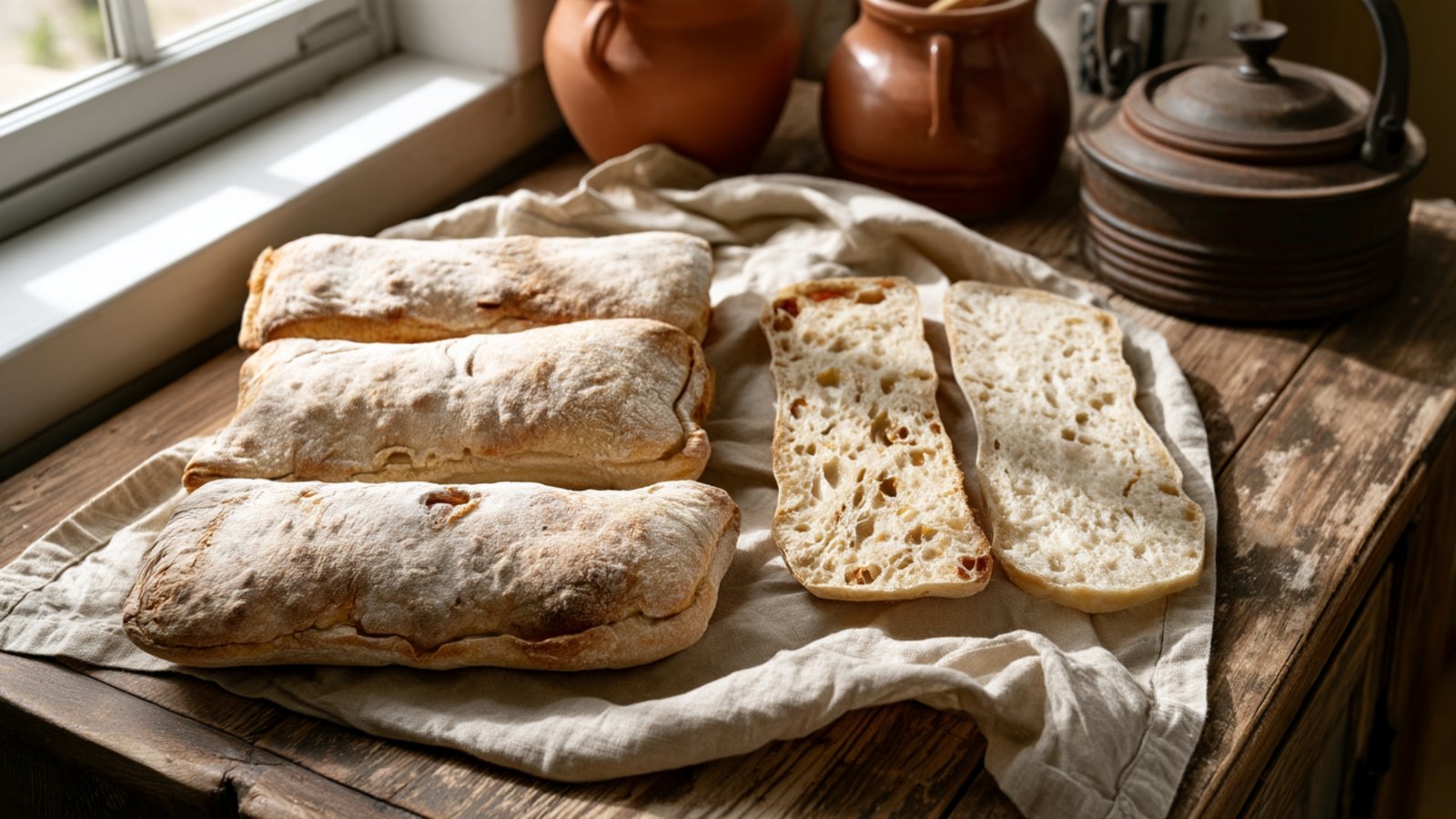
- Cool. Move the pieces to a cooling rack and let them cool completely before cutting in - they'll be very crunchy on the outside and open and airy inside.
Video
Notes
This dough is genuinely hard to handle, wet, loose, and wiggly. That's normal for 80% hydration, don't add extra flour to fight it or you'll lose the open crumb you're after.
I recommend coil folds over regular stretch and folds here. The dough is so wiggly that coil folds give you more control and keep it from tearing.
I usually bake this the same day rather than doing an overnight cold proof. I've done the overnight version, but I don't always have the patience to let it fully rise the next day, so same-day is my go-to.
Handle the dough as little as possible once it's proofed. You want those big air pockets to survive into the oven, not get knocked out while you're cutting it.