Ingredients
Equipment
Method
- Preheat the oven to 400°F (205°C) and line a baking sheet with parchment.
- In a large bowl, whisk together the flour, baking soda, salt, and sugar.
- Cut the cold butter into the dry ingredients with a pastry cutter or two forks until the mixture looks like coarse crumbs, with pieces no bigger than a pea.
- In a separate bowl or large measuring cup, whisk the sourdough discard and buttermilk together until smooth.
- Pour the wet mixture into the dry ingredients and stir with a fork or spatula just until a shaggy, sticky dough comes together. Don't overmix - a rough, craggy dough is exactly right.
- Turn the dough out onto a floured surface and gently pat (don't knead) into a round about 7–8 inches across and roughly 2 inches thick.
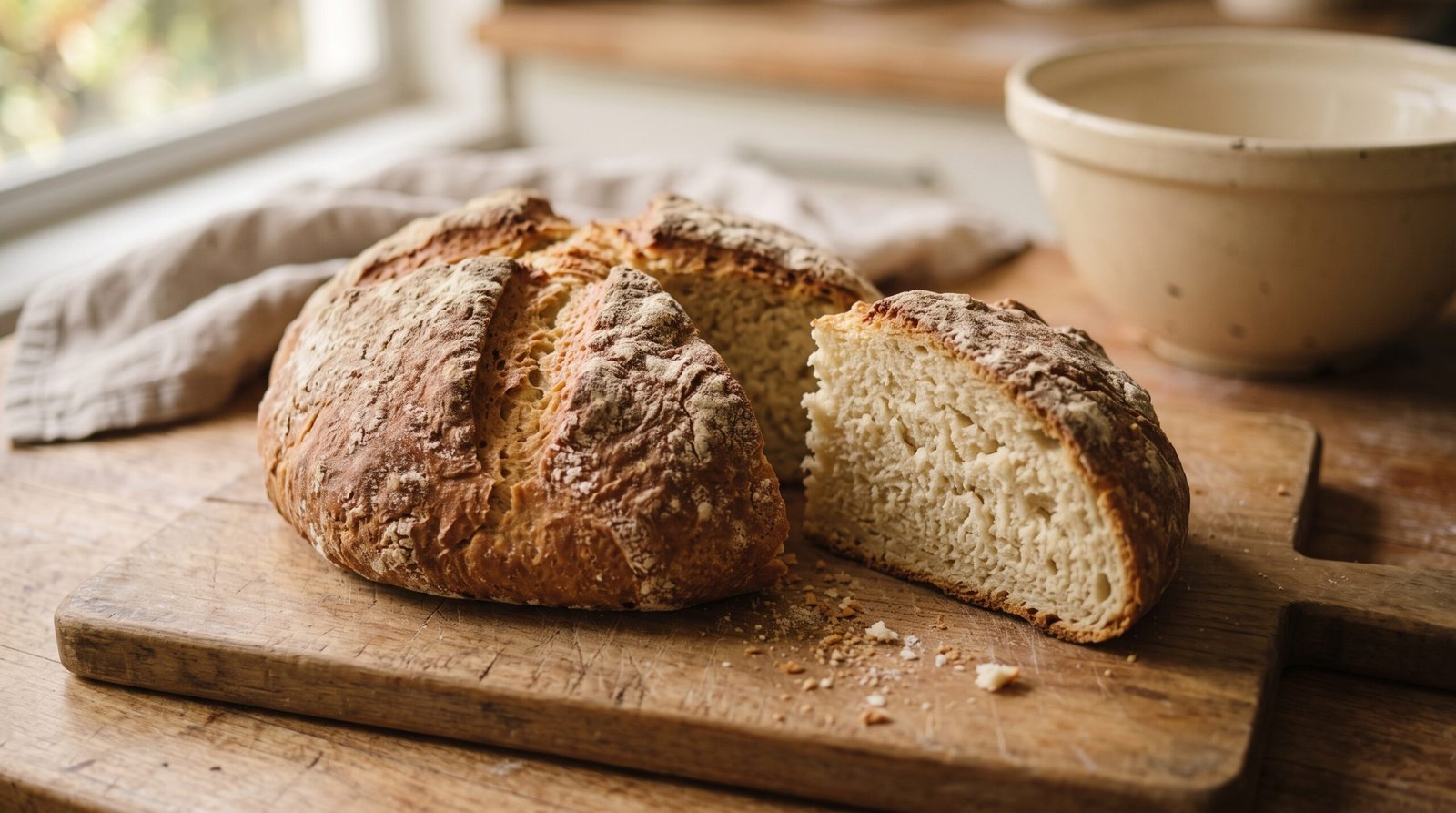
- Transfer to the prepared baking sheet and cut a deep cross into the top with a sharp knife, about ¾ inch deep.
- Bake for 40–45 minutes, until deeply golden brown and the loaf sounds hollow when tapped on the bottom (an internal temperature of 200–205°F is the most reliable test).
- Cool on a wire rack at least 20–30 minutes before slicing. Soda bread is traditionally served while still warm.
Notes
Soda bread isn't really sourdough - there's no fermentation happening here, the baking soda and the acid in the buttermilk and discard do all the lifting, fast. I still think it earns a place on a sourdough site: it's the single best way to use up a cup of discard when you don't want to wait for anything to rise.
The cross cut into the top isn't just tradition (though the old story is that it lets the fairies out) - it also helps a thick, dense dough like this bake through more evenly.
Don't overwork this dough. It should look a little rough and craggy going into the oven. A soda bread that's been kneaded smooth like a yeasted loaf comes out tough instead of tender.