Ingredients
Equipment
Method
- In the bowl of a stand mixer, whisk the warm milk, starter, and eggs together until combined.
- Add the flour, sugar, salt, orange zest, and anise seeds. Mix on low with the dough hook until a shaggy dough forms.
- Add the softened butter a tablespoon at a time, kneading on medium-low until each addition is absorbed before adding the next. Continue kneading until the dough is smooth, elastic, and slightly tacky, 10–12 minutes total.
- Cut off about 140 g of dough, wrap tightly, and refrigerate — this piece is for the decorative bones and skull. Shape the remaining dough into a round and place on a parchment-lined baking sheet.
- Cover both pieces and let the main dough bulk ferment at room temperature for 3 hours, with 2 gentle folds in the first hour. Keep the reserved decoration piece refrigerated the whole time.
- Cover the shaped loaf and refrigerate overnight (10–12 hours) alongside the reserved dough.
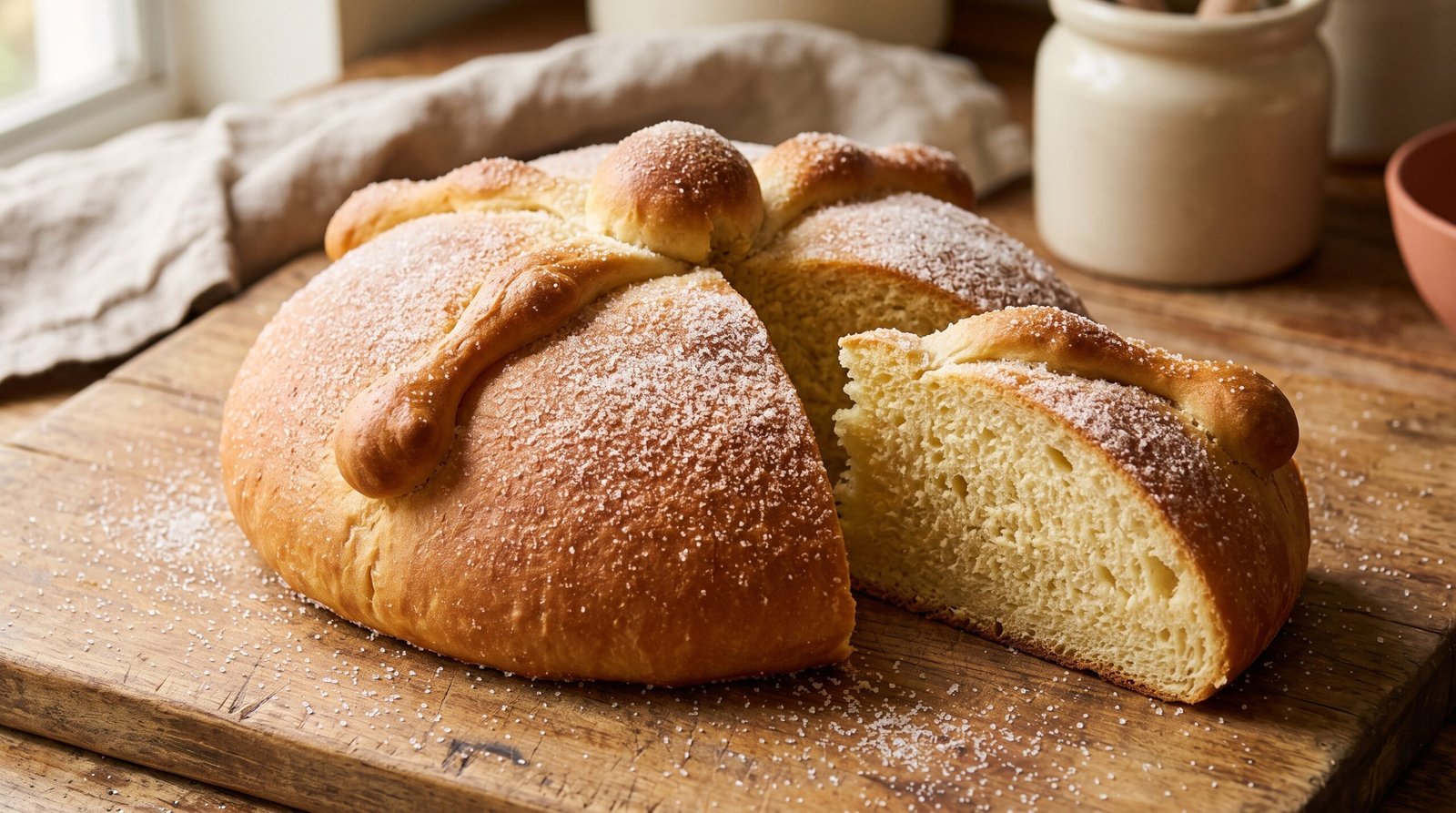
- The next day, let the shaped loaf sit at room temperature for 20 minutes. On a lightly floured surface, roll the cold reserved dough into 6–8 thin ropes for "bones," pinching small bumps along each one to mimic bone joints, plus one small ball for the skull.
- Lightly dampen the underside of each bone with water and arrange in crossed pairs radiating out from the center of the loaf, like a starburst. Press the small ball firmly into the very center as the skull.
- Cover loosely and let the decorated loaf proof at room temperature for 30–45 minutes, until visibly puffy.
- Preheat the oven to 350°F (175°C).
- Bake for 25–30 minutes, until deeply golden and an internal temperature of about 190°F (88°C).
- While still hot, brush generously all over with melted butter, then roll or dust thoroughly in the sugar (mixed with the extra orange zest, if using). Serve warm or at room temperature.
Notes
Pan de muerto is traditionally made with commercial yeast, and I'll be honest, the sourdough version takes real patience — enriched dough with this much butter, egg, and sugar in it ferments slower than almost anything else on this site. Give it the full time rather than rushing the rise with a warmer spot; the orange and anise flavor actually deepens with the slower schedule.
The bones don't need to be identical or perfectly symmetrical. Traditional pan de muerto has a handmade, slightly uneven quality to it, and that's part of what makes it recognizable — a too-tidy version loses some of its character.
Brush the butter and roll it in sugar while the loaf is still properly hot, straight out of the oven. Wait until it's cooled and the sugar won't stick evenly.