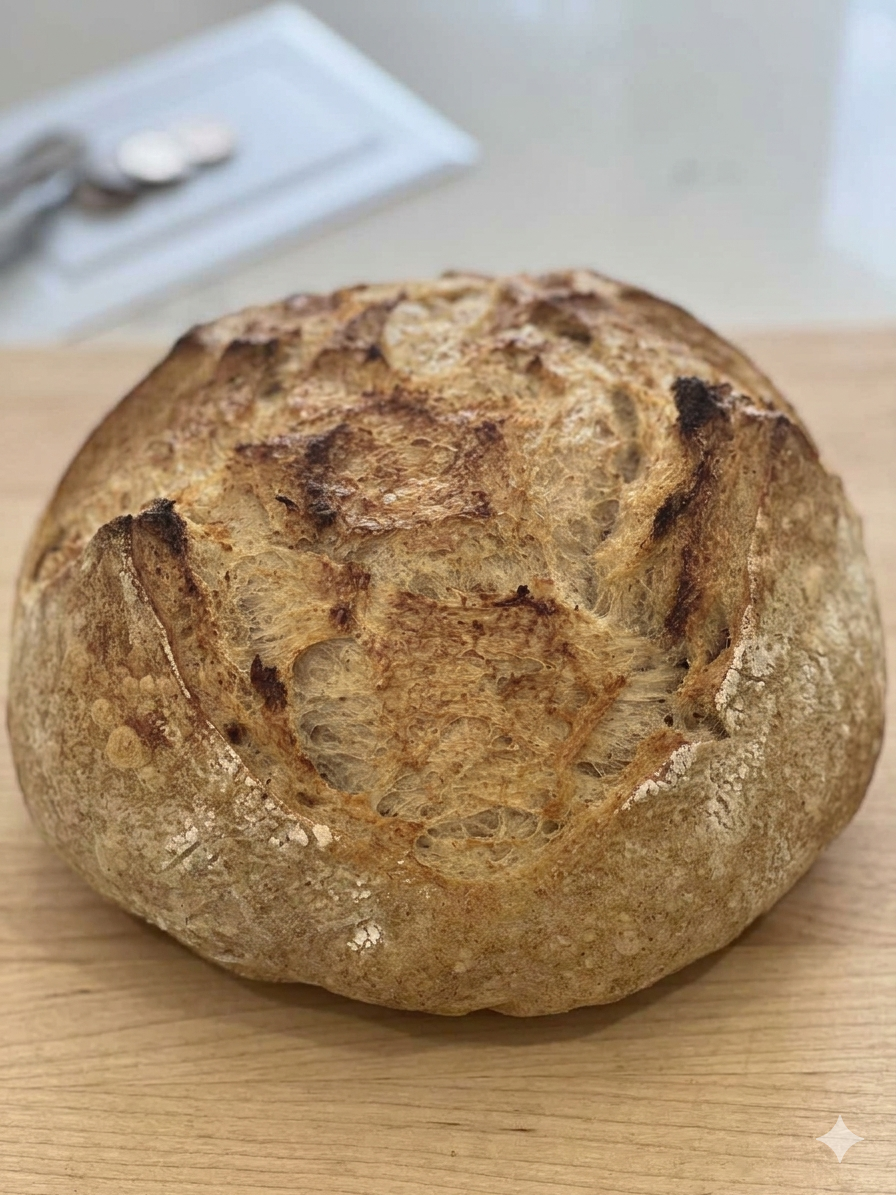
Whole Wheat Sourdough Loaf
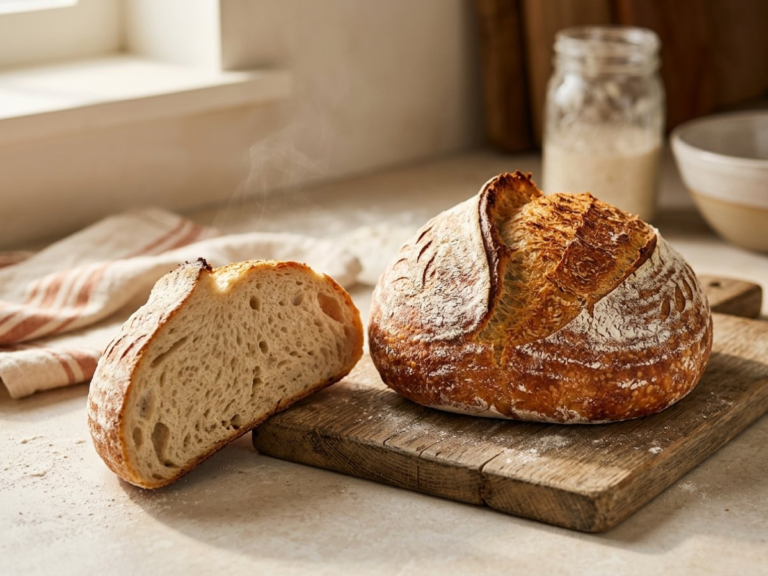
Half white, half whole wheat, and still ridiculously soft. I know “whole wheat” can sound like code for dense, dry, and a little sad, but cut with a very fine, soft Italian flour, this loaf holds onto everything good about whole wheat without turning your sandwich into a workout.
Why You’ll Love It
- A 50/50 blend of two soft Italian flours — white and whole wheat — so you get real nutrition without a brick of a loaf
- More fiber, B vitamins, iron, and magnesium than an all-white loaf
- The same simple, no-mixer method as my Plain Sourdough Loaf — you’re just cutting back the white flour and adding whole wheat in its place
- Still timed for hot, humid kitchens, so it works wherever you’re baking
- A softer, lighter whole wheat crumb than most recipes manage to pull off
Ingredients & Equipment
Volume measurements are included for convenience, but they’re approximate — a kitchen scale will always get you a more consistent loaf, especially with two different flours in the mix.
Heads up: Some of the links below are affiliate links. As an Amazon Associate, I earn from qualifying purchases. This means if you click and make a purchase, I may earn a small commission at no extra cost to you.
- Caputo Chef 00 flour (250 g / about 2 cups): the same fine, soft Italian flour from my Plain Sourdough Loaf. It’s what keeps this bread light instead of letting the whole wheat turn it into a dense, overly sour brick.
- Caputo Integrale whole wheat flour (250 g / about 2 cups): milled the same fine, soft way as the Chef 00. It brings in the fiber, B vitamins, iron, and magnesium that get stripped out during the milling of white flour, and it’s digested more slowly, so this loaf tends to keep you fuller longer than an all-white one.
- Filtered water (375 g / 1½ cups + 1 Tbsp), lukewarm: stick with filtered or drinking water. Chlorine from the tap can fight your fermentation.
- Active sourdough starter (120 g / ½ cup): as long as it’s active and strong, room temperature or straight out of the fridge works the same for me.
- Fine sea salt (11 g / about 2 teaspoons): this time it goes in alongside the whole wheat flour, not before it. Salt volume varies by brand, so weighing is worth it here.
- Kitchen scale: I highly, highly recommend one, especially for this loaf — whole wheat flour absorbs water differently than white flour, and precision is what makes a two-flour dough behave the same way every time.
- Banneton (proofing basket) with a cloth liner: gives the dough something to hold its shape against through the final rise.
- Dutch oven: creates the enclosed steam that gives you a real bakery-style crust at home.
- Lame or a very sharp, thin blade: for a clean score, so the loaf opens up exactly where you want it to instead of splitting on its own.
- Shower cap or a reusable bowl cover: keeps the surface of the dough from drying out or crusting over while it rests.
- Parchment paper: makes moving the dough into a blazing hot Dutch oven painless.
- Ice cubes (about 4): create the steam that helps this loaf get a good spring in the oven.
Sample Schedule (2-Day)
Day 1
- Mix the dough (about 20 minutes hands-on)
- Rest 30–40 minutes
- Stretch and fold, rest 30 minutes — four rounds total
- Bulk ferment 2–3 hours at room temperature, until risen about 50%
- Shape the loaf and set it in the banneton
- Refrigerate overnight
Day 2
- Preheat the oven with the Dutch oven inside to 475°F (30 minutes)
- Score, then bake covered for 30 minutes
- Bake uncovered for 10 minutes
- Finish on a baking sheet, open, about 5 minutes (longer for a darker crust)
- Cool at least 1 hour, ideally 3, before slicing
Whole Wheat Sourdough Loaf
Ingredients
Heads up: Some of the links below are affiliate links. As an Amazon Associate, I earn from qualifying purchases. This means if you click and make a purchase, I may earn a small commission at no extra cost to you.
Equipment
Method
- Mix 375 g (1½ cups + 1 Tbsp) lukewarm filtered water with 120 g (½ cup) active starter until dissolved.
- Mix in 250 g (2 cups) Caputo Chef 00 flour. Add 11 g (about 2 tsp) salt along with 250 g (2 cups) Caputo Integrale whole wheat flour, and mix until combined into a sticky, shaggy dough.
- Cover and rest 30–40 minutes.
- Stretch and fold, rest 30 minutes. Repeat for a total of 4 rounds.
- Bulk ferment 2–3 hours at room temperature, until risen about 50% (not doubled).
- Turn dough onto a floured surface, pre-shape, then shape into a tight loaf.
- Place seam-side up in a floured banneton, cover, and refrigerate overnight.
- Preheat oven with a Dutch oven inside to 475°F for 30 minutes.
- Turn the dough onto parchment, score at a 45° angle, transfer to the Dutch oven, then add 4 ice cubes under the parchment paper
- Bake covered 30 minutes, then uncovered 10 minutes.
- Move to a baking sheet and bake open 5 minutes more for a lighter crust (longer for darker).
- Cool on a rack at least 1 hour, ideally 3, before slicing.
Notes
Save This Recipe
Get it emailed to you now, plus new recipes as they go up.
Your email is safe with me. I’ll send this recipe straight over. No spam, ever—and you can unsubscribe anytime.
How to Make It
1Mix the water and starter. In a large bowl, combine 375 g (1½ cups + 1 Tbsp) lukewarm filtered water with 120 g (½ cup) active, bubbly sourdough starter. Whisk or stir with a mixing spoon until the starter has fully dissolved into the water.
2Add the white flour, then the salt and Caputo Integrale whole wheat flour. Add 250 g (about 2 cups) of Caputo Chef 00 flour to the bowl and mix well. Next, add 11 g (about 2 teaspoons) of salt together with 250 g (about 2 cups) of Caputo Integrale whole wheat flour, and mix everything until it’s fully combined. Expect this dough to feel thirstier and a little more textured than an all-white dough — that’s just the whole wheat doing its thing. You’ll still end up with a sticky, shaggy mixture.
3Let it rest. Cover the bowl — a shower cap works well, or a lid if your bowl has one — and set it aside on the counter for 30 to 40 minutes.
4First stretch and fold. Reach down where the dough meets the side of the bowl, pull up gently, and fold it toward the center. Rotate the bowl as you go, folding in each side once or twice. Cover it back up and let it rest another 30 minutes.
5Three more rounds. Repeat the stretch-and-fold, resting 30 minutes between each round, for a total of four rounds. By the final fold, the dough should feel noticeably smoother and less sticky, with a few small bubbles starting to show on top.
6Bulk ferment. Cover the dough and let it sit on the counter until it’s risen by about 50%. In a hot, humid climate like South Florida, that’s usually 2 to 3 hours. Don’t wait for it to double — push past 50% in this kind of heat and you’ll end up with oversized holes and a gummier crumb.
7Turn the dough out. Once it’s risen enough, run your fingers around the edge of the bowl to loosen the dough. Flour your counter, then flip the bowl over and let the dough drop out onto the floured surface.
8Shape the loaf. Give the dough a light stretch, then fold the top edges in so they overlap slightly, and do that once more, leaving a small seam at the bottom to close. Roll it into a loaf shape, press it down, flip it, and roll again — this builds the surface tension that gives you a strong oven spring. Cup the dough with both hands and pull it toward you to tighten the outside into a smooth skin, then pinch the ends closed.
9Move it to the banneton. Flour your banneton well so the dough won’t stick. Lift the dough with both hands and flip it into the banneton so the smooth side you just shaped ends up on the bottom of the basket. Pinch the seam on top closed, dust with a little more flour, and cover with a breathable cloth.
10Cold proof overnight. Set the banneton in the refrigerator and let the dough proof overnight. Pull it out the next day right before you’re ready to bake.
11Preheat. Set your Dutch oven inside your oven and preheat to 475°F, giving the Dutch oven at least 30 minutes to heat through before baking.
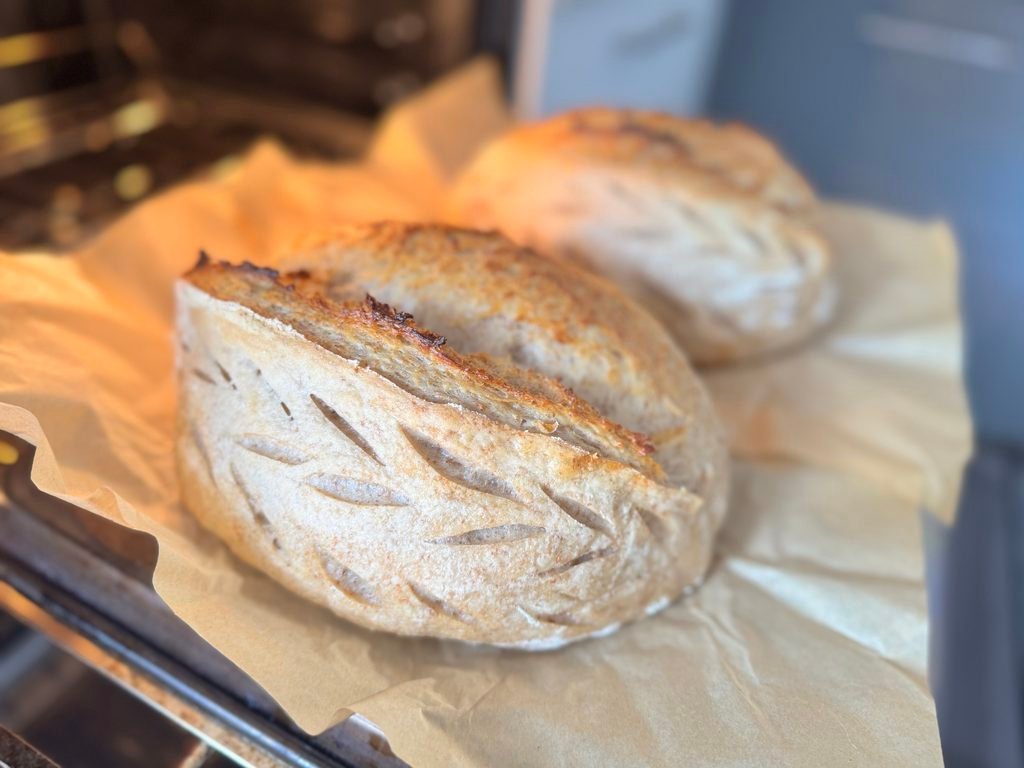
12Score and add steam. Lay parchment paper over the banneton and flip the dough out onto it — the smooth bottom of the banneton becomes the top of your loaf. Score at a 45-degree angle with a lame or a very sharp blade for a clean, well-opened ear. Lift the bread by the parchment into the hot Dutch oven, tuck about 4 ice cubes under the parchment for steam, and close the lid.
13Bake. Bake covered for 30 minutes, then remove the lid and bake for another 10 minutes.
14Finish the crust. Pull the Dutch oven out and set it somewhere heatproof, like your stovetop. Place a baking sheet on an oven rack, then carefully lift the bread out of the Dutch oven by the parchment — go slow, since the loaf can slide and everything is extremely hot. Set it on the baking sheet and bake uncovered for about 5 minutes, longer if you prefer a darker crust.
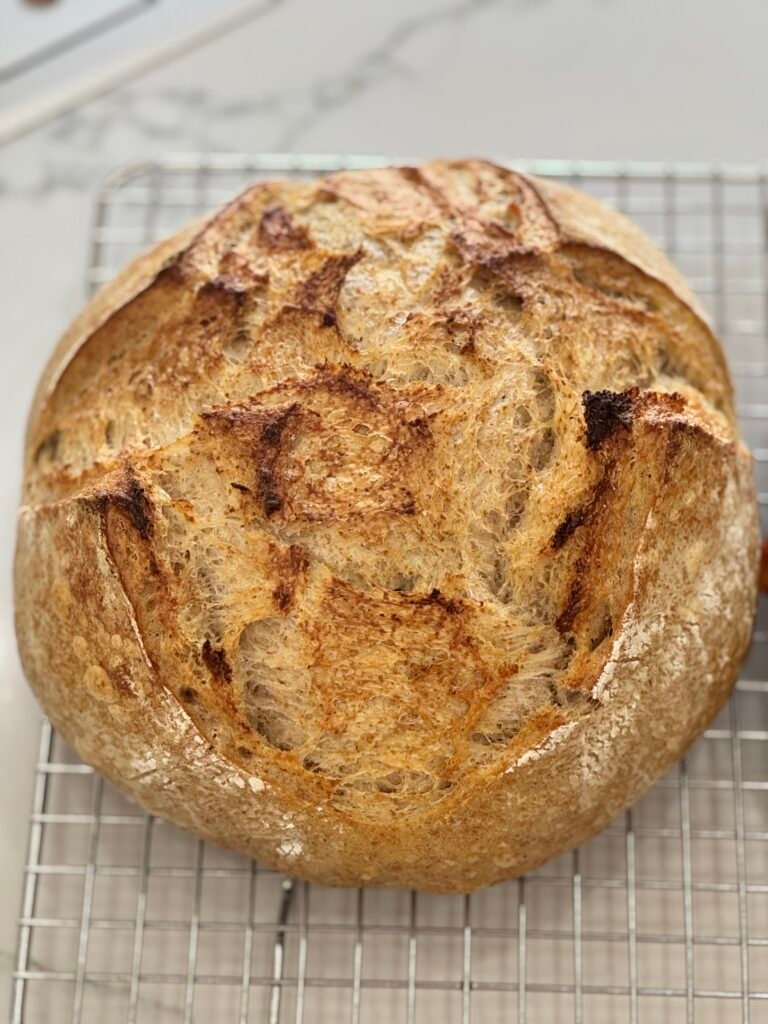
15Let it cool. Transfer the bread to a cooling rack. It’s technically fine to slice after an hour, but give it at least 3 hours if you can — the crumb needs that time to finish setting, or you’ll end up with a gummier slice.
Tips & Troubleshooting
- Hot, humid kitchens: developed in South Florida, so if your kitchen runs warm year-round, lean on this timing instead of recipes written for cooler climates.
- Feels different going in, bakes the same coming out: whole wheat dough looks shaggier and less smooth than an all-white dough at every stage. Don’t chase a smoother look — just follow the timing.
- Want it heartier? you can push the ratio toward more whole wheat, but expect to add a bit more water — whole wheat soaks up more than white flour does.
- Crust color: 5 minutes of open baking gives a lighter crust; leave it longer for something deeper and darker.
- Watch the rise, not the clock: stop bulk fermentation at about 50% risen, not doubled, especially in a warm kitchen.
How to Store
To store: in a bread bag, this loaf holds up for a couple of days at room temperature. I still recommend only keeping out enough for a day or two and freezing the rest.
To freeze: slice it the same day you bake it, then freeze the slices. Thawed and warmed, it tastes just as good as the day it came out of the oven, and the fiber from the whole wheat only adds to the reason to keep this one in the freezer, since bread that’s been frozen and thawed also causes less of a blood sugar spike than fresh-baked bread does.
Nutrition
Nutrition is estimated based on the ingredients used and a 12-slice loaf. It’s provided for convenience and isn’t a substitute for a precise calculation.
175
CALORIES
34
CARBS (G)
6
PROTEIN (G)
1
FAT (G)
3
FIBER (G)
360
SODIUM (MG)
Desi’s Notes
Whole wheat gets blamed for a lot of bad bread it didn’t actually bake. People assume it has to come out dense and sour, but that’s really about the flour and the fermentation, not the grain itself. I use Caputo for both the white and whole wheat portions of this loaf because it’s an incredibly fine, soft Italian flour, and it keeps the finished bread from tasting overly sour — even with the natural tang that comes from sourdough fermentation.
Swapping in whole wheat does change how the dough feels going in. It’s thirstier and a bit grainier at first, and it won’t look quite as smooth as an all-white dough. The process, though, is exactly the same. Same folds, same timing, same oven. If you’ve already made my Plain Sourdough Loaf, you basically already know how to make this one.
Before You Bake
Scaling this recipe up or down? Run your numbers through the Sourdough Calculator. And if you want a printable reference for planning your bake day, grab the Bake-Day Timeline Template.
Knead to Know?
New recipes, baking tips, and sourdough troubleshooting — delivered before your starter even finishes its next rise.
Get the latest insights, no spam — just new recipes and baking tips. Unsubscribe anytime. See our Privacy Policy.
Tried this recipe? Leave a star rating below — it takes 10 seconds and helps other bakers decide what to make next.
Baked this recipe your way? Share it in Community Bakes and inspire other readers.