Reading Your Bread
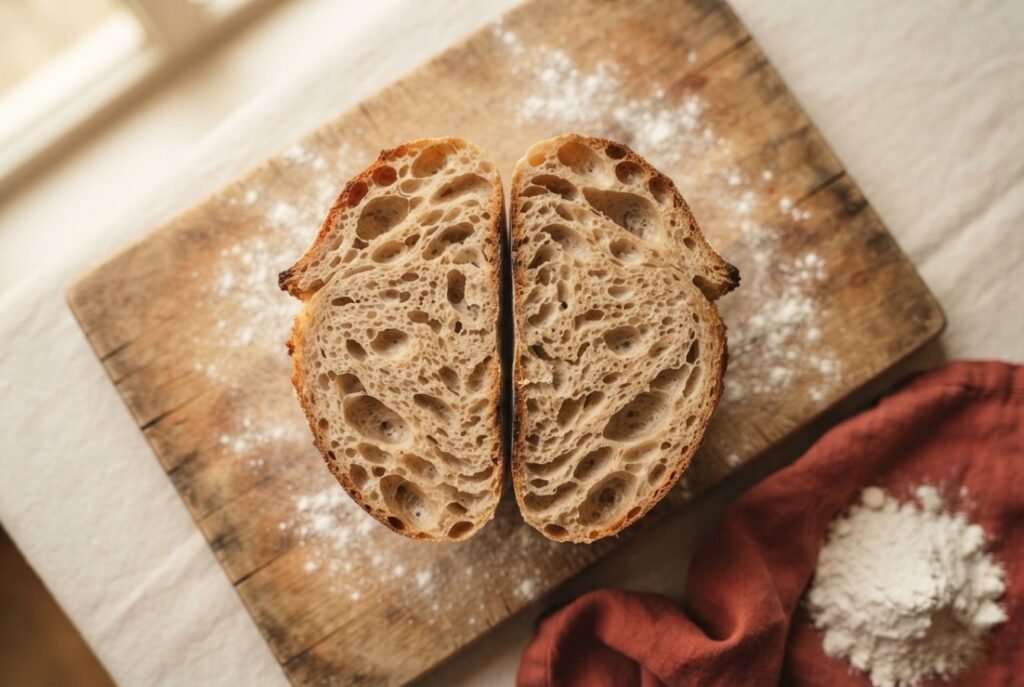
A visual guide to what your crumb and crust are telling you, because the loaf on your cutting board already has the answer, if you know how to look at it.
 Get the Free PDF ↓
Enter your email to read the full guide & get the PDF
We'll also add you to The Bake-Keeper newsletter for new recipes and guides. Unsubscribe anytime.
Already have an account?
About this guide
The best time to read a loaf is the day you bake it, while you still remember what the dough did. Cut a slice from the center, because the ends are denser and can mislead you. Match the crumb to the closest picture, then read the cause under it. Most symptoms have more than one possible cause, so change one thing at the next bake and write down grams and temperatures. A photo of each slice next to your notes makes it easy to compare loaves from week to week.
If you change flour and timing at once, you will not know which change mattered. Crust color tells you about oven heat and steam, while crumb tells you about fermentation and hydration. An oven thermometer is cheap and worth checking before you blame the dough. When a symptom keeps coming back, the Sourdough Troubleshooting guides go deeper on each one.