
The Sourdough Glossary
Every term our Science and Troubleshooting posts assume you already know – hooch, autolyse, bulk ferment, levain, crumb, ear, and 70 others – explained in plain English, with a few in photos. Search, browse by topic, or jump straight to a letter.
See It, Not Just Read It
Five terms that are easier to spot in a photo than explain in words.

Ear
Hooch
Crumb
Windowpane Test
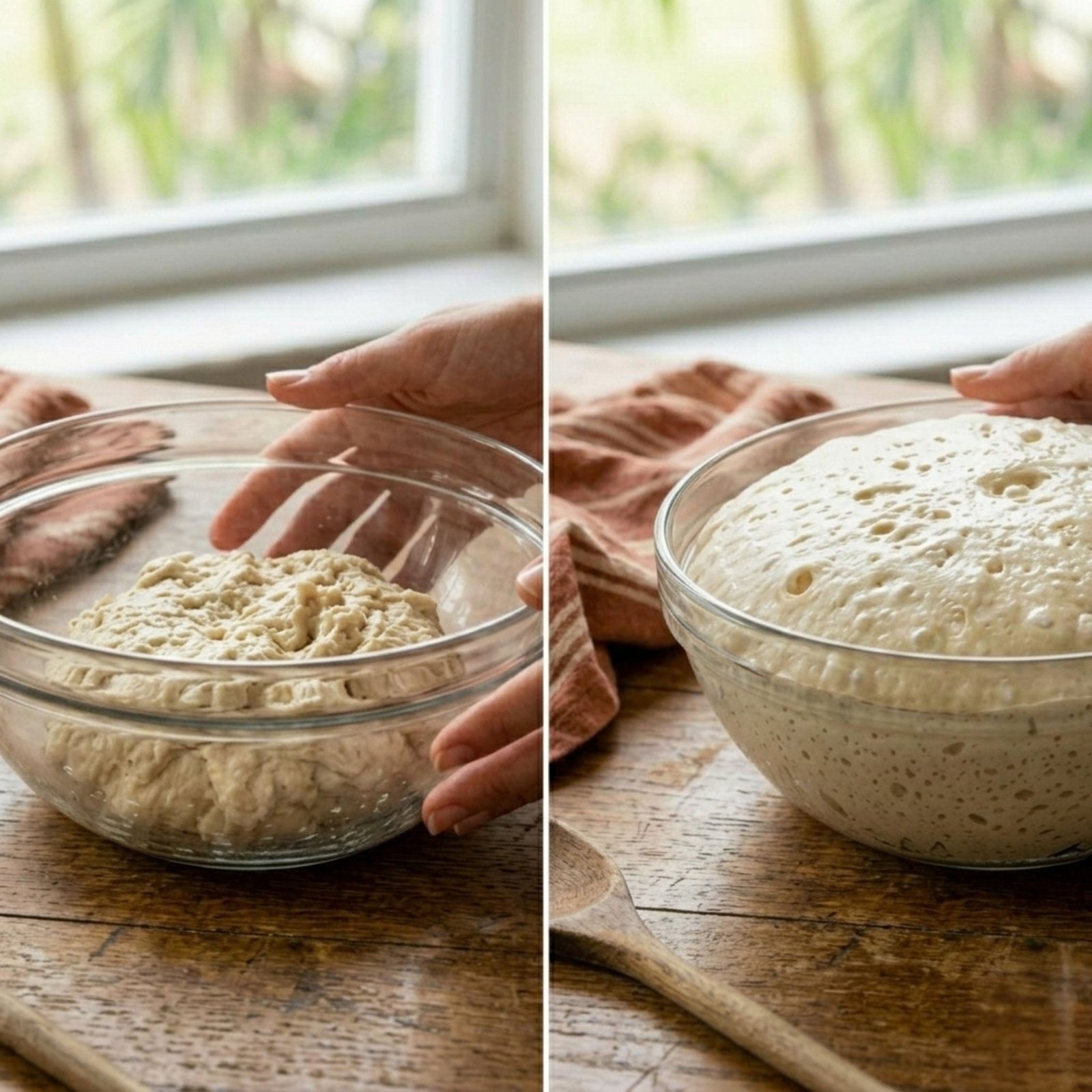
Bulk Fermentation
Starter & Fermentation
16Starter
A live culture of flour and water, colonized by wild yeast and lactic acid bacteria, that you feed and keep alive to leaven bread without commercial yeast. Full care guide: Starter 101.
Levain
A portion of starter built up specifically for one bake, mixed to the hydration and ripeness a recipe calls for, then used and (usually) discarded rather than fed back into your main jar.
Discard
The portion of starter you remove at each feeding so the jar doesn’t grow forever. It’s still alive and usable – see Discard? No Guilt. for what to do with it instead of tossing it.
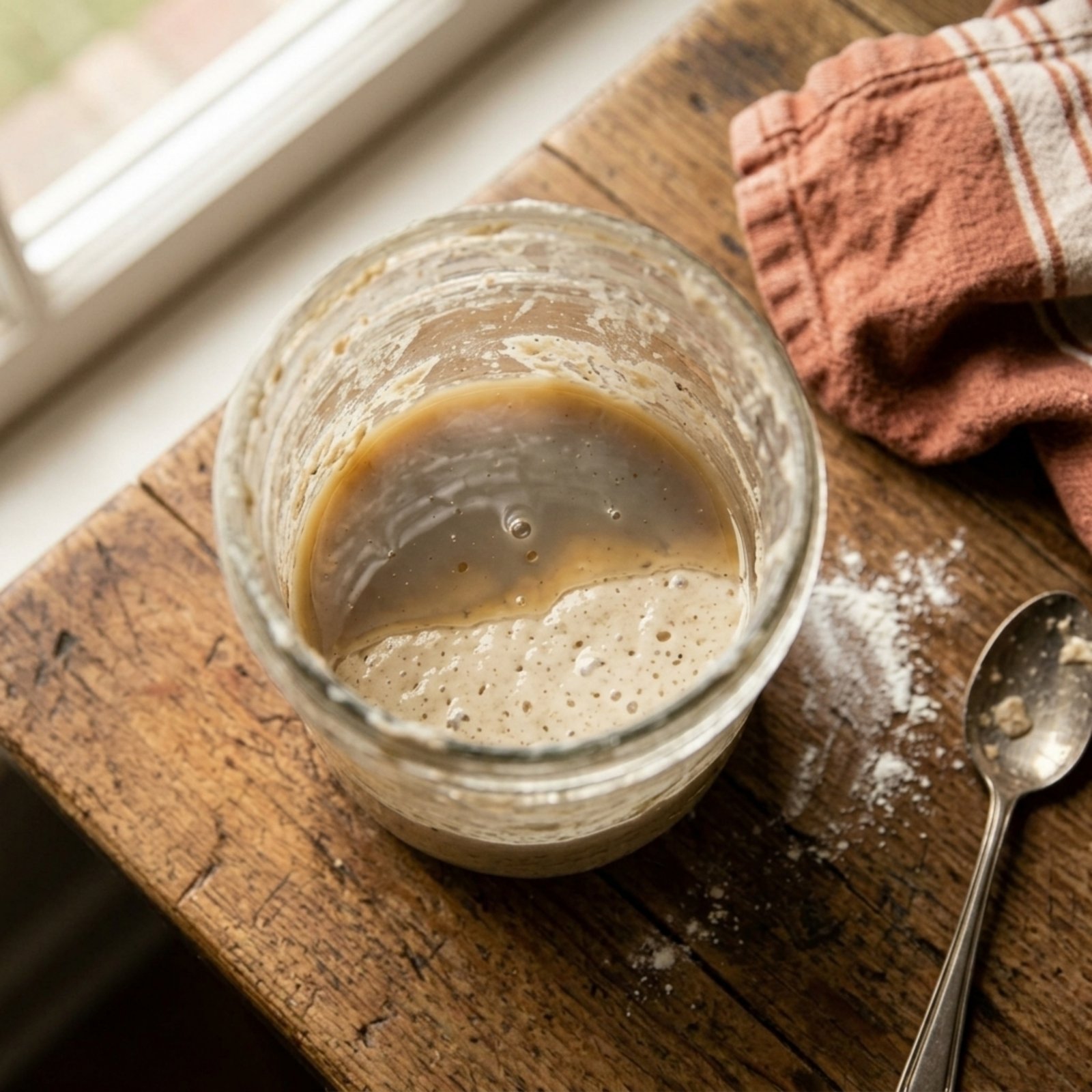
Hooch
The layer of grey or amber liquid that separates on top of a hungry starter. It’s alcohol, a byproduct of fermentation – it means your starter needs feeding, not that it’s dead.
Feeding Ratio
Shorthand (like 1:1:1 or 1:5:5) for starter : flour : water by weight at each feeding. Lower ratios build activity fast; higher ratios slow it down for a longer window before peak.
Peak
The point where a fed starter has risen as high as it’s going to, right before it starts to fall. This is the window most recipes mean by “active” or “ripe” starter.
Float Test
Dropping a spoonful of starter in water to see if it floats. A popular but imperfect proxy for readiness – a starter can float and still underperform in dough. See why the float test lies to you for the science behind it.
Fermentation
The biological process of yeast and bacteria converting sugars in flour into carbon dioxide (which leavens the dough) and organic acids (which flavor it).
Wild Yeast
The naturally occurring yeast strains living in flour and the air that colonize a starter, distinct from the single commercial strain in packaged yeast.
Lactic Acid Bacteria (LAB)
The bacteria living alongside wild yeast in a starter; they produce the acids responsible for sourdough’s tang and help condition gluten.
Tang
The characteristic sour flavor of sourdough, produced mainly by lactic and acetic acid. More tang generally means a longer, cooler fermentation or more acetic-acid activity.
Acetic Acid
One of the two main acids starters produce; sharper and more vinegar-like than lactic acid. Favored by cooler, drier, less-frequently-fed starters.
Lactic Acid
The other main acid, milder and more yogurt-like than acetic acid. Favored by warmer, wetter, more frequently fed starters.
Hybrid Starter
A dough leavened with both sourdough starter and a small amount of commercial yeast, for a faster, more predictable rise while keeping some sourdough flavor.
Starter Hydration
The ratio of water to flour in the starter itself (separate from your dough’s hydration). A 100%-hydration starter is equal parts flour and water by weight – the most common baseline.
Ripe
Another word for a starter or levain at or near peak – active, domed or just starting to recede, and ready to use.
Dough & Mixing
17Hydration
The percentage of water relative to flour, by weight (baker’s percentage). Higher hydration doughs are wetter and more open-crumbed but harder to handle. See the Conversion & Baker’s-Percentage Cheat Sheet.
Baker’s Percentage
A way of expressing every ingredient as a percentage of the flour weight (flour is always 100%), which lets you scale a recipe up or down while keeping its ratios intact.
Autolyse
Resting flour and water together, before adding starter and salt, so the flour fully hydrates and enzymes begin breaking down starch and protein. Shortens the mixing needed to develop gluten.
Gluten
The elastic protein network (glutenin and gliadin) that develops when flour and water are mixed, giving dough its structure and the ability to trap fermentation gas.
Gluten Development
The process of building that network through mixing, folding, or time, until dough can stretch without tearing and hold its shape.
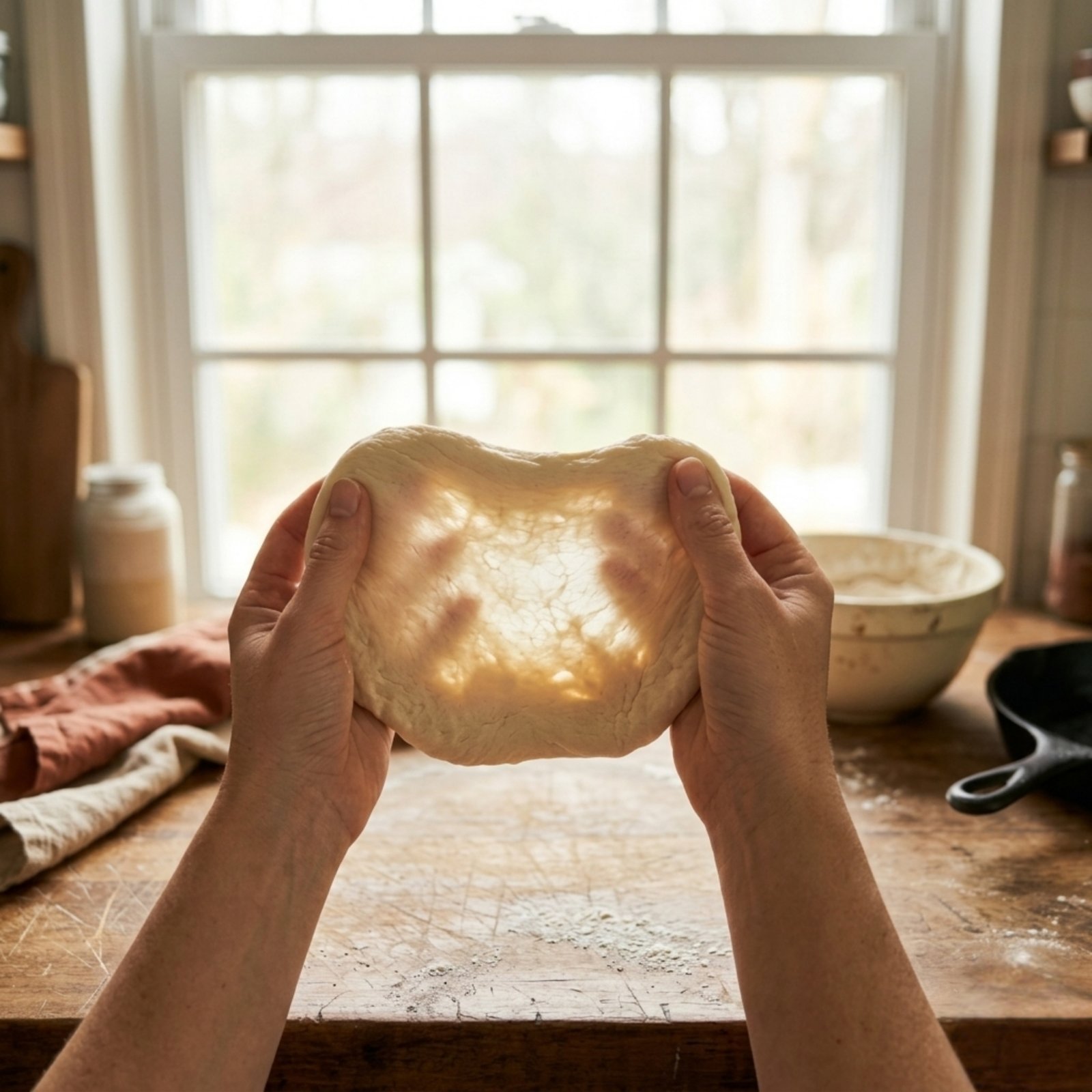
Windowpane Test
Stretching a small piece of dough thin enough to see light through it, without it tearing, to check whether gluten development is far enough along.
Fold / Stretch and Fold
Periodically stretching a section of dough up and folding it over itself during bulk fermentation, to redistribute yeast activity, even out temperature, and build strength without a full knead.
Lamination
Stretching the whole mass of dough out thin on a wet counter, then folding it back into a package – a more thorough fold, often used early in bulk to build strength or work in mix-ins evenly.
Slap and Fold
A hand-mixing technique for wetter doughs: lifting and slapping the dough against the counter, folding it over itself repeatedly, to develop gluten before bulk fermentation begins.
Slack Dough
Dough that’s loose, wet, and hard to hold a shape – usually from high hydration relative to the flour’s strength, or under-developed gluten.
Tight Dough
The opposite of slack: firm, springy, and quick to snap back – usually from lower hydration or well-developed gluten.
Extensibility
How far dough will stretch before tearing. Too little and it fights you during shaping; too much and it won’t hold tension.
Elasticity
How strongly dough springs back after being stretched. Balances against extensibility – you want dough that stretches and holds.
Dough Strength
An overall term for how well-developed and structurally sound a dough is – how well it holds shape, traps gas, and resists over-proofing collapse.
Bulk Fermentation (Bulk)
The first, longer rise, right after mixing and before shaping, where most flavor development and gas production happens. See the Bake-Day Timeline Template.
Degassing
Deflating trapped fermentation gas from dough, either on purpose (light degassing during shaping) or by accident (overhandling, or waiting too long before baking).
Enriched Dough
Dough with added fat, sugar, egg, or dairy (brioche, babka, sandwich loaves), which ferments and browns differently than lean sourdough and usually needs adjusted timing.
Shaping & Proofing
15Bench Rest
A short pause (usually 15-30 minutes) after pre-shaping and before final shaping, letting the gluten relax so the dough is easier to shape tightly without tearing.
Pre-shape
A loose, preliminary shaping step right after bulk fermentation, done before the final shape, to organize the dough and build a bit of surface tension ahead of bench rest.
Final Shape
The last shaping step, done after bench rest, where the loaf gets its final tension and form (boule, batard, etc.) before proofing.
Bench Flour
A light dusting of flour on your work surface during shaping, to keep dough from sticking. Too much dries out the dough’s surface and weakens the seal.
Surface Tension
The tight, smooth “skin” built into a loaf’s exterior during shaping, which helps it hold its form and rise upward rather than spreading during proofing and baking.
Banneton
A basket (often cloth-lined) used to hold a shaped loaf during proofing, giving it support and its characteristic ring pattern. See the Equipment Guide.
Couche
A heavy linen cloth used to support batards or baguettes during proofing, pleated between loaves instead of using individual baskets.
Proofing
The final rise after shaping and before baking, where the dough relaxes and expands one last time – at room temperature or in the fridge (see Cold Retard).
Cold Retard
Proofing a shaped loaf in the refrigerator, usually 8-24 hours, which slows fermentation, deepens flavor, and firms the dough for easier scoring. See the Bake-Day Timeline Template.
Over-proofed
Dough that’s proofed past its peak – it looks flat, spreads rather than rises in the oven, and often deflates when scored. See the Crumb & Crust Diagnostic Quicksheet.
Under-proofed
Dough that hasn’t proofed long enough – often tight, dense, and prone to blowing out unevenly along the score in the oven.
Poke Test
Pressing a floured finger gently into the dough to gauge proof: a slow, mostly-filling-back spring means it’s ready; a fast full bounce-back means it needs more time; no spring means it’s over-proofed.
Seam
The pinched or folded closure on the underside of a shaped loaf. A well-sealed seam holds the loaf’s shape; a weak one can split unpredictably during baking.
Boule
A round loaf shape – French for “ball.”
Batard
An oval, torpedo-shaped loaf – a common alternative to a boule, often easier to score evenly along its length.
Baking & Crust
13Scoring
Cutting the surface of a proofed loaf just before baking, which controls where it expands (its “ear”) instead of splitting randomly. See Reading Your Bread.
Lame
A razor blade mounted on a handle, used to score dough with a clean, controlled cut. See the Equipment Guide.
Ear
The dramatic upward “flap” that lifts along a score line during baking – a visual signature of good scoring technique and adequate oven spring.
Oven Spring
The rapid rise a loaf gets in the first several minutes of baking, driven by heat expanding trapped gas and steam before the crust sets. Proof level, scoring, and steam all affect how much you get.
Steam
Introducing moisture into the oven for the first part of the bake (a covered vessel, water pan, or ice cubes), which keeps the crust soft longer so the loaf can expand fully before it sets and browns.
Dutch Oven / Cloche Baking
Baking inside a covered, preheated vessel, which traps the loaf’s own steam for the first phase of baking, then removing the lid to let the crust brown and crisp.
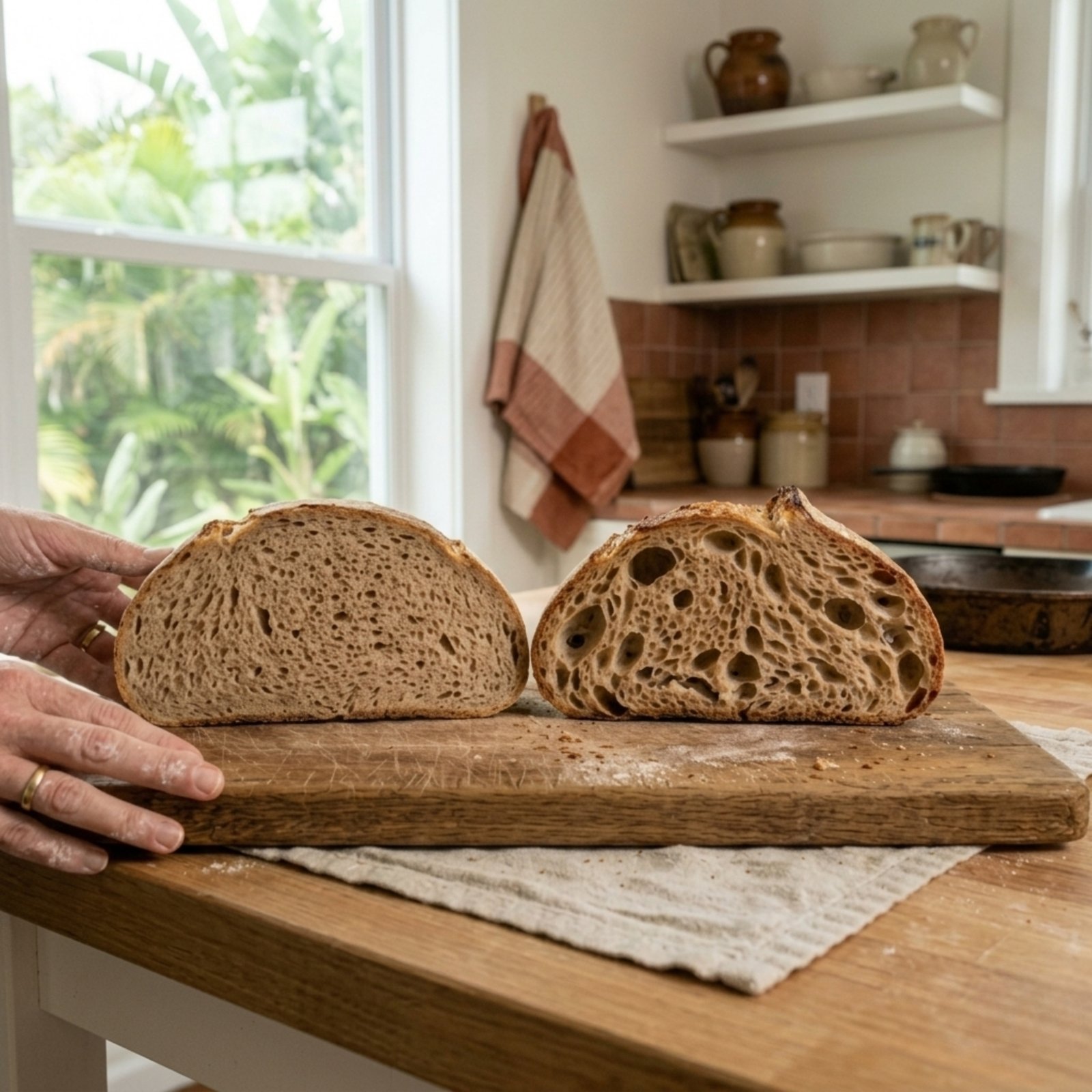
Crumb
The interior texture of baked bread – its holes, density, and structure – as opposed to the crust. See Reading Your Bread and the Crumb & Crust Diagnostic Quicksheet.
Crust
The exterior surface of baked bread, formed by the Maillard reaction and moisture loss during baking; its color, thickness, and crackle are shaped by oven temperature and steam.
False Rise
A misleadingly large rise in the oven’s first minutes that isn’t real oven spring – often from under-proofed dough or excess surface gas – followed by the loaf settling or deflating.
Blowout
A loaf splitting open somewhere other than its intended score, usually from under-proofing, a weak seam, or too-shallow a score for how much the dough wants to expand.
Internal Temperature
The doneness check for bread: fully baked sourdough typically reads 205-210°F (96-99°C) at the center – more reliable than crust color alone.
Gelatinization
The process by which starch granules absorb water and swell when heated, which is what sets a loaf’s crumb structure during baking.
Maillard Reaction
The browning reaction between sugars and proteins at high heat, responsible for a crust’s color and much of its flavor (distinct from caramelization, which only involves sugar).
Science & Troubleshooting
14Ash Content
A measurement of the mineral content left behind when flour is incinerated in a lab, used as an indicator of how much bran and germ (versus pure endosperm) is in the flour. Higher ash content generally means more flavor and faster fermentation. See Ash, Mineral Content & Flour Fermentation.
Protein Content
The percentage of protein in a flour, printed on most bags. Higher-protein flours (bread flour, 12%+) generally build stronger gluten networks than lower-protein flours (all-purpose, cake flour).
Mineral Content
See Ash Content – the two terms are often used interchangeably, since ash is how mineral content is measured.
Retrogradation
The process by which starch molecules re-crystallize after baking, which is the main mechanism behind bread going stale – distinct from simply drying out.
Staling
The overall loss of fresh-baked texture over time, driven mostly by starch retrogradation rather than moisture loss alone – which is why stale bread can still feel “moist” but taste and chew wrong.
Starch Damage
Physical damage to starch granules during milling, which affects how much water flour can absorb and how quickly enzymes can act on it during fermentation.
Enzyme Activity
The action of naturally occurring enzymes (mainly amylase and protease) in flour, which break starch down into sugars yeast can eat and loosen gluten structure over time – a major reason long autolyse and bulk times change dough behavior.
Amylase
The specific enzyme responsible for breaking starch down into fermentable sugars; its activity level (naturally present or added as diastatic malt) affects fermentation speed and crust color.
Diastatic Malt
A flour additive (malted barley) containing active amylase, sometimes added in small amounts to boost fermentation speed and crust browning.
Gluten Network
The interconnected web of gluten strands throughout dough, whose strength and organization determine how well a loaf holds gas and shape – the structural through-line behind most crumb and shape troubleshooting.
Crumb Structure
The specific pattern of holes (alveoli) in baked bread – their size, distribution, and wall thickness – determined by gluten strength, hydration, shaping, and proof level together.
Flour Extraction Rate
The percentage of the wheat kernel retained in a flour after milling. Whole wheat is close to 100% extraction; white flour is a lower-extraction flour with bran and germ removed.
Hydration Tolerance
How much water a given flour can absorb while still building a workable gluten network – higher-protein, higher-extraction flours generally tolerate more water before dough turns unmanageably slack.
Gluten-Forming Flour
Flour capable of building strong gluten (wheat, spelt, rye to a lesser extent) as opposed to gluten-free flours, which need very different techniques to trap fermentation gas.
Want the short, printable version?
The Glossary of Sourdough Terms Quicksheet is a free one-page cheat sheet with the 20 terms you’ll use most – good for taping inside a cabinet. This page is the full, searchable reference; the quicksheet is the fridge copy.