Ash Content: The Flour Number Nobody Explains, and Why It Predicts Your Bake Better Than Protein Does
Every home baker learns to check protein percentage. Almost nobody learns to check ash content, even though it’s the number that actually tells you how a flour was milled, how it will ferment, and roughly what it’s going to taste like. Italian millers, including Caputo, have been sorting flour by this number for a century. It’s time American home bakers caught up.
The Short Answer
Ash content is the percentage of mineral residue left behind after a flour sample is completely burned in a lab furnace. Since minerals concentrate almost entirely in the bran and germ, ash content is really a proxy for how much of the whole grain got left in the flour during milling.
Low ash (under 0.55%, like Caputo Chef 00) means a flour milled almost entirely from the starchy endosperm: pale, mild, gentler fermentation. High ash (whole grain flours like Caputo Integrale) means more bran and germ made it into the bag: more minerals, more flavor compounds, more phytic acid, and a noticeably more vigorous ferment.
Protein percentage tells you about gluten strength. Ash content tells you about composition. They’re measuring two different things, and a flour’s real baking behavior depends on both.
What the Test Actually Measures
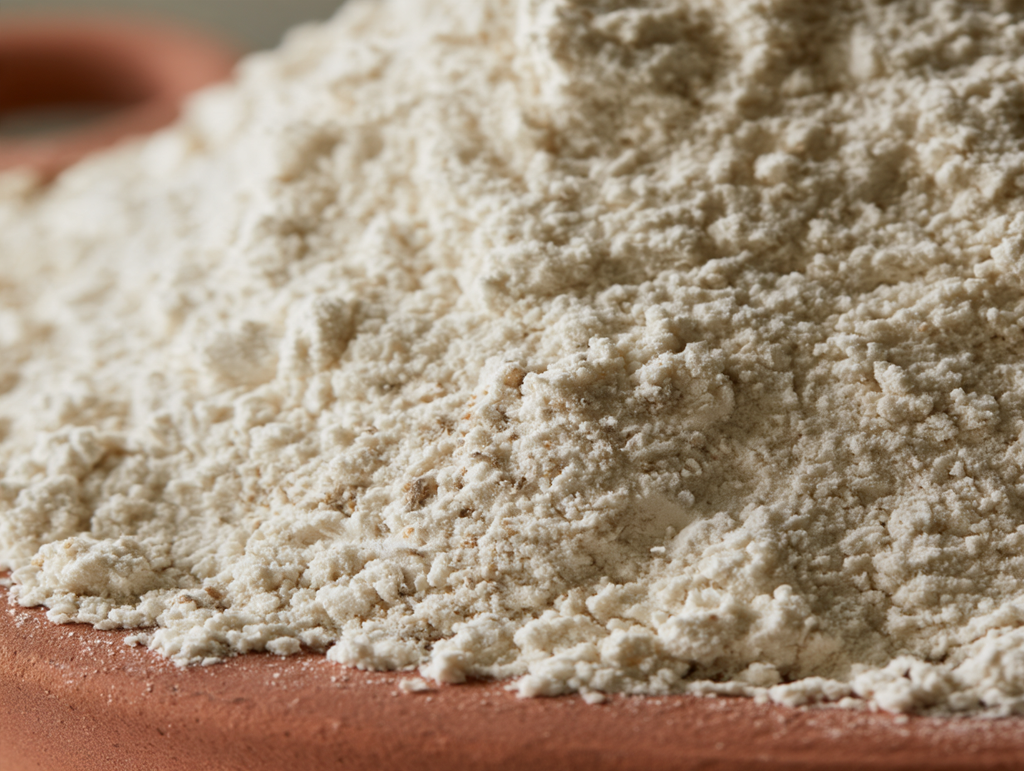
Here’s the actual test, and it’s almost funny how low-tech the logic is: take a few grams of flour, weigh it, then burn it. Not toast it, burn it, in an industrial furnace at over 1,000°F (585°C, if you want the official number), until literally everything that can burn is gone. What’s left is pure mineral residue, the stuff that doesn’t burn. Weigh that leftover ash, compare it to the original weight, and that percentage is the ash content. The official name is AACCI Method 08-01, but “burn it and weigh what’s left” is really all it is.
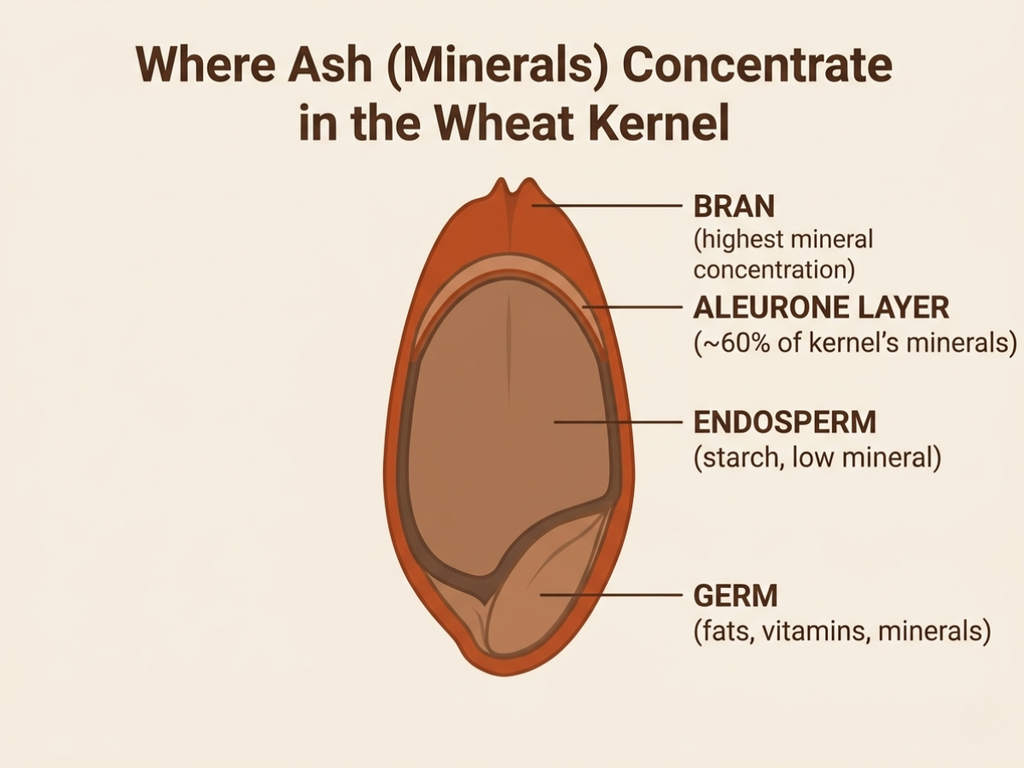
Why does burning flour tell you anything useful? Because minerals aren’t spread evenly through a wheat kernel. The starchy middle part, which is what most white flour is made from, barely has any minerals in it at all. Almost all of them are packed into one thin layer stuck to the bran, called the aleurone layer, which holds about 60% of the kernel’s entire mineral supply by itself. So when a flour has a high ash number, it’s not some abstract chemistry stat, it’s just telling you how much of that mineral-rich outer layer made it into the bag instead of getting stripped out at the mill.
Two Classification Systems, Two Different Questions
American flour is sold by protein percentage: all-purpose around 10-12%, bread flour around 12-14%. That number predicts gluten strength, how much structure the flour can build, how much water it can absorb, how it’ll hold up to a long fermentation.
Italian flour, including everything Caputo makes, is classified first by ash content: 00 (under 0.55% ash), 0, 1, 2, and Integrale (whole grain, with the highest ash of all). That number predicts something protein percentage doesn’t: how refined the flour is, and by extension, how much of the grain’s flavor compounds, minerals, and fiber are actually in the bag. A flour can be 00 and still range from about 9% protein (soft wheat, pastry-grade) to over 14% (Manitoba hard wheat, built for pizza and long-fermented bread), which is exactly why “00” alone never tells you what you need to know about strength.
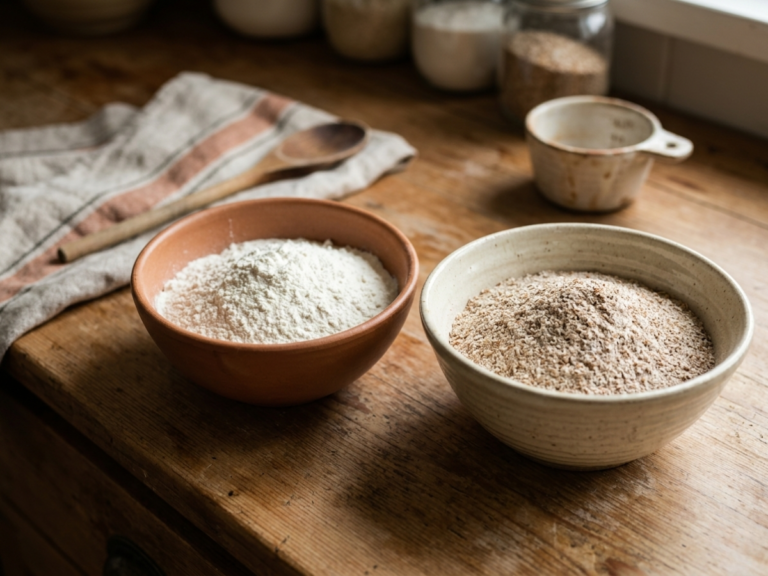
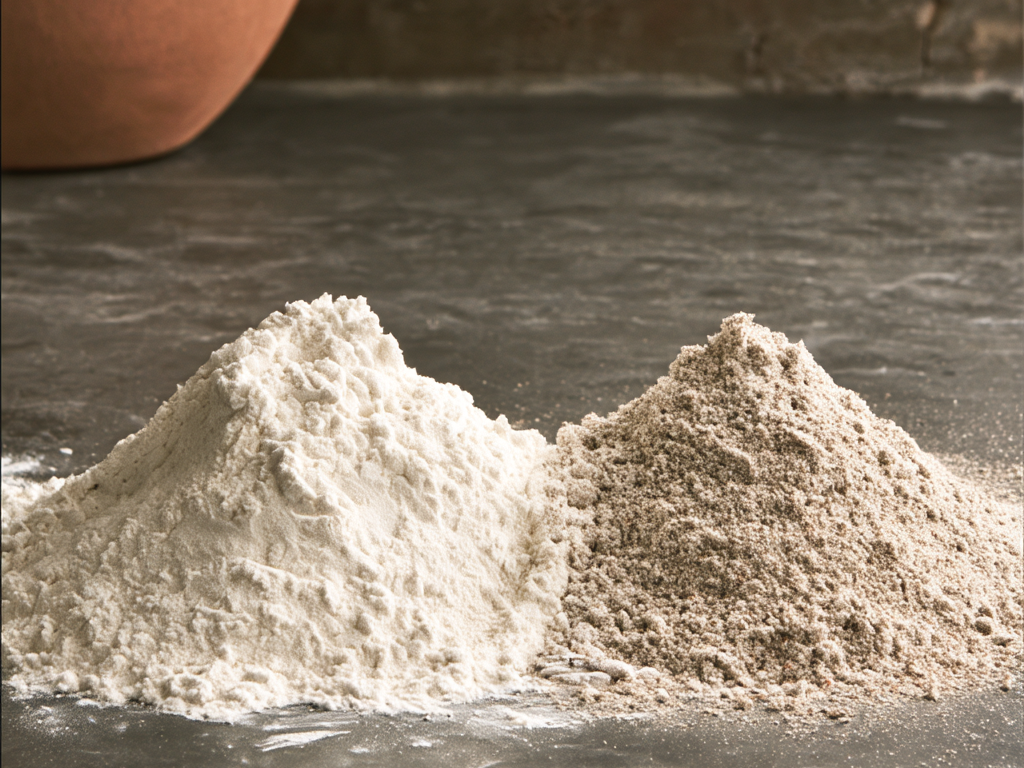
Caputo Chef 00 vs. Caputo Integrale, side by side
Chef 00 sits at under 0.55% ash with roughly 12.5-13.5% protein, milled almost entirely from the endosperm. It’s the mild, predictable, forgiving flour, which is exactly why it’s the base of my Plain White Sourdough Loaf.
Integrale is true whole wheat, milled with the bran and germ intact, carrying meaningfully higher ash, along with higher fiber, mineral content, and protein (commonly cited around 14%+). It’s a fundamentally different starting material, not just a “heartier” version of the same flour.
Desi’s Note
Ash content is basically an impairment test for flour. You strip everything else away by fire and look at what’s actually left on the balance sheet. Protein percentage is more like a projected performance metric, useful, but it’s telling you what the flour might do, not what’s actually in it.
Why This Changes How Your Dough Ferments
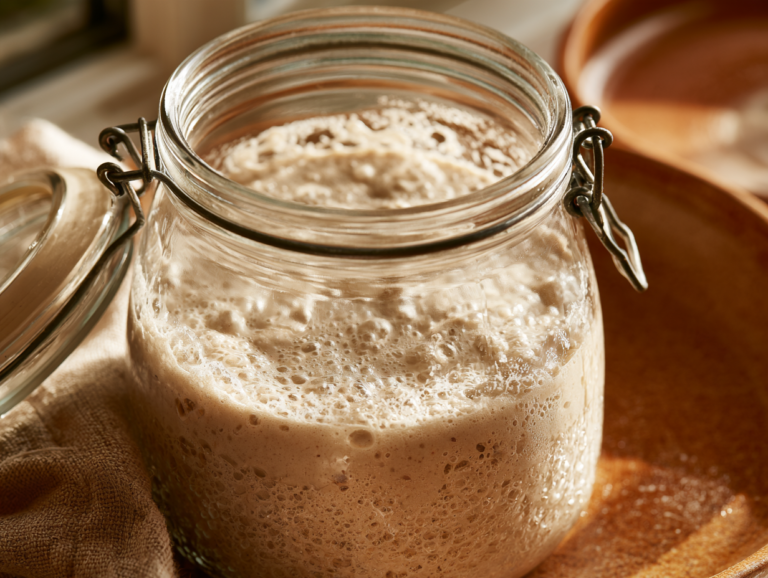
Higher ash flour doesn’t just taste different, it behaves differently in the bowl. More bran and germ means more minerals directly available to feed your starter’s wild yeast and lactic acid bacteria, which tends to produce a faster, more vigorous fermentation than the same volume of low-ash flour would. It also means more phytic acid going in, which, as covered in the flour and health piece, is exactly the substrate your starter’s phytase enzymes need several hours of fermentation to break down.
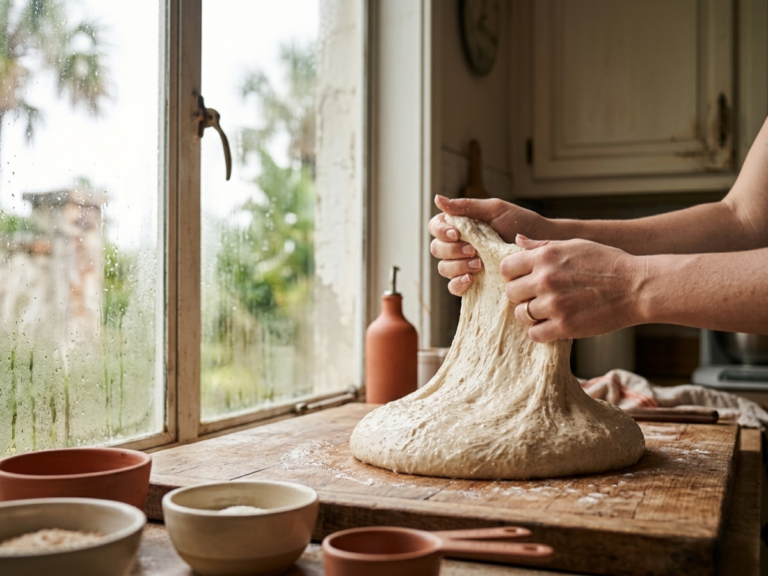
The tradeoff is structural. Bran particles are sharp at a microscopic level and physically cut through developing gluten strands as the dough is mixed and folded, which is part of why high-ash, high-extraction flours build weaker gluten networks than their protein percentage alone would predict. This is the real reason a 50/50 Chef 00 and Integrale blend, like my Whole Wheat Sourdough Loaf, behaves so differently from either flour used alone: you’re balancing gluten integrity against mineral and flavor content, not just splitting the difference on taste.
Higher ash flour also absorbs more water relative to its weight, because bran and germ are more water-hungry than pure starch. If you’ve ever swapped in a whole grain flour and had your usual hydration percentage suddenly feel too dry, this is why. It isn’t the recipe failing, it’s a different material with a different water appetite.
Key Takeaways
- Ash content measures the mineral residue left after burning a flour sample, which functions as a proxy for how much bran and germ remain after milling.
- Italian flours (00, 0, 1, 2, Integrale) are classified by ash content first; American flours are classified by protein percentage. These measure different things.
- Caputo Chef 00 is under 0.55% ash and mild in flavor and fermentation. Caputo Integrale carries far more bran, germ, minerals, and phytic acid.
- Higher-ash flours ferment faster and taste more complex, but bran particles physically weaken gluten development, which is why whole grain doughs need different handling, not just a longer mixer run.
- Higher-ash flours also absorb more water, so hydration percentages don’t transfer directly between a 00 recipe and a whole grain one.
Next time a flour bag lists ash content and you skip past it for the protein number, remember it’s telling you the more honest story: not how strong the flour might be, but what’s actually in it.
More Resources
Keep the Conversion & Baker’s-Percentage Cheat Sheet and the Glossary of Sourdough Terms nearby for quick reference.
Knead to Know?
New recipes, baking tips, and sourdough troubleshooting — delivered before your starter even finishes its next rise.
Get the latest insights, no spam — just new recipes and baking tips. Unsubscribe anytime. See our Privacy Policy.