How to Maintain (and Revive) Your Starter
Now that you’ve built your own starter, gotten one from a friend, or bought one from a fellow baker, keeping it alive is the part nobody warns you about enough. I keep mine in the fridge, feed it exactly what I need for whatever I’m baking, and I have never once thrown a spoonful of it in the trash. Here’s exactly how I maintain mine, and how I bring it back when it’s gone further than I meant to let it.
The Short Answer
Store your starter in the fridge, not the counter, especially in a hot, humid kitchen. Feed it only as much as your next bake actually needs, using a 1:10:10 or 1:5:5 ratio to reactivate a small amount ahead of time, so you’re never stuck maintaining more than you use.
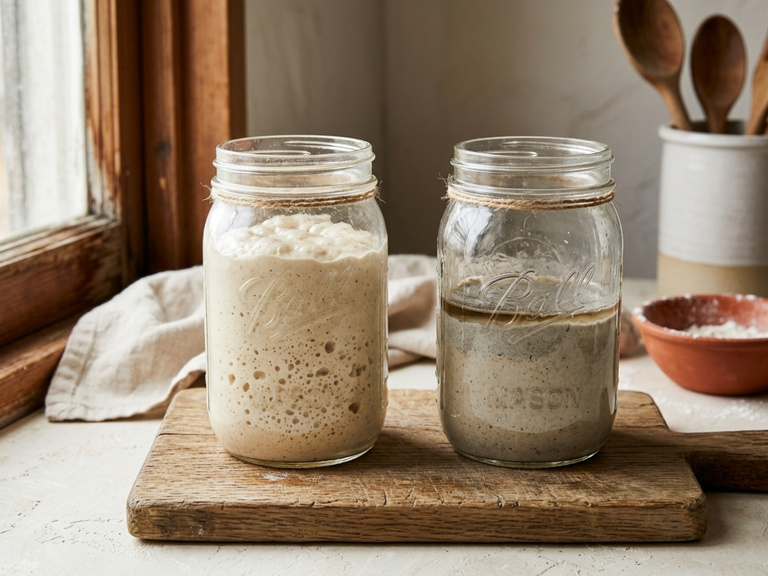
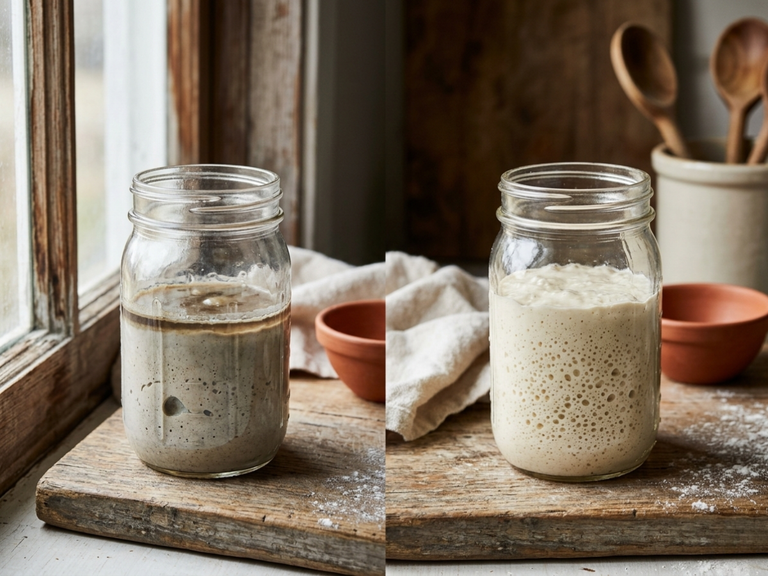
A dormant fridge starter will eventually separate and grow a brownish liquid on top. That’s alcohol from fermentation, not spoilage. Mix it back in, then feed the starter a spoonful or two of flour at a time to bring it back to a thicker, healthier consistency before fully reactivating it.
Never throw starter away, unless it’s moldy or shows a pink or orange tinge, which means real spoilage rather than hooch. Otherwise, leftover active starter goes back into your fridge jar, and once that jar builds up more than you need, the extra goes into a discard recipe instead of the trash.
Why I Keep My Starter in the Fridge
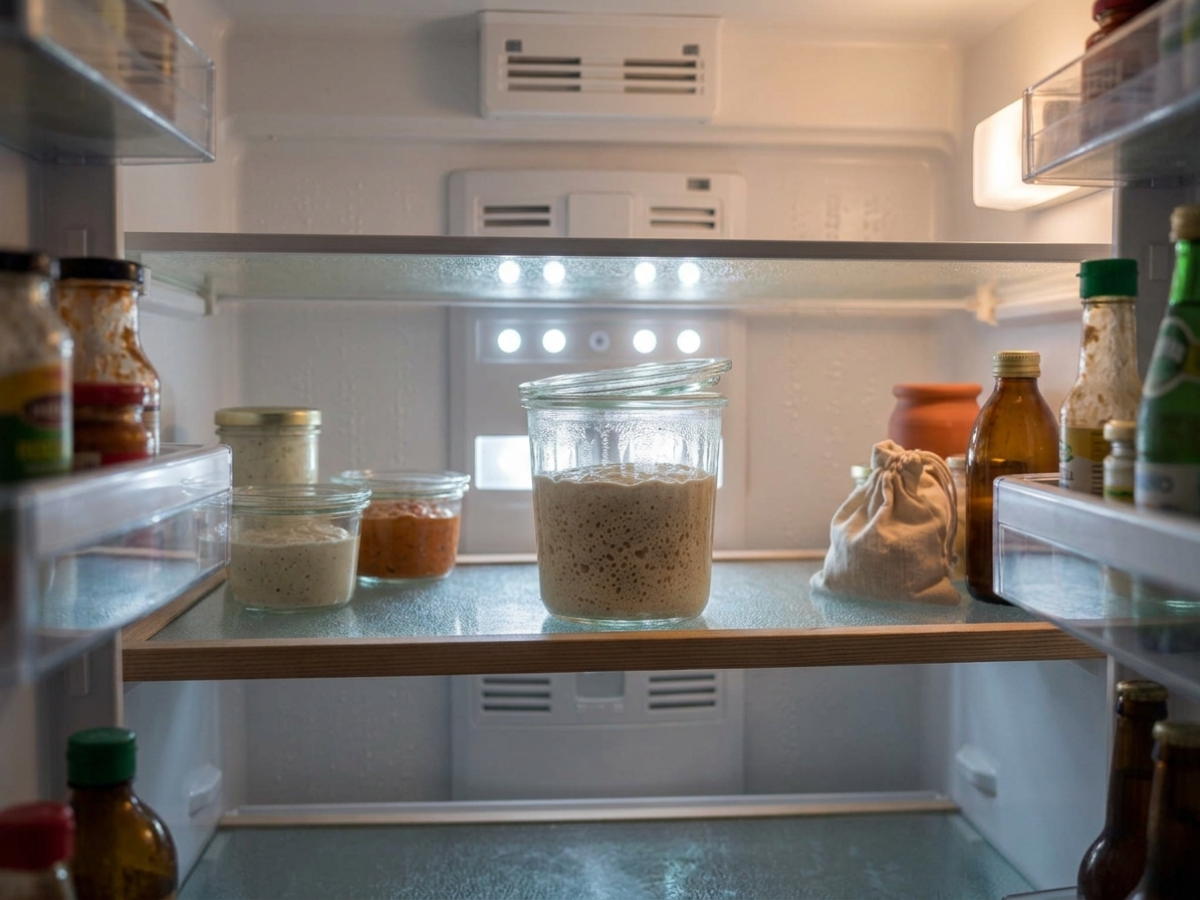
I bake about twice a week, but my kitchen runs hot and humid, so leaving a starter out on the counter the way some tutorials suggest just isn’t realistic here. It would move too fast and turn on me. I keep mine in the fridge instead, and because I feed it the exact amount I’ve calculated for whatever I’m baking, whatever’s left over after a feeding is small, not a big tub I have to babysit.
If you don’t bake as often as I do, the fridge is even more useful. I have friends who only bake once a month or so, and the fridge lets them keep a starter alive without daily attention. One thing to watch for: a very active starter doesn’t just stop working the moment it hits the cold. It will keep producing bubbles and gas for a while, so leave some headroom in the jar. A sealed, overfull jar in the fridge is a mess I don’t recommend finding out about the hard way.
How I Reactivate a Fridge Starter Before Baking
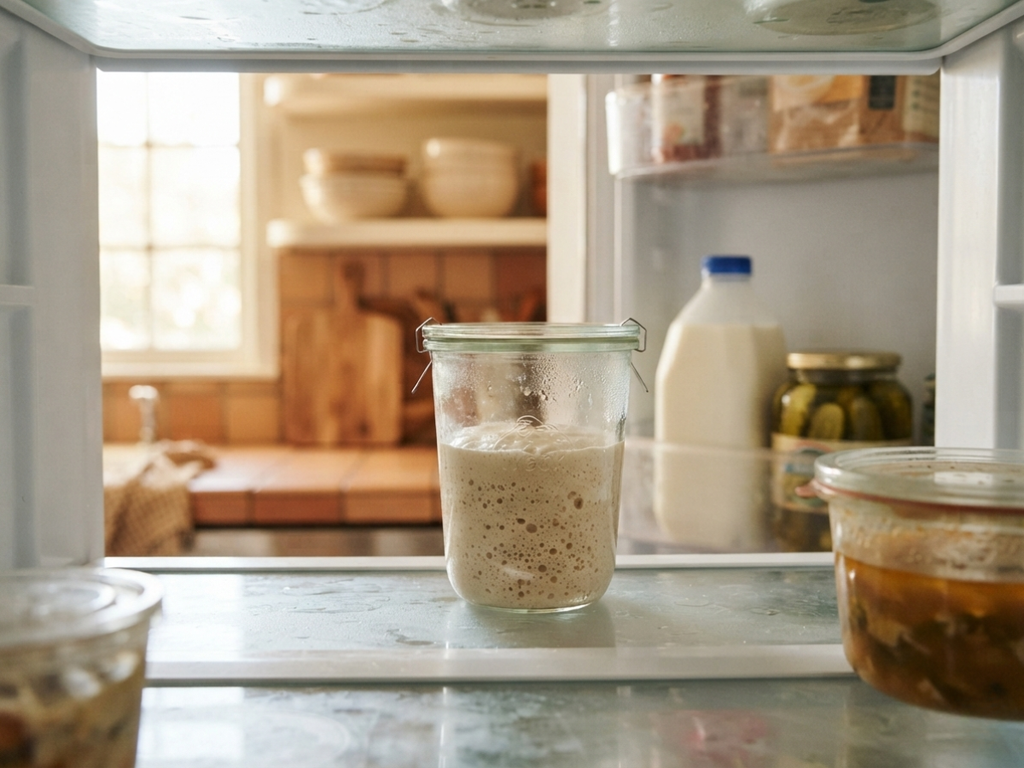
I plan backward from my bake day. If I need bread ready to eat on Wednesday, I activate my starter on Monday. I take a small amount out of the fridge, based on how much I’ll actually need, and feed it at a 1:10:10 ratio. So if I take out 20 g of starter, I add 200 g of water and 200 g of flour, mix it well, and leave it on the counter.
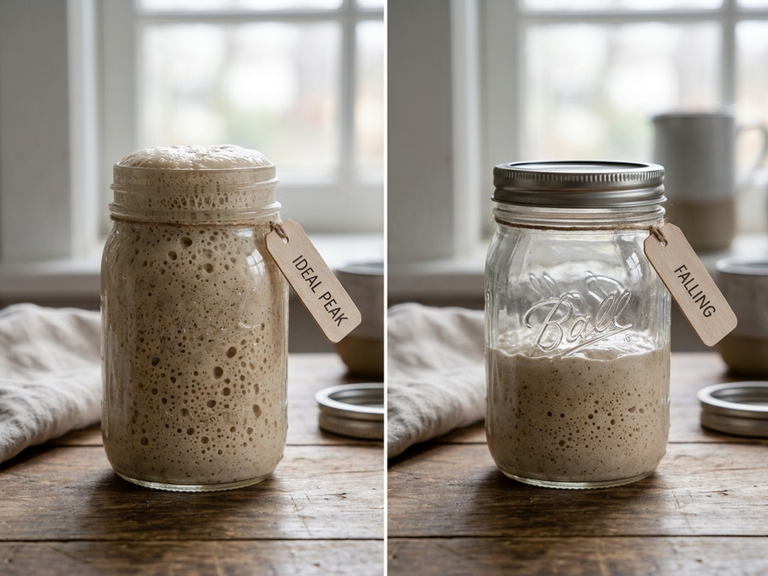
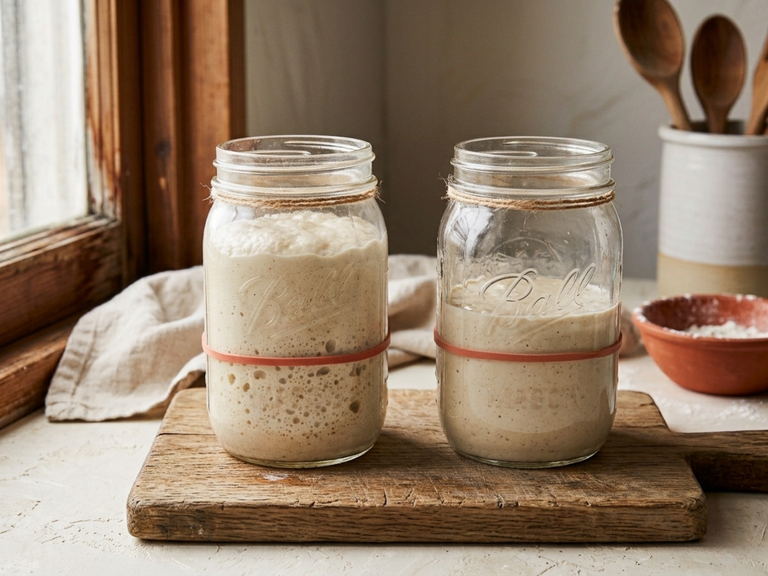
In my hot kitchen, that feeding triples in about 8 to 10 hours. Your timeline will likely run longer in a cooler kitchen, since that large feeding ratio takes more time to fully activate. If you need your starter ready sooner, increase the ratio to 1:5:5 instead. Using the same 20 g of starter, that means 100 g of water and 100 g of flour. The smaller ratio activates faster.
Watching for Over-Acidification
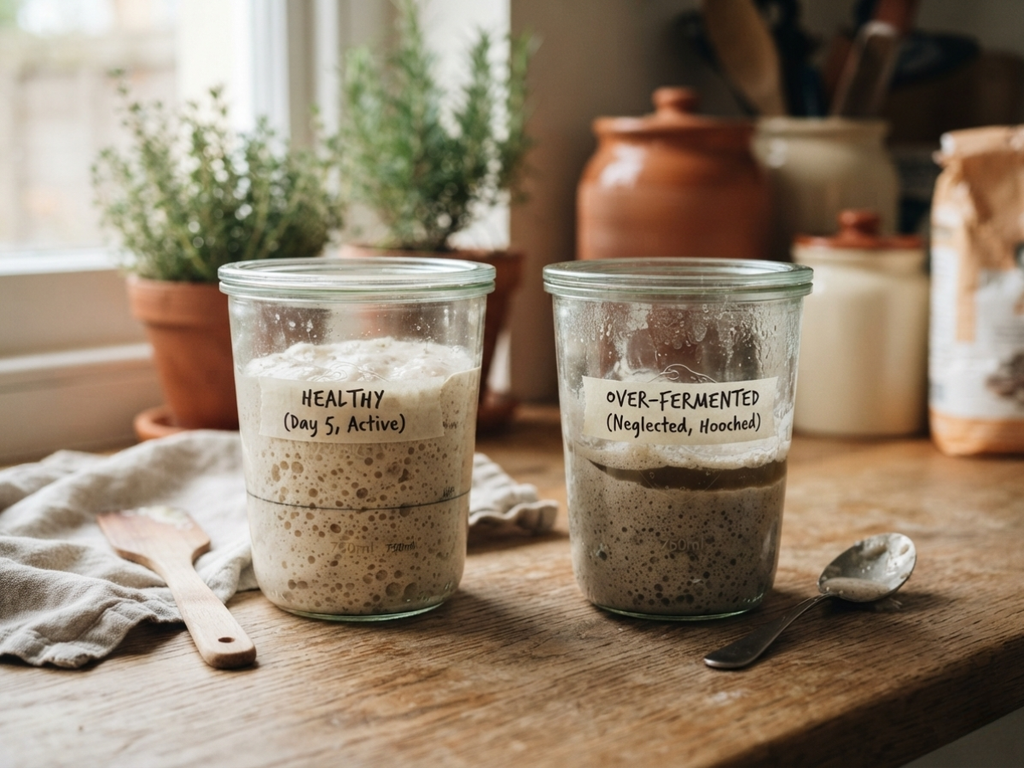
I keep my ratios large (1:10:10) on purpose, partly because it keeps my fridge starter small, and partly because I’ve learned it helps prevent the starter from turning too acidic. In a hot kitchen, hours on the counter can accelerate that process further than you’d expect. If you don’t catch it in time, the starter gets very liquidy, and that’s usually a sign you’ve passed the healthy window and moved into acidic territory. I’m speaking from experience here: an over-acidic starter can cause your bread to overferment fast, and the loaf falls flat.
Whatever ratio you use, keep an eye on your starter rather than walking away for the full window. Watching how it behaves matters more than following a fixed number of hours.
What I Do With Leftover Active Starter
Whatever active starter is left after a bake doesn’t get tossed. I put it right back into my original starter jar in the fridge. It’s just healthy, activated starter joining the older starter it came from. After several bakes, that jar builds up more volume than I actually need, and when that happens, I use the extra in a discard recipe to bring the quantity back down. I never, ever throw starter away, unless it’s moldy or shows a pink or orange tinge. I’m a true believer in not wasting it.
Reviving a Starter With Hooch on Top
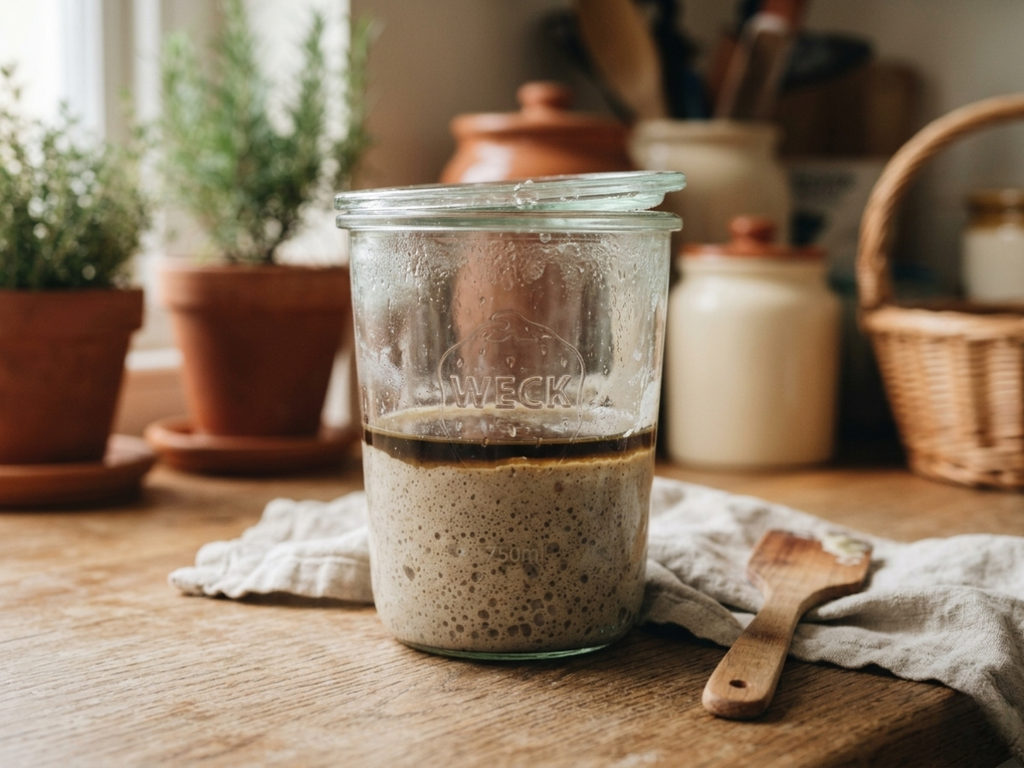
If your starter sits in the fridge for a long stretch, say two months without use, you’ll likely see a liquidy, brownish layer form on top. That’s hooch: alcohol created by fermentation, not a sign your starter has gone bad. Some bakers dump it out. I don’t. I mix it back in. Mold or an orange or pink tinge is a different story, though. That’s actual spoilage, not hooch, and if you ever see either one, the whole jar needs to go in the trash. No exceptions there.
Keep in mind, once you mix the hooch back in, your starter will be quite acidic. When I take a small amount out to reactivate it at a 1:10:10 ratio, I watch it closely, since an acidic starter doesn’t rise the same way a fresh one does, and I don’t want it to double or triple without me noticing.
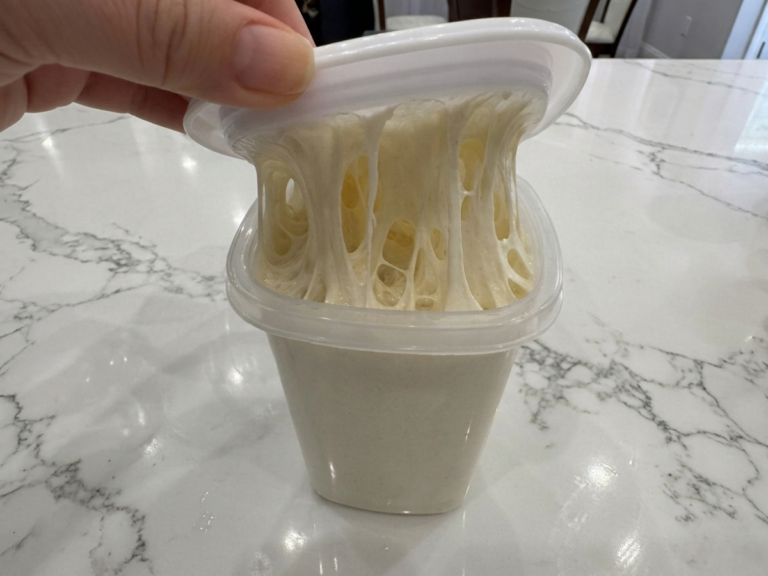
For the starter still sitting in the fridge, the high alcohol content usually leaves it very liquidy. Here’s where I do things a little differently than most tutorials you’ll find, which usually have you discard most of a neglected starter down to a small amount before feeding it back up. I keep the whole jar and add a couple of spoons of flour directly into it instead, mixing it in. Flour is what actually feeds a starter, so a couple of spoons won’t fully activate it for baking, but it feeds it little by little and helps thicken it back toward a shaggy consistency. I put it back in the fridge, check on it over the next day or two, and add more flour if it’s still too liquidy. The next time I bake, I go through the same reactivation process, and any leftover active starter goes right back into that same jar.
If a Starter Doesn’t Make It
I’ll be honest, I’ve killed a few starters over the years. Early on, I didn’t have the experience or the confidence to experiment and see where things landed. It happens. If your first attempt doesn’t work out, don’t be discouraged. Try again. And if it’s just not coming together no matter what, plenty of bakers will give away or sell a starter, so you can always get your hands on one and start maintaining from there.
If you have questions along the way, leave a comment at the bottom of this article. I read them and reply.
Desi’s Note
My real maintenance secret isn’t a special ratio. It’s keeping almost nothing in the fridge to begin with. A small, well-fed starter is so much easier to keep healthy than a large one you’re not using fast enough, and it’s exactly what keeps mine from turning acidic before I catch it.
Key Takeaways
- Store your starter in the fridge, covered, especially in a hot or humid kitchen, and leave headroom since it can keep producing gas even cold.
- Feed only what your next bake needs, using a 1:10:10 or 1:5:5 ratio, and plan backward from your bake day.
- A liquidy, over-acidic starter is a warning sign, not a feature. It can cause your bread to overferment and fall flat.
- Leftover active starter goes back into the fridge jar, never the trash. Any buildup can go into a discard recipe.
- The brownish liquid (hooch) on a neglected starter is alcohol, not spoilage. Mold or an orange or pink tinge is different, that’s real spoilage, and that starter goes in the trash, no exceptions.
- To revive a hooched starter, I skip the usual discard-most-of-it approach and instead feed the whole jar a spoonful or two of flour at a time until it thickens back up. Either method works; this is just mine.
- Losing a starter happens. Try again, or start with one from a friend or fellow baker.
So no, maintaining a starter doesn’t mean babysitting it every day. Feed it what you actually need, use what’s left, and let the fridge do the waiting for you.
More Resources
Track every feeding with the free Starter Feeding & Discard Log.
Knead to Know?
New recipes, baking tips, and sourdough troubleshooting — delivered before your starter even finishes its next rise.
Get the latest insights, no spam — just new recipes and baking tips. Unsubscribe anytime. See our Privacy Policy.