Why Does My Sourdough Starter Smell Like Nail Polish or Vinegar?
On This Page
This is one of those things that makes new bakers want to toss the whole jar and start over, but a strong smell is usually your starter communicating something specific, not dying.
The Short Answer
A nail polish or acetone smell means your starter is hungry and producing excess alcohol as a byproduct. A vinegar smell means it’s leaning more acidic than usual. Both point to the same underlying issue, and both call for the same reset.
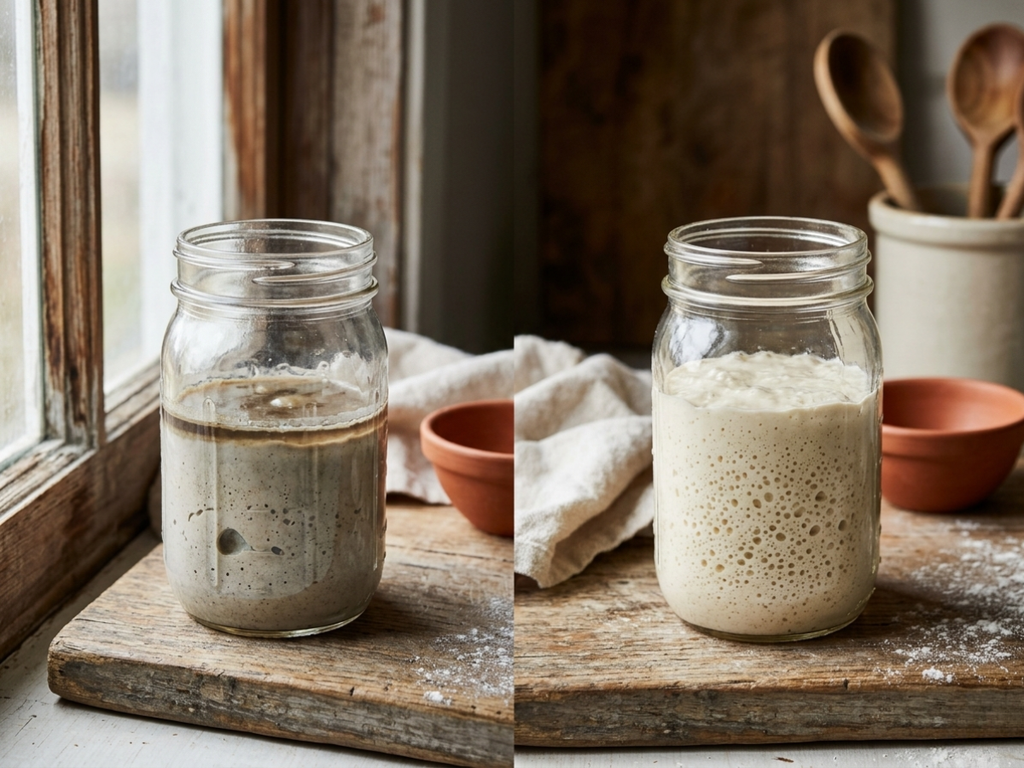
What’s Going Wrong (and How to Fix It)
Problem #1
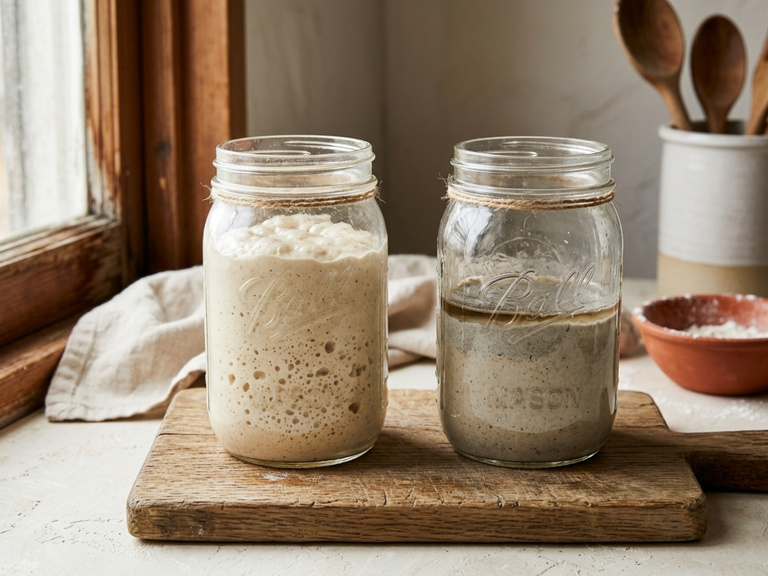
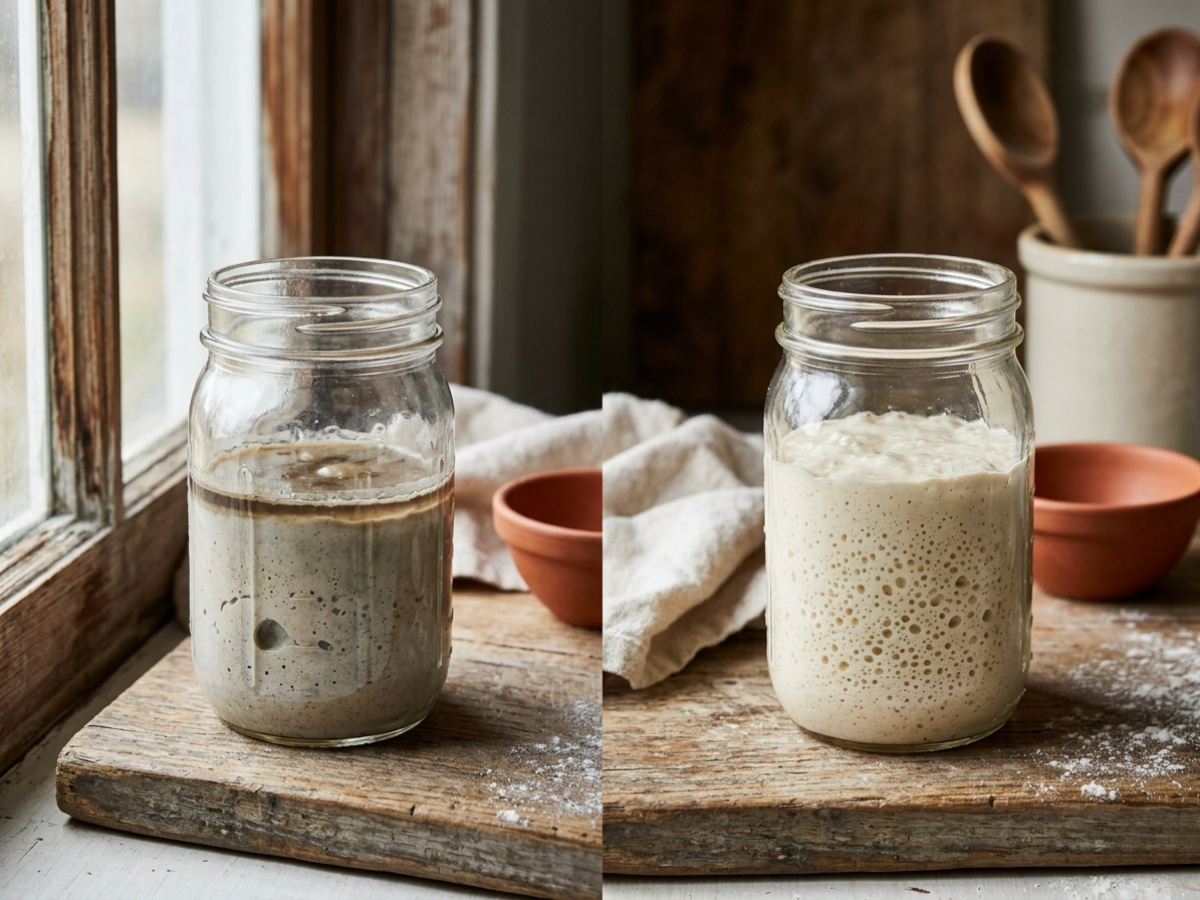
Whether it smells like nail polish (from excess alcohol as the yeast runs low on food) or like sharp vinegar (from the acetic-acid bacteria pulling ahead), both smells mean your starter has gone hungry long enough to turn noticeably acidic. Sometimes that shows up as a layer of dark liquid sitting on top, but not always, a starter can smell this sharp and acidic with no visible liquid at all, and it means the same thing either way
The Fix
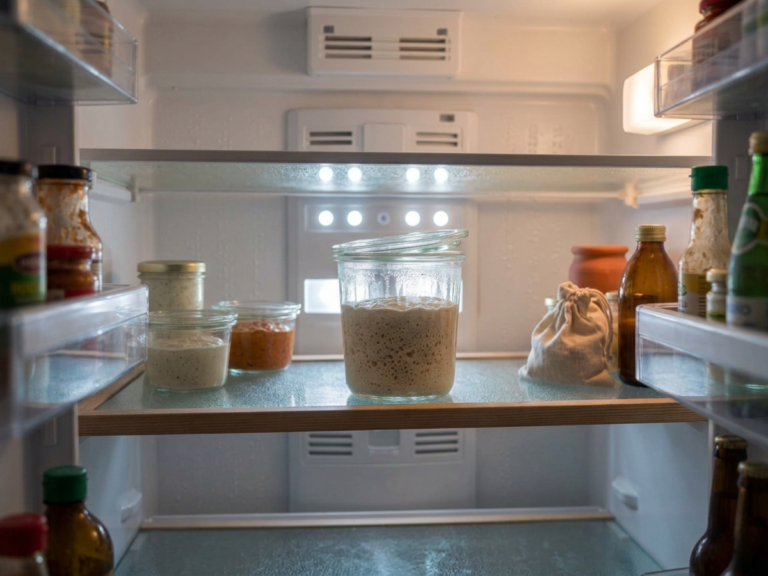
If there’s a layer of dark liquid on top, work it back into the starter rather than pouring it out, and treat the starter as just as acidic even on the days there’s no visible liquid but the smell is still sharp. Either way, this isn’t a starter you want to bake with directly yet. Set aside a small spoonful, somewhere around 20g, and feed only that portion at a 1:10:10 ratio, letting it double and fully ferment before you rely on it in a dough. For what’s left of the acidic starter, don’t toss it either, work in enough flour to bring it back to a thick, shaggy consistency, similar to a rough waffle batter, and let it rest in the fridge overnight. Next time you’re ready to bake, you can draw off a portion to reactivate the same way, or just put the rest to use in a discard recipe
Desi’s Note
A starter that smells like a nail salon isn’t broken, it’s just loud about being hungry. Feed it, and it calms back down within a feeding or two, no drama required.
Want To Know The Science Behind This?
If you want the deeper “why” behind what your starter’s wild yeast and bacteria are actually producing and why, check out our Sourdough Science article: “Starter Microbiology 101: What’s Actually Living in That Jar” click here →.
More Resources
For a printable reference, grab the Starter Troubleshooting Quicksheet.
Knead to Know?
New recipes, baking tips, and sourdough troubleshooting — delivered before your starter even finishes its next rise.
Get the latest insights, no spam — just new recipes and baking tips. Unsubscribe anytime. See our Privacy Policy.