Sourdough Starter Not Rising? Here’s What’s Wrong
On This Page
A starter that won’t rise is usually the very first wall new bakers hit, and it can feel like something is fundamentally broken. Most of the time, it isn’t. It just needs a little more patience or a small change in routine.
The Short Answer
A starter that won’t rise is usually too young, underfed, too cold, or being fed the wrong ratio of flour to water. Match your situation to the specific cause below rather than changing everything at once.
What’s Going Wrong (and How to Fix It)
Problem #1
Your starter is still young and simply hasn’t built up enough wild yeast and bacteria yet to reliably rise, which has nothing to do with how many days have passed on a calendar
The Fix
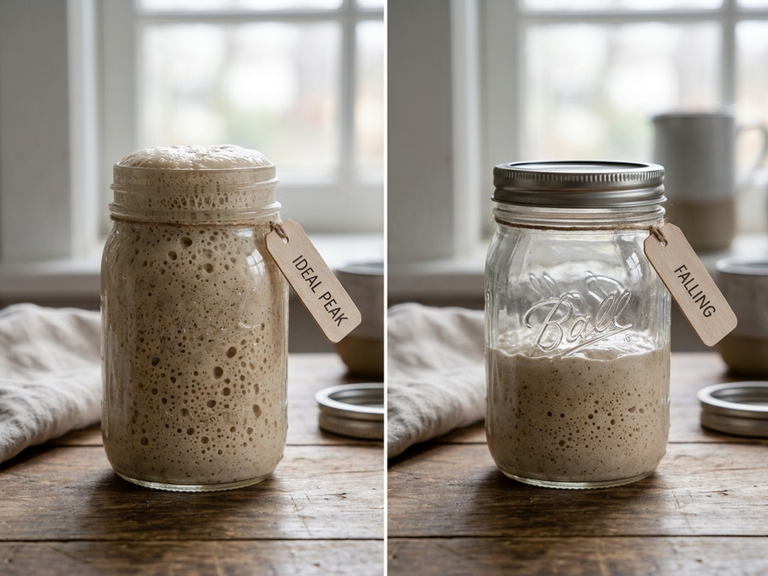
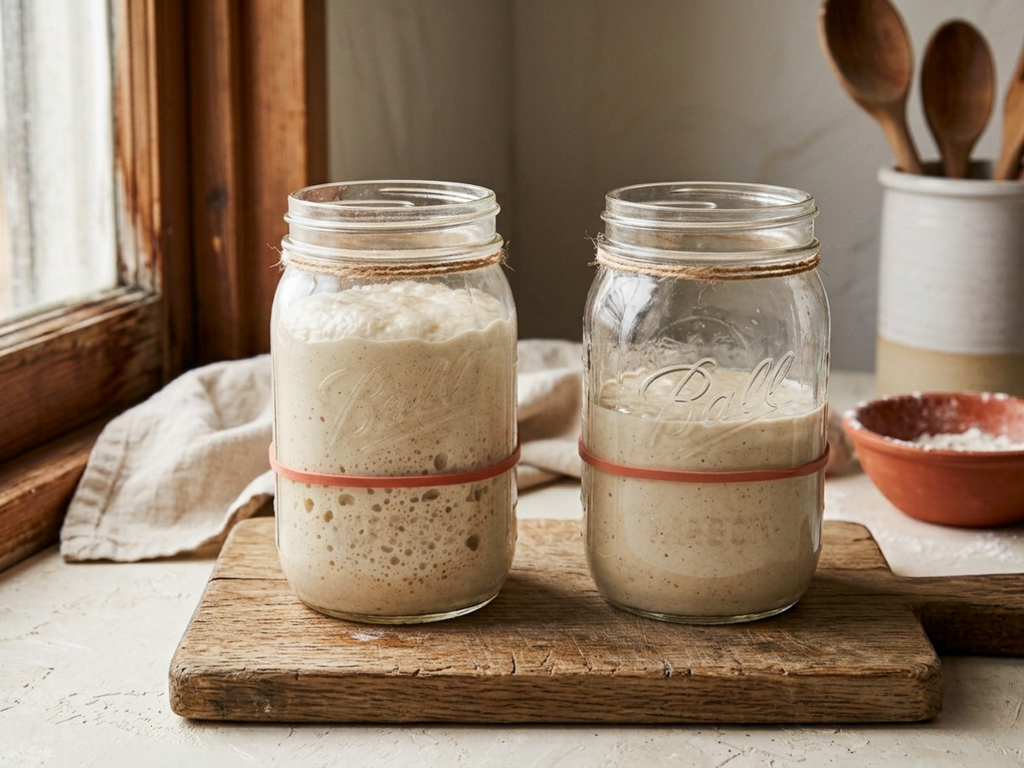
Judge readiness by a pattern, not a date: once your starter more than doubles in size after a single daily feeding, three days in a row, it’s ready to bake with. How long that takes varies a lot depending on your kitchen’s temperature, humidity, and the flour you’re using. My own first starter only took about 5 days to get there, but a new starter can just as reasonably take a full week, or two, or even three, depending on your conditions. All of that is normal. Let the three-day doubling pattern be your marker instead of the calendar
Problem #2
Feedings have been inconsistent, so the yeast population never gets the chance to establish a rhythm
The Fix
Feed on a consistent schedule, but match the ratio to your actual situation. If you’re building a brand new starter from scratch, feed once daily at a 1:1:1 ratio (equal parts starter, flour, and water by weight), discarding down before each feeding. If instead you already have an established starter that’s just gone dormant, not one you’re building from day one, feed it at a more diluted 1:10:10 ratio, and it should be active and ready to use again within about 8 to 10 hours
Problem #3
The kitchen is too cold, which slows microbial activity significantly
The Fix
Move the starter somewhere warmer, like the top of the fridge or a turned-off oven with the light on
Problem #4
The flour-to-water ratio is off, or you switched flour types recently without adjusting
The Fix
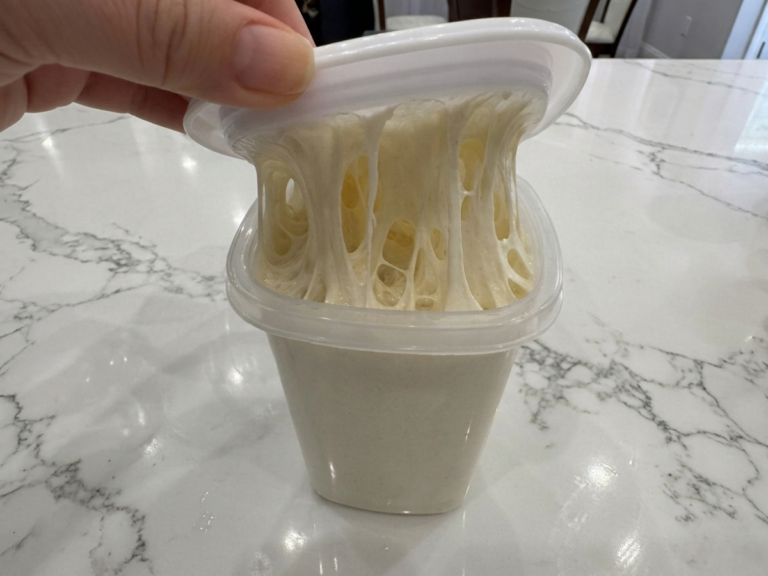
If your starter looks too liquidy, add more flour until it looks like a shaggy waffle mix, thick, not pourable, then let it ferment until it doubles or triples before you use it. Your starter feeds off that flour, so it’s better to have it a bit thick right after feeding than loose, it will relax and loosen back up on its own as it ferments
Problem #5
Chlorinated tap water is suppressing the wild yeast. Chlorine is added specifically to kill microorganisms, and your starter is a jar of microorganisms
The Fix
Switch to filtered or bottled water if you suspect chlorine is the issue
Problem #6
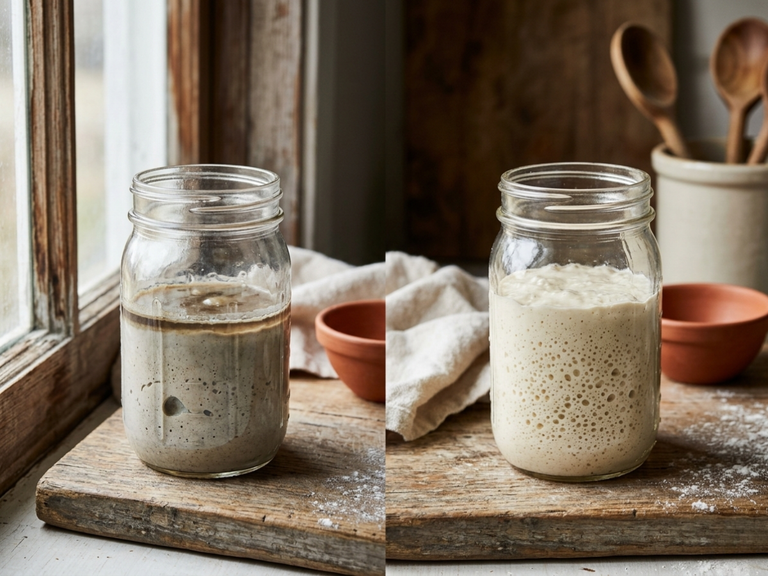
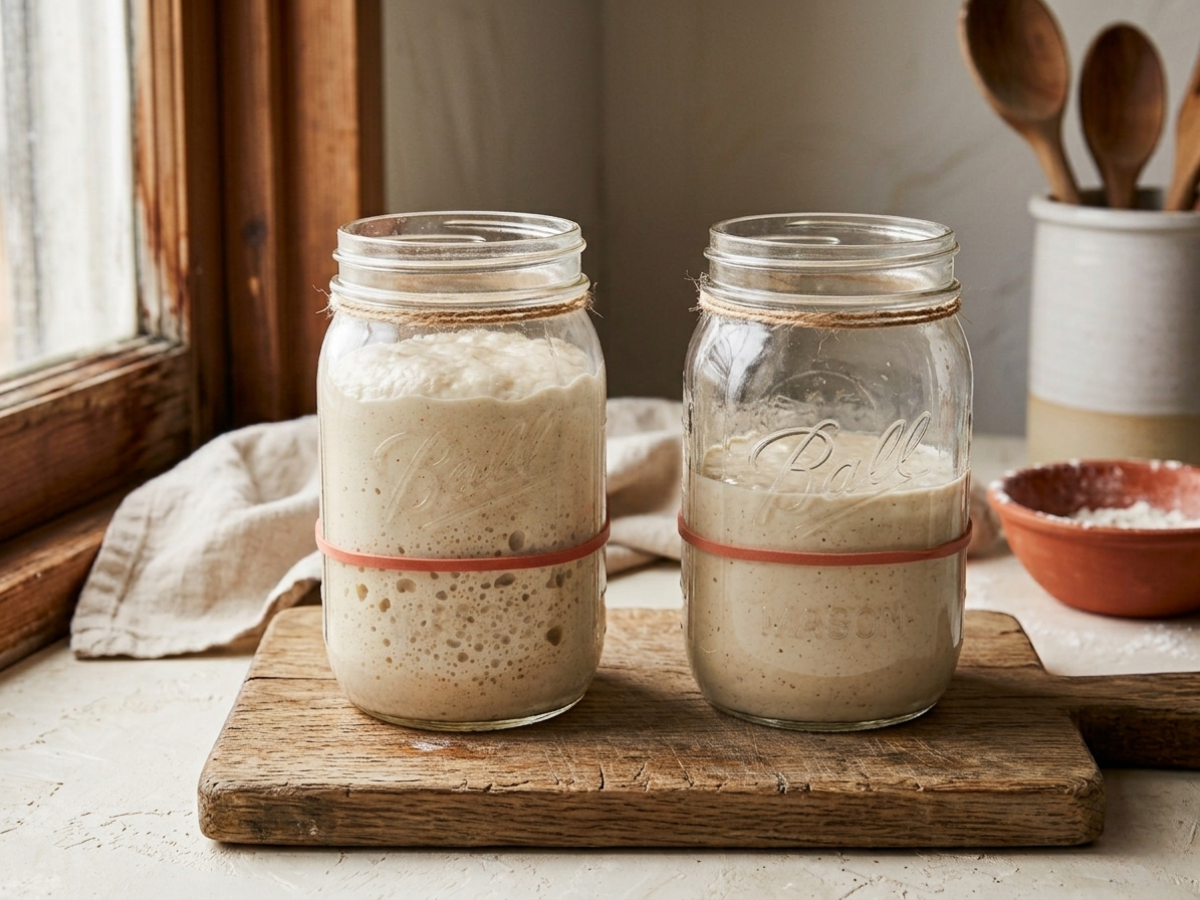
The starter hasn’t been fed in too long and has gone dormant, sometimes developing a layer of dark liquid called hooch on top
The Fix
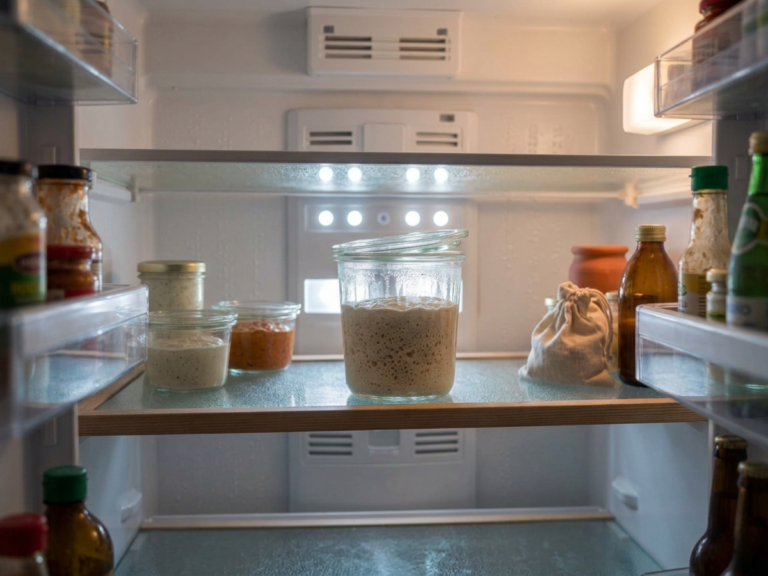
Don’t pour the hooch off, mix it back in. Just keep in mind that at this point your starter is very acidic, so it’s not ready to bake with yet. Pull out a small amount, about 20g, and feed that portion at a 1:10:10 ratio. Once it doubles and fully ferments, that portion is usable. As for the rest of the very acidic starter, don’t throw it away either, just stir in a few tablespoons of flour until it’s back to a thick, shaggy waffle-mix consistency, then put it back in the fridge overnight. Next time you’re ready to bake, you can pull a portion from it to activate again the same way, or just use it in your discard recipes
Desi’s Note
Every starter I’ve ever grown had some slow, unremarkable days where nothing seemed to happen. Then one day it just clicked. Don’t audit yourself out of the process before it’s had a fair chance to close.
Want To Know The Science Behind This?
If you want the deeper “why” behind what’s actually living in your starter and how it establishes itself, check out our Sourdough Science article: “Starter Microbiology 101: What’s Actually Living in That Jar” click here →.
More Resources
For a printable reference, grab the Starter Troubleshooting Quicksheet.
Knead to Know?
New recipes, baking tips, and sourdough troubleshooting — delivered before your starter even finishes its next rise.
Get the latest insights, no spam — just new recipes and baking tips. Unsubscribe anytime. See our Privacy Policy.