
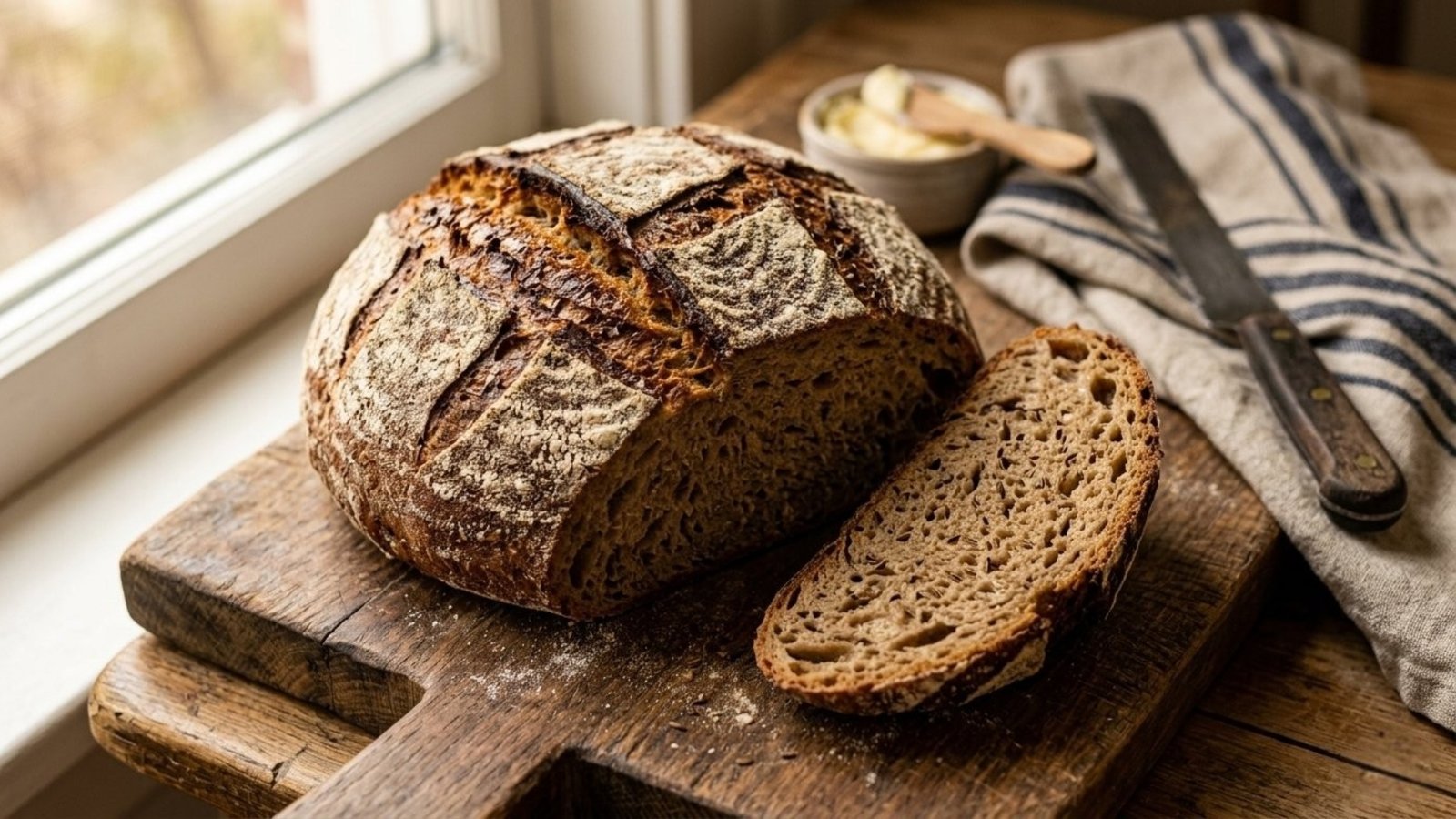
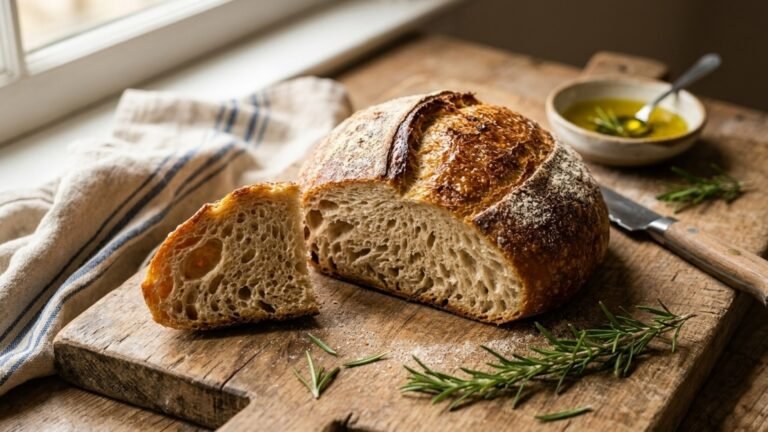
Sourdough Rye Loaf
The natural next loaf once you’ve got Plain Sourdough Loaf down – a portion of the bread flour swapped for dark rye, for a deeper, earthier flavor and a slightly denser, moister crumb.
Why You’ll Love It
- A simple one-ingredient swap from our Plain Sourdough Loaf, so it’s an easy next step, not a whole new technique.
- Rye adds a deeper, earthier flavor and a moist, tight crumb that keeps especially well.
- Pairs beautifully with butter, cheese, or a bowl of soup.
- Same basic method as our beginner loaf, so nothing here should feel unfamiliar.
Ingredients
Volume measurements are included for convenience, but they’re approximate – a kitchen scale will always get you a more consistent loaf, especially with two different flours in the mix.
A closer look at what makes this loaf different from our Plain Sourdough Loaf, and what you’ll need.
- Bread flour (350 g / 2¾ cups): provides structure and gluten strength that rye flour alone can’t.
- Dark rye flour (175 g / 1½ cups): the star of this loaf, for deep flavor and a moist, tight crumb.
- Water (375 g / 1½ cups plus 1 Tbsp): hydrates the dough; rye absorbs water more slowly than bread flour, so don’t rush the initial mix.
- Active sourdough starter (120 g / generous ½ cup): fed and near peak for reliable rise.
- Fine sea salt (11 g / about 2 tsp): balances flavor and strengthens the dough.
- Caraway seeds (1 Tbsp): optional, for a classic rye flavor; leave out if you prefer a milder loaf.
Equipment
- Kitchen scale: for accurate measuring, especially important with rye flour.
- Banneton or bowl lined with a floured towel: to support the shaped loaf during its final rise.
- Dutch oven: traps steam for a crackly, well-risen crust.
- Bread lame or sharp knife: for scoring the top before baking.
Sample Schedule
Day 1
- Feed your starter 4 to 6 hours before mixing so it's active and doubled.
- Mix the dough, then bulk ferment at room temperature for 4 to 5 hours, with 2 to 3 sets of stretch and folds in the first 2 hours.
- Shape into a round loaf and place seam-side up in a floured banneton.
- Cover and refrigerate overnight for 8 to 14 hours.
Day 2
- Preheat your oven and Dutch oven to 475°F (245°C) for at least 45 minutes.
- Turn the cold dough out, score the top, and bake covered for 20 minutes, then uncovered for 20 to 25 minutes more.
- Cool completely on a wire rack, at least 1 hour, before slicing.
Sourdough Rye Loaf
Method
- Whisk the water and active starter together, then mix in the bread flour, rye flour, and caraway seeds until no dry flour remains.
- Rest 30 minutes, then mix in the salt.
- Bulk ferment 4-5 hours at room temperature, with 2-3 stretch and folds in the first 2 hours.
- Shape into a round loaf and place seam-side up in a floured banneton.
- Cover and refrigerate overnight, 8-14 hours.
- Preheat the oven and a Dutch oven to 475°F (245°C) for at least 45 minutes.
- Turn out the cold dough, score the top, and bake covered 20 minutes.
- Uncover and bake 20-25 minutes more, until deeply browned.
- Cool completely on a wire rack, at least 1 hour, before slicing.
Notes
Save This Recipe
Get it emailed to you now, plus new recipes as they go up.
Your email is safe with me. I’ll send this recipe straight over. No spam, ever—and you can unsubscribe anytime.
How to Make It
1Feed Your Starter. Feed your starter 4 to 6 hours before mixing, until doubled, domed, and passing the float test.
2Mix the Dough. Whisk the water and active starter together. Add the bread flour, rye flour, and caraway seeds if using, and mix until no dry flour remains. Rest, covered, for 30 minutes, then add the salt and mix or knead briefly to incorporate.
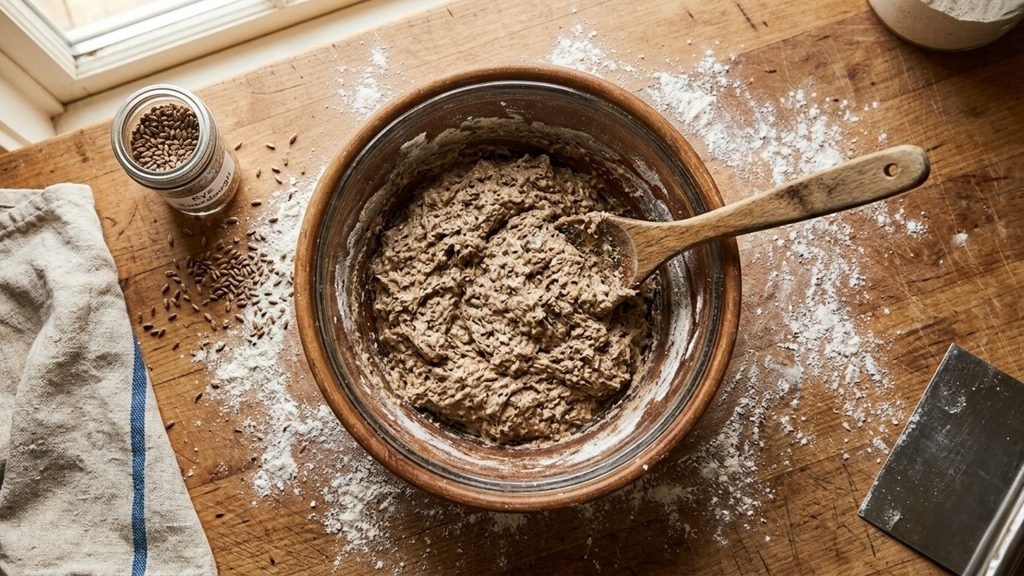
3Bulk Ferment and Stretch and Fold. Cover and bulk ferment at room temperature for 4 to 5 hours. Perform 2 to 3 sets of stretch and folds in the first 2 hours to build strength, since rye dough needs a little extra help holding structure.
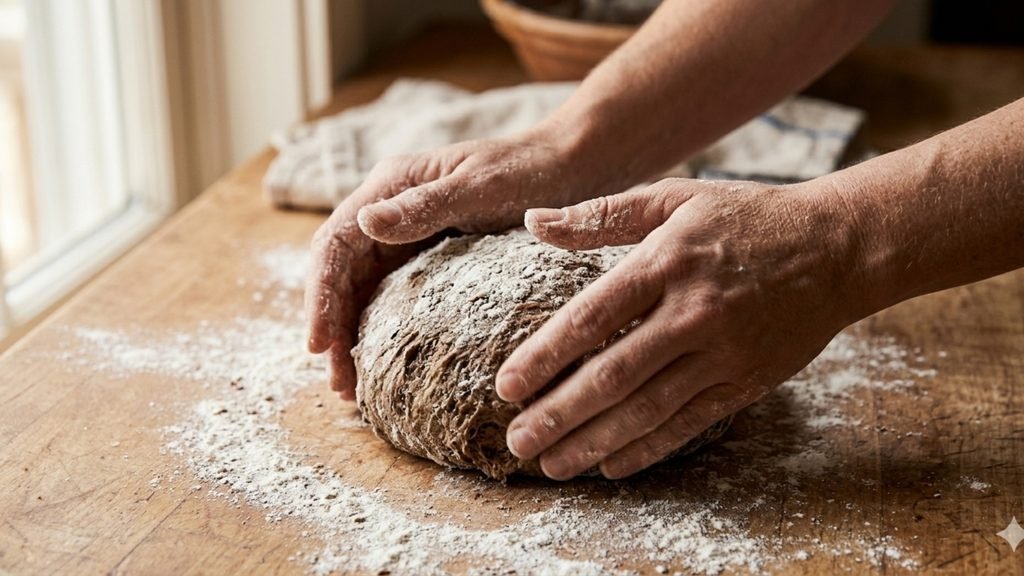
4Shape the Loaf. Turn the dough out onto a lightly floured surface and shape into a round boule. Place seam-side up in a well-floured banneton or bowl lined with a floured towel.
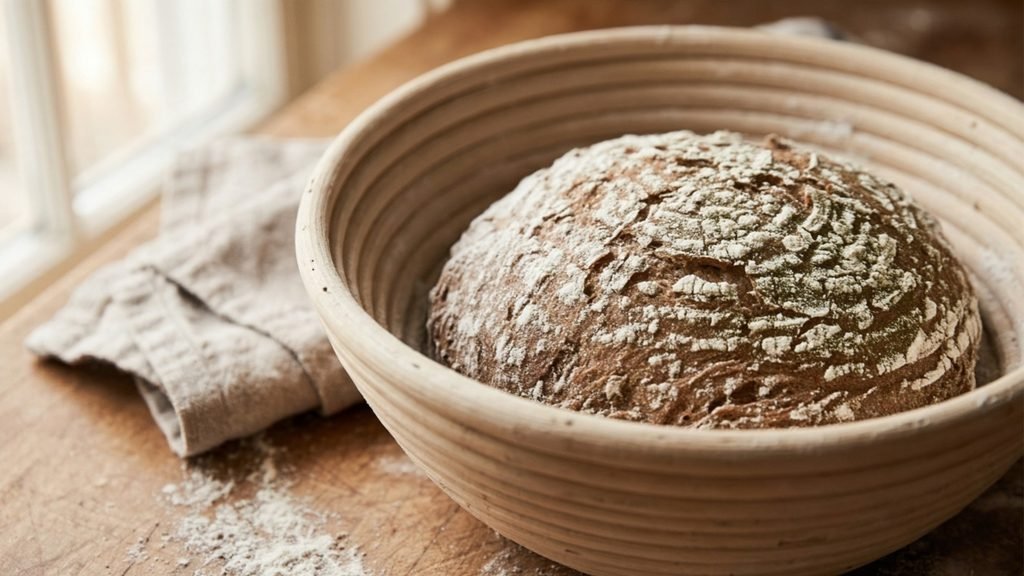
5Cold Retard Overnight. Cover and refrigerate overnight, 8 to 14 hours.
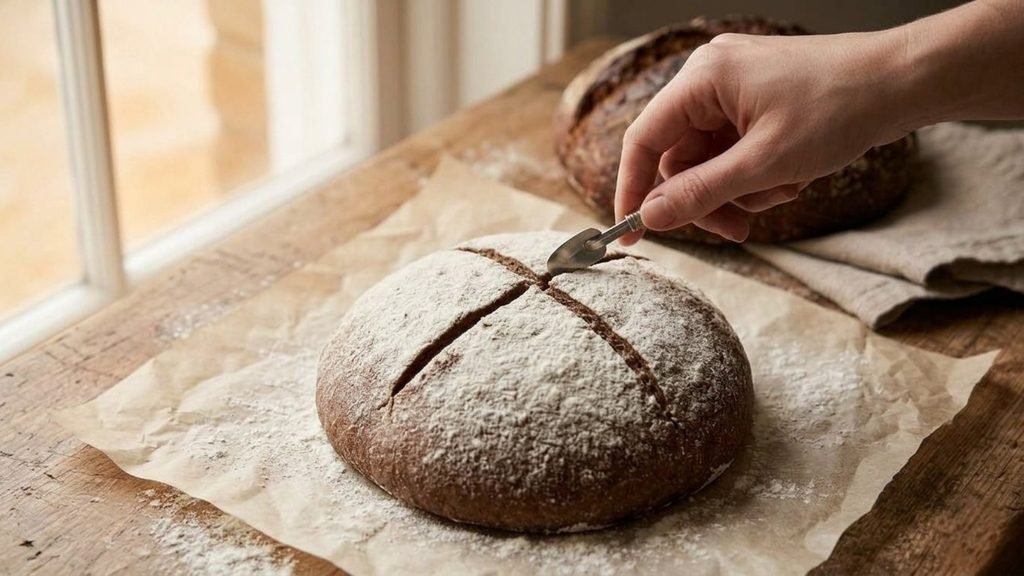
6Preheat and Score. The next day, preheat your oven with a Dutch oven inside to 475°F (245°C) for at least 45 minutes. Turn the cold dough out onto parchment, score the top with a lame or sharp knife.
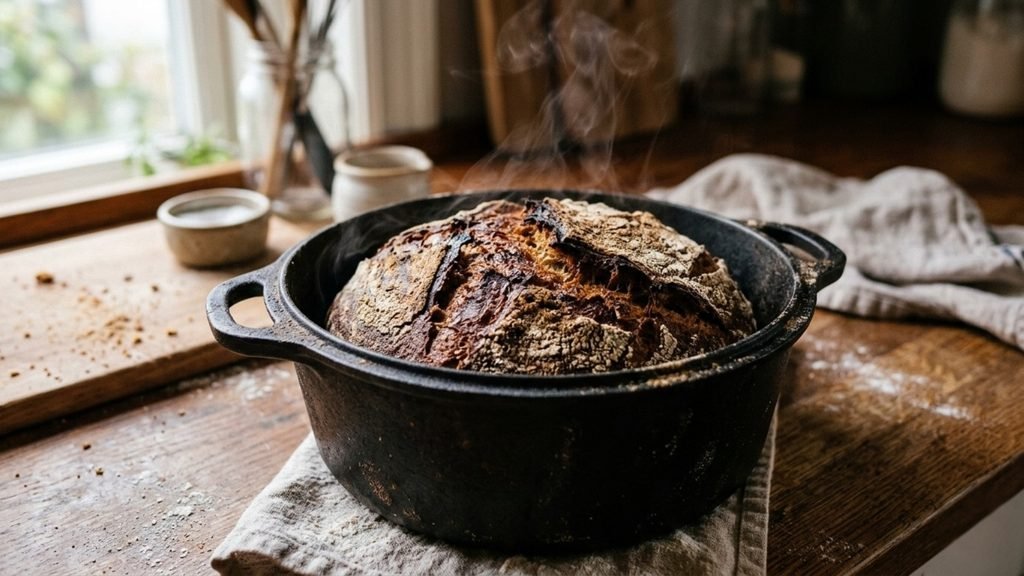
7Bake. Carefully lower the dough into the hot Dutch oven using the parchment as a sling. Bake covered for 20 minutes, then remove the lid and bake 20 to 25 minutes more, until deeply browned.
8Cool Completely. Cool on a wire rack for at least 1 hour before slicing – rye loaves in particular need the full cooling time for the crumb to set.
Tips & Troubleshooting
- Sticky dough: this dough will feel stickier and less elastic than an all-bread-flour dough – that’s the rye, not underworking it.
- Flat loaf: if your loaf spreads flat instead of holding its shape, your dough may need more stretch and folds, or a slightly firmer shape with more tension.
- Gummy crumb: almost always means it was sliced before fully cooling.
- No caraway seeds: simply leave them out; the loaf works fine without them.
How to Store
Room temperature: cut-side down or in a bread bag, for up to 4 days – rye loaves keep noticeably longer than an all-white-flour loaf.
Freezer: whole or sliced for up to 3 months.
Nutrition
Nutrition estimated per slice (1 of 12) and will vary depending on the exact ingredients used.
165
CALORIES
34
CARBS (G)
5
PROTEIN (G)
1
FAT (G)
1
SUGAR (G)
Desi’s Notes
Rye flour behaves differently than bread flour – it absorbs water more slowly and doesn’t develop gluten the same way, so this dough will feel stickier and less elastic than an all-bread-flour loaf. That’s normal, not a sign you did something wrong. I keep the rye percentage at about a third of the total flour here specifically so beginners get the flavor payoff without fighting a dough that’s hard to shape.
Before You Bake
Scaling this recipe up or down? Run your numbers through the Sourdough Calculator. And if you want a printable reference for troubleshooting or timing, browse all six Printable Quicksheets.
Knead to Know?
New recipes, baking tips, and sourdough troubleshooting — delivered before your starter even finishes its next rise.
Get the latest insights, no spam — just new recipes and baking tips. Unsubscribe anytime. See our Privacy Policy.
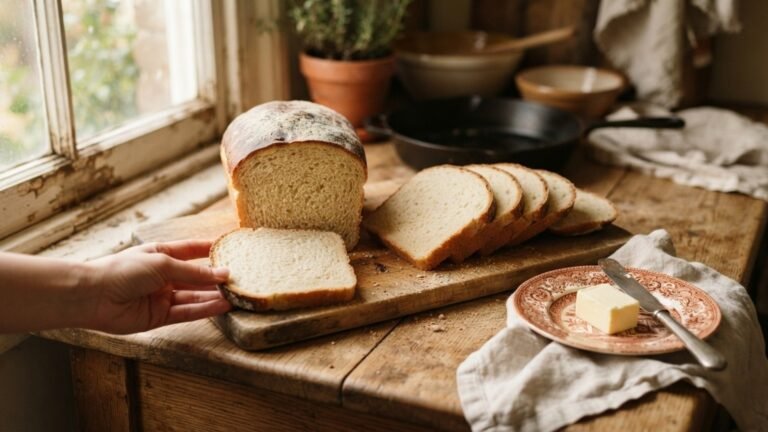


Tried this recipe? Leave a star rating below — it takes 10 seconds and helps other bakers decide what to make next.
Baked this recipe your way? Share it in Community Bakes and inspire other readers.