
Sourdough Pan de Muerto
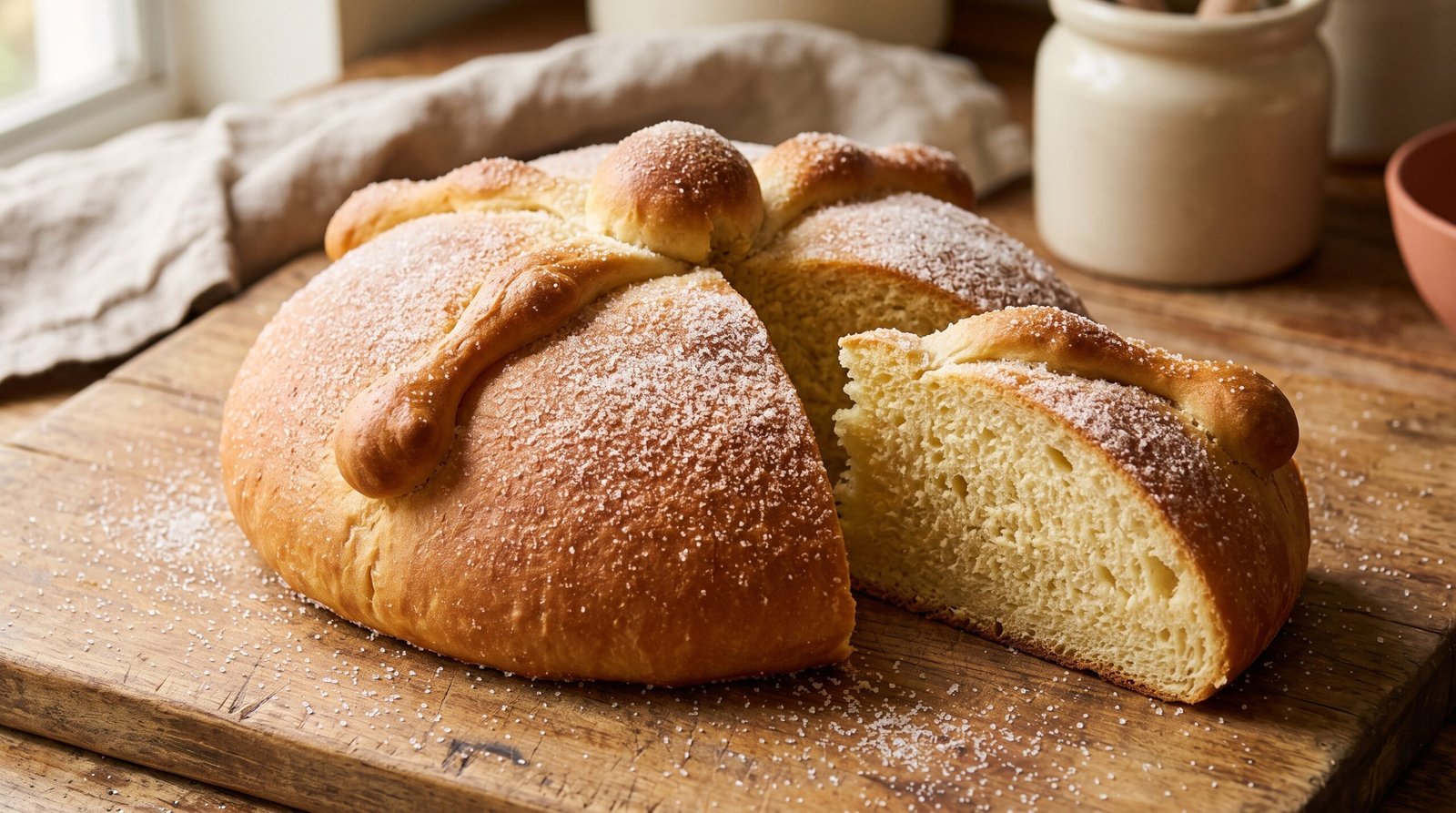
Pan de muerto is traditionally made for Día de los Muertos, Mexico’s Day of the Dead holiday at the start of November – a soft, orange-and-anise-scented sweet bread topped with dough shaped into bones and a small skull-like knob, meant to be set out for departed loved ones and shared by the living.
This version swaps the usual commercial yeast for a real sourdough ferment, which asks for more patience but rewards it with real depth of flavor underneath all that orange and anise.
Why You’ll Love It
- A genuine, respectful take on a real cultural tradition, not just a seasonal gimmick
- Bright orange and anise flavor you won’t find anywhere else in the catalog
- The site’s first sweet, enriched entry in Sourdough Art – appliqué technique applied to a soft dough instead of a lean boule
- A warm butter-and-sugar finish that makes it taste like a treat, not a craft project
- Timely for the first days of November, alongside the rest of the site’s fall lineup
Ingredients
Volume measurements are included for convenience, but they’re approximate – for the most consistent results, weigh your ingredients on a kitchen scale, especially the flour.
Dough
- Bread flour (500 g / 4 cups)
- Granulated sugar (100 g / ½ cup)
- Active sourdough starter (100 g / ⅓ cup + 1 Tbsp)
- Large eggs (3)
- Whole milk, warm (100 g / scant ½ cup)
- Unsalted butter, softened (85 g / 6 Tbsp)
- Fine sea salt (8 g / 1½ tsp)
- Orange zest (1 Tbsp)
- Anise seeds, lightly crushed (2 tsp)
Topping
- Unsalted butter, melted (45 g / 3 Tbsp): for brushing
- Granulated sugar (100 g / ½ cup): for coating
- Orange zest (1 tsp): optional, mixed into the sugar
Equipment
- Kitchen scale
- Stand mixer with dough hook (or a large bowl and patience for hand-kneading)
- Baking sheet
- Parchment paper
- Pastry brush
- Instant-read thermometer (optional, but the most reliable doneness test)
Sample Schedule (2-Day)
Day 1
- Mix and knead the enriched dough (20 minutes hands-on)
- Set aside dough for the bones and refrigerate it
- Shape the main loaf and bulk ferment 3 hours with 2 folds
- Refrigerate the shaped loaf overnight
Day 2
- Rest 20 minutes, then shape the bones and skull
- Decorate the loaf and proof 30-45 minutes
- Bake
- Butter and sugar while hot; serve warm
Sourdough Pan de Muerto
Method
- In the bowl of a stand mixer, whisk the warm milk, starter, and eggs together until combined.
- Add the flour, sugar, salt, orange zest, and anise seeds. Mix on low with the dough hook until a shaggy dough forms.
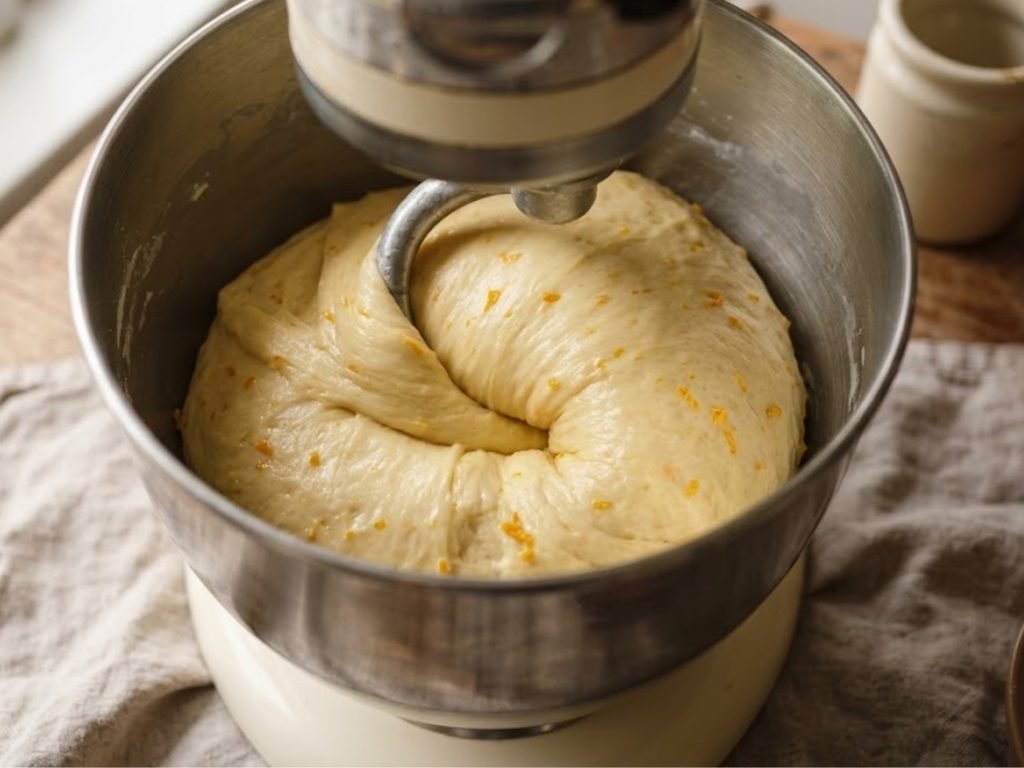
- Add the softened butter a tablespoon at a time, kneading on medium-low until each addition is absorbed before adding the next. Continue kneading until the dough is smooth, elastic, and slightly tacky, 10–12 minutes total.
- Cut off about 140 g of dough, wrap tightly, and refrigerate — this piece is for the decorative bones and skull. Shape the remaining dough into a round and place on a parchment-lined baking sheet.
- Cover both pieces and let the main dough bulk ferment at room temperature for 3 hours, with 2 gentle folds in the first hour. Keep the reserved decoration piece refrigerated the whole time.
- Cover the shaped loaf and refrigerate overnight (10–12 hours) alongside the reserved dough.
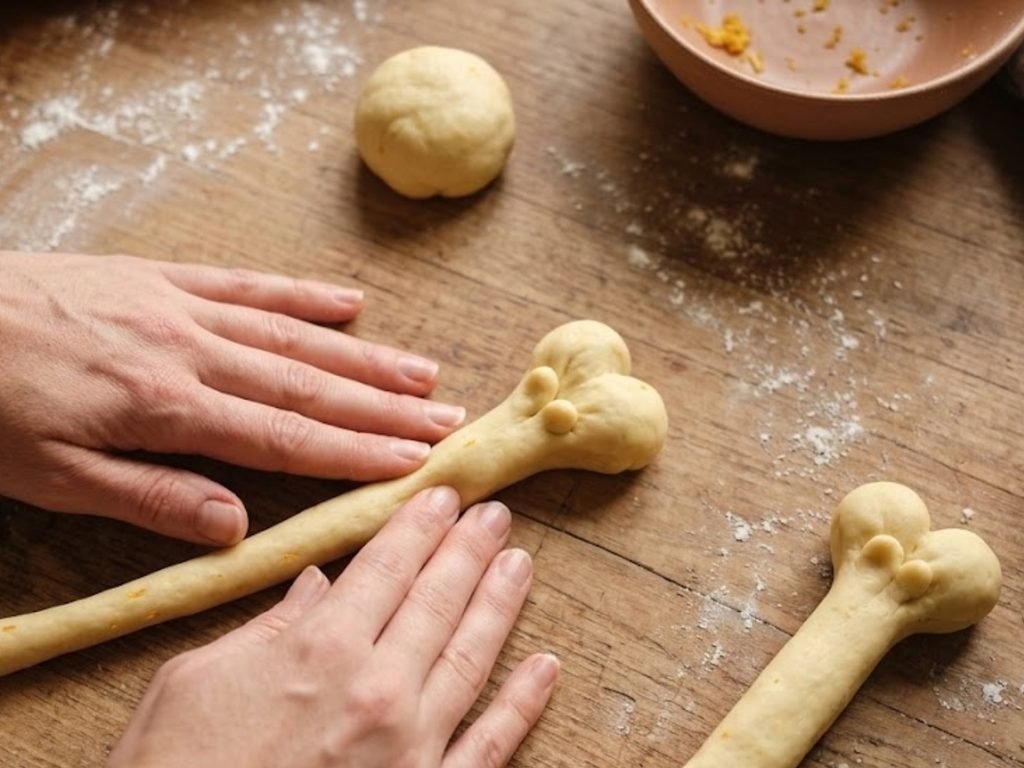
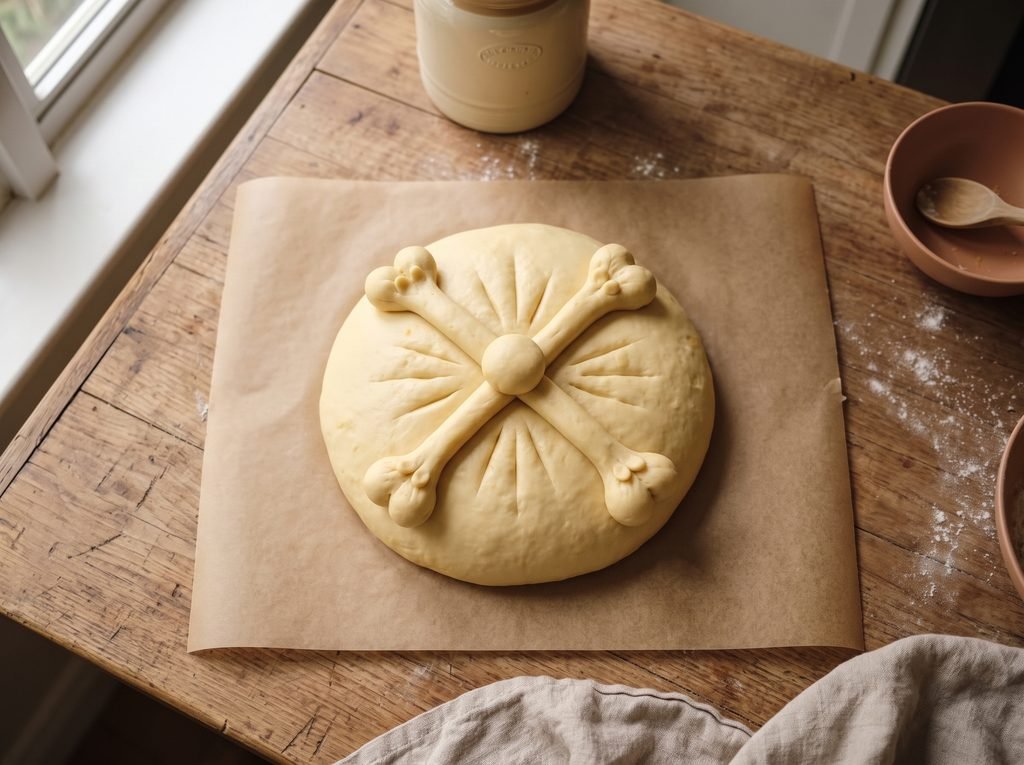
- The next day, let the shaped loaf sit at room temperature for 20 minutes. On a lightly floured surface, roll the cold reserved dough into 6–8 thin ropes for “bones,” pinching small bumps along each one to mimic bone joints, plus one small ball for the skull.
- Lightly dampen the underside of each bone with water and arrange in crossed pairs radiating out from the center of the loaf, like a starburst. Press the small ball firmly into the very center as the skull.
- Cover loosely and let the decorated loaf proof at room temperature for 30–45 minutes, until visibly puffy.
- Preheat the oven to 350°F (175°C).
- Bake for 25–30 minutes, until deeply golden and an internal temperature of about 190°F (88°C).
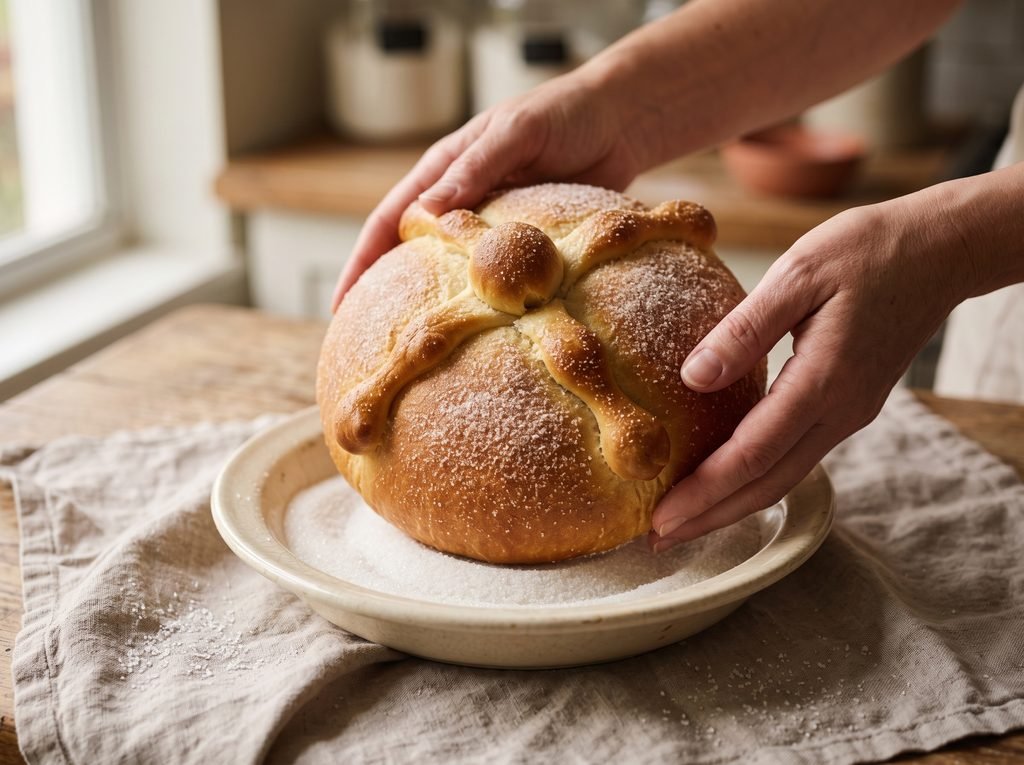
- While still hot, brush generously all over with melted butter, then roll or dust thoroughly in the sugar (mixed with the extra orange zest, if using). Serve warm or at room temperature.
Notes
Save This Recipe
Get it emailed to you now, plus new recipes as they go up.
Your email is safe with me. I’ll send this recipe straight over. No spam, ever—and you can unsubscribe anytime.
How to Make It
1Mix the base. In the bowl of a stand mixer, whisk the warm milk, starter, and eggs together until combined.
2Add the dry ingredients. Add the flour, sugar, salt, orange zest, and anise seeds. Mix on low with the dough hook until a shaggy dough forms.
3Knead in the butter. Add the softened butter a tablespoon at a time, kneading on medium-low until each addition is absorbed before adding the next. Continue kneading until the dough is smooth, elastic, and slightly tacky, 10-12 minutes total.
4Set aside dough for decorating. Cut off about 140 g of dough, wrap tightly, and refrigerate – this piece is for the decorative bones and skull. Shape the remaining dough into a round and place on a parchment-lined baking sheet.
5Bulk ferment. Cover both pieces and let the main dough bulk ferment at room temperature for 3 hours, with 2 gentle folds in the first hour. Keep the reserved decoration piece refrigerated the whole time.
6Refrigerate overnight. Cover the shaped loaf and refrigerate overnight (10-12 hours) alongside the reserved dough.
7Shape the bones. The next day, let the shaped loaf sit at room temperature for 20 minutes. On a lightly floured surface, roll the cold reserved dough into 6-8 thin ropes for “bones,” pinching small bumps along each one to mimic bone joints, plus one small ball for the skull.
8Decorate. Lightly dampen the underside of each bone with water and arrange in crossed pairs radiating out from the center of the loaf, like a starburst. Press the small ball firmly into the very center as the skull.
9Final proof. Cover loosely and let the decorated loaf proof at room temperature for 30-45 minutes, until visibly puffy.
10Preheat. Preheat the oven to 350°F (175°C).
11Bake. Bake for 25-30 minutes, until deeply golden and an internal temperature of about 190°F (88°C).
12Butter and sugar. While still hot, brush generously all over with melted butter, then roll or dust thoroughly in the sugar (mixed with the extra orange zest, if using). Serve warm or at room temperature.
Tips & Troubleshooting
- Enriched dough moves slowly: all that butter, egg, and sugar slows fermentation noticeably compared to a lean dough – don’t expect it to look as dramatically risen as a plain loaf at the same stage.
- Keep the decoration dough cold until you need it: it stays far easier to roll and shape cold, and it’s less likely to overproof before it goes on the loaf.
- No anise seeds on hand: ½ teaspoon anise extract stirred into the wet ingredients works as a substitute, or you can leave it out entirely for a simpler orange-only flavor.
- Butter and sugar while it’s genuinely hot: the sugar won’t adhere evenly to a loaf that’s cooled down, so have the topping ready to go the moment it comes out of the oven.
- Uneven bones are part of the look: traditional pan de muerto has a handmade, slightly asymmetrical character – don’t aim for machine-perfect symmetry.
How to Store
To store: keep covered at room temperature up to 3 days; the orange and anise flavor is actually best the day after baking.
To freeze: freeze the baked, cooled loaf (before or after sugaring) up to 2 months; thaw at room temperature and warm briefly before serving.
Nutrition
Per slice, based on 10 slices per loaf. Estimated from the ingredients used – provided for convenience and not a substitute for a precise calculation.
260
Calories
38g
Carbs
6g
Protein
9g
Fat
1g
Fiber
170mg
Sodium
Desi’s Notes
Pan de muerto is traditionally made with commercial yeast, and I’ll be honest, the sourdough version takes real patience – enriched dough with this much butter, egg, and sugar in it ferments slower than almost anything else on this site. Give it the full time rather than rushing the rise with a warmer spot; the orange and anise flavor actually deepens with the slower schedule.
The bones don’t need to be identical or perfectly symmetrical. Traditional pan de muerto has a handmade, slightly uneven quality to it, and that’s part of what makes it recognizable – a too-tidy version loses some of its character.
Brush the butter and roll it in sugar while the loaf is still properly hot, straight out of the oven. Wait until it’s cooled and the sugar won’t stick evenly.
Before You Bake
Scaling this recipe up or down? Run your numbers through the Sourdough Calculator. And if you want a printable reference for troubleshooting or timing on your other bakes, browse all six Printable Quicksheets.
Knead to Know?
New recipes, baking tips, and sourdough troubleshooting — delivered before your starter even finishes its next rise.
Get the latest insights, no spam — just new recipes and baking tips. Unsubscribe anytime. See our Privacy Policy.

Tried this recipe? Leave a star rating below — it takes 10 seconds and helps other bakers decide what to make next.
Baked this recipe your way? Share it in Community Bakes and inspire other readers.