Starter Microbiology 101: What’s Actually Living in That Jar
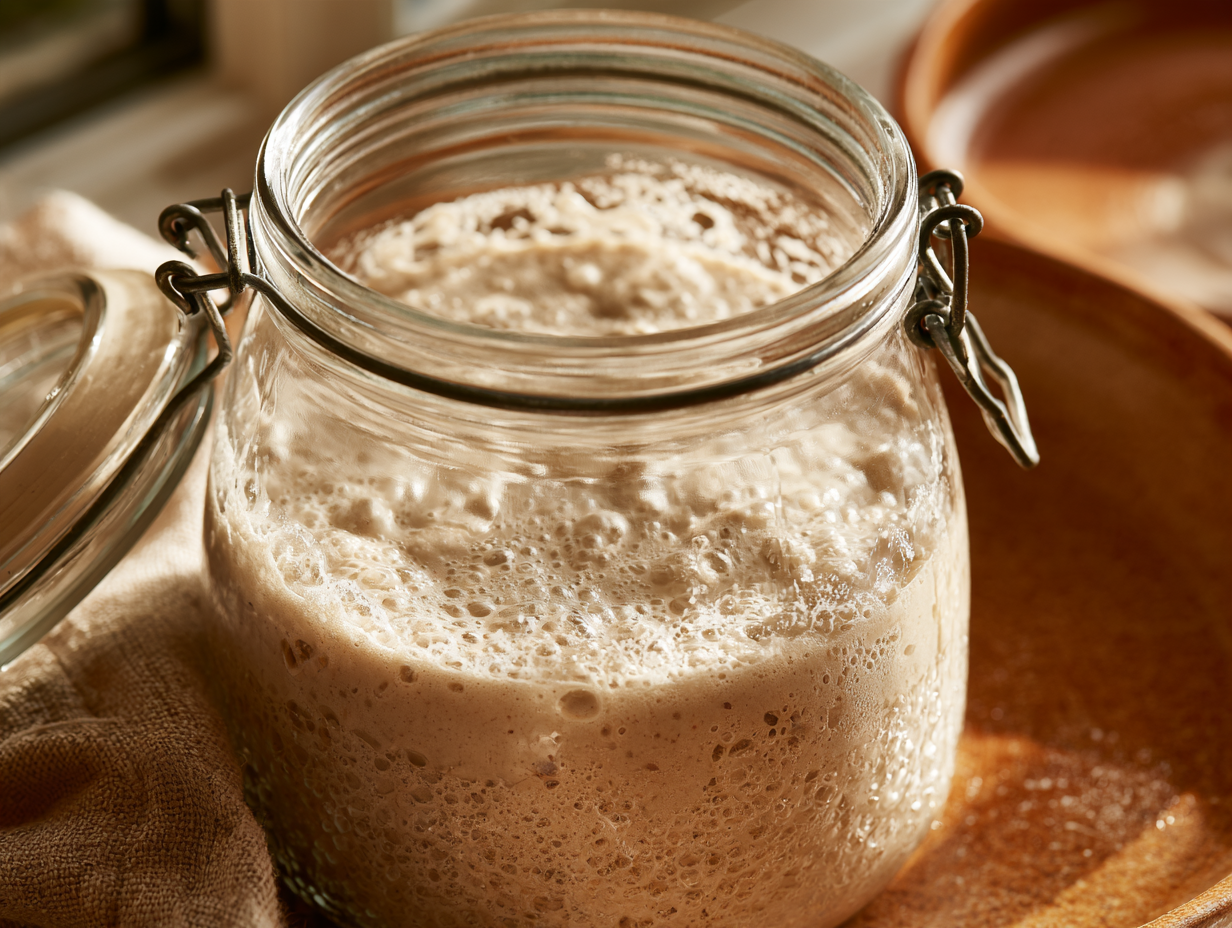
“Good bacteria” gets thrown around so much in sourdough content that it’s basically stopped meaning anything. Your starter isn’t a mystery cloud of good vibes, it’s a small, specific little ecosystem, and scientists have actually gone and identified exactly who lives there. Here’s the cast of characters, in plain English, plus what they’re really doing to each other in that jar on your counter.
The Short Answer
A sourdough starter is a small, stable community made up of a few types of bacteria and one or two types of wild yeast, the naturally occurring kind, not anything added from a packet. They’re pulled from a much bigger pool of possible microbes floating around in your flour and kitchen, but only a handful actually move in and stay.
The regulars: a few specific bacteria species (their scientific names are a mouthful, more on that below) and usually one dominant wild yeast called Kazachstania humilis, which is basically the house yeast of sourdough.
People love describing the yeast and bacteria as best friends splitting chores evenly. The real research says it’s messier than that, more like roommates who mostly just tolerate each other, and which roommates you end up with primarily depends on your flour and your feeding schedule.
The Cast of Characters
The bacteria (the tangy ones)
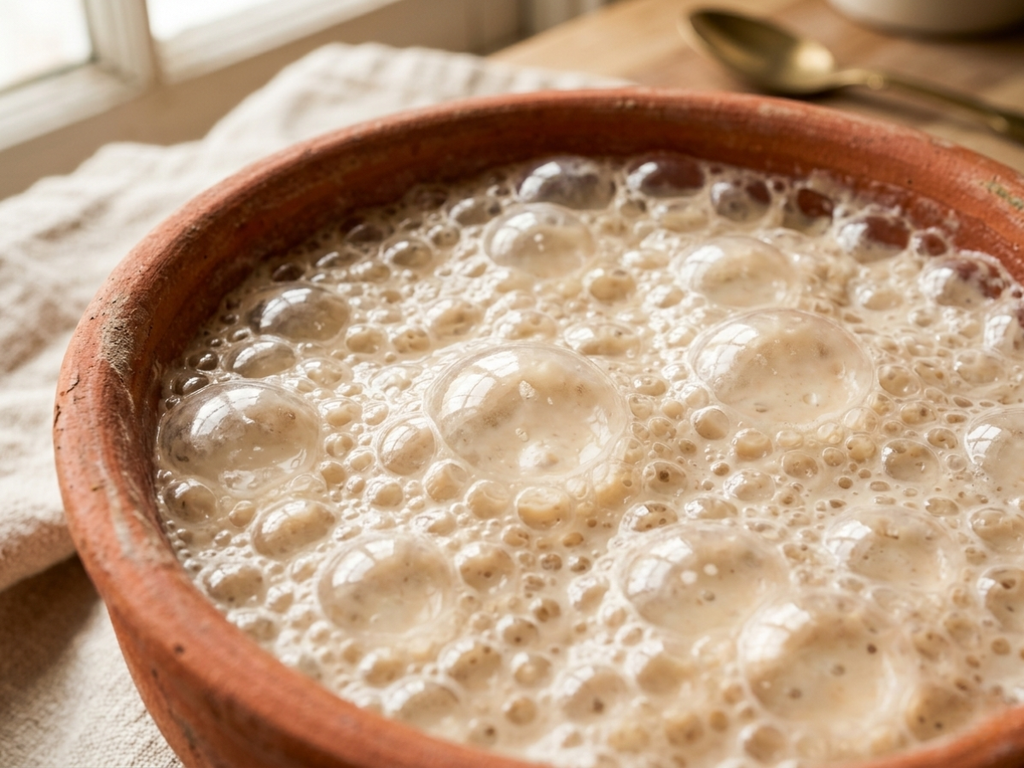
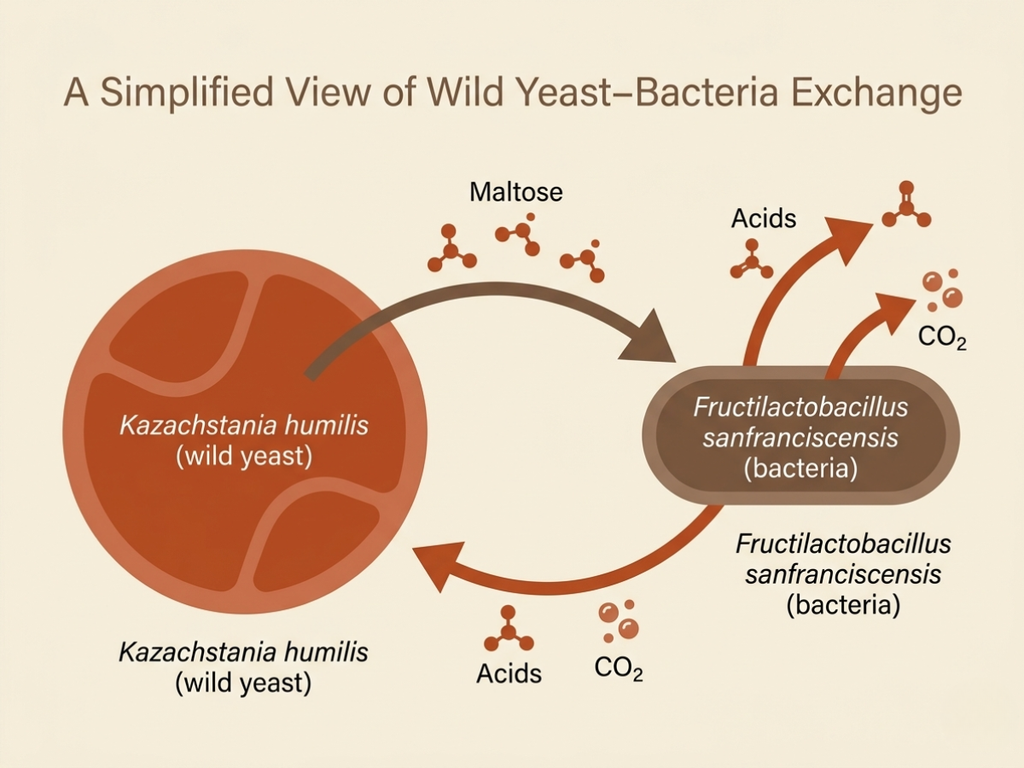
Sourdough is run by a family of bacteria that scientists call lactic acid bacteria, or LAB for short. Instead of making just one thing, these bacteria produce a mix of lactic acid, acetic acid, and carbon dioxide as they eat, which is exactly where the tang and some of the rise come from. Across starters worldwide, a handful of species show up over and over, and one in particular, Fructilactobacillus sanfranciscensis, is worth knowing by reputation even if you never remember the name. Think of it as the sourdough specialist: it’s rarely found anywhere except sourdough, and it’s the bacteria most responsible for that classic tangy flavor people chase.
The wild yeast (your starter’s actual rise)
Most starters are run by a wild yeast called Kazachstania humilis, nicknamed simply enough. It used to go by a different name, Candida humilis, before scientists reclassified it, same organism, new paperwork. Sometimes you’ll also find Saccharomyces cerevisiae hanging around, and yes, that’s the exact species sold in commercial yeast packets, just a wild, uncultivated version of it living happily in your jar instead of a foil packet.
A Huge Global Pool, a Tiny Local Community
Scientists who’ve DNA-tested starters from all over the world have found over 60 different bacteria groups and more than 80 wild yeast species floating around out there. Sounds like your jar could contain almost anything, right? It doesn’t. Every time researchers test hundreds of individual starters, they find the same thing: each one settles down with just a tiny handful of species, usually around three bacteria and one yeast, even though the full guest list they could have chosen from is enormous.
In one large study testing hundreds of starters, whenever that commercial-yeast lookalike showed up, it usually took over more than half the yeast population. And whenever the sourdough specialist bacteria showed up, it usually pushed out the competition rather than sharing space nicely. So your starter isn’t randomly grabbing a little bit of everything, it’s running its own tiny competition, and a few species just win.
The Symbiosis Story Is Real, But Messier Than the Blog Version
Here’s the story you’ve probably heard: the yeast can’t digest a sugar called maltose very well, so it hands off the leftovers to the bacteria, and everybody wins. Cute story, partly true. But when scientists actually put the yeast and bacteria together in a lab and watched what happened, it wasn’t such a fair trade. The yeast population usually shrank when bacteria were around, no matter which bacteria. The bacteria, meanwhile, didn’t seem to notice or care that the yeast was there at all. A few specific pairings did genuinely help each other out, but overall it’s less “happy roommates splitting the rent evenly” and more “one roommate quietly benefiting while the other one just deals with it.”
What that means for you: the flavor and rise in your bread doesn’t come from your starter’s wild yeast and bacteria holding hands and working together, the way most content likes to imply. It comes from a constant, quiet competition between specific species, and whoever’s winning that competition in your jar right now depends entirely on how you’re feeding it.
What Actually Shapes Which Species Show Up
Researchers tested starters under different feeding routines and found that the house yeast, Kazachstania, basically always wins no matter what you do. But which bacteria show up is a different story. The type of flour you use actually shifts which species take hold, and your feeding schedule, how often and how much, tips the balance too. Which is the real, science-backed reason two bakers can start with the exact same culture and end up with two completely different-tasting starters within a few weeks. It’s not magic, it’s just different bacteria winning the competition under different conditions.
Desi’s Note
This is basically two businesses with the exact same chart of accounts producing totally different numbers. Same categories, same structure on paper, but the actual results depend entirely on the choices made day to day. Your starter’s “personality” isn’t some mystical thing. It’s just what naturally happens given your flour and your feeding habits.
What This Means for How You Actually Feed and Judge a Starter
- Don’t obsess over which exact species you have. You can’t tell them apart at home anyway, and you don’t need to. Judge your starter the normal way: how much it rises, what the bubbles look like, how it smells, and the float test.
- Switching flour is a bigger deal than it seems. It’s not just about hydration and nutrients, it can actually change which bacteria end up running the show.
- Two starters having two different personalities is completely normal. Even starters that came from the exact same source can taste and behave differently within weeks, because feeding and flour are quietly picking different winners the whole time.
- That classic tangy sourdough flavor everyone associates with a mature starter mostly comes from one specific bacteria species, not something every starter is guaranteed to have. If yours isn’t super tangy, it’s not broken, it’s just being run by a different crew.
Key Takeaways
- Your starter is a small, specific community, usually about three bacteria species and one wild yeast, not a random grab bag of whatever’s floating around.
- Despite a huge global pool of possible species, any individual starter settles into just a handful of winners through its own quiet competition.
- The yeast-bacteria relationship isn’t the tidy partnership most content describes. Studies show it’s lopsided, with the yeast affected by the bacteria far more than the other way around.
- Your flour and feeding schedule are the real levers shaping which species dominate, which is why two starters from the same source can turn out completely different.
Your starter isn’t a science experiment you need to control at the species level. It’s a tiny ecosystem that’s already sorting itself out every time you feed it. Your job is just to keep giving it what it needs and read the results.
More Resources
New to the vocabulary? Keep the Glossary of Sourdough Terms handy while you read.
Knead to Know?
New recipes, baking tips, and sourdough troubleshooting — delivered before your starter even finishes its next rise.
Get the latest insights, no spam — just new recipes and baking tips. Unsubscribe anytime. See our Privacy Policy.