Why Is My Sourdough So Dense? Troubleshooting Guide
On This Page
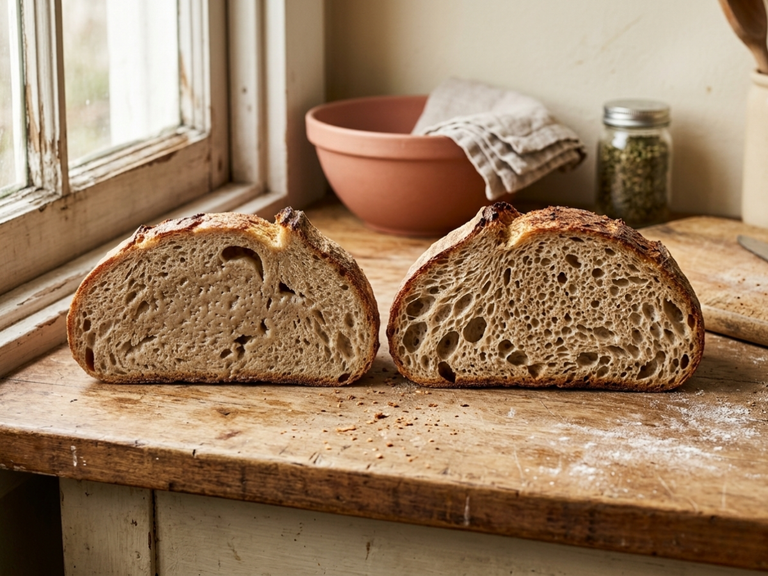
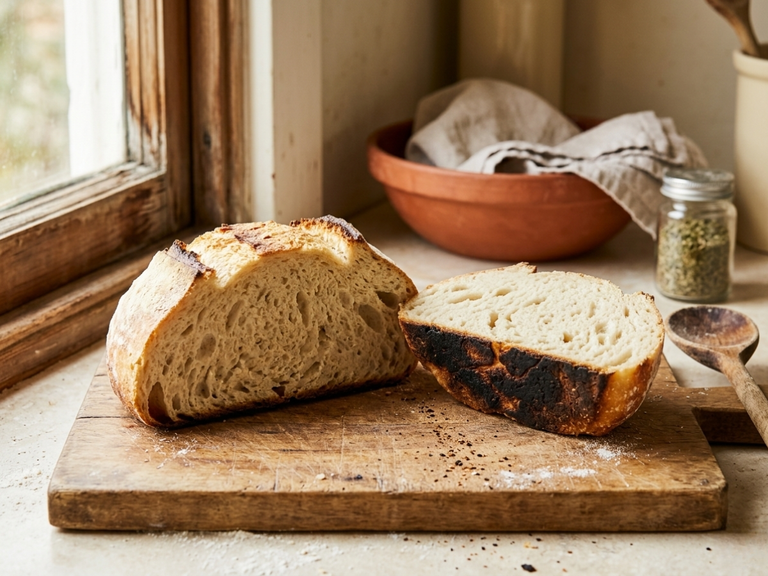
A dense loaf isn’t a failure, it’s data. Something in the process didn’t give the dough enough lift, and once you know where to look, it’s usually an easy fix for next time.
The Short Answer
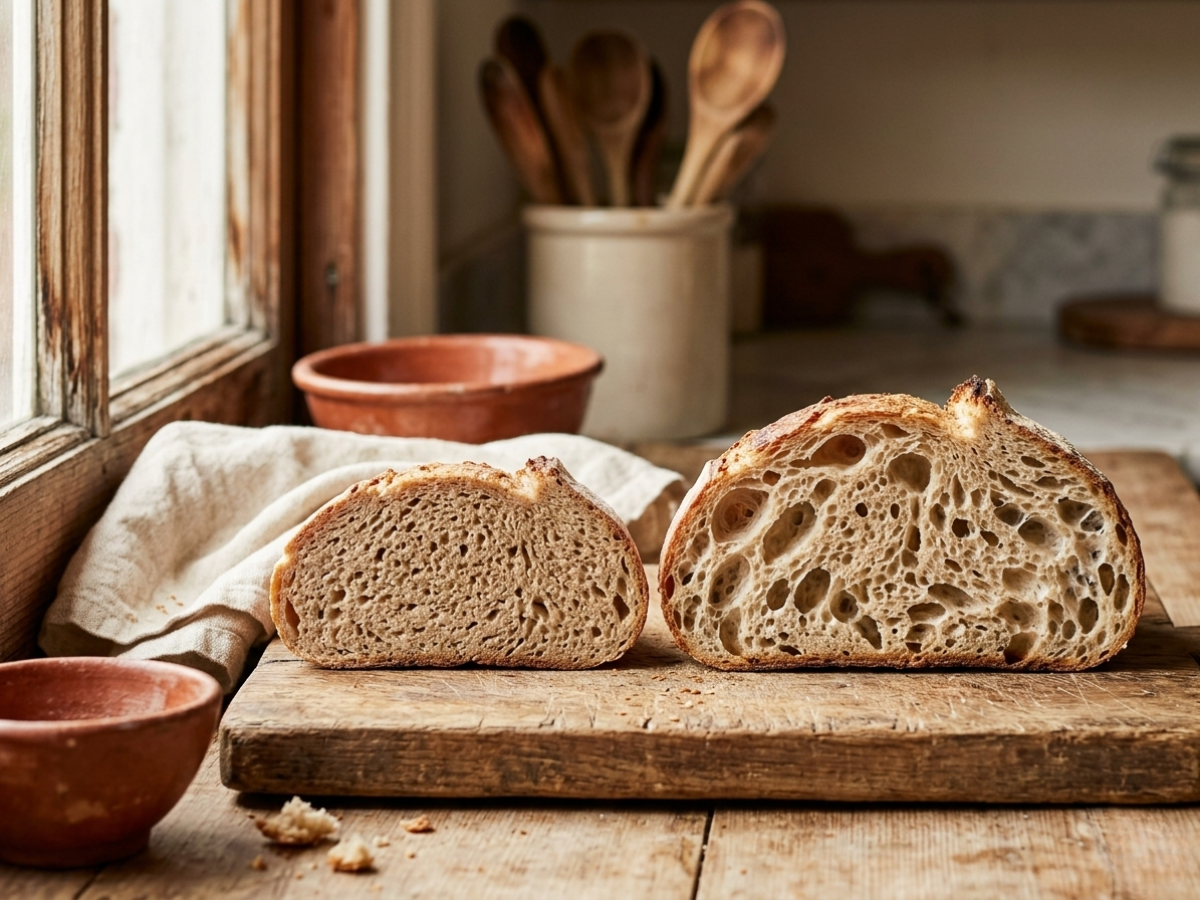
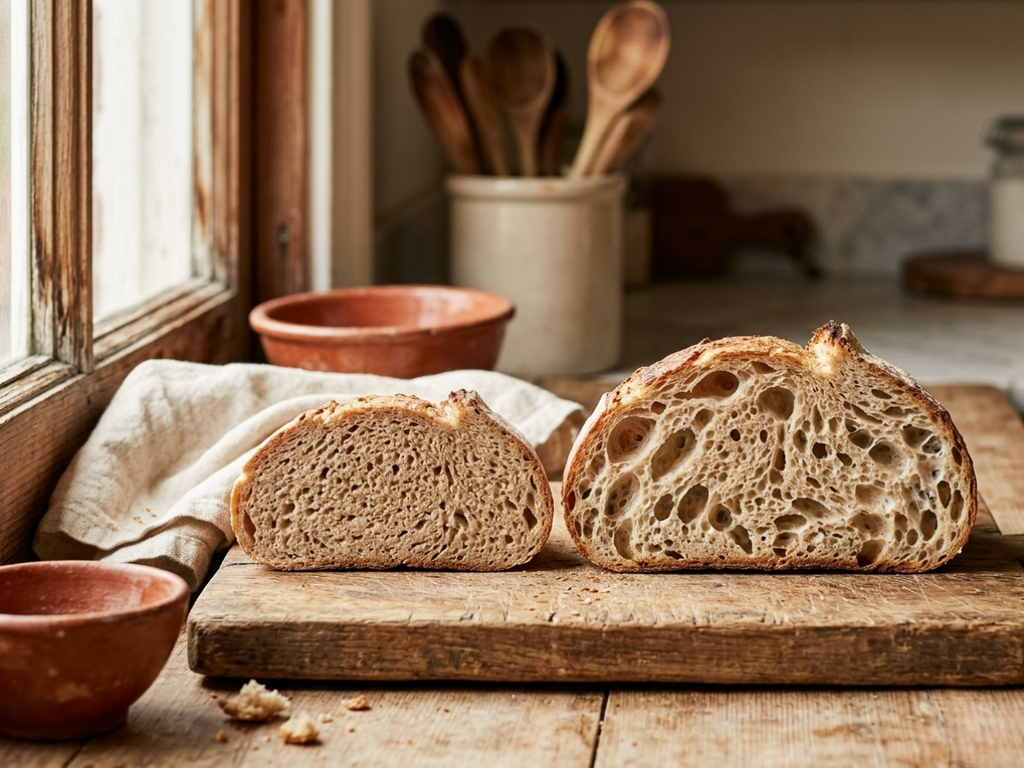
Dense sourdough is typically caused by a weak or underfed starter, insufficient bulk fermentation time, or too little gluten development. Match your situation to the cause below before you change anything else.
What’s Going Wrong (and How to Fix It)
Problem #1
Your starter wasn’t active enough at peak to properly leaven the dough
The Fix
Make sure your starter is fully active before you use it in your recipe. Feed it with enough flour and water to give it real room to grow, and confirm it’s doubled or even tripled in size with bubbles throughout, not just on the surface, before you mix your dough
Problem #2
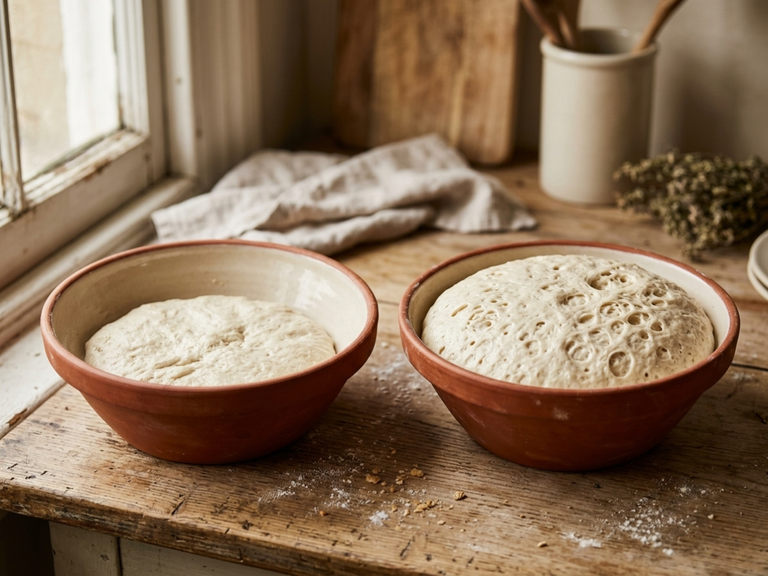
Bulk fermentation was cut short, so the dough never built enough gas to create an open crumb
The Fix
Extend bulk fermentation and confirm it’s actually done with the poke test alongside a genuine 50 percent rise in volume, not just the clock
Problem #3
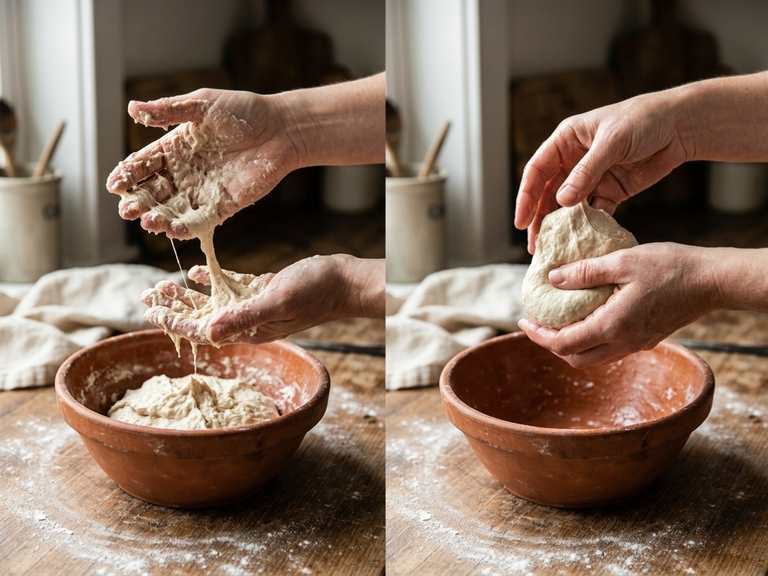
Gluten development was weak, from too little kneading, folding, or resting time
The Fix
Add a few extra sets of stretch and folds during the first few hours of bulk fermentation
Problem #4
Too much whole grain flour was used without adjusting hydration, since whole grains absorb more water and can weigh down a loaf
The Fix
For every 100g of white flour you swap out for whole wheat, add roughly 10g of extra water to your formula (King Arthur’s own baking guide recommends about 2 teaspoons of extra liquid per cup of whole wheat flour, which works out to about the same ratio). Scale that up or down depending on how much of the flour you’re actually replacing
Problem #5
The dough was handled too roughly during shaping, knocking out gas that had already developed
The Fix
Handle the dough gently during your stretch and folds and while shaping
Desi’s Note
Dense loaves usually trace back to one line item: not enough fermentation time. Everything else is a rounding error by comparison.
Want To Know The Science Behind This?
If you want the deeper “why” behind why whole grain flour behaves so differently than white flour in the bowl, check out our Sourdough Science article: “Ash Content: The Flour Number Nobody Explains, and Why It Predicts Your Bake Better Than Protein Does” click here →.
More Resources
For a printable reference, grab the Crumb & Crust Diagnostic Quicksheet.
Knead to Know?
New recipes, baking tips, and sourdough troubleshooting — delivered before your starter even finishes its next rise.
Get the latest insights, no spam — just new recipes and baking tips. Unsubscribe anytime. See our Privacy Policy.