Sticky, Wet Sourdough Dough? Here’s Why
On This Page
Sticky dough drives new bakers to add flour by the fistful, which almost always makes things worse, not better. Here’s what’s actually going on and what to do instead.
The Short Answer
Sticky sourdough dough is usually just high hydration dough that hasn’t developed enough gluten strength yet. Resist the urge to add extra flour, and instead use wet hands, proper folding technique, and time.
What’s Going Wrong (and How to Fix It)
Problem #1
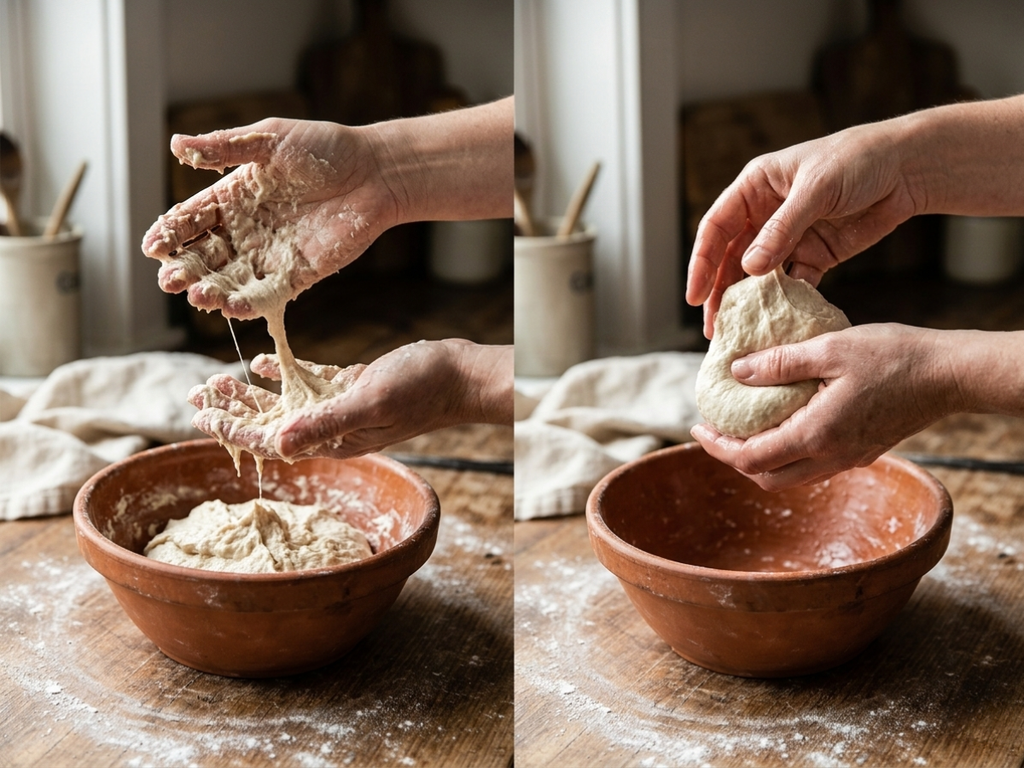
High hydration dough is sticky by nature, especially early on, and handling it with dry hands or a dry work surface only makes that worse by causing it to stick immediately instead of releasing cleanly
The Fix
Wet your hands and lightly dampen your work surface instead of adding flour, and trust the process through a few folds. Dough that feels unmanageable at hour one is often smooth and elastic by hour three
Problem #2
Gluten hasn’t developed enough yet, which happens naturally through folding and time, not just mixing
The Fix
Use the stretch and fold method rather than traditional kneading for high hydration doughs, it builds strength without needing extra flour
Problem #3
The flour you’re using absorbs water differently than the flour the recipe was developed with
The Fix
Hold back about 10 percent of the recipe’s water when you first mix, then work it in gradually by hand or during your first few folds once the dough has come together, a technique called bassinage. It lets you feel how much water your specific flour can actually handle instead of committing to the full amount up front, which is especially useful with a flour you haven’t used before
Problem #4
Humidity in your kitchen is adding extra moisture that the recipe didn’t account for
The Fix
Use your local relative humidity as a rough guide: between about 50 and 70 percent, reduce the recipe’s hydration by around 1 to 2 percent; above 70 percent, reduce it by closer to 2 to 3 percent. On a 500g flour formula, that’s roughly 5 to 10g less water in moderate humidity, or 10 to 15g less in high humidity. Treat these as a starting point and fine-tune from there based on how the dough actually feels
Desi’s Note
My rule with sticky dough is the same as my rule with a messy set of books: don’t panic and start throwing things at it. Slow down, use the right method, and it sorts itself out.
Want To Know The Science Behind This?
If you want the deeper “why” behind how hydration actually behaves in your specific kitchen, check out our Sourdough Science article: “Hydration and Climate: The Two Numbers That Actually Control Your Fermentation Time” click here →.
More Resources
For a printable reference, grab the Crumb & Crust Diagnostic Quicksheet.
Knead to Know?
New recipes, baking tips, and sourdough troubleshooting — delivered before your starter even finishes its next rise.
Get the latest insights, no spam — just new recipes and baking tips. Unsubscribe anytime. See our Privacy Policy.