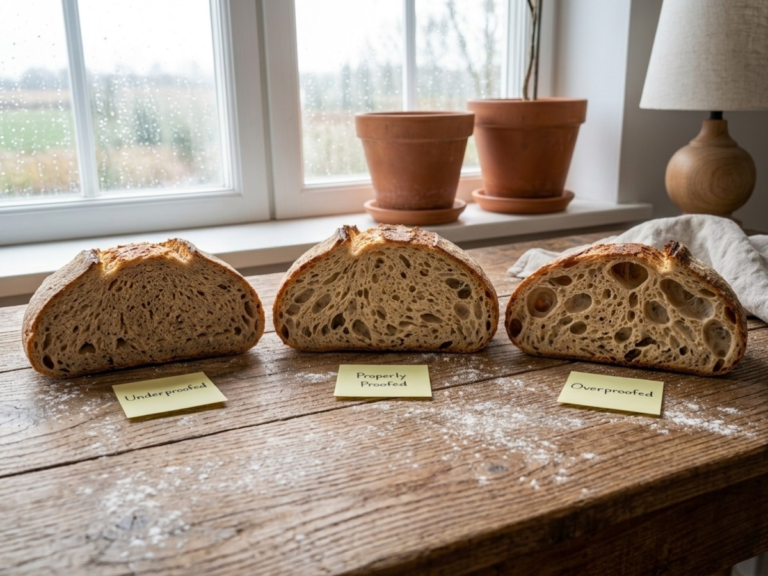
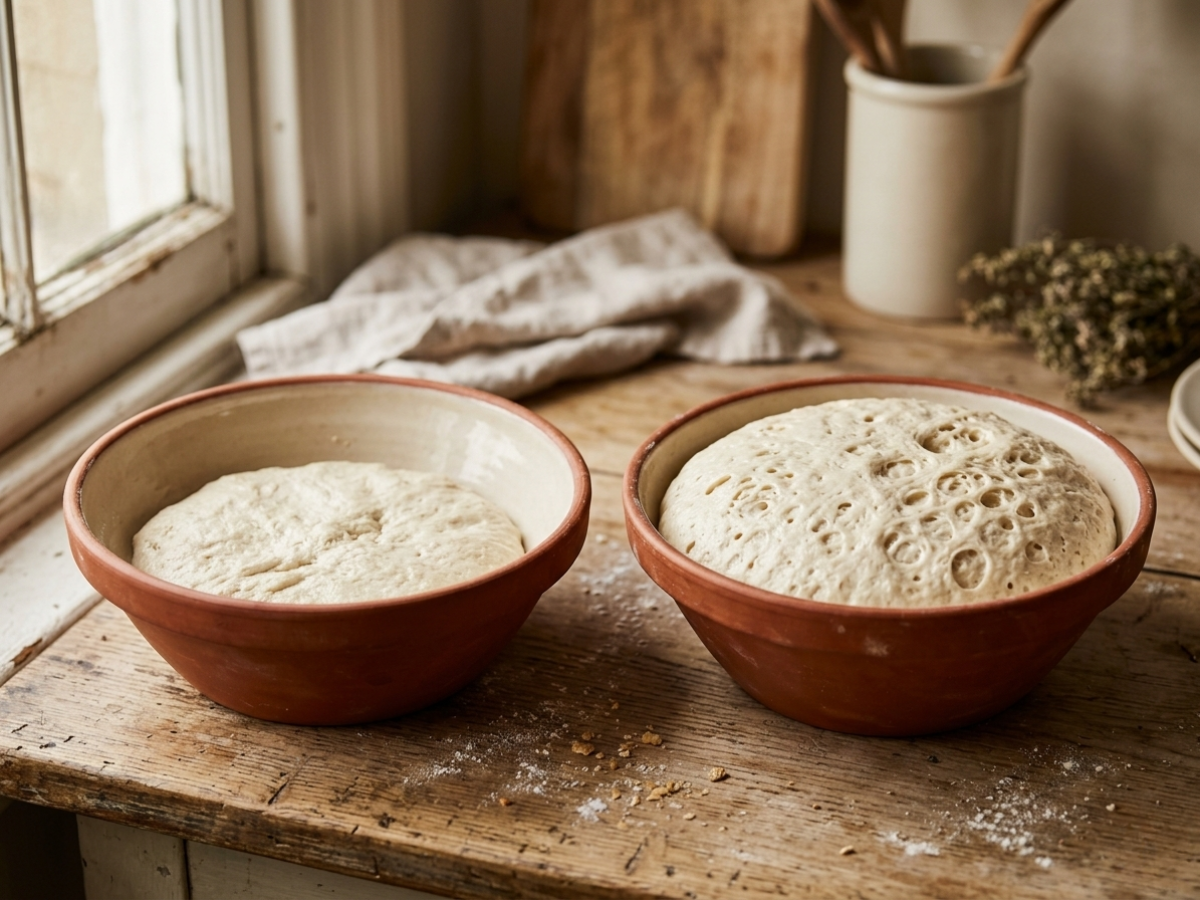
Why Is My Sourdough Not Rising? 5 Common Causes (and Fixes)
On This Page
You fed your starter, you did the folds, you waited the amount of time the recipe told you to wait, and your dough looks exactly like it did four hours ago. I’ve been there more times than I’d like to admit, and the honest answer is that sourdough rise problems almost always trace back to one of a handful of usual suspects. Let’s go through them, cause by cause, with the fix that actually matches each one.
The Short Answer
Sourdough usually fails to rise because the starter wasn’t active enough when you mixed the dough, the kitchen was too cold, or the dough simply needed more time than the recipe assumed. Match your situation to the specific cause below rather than trying every fix at once.
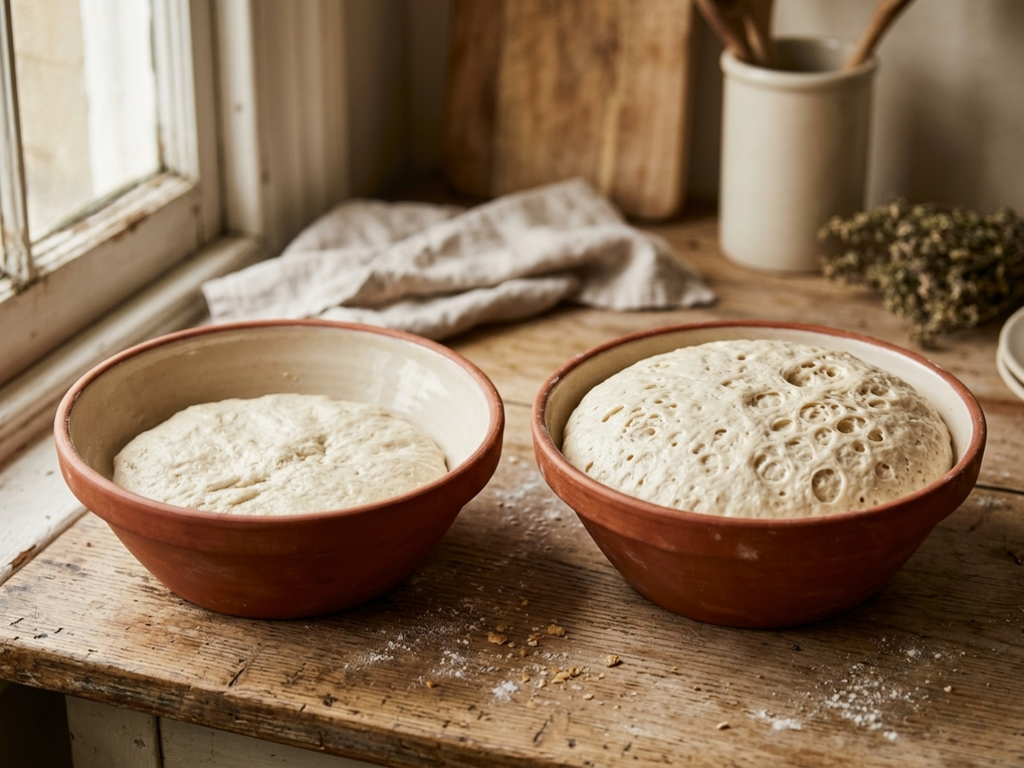
What’s Going Wrong (and How to Fix It)
Problem #1
Your starter wasn’t at peak activity when you mixed the dough, often because it’s underfed or just hasn’t had time to build real strength yet
The Fix
Only mix dough when your starter has doubled and looks domed and bubbly, ideally within its peak window (usually 4 to 8 hours after feeding). If it’s not reliably getting there, feed it more consistently for a few days before your next bake to build up its strength first
Problem #2
Your kitchen is cooler than the recipe writer’s kitchen, which slows fermentation more than most people expect, and dough that’s simply rising slower than expected can look like it’s “not rising” if you’re checking it on the clock’s schedule instead of the dough’s
The Fix
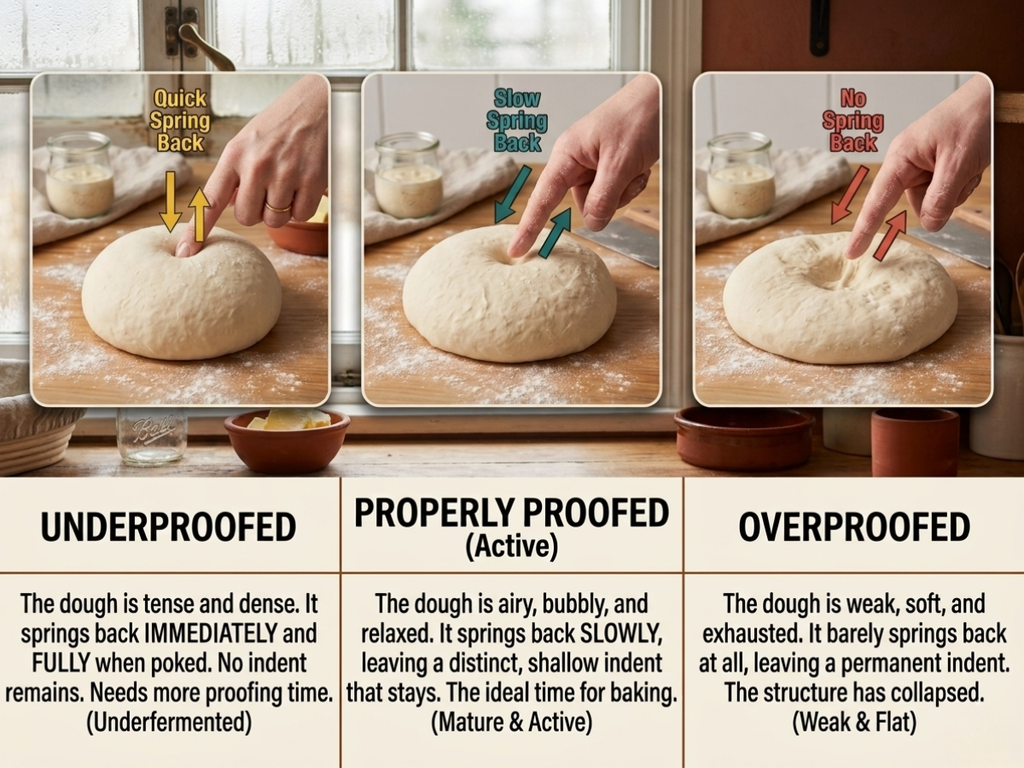
Find the warmest consistent spot you can (the top of the fridge, inside the oven with the light on, or a proofing box). But if you can’t control the temperature, that’s fine too, just give it more time. Let bulk fermentation run longer and judge readiness with the poke test and visual cues, about 50 percent risen, jiggly, bubbly, instead of the clock
Problem #3
You used too little starter for the amount of flour in the recipe
The Fix
If you’re following someone else’s recipe as written and rise is consistently sluggish, try increasing the starter by about 20 percent from what the recipe calls for. So if it calls for 100g of starter, use about 120g instead
Problem #4
Your flour is old or your water is heavily chlorinated, both of which can quietly work against you
The Fix
Use flour milled within the last few months when you can, and switch to filtered or bottled water if you suspect chlorine is an issue
Problem #5
Too much salt relative to your recipe’s ratio can noticeably slow fermentation timing (salt doesn’t kill the yeast, but too much of it will slow the clock down more than people expect)
The Fix
Double check your salt against the recipe’s ratio, typically around 1.8 to 2.2 percent of the flour weight, and correct it if you’ve been running heavy-handed
Desi’s Note
My notes always say the same thing when a loaf falls flat: check the starter first. Everyone wants to blame the flour or the weather, but nine times out of ten the real issue is sitting right there in the jar. Get your starter’s activity in order and the rest tends to follow.
Want To Know The Science Behind This?
If you want the deeper “why” behind why temperature changes your fermentation timeline so much, check out our Sourdough Science article: “Hydration and Climate: The Two Numbers That Actually Control Your Fermentation Time” click here →.
More Resources
Run your numbers through the Sourdough Calculator to double-check your schedule, or copy a ready-made one from the Bake-Day Timeline Template.
Knead to Know?
New recipes, baking tips, and sourdough troubleshooting — delivered before your starter even finishes its next rise.
Get the latest insights, no spam — just new recipes and baking tips. Unsubscribe anytime. See our Privacy Policy.