
Classic Sourdough Pretzels
In my kitchen, pretzels and bagels start as the exact same dough. What splits them apart happens after that first rise: instead of dividing into rings, this dough gets rolled into long ropes and twisted into the familiar pretzel cross. A stronger soda bath and a shorter, hotter bake are what give it that deep mahogany color and soft, chewy bite.
Why You’ll Love It
- Uses the same sourdough dough as my bagels, nothing new to mix up
- A heavier soda bath gives a true soft-pretzel color and chew
- Bakes in just 15 minutes
- Finish with coarse salt or cinnamon sugar, whichever mood you’re in
- Same flexible same-day or overnight timing as the bagels
Ingredients
Volume measurements are included for convenience, but they’re approximate – a kitchen scale will always get you a more consistent batch, especially for the flour.
- Filtered water (500 g / 2 cups + 2 Tbsp): the same base as the bagel dough. Skip chlorinated tap water if you can.
- Active sourdough starter (360 g / 1½ cups): needs to be bubbly and active before it goes in.
- Organic raw cane sugar (50 g / ¼ cup): for a light sweetness and a hand in the browning.
- Maple syrup (50 g / about 2½ Tbsp): mixed in with the sugar.
- High-protein bread flour, 12-14% protein (1150 g / about 9½ cups): my go-to here is Caputo Chef 00, though any high-protein bread flour will do the job. Just watch hydration and fermentation, since every flour behaves a little differently.
- Fine sea salt (22 g / about 4 tsp): mixed in with the flour, weighing it is worth the consistency.
- Honey (about 1 Tbsp, optional): goes in the boiling water. I like adding a little, but it’s not required.
- Baking soda (3 Tbsp): also for the boiling water, a heavier dose than the bagels get, which is part of what gives pretzels their color and flavor.
- Coarse sea salt (to taste): the topping I reach for most, pressed onto the pretzel right after boiling, before it bakes.
- Unsalted butter, melted (about 2 Tbsp, for the sweet version): brushed over the pretzels once they’re out of the oven, this is what the cinnamon sugar sticks to.
- Cinnamon and sugar (to taste): combine your own mix and coat the buttered pretzels with it after baking, not before.
- Egg wash, optional (1 egg yolk + a few drops of oil): whisked together and brushed on before baking if you want a deeper, shinier color on the salted version.
Equipment
- Stand mixer: handles the mixing, though this dough can be kneaded by hand as well.
- Kitchen scale: for the dough and for dividing into 12 even portions.
- Bench scraper or a sharp knife: for portioning the dough.
- Parchment paper, cut into 6-inch squares: one under each shaped pretzel makes moving it into the pot simple.
- Large pot: for the honey and baking soda bath.
- Baking sheet lined with parchment paper: for the pretzels once they’re boiled.
- Shower cap or a reusable bowl cover: keeps the dough from drying out while it rests.
- Covered container: for an overnight proof in the fridge, if you’re going that route.
- Wide, shallow slotted strainer: a metal spider strainer or slotted spoon for lifting the pretzels out of the boiling water. It lets the excess water drain right back into the pot instead of pooling on the baking sheet.
- Pastry brush (optional): only needed if you’re using the egg wash.
Sample Schedule
Dough Day
- Mix the water and starter until dissolved
- Mix in the sugar and maple syrup
- Add the flour, then the salt, and mix until just incorporated
- Knead by hand about 1 minute, until smooth
- Rest, covered, 1 hour
- Knead again for about 2 minutes
- Bulk ferment until risen about 50%, roughly 4 hours in a warm kitchen, longer in a cooler one
- Divide into 12 portions (about 175-177 g each) and pre-shape into rounds
- Rest, covered, 20 minutes
- Roll into ropes and twist into pretzels, setting each on a parchment square
Path A: Bake the Same Day
- Let the shaped pretzels rise at room temperature 1-2 hours, until risen about 50%
- Move straight into boiling and baking
Path B: Bake the Next Day
- Transfer the shaped pretzels to a covered container and refrigerate overnight
- The next day, let them sit out 1-2 hours, until risen about 50%
- Move straight into boiling and baking
Boil & Bake
- Bring a large pot of water to a boil with the baking soda, and honey if using
- Boil each pretzel 30 seconds per side, using a strainer to flip and lift them out
- Top with coarse salt while still wet, or brush with egg wash, then bake
- Preheat oven to 425°F
- Bake 15 minutes
- For the sweet version, brush warm baked pretzels with melted butter and coat in cinnamon sugar
- Cool on a rack before serving

Classic Sourdough Pretzels
Method
- Mix the water and starter until dissolved, then mix in the sugar and maple syrup.
- Mix in the flour, then the salt, just until combined.
- Knead by hand for about a minute, until the dough smooths out, then cover and let it rest for 1 hour.
- Knead again for about 2 minutes, cover, and bulk ferment until risen about 50%.
- Portion into 12 pieces (about 175-177 g each), pre-shape into rounds, and let rest, covered, for 20 minutes.
- Roll each round into a 16-18 inch rope and twist into a pretzel shape. Set on a parchment square.
- Either let rise at room temperature 1-2 hours until about 50% risen, or refrigerate overnight and rise 1-2 hours the next day.
- Boil a large pot of water with the baking soda (and honey, if using). Boil each pretzel 30 seconds per side, using a strainer to flip and lift them out.
- While still wet, top with coarse salt, or brush with egg wash for extra shine, then bake at 425°F for 15 minutes.
- For the cinnamon-sugar version, skip the salt and bake plain instead, then brush the warm baked pretzels with melted butter and coat in cinnamon sugar.
- Cool on a rack before serving.
Notes
Save This Recipe
Get it emailed to you now, plus new recipes as they go up.
Your email is safe with me. I’ll send this recipe straight over. No spam, ever—and you can unsubscribe anytime.
How to Make It
1Dissolve the starter. Combine the filtered water and active sourdough starter in the bowl of a stand mixer. Stir or mix until the starter is fully dissolved.
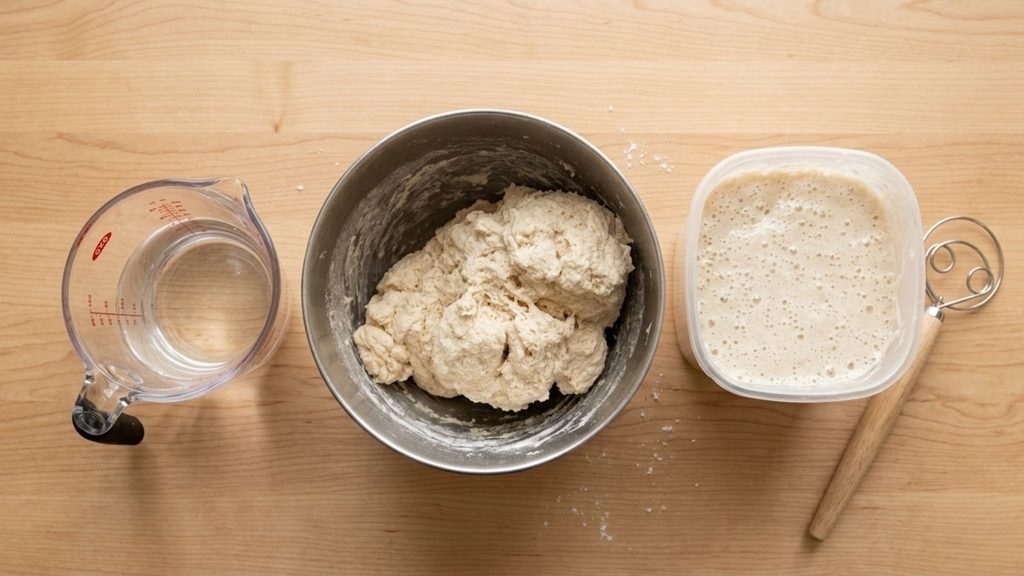
2Add the sweeteners. Mix in the cane sugar and maple syrup until dissolved.
3Mix in the flour and salt. Add the flour, then the salt on top. Mix with the dough hook just until everything is incorporated.
4Knead briefly. Turn the dough out and knead by hand for about a minute, until smooth.
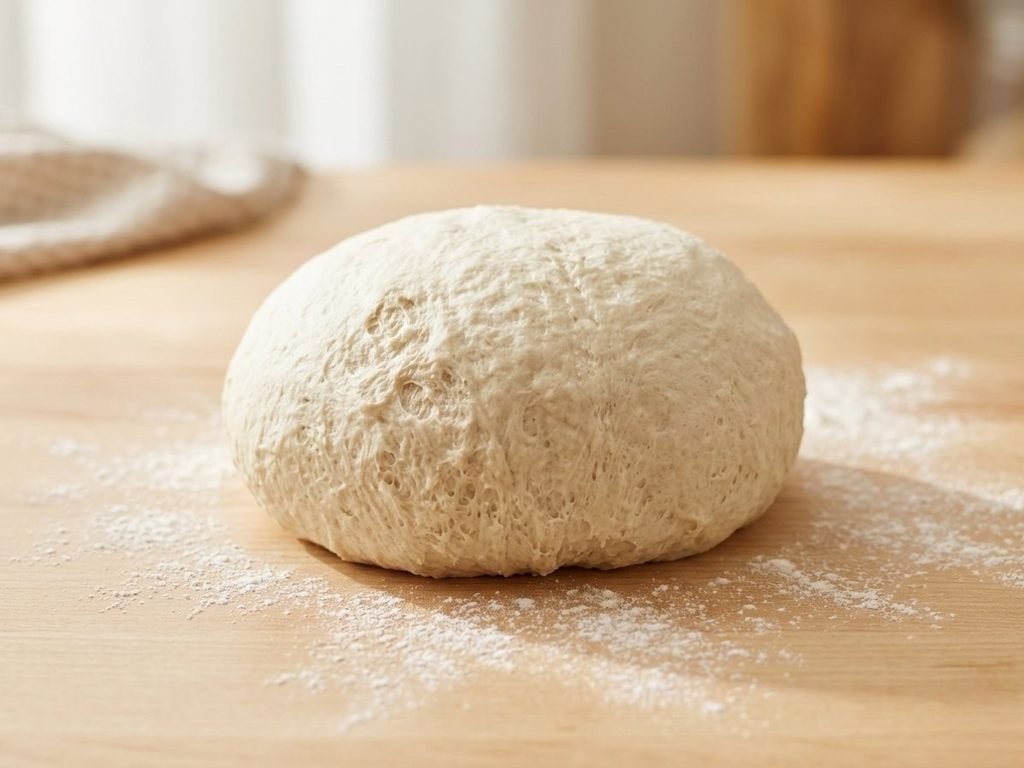
5First rest. Return the dough to the bowl, cover it, and let it rest on the counter for about an hour so the gluten can begin relaxing.
6Knead again. Turn the dough out for a second knead, about two minutes this time. It should feel noticeably smoother than it did after the first knead.
7Bulk ferment. Cover the dough and let it rise on the counter until it’s about 50% bigger. Fermentation is already underway from the moment the starter went in, so check on the dough rather than watching a timer, this usually runs about 4 hours in a warm kitchen and longer in a cooler one.
8Divide. Turn the risen dough out and divide it into 12 pieces with a scale and a bench scraper or sharp knife, aiming for about 175 to 177 grams each.
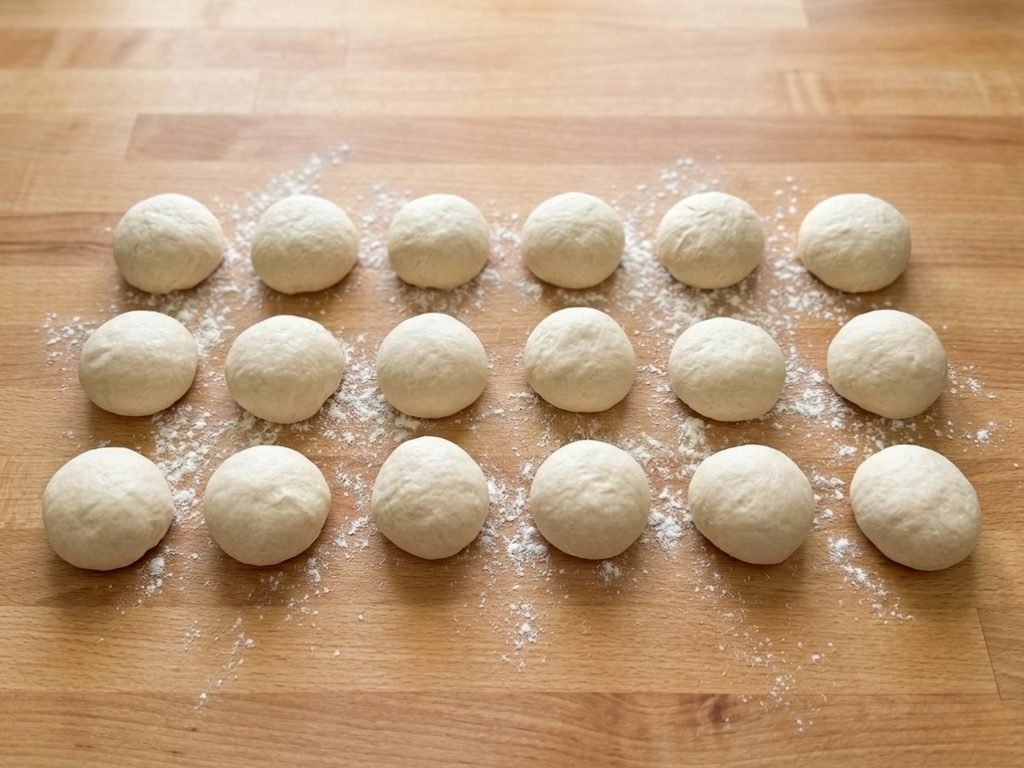
9Pre-shape into rounds. Shape each piece into a tight round the same way you would for the bagels, pressing it flat, folding the edges toward the center, then flipping and dragging it against the counter to build tension. Cover all 12 rounds and let them rest for 20 minutes so the dough relaxes before the final shaping.
10Roll and twist into pretzels. Working with one relaxed round at a time, use both hands to roll it out on the counter, starting from the center and working outward so the rope thins evenly instead of staying thick in the middle. Keep rolling until you have a rope roughly 16 to 18 inches long and about ¾ inch thick. Bring the two ends up and cross them over each other into the classic pretzel twist, then press the ends down to seal. Set each shaped pretzel on its own 6-inch parchment square and repeat with the rest.
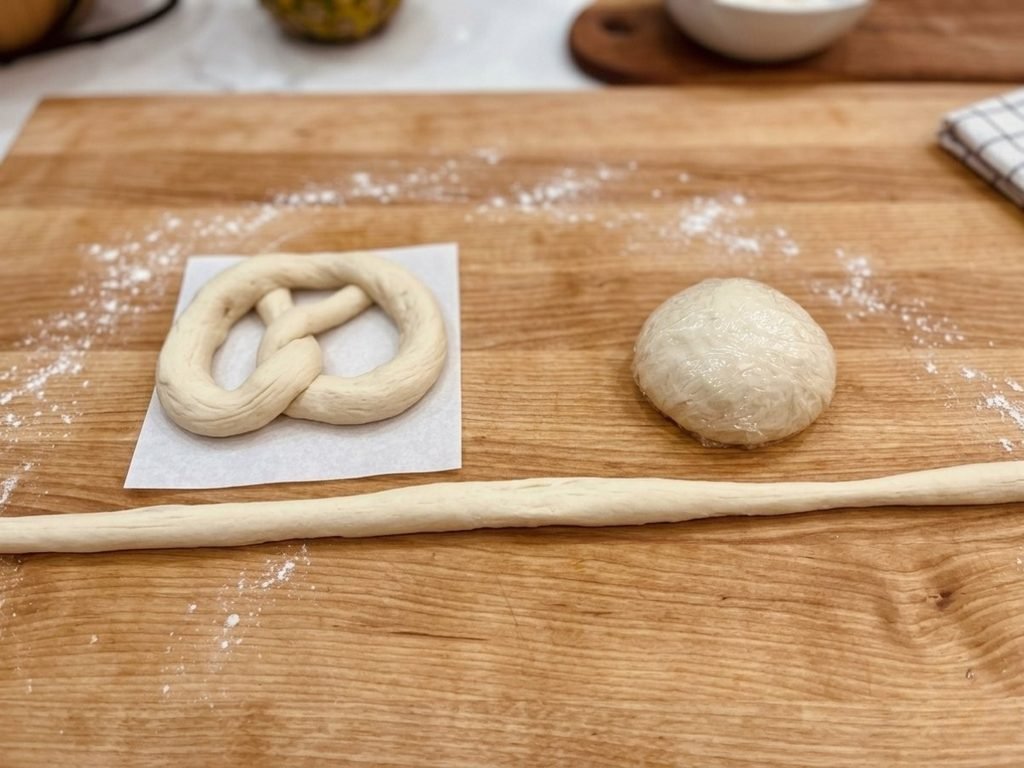
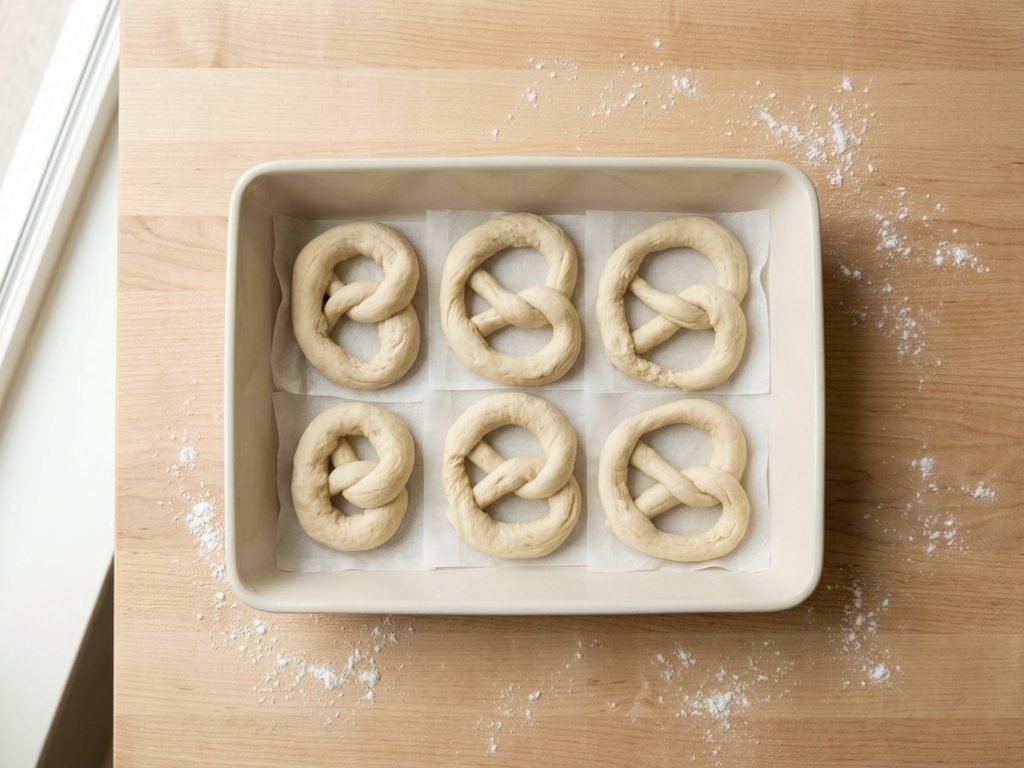
11Choose your timing. For a same-day bake, let the shaped pretzels rise at room temperature for 1 to 2 hours, watching for about 50% rise. For a next-day bake, place them in a covered container and refrigerate overnight without letting them rise first, then the next day let them sit out for 1 to 2 hours, depending on your kitchen, until they reach that same 50% mark.
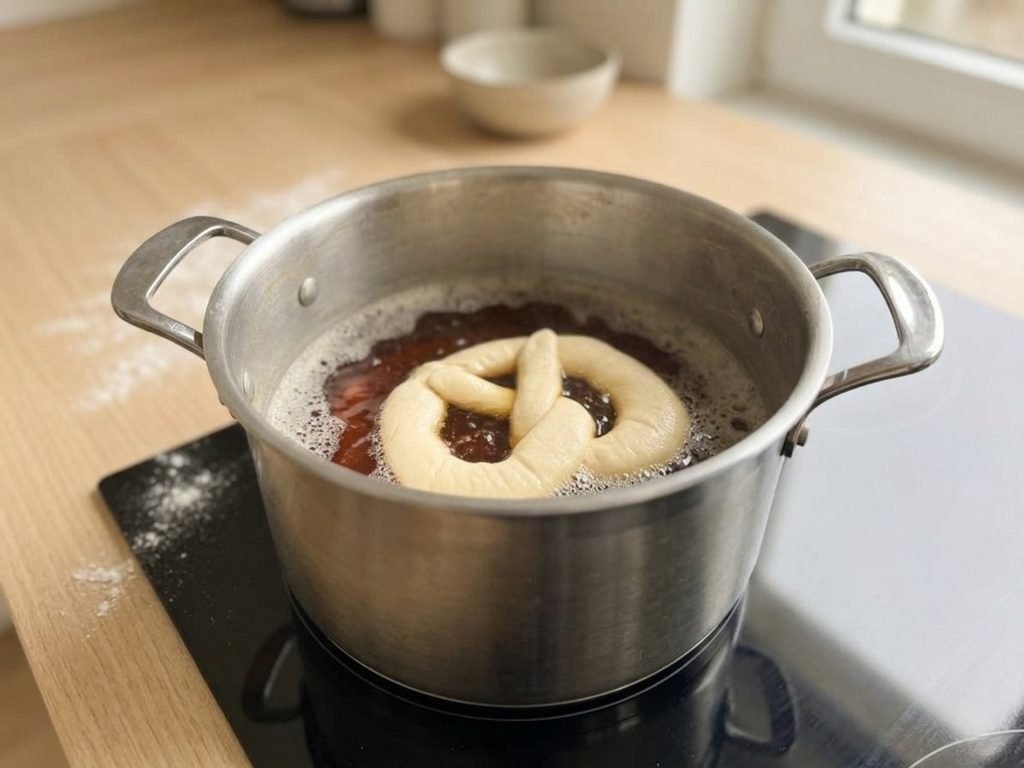
12Boil. Bring a large pot of water to a boil with the baking soda, and the honey if you’re using it. Boil each pretzel for 30 seconds per side, using a wide, shallow strainer to flip it and lift it out, letting the excess water drain back into the pot.
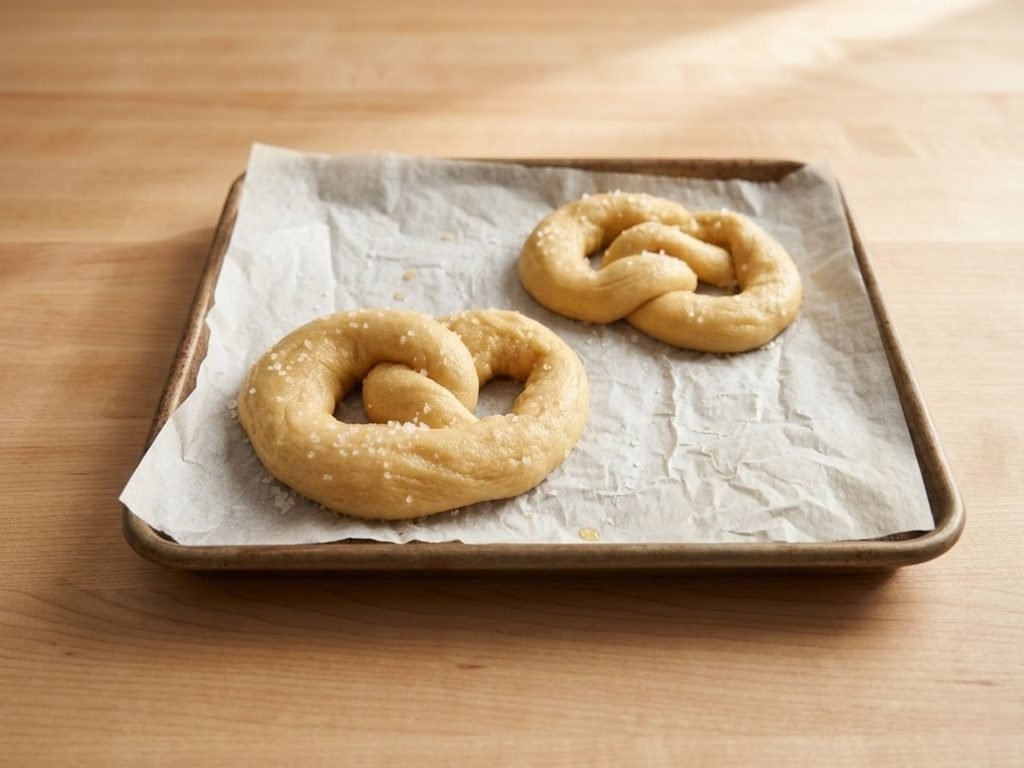
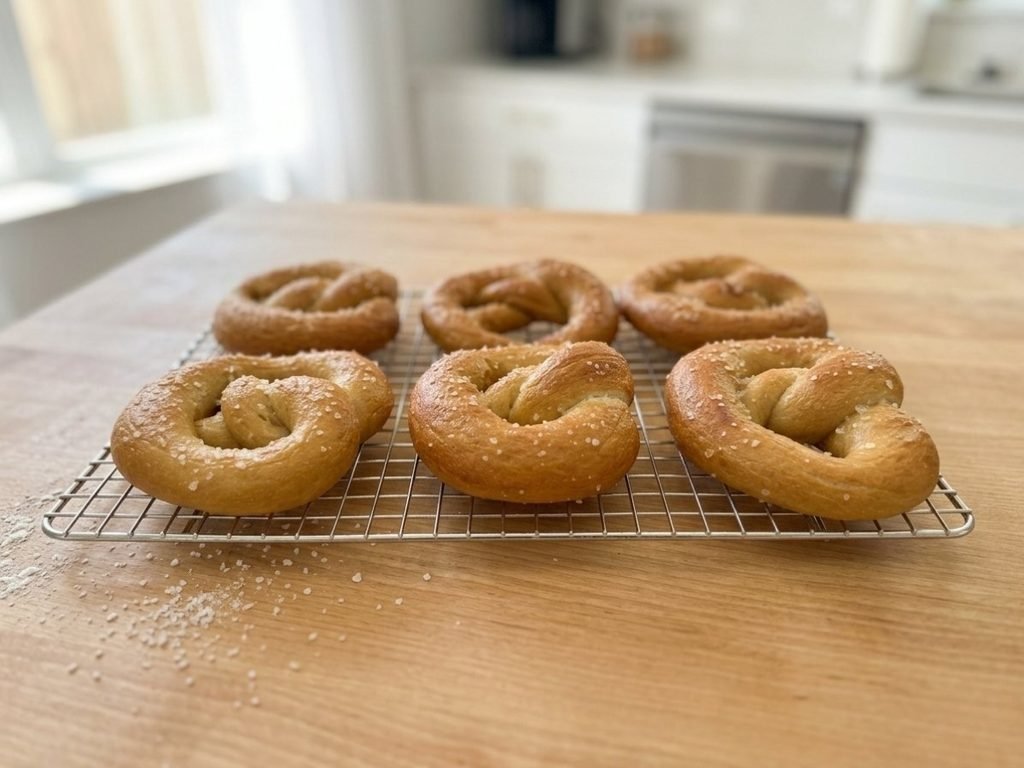
13Salt (or egg wash) and bake. As each pretzel comes out of the water, set it on a parchment-lined baking sheet while it’s still wet. If you’re making the salted version, press coarse salt onto the top now. If you’d rather have a deeper, shinier color, brush with the egg wash instead. Preheat the oven to 425°F and bake for 15 minutes, leaving them a minute or two longer if you’d like more color.
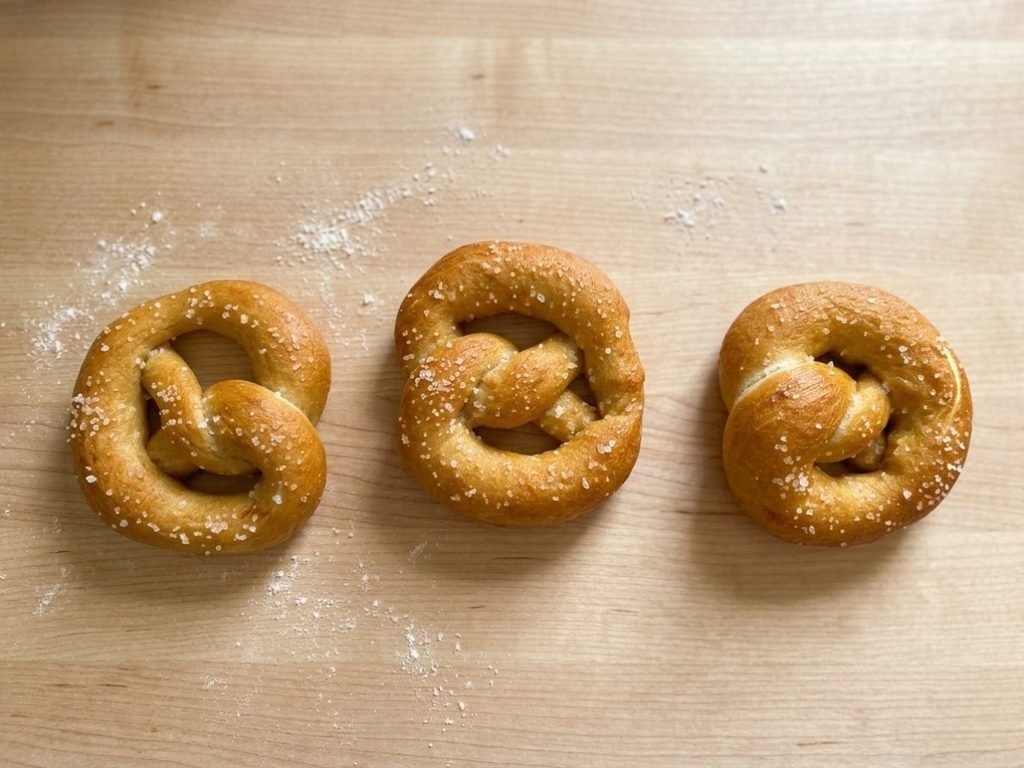
14Finish the sweet version (optional). For cinnamon sugar pretzels, skip the salt at Step 13 and instead brush the warm, freshly baked pretzels with melted butter, then coat them in your cinnamon-sugar mix while the butter is still wet enough to hold it. This only happens after baking, not before.
15Cool. Move the pretzels to a cooling rack and let them come down to a good eating temperature before digging in.
Tips & Troubleshooting
- Uneven ropes: roll from the center outward with both hands rather than pressing hardest in one spot, that’s what keeps the thickness consistent end to end.
- Want a darker pretzel: brush with the egg wash before baking, or leave them in the oven an extra minute or two.
- Overnight in the fridge: fermentation keeps going, just slower, so check the dough before assuming it needs the full rise time the next day.
- Prefer it simple: coarse salt alone, with no egg wash, is how I make these most of the time.
How to Store
To store: keep out what you’ll eat that day at room temperature.
To freeze (my real recommendation): freeze the rest the same day you bake them for the freshest results later. Warm them back up whenever you’re ready, no need to slice them first the way you would a bagel.
Pretzel Toppings
These two finish very differently, one goes on wet and heads straight into the oven, the other waits until the pretzel is already baked.
Coarse sea salt: press a pinch over each pretzel right after it comes out of the pot, while it’s still wet, before it goes into the oven to bake.
Cinnamon sugar: hold off on this one until after baking. Brush the warm, baked pretzel with melted butter, then coat it in your cinnamon-sugar mix while the butter is still wet enough to hold it. Adding it before baking would just burn it under 15 minutes at 425°F.
Egg wash (optional, for the salted version): if you want extra shine and color under the coarse salt, brush on the egg wash right after boiling, before the salt and before it bakes.
Nutrition
Nutrition is estimated based on the dough ingredients and a 12-pretzel batch; it doesn’t include optional toppings or egg wash. It’s provided for convenience and isn’t a substitute for a precise calculation.
400
CALORIES
87
CARBS (G)
11
PROTEIN (G)
1
FAT (G)
3
FIBER (G)
640
SODIUM (MG)
Desi’s Notes
This is the bagel dough start to finish, so the same rule holds at every stage: watch for about 50% risen, don’t watch the clock.
The rope is where most people rush. Work outward from the center with both hands so it thins evenly, rather than staying thick in the middle with skinny ends.
I skip the egg wash most of the time and let coarse salt do the talking. If you want that deeper, shinier pretzel-shop color, a light brush of egg yolk thinned with a little oil before baking will get you there.
Before You Bake
Scaling this recipe up or down? Run your numbers through the Sourdough Calculator. And if you want a printable reference for troubleshooting or timing, browse all six Printable Quicksheets.
Knead to Know?
New recipes, baking tips, and sourdough troubleshooting — delivered before your starter even finishes its next rise.
Get the latest insights, no spam — just new recipes and baking tips. Unsubscribe anytime. See our Privacy Policy.



Tried this recipe? Leave a star rating below — it takes 10 seconds and helps other bakers decide what to make next.
Baked this recipe your way? Share it in Community Bakes and inspire other readers.