Overproofed vs. Underproofed Sourdough: How to Tell the Difference
On This Page
This is the question that trips up more home bakers than almost anything else, because the two problems can look confusingly similar at a glance, and the fixes are basically opposite. Get this wrong and you’ll end up chasing the wrong solution for weeks.
The Short Answer
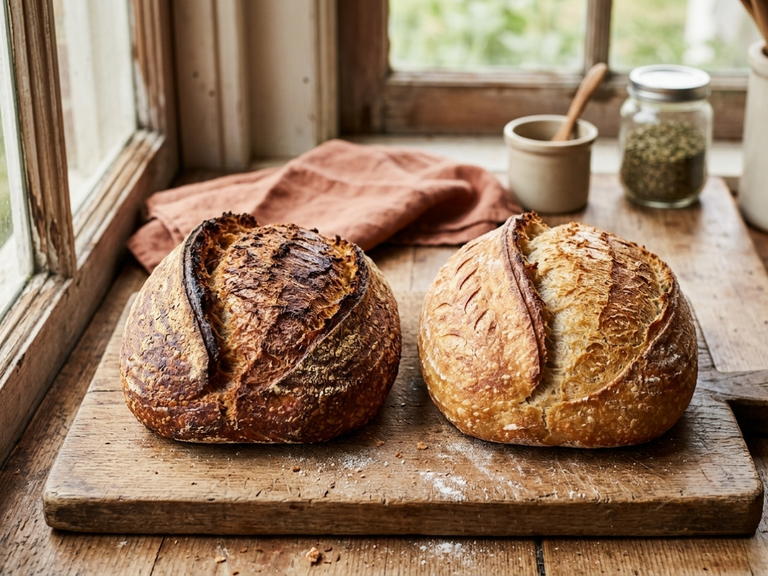
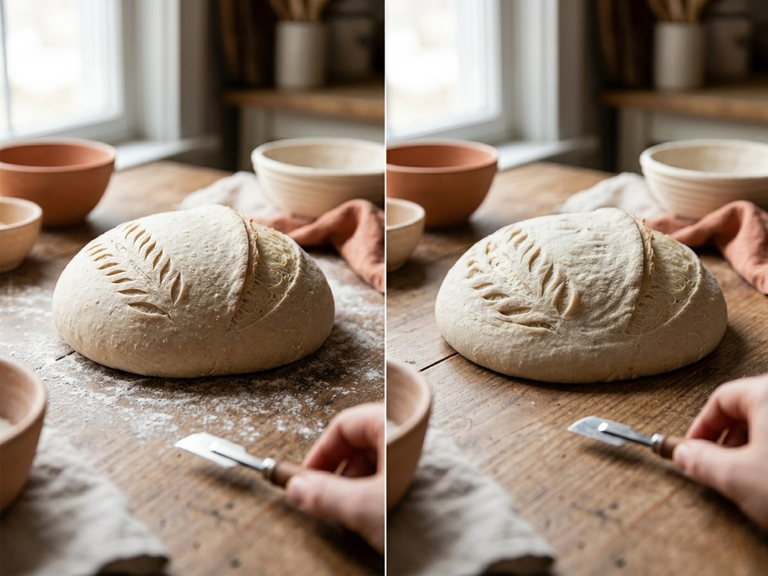
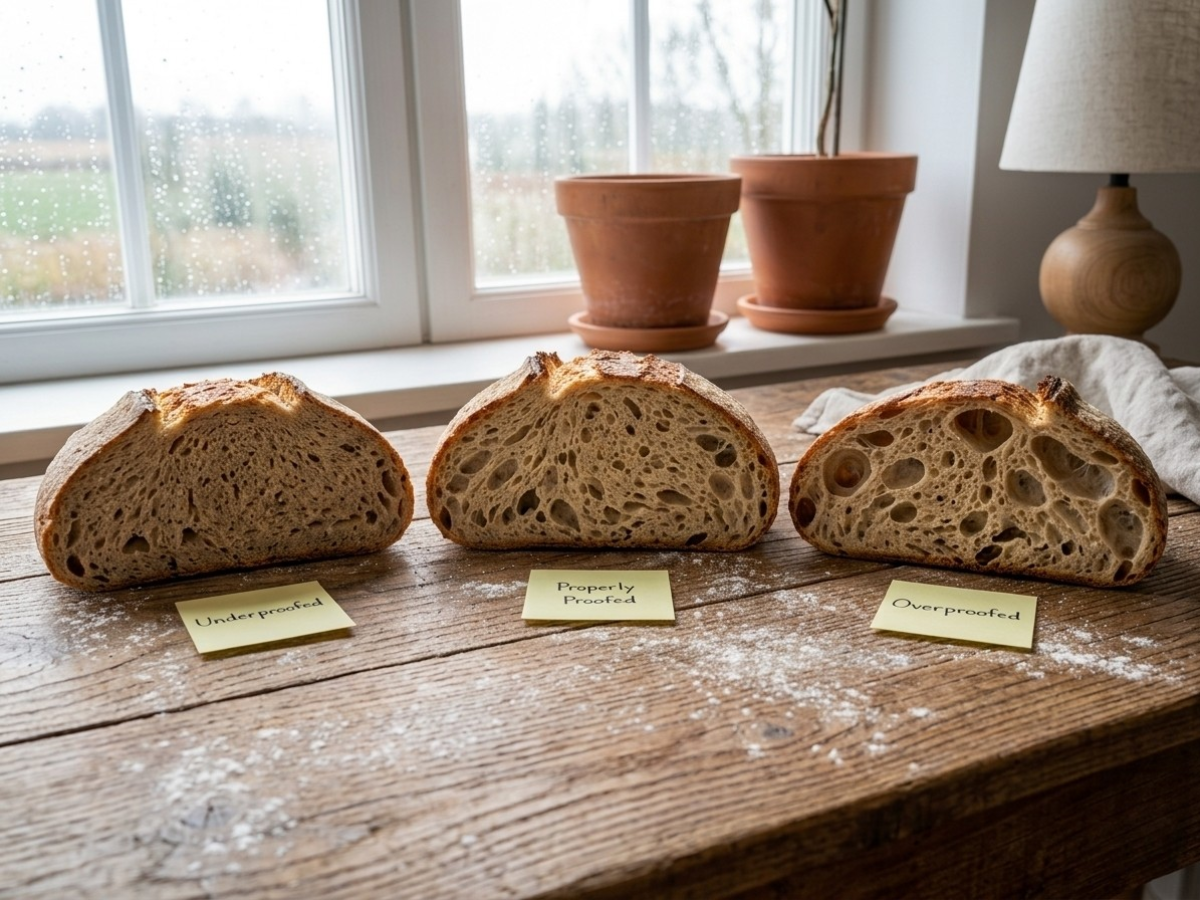
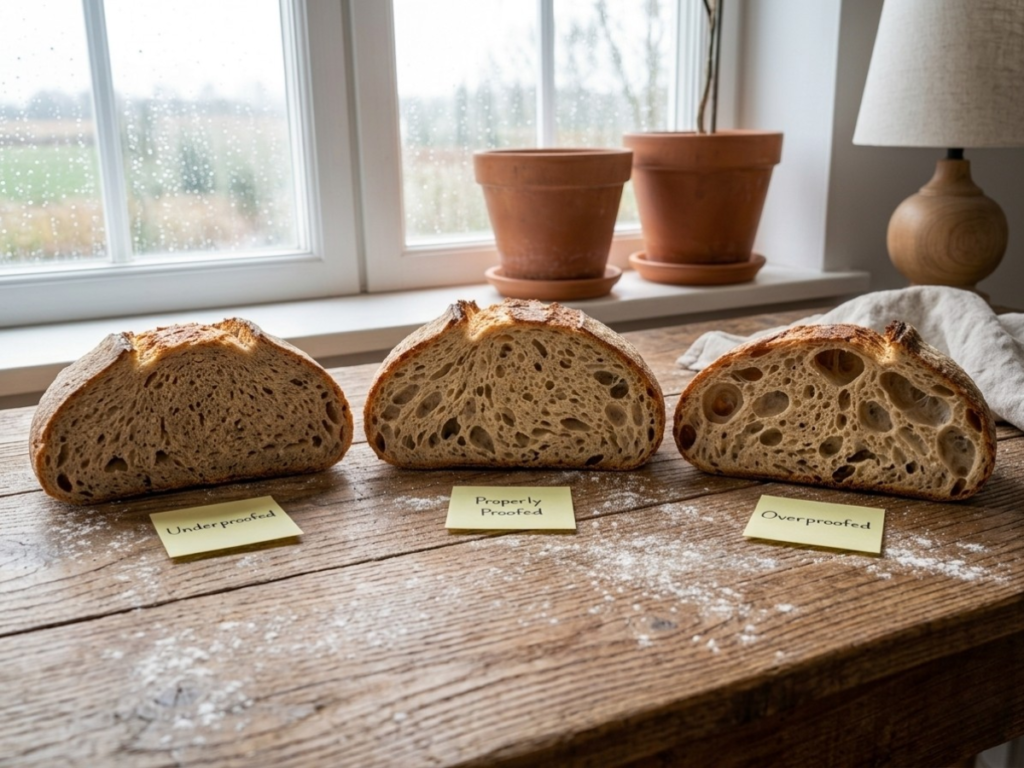
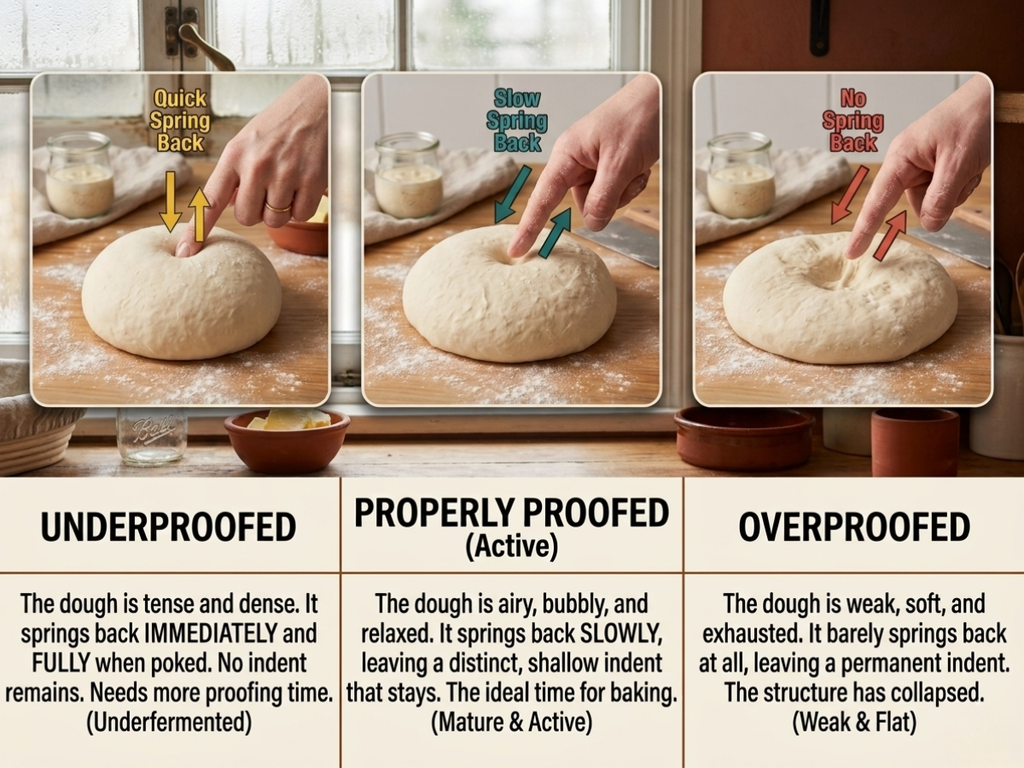
Underproofed dough is tight, dense, and springs back firmly when poked. Overproofed dough is slack, sticky, and barely springs back at all. The poke test is the fastest way to tell them apart before you even bake.
What’s Going Wrong (and How to Fix It)
Problem #1
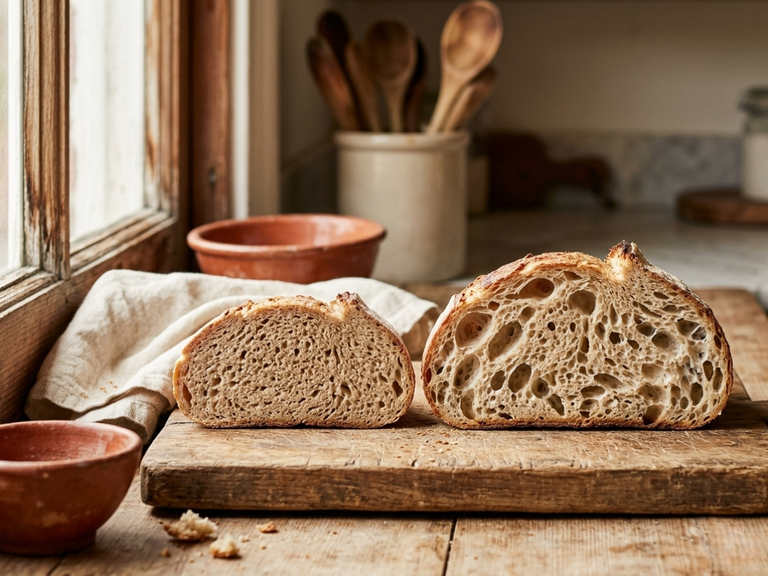
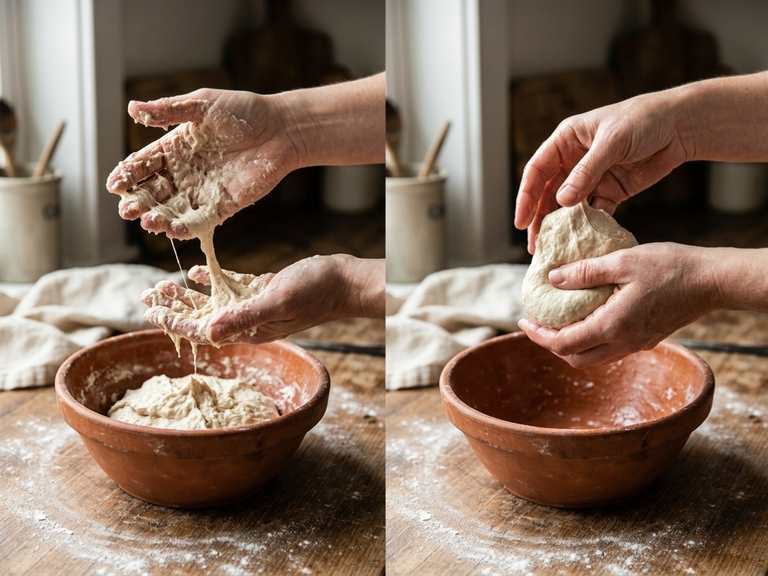
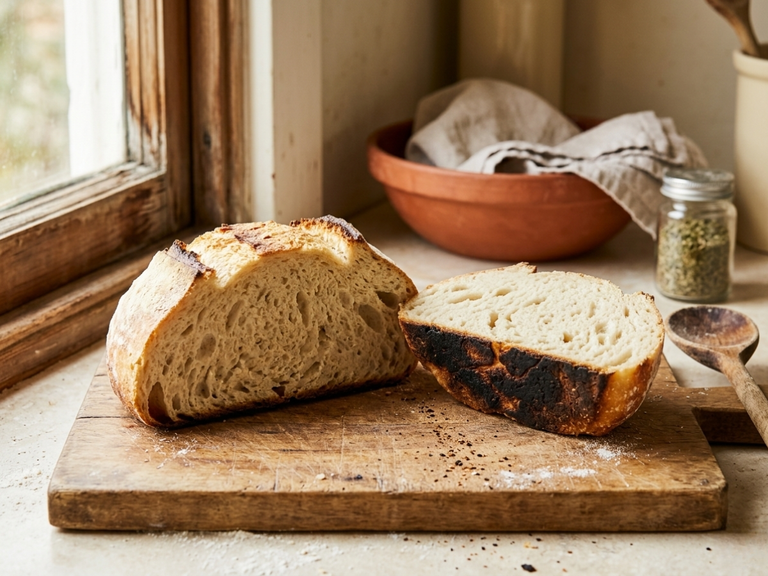
Underproofed dough feels tight and elastic, springs back quickly and fully when poked, and usually bakes up with great oven spring but a dense, tight crumb, sometimes with a burst side seam. It’s caused by not enough time or a sluggish starter
The Fix
Give bulk fermentation more time and watch for a 50 percent volume increase rather than relying on the clock
Problem #2
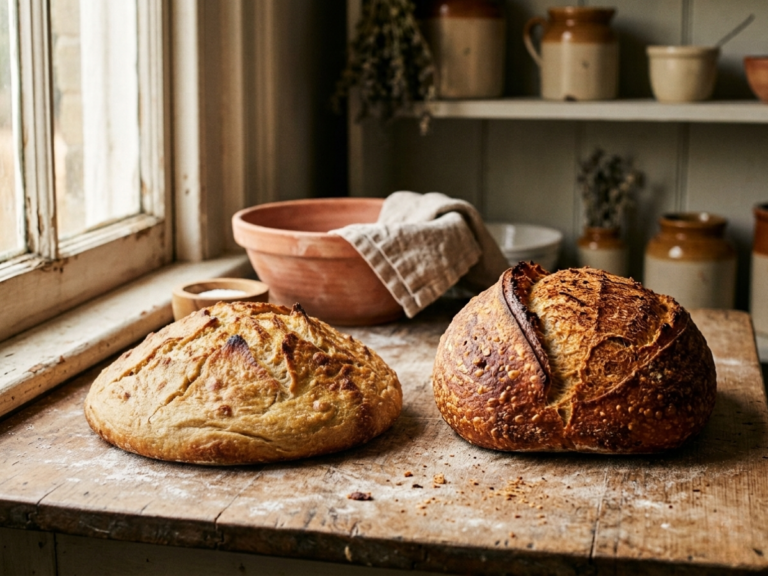
Overproofed dough feels slack, sticky, and fragile, barely springs back when poked, or the indent just stays. Loaves tend to spread instead of holding their shape, with a gummy or overly open crumb near the crust. It’s caused by too much time, too warm a kitchen, or a starter that’s more active than the recipe assumed
The Fix
Pull it earlier next time, or move it somewhere cooler during bulk fermentation to slow it down
A Couple More Things Worth Trying
- Use the poke test every time until you learn what properly proofed dough feels like for your kitchen specifically
- Track your kitchen temperature for a week. It explains more inconsistency than any other single factor
- When in doubt, slightly underproofed is more forgiving than overproofed. You can always give a loaf a longer rest before baking, but you can’t undo overproofing
Desi’s Note
I keep a little notebook by my proofing basket with the kitchen temp and rough proof time for every bake. It sounds excessive, but once you have a few data points, you stop guessing and start actually knowing your own kitchen. Consider it due diligence.
Want To Know The Science Behind This?
If you want the deeper “why” behind how temperature and time interact during fermentation, check out our Sourdough Science article: “Hydration and Climate: The Two Numbers That Actually Control Your Fermentation Time” click here →.
More Resources
Grab the Crumb & Crust Diagnostic Quicksheet to match what you’re seeing, and the Bake-Day Timeline Template to fix your timing going forward.
Knead to Know?
New recipes, baking tips, and sourdough troubleshooting — delivered before your starter even finishes its next rise.
Get the latest insights, no spam — just new recipes and baking tips. Unsubscribe anytime. See our Privacy Policy.