Hydration and Climate: The Two Numbers That Actually Control Your Fermentation Time
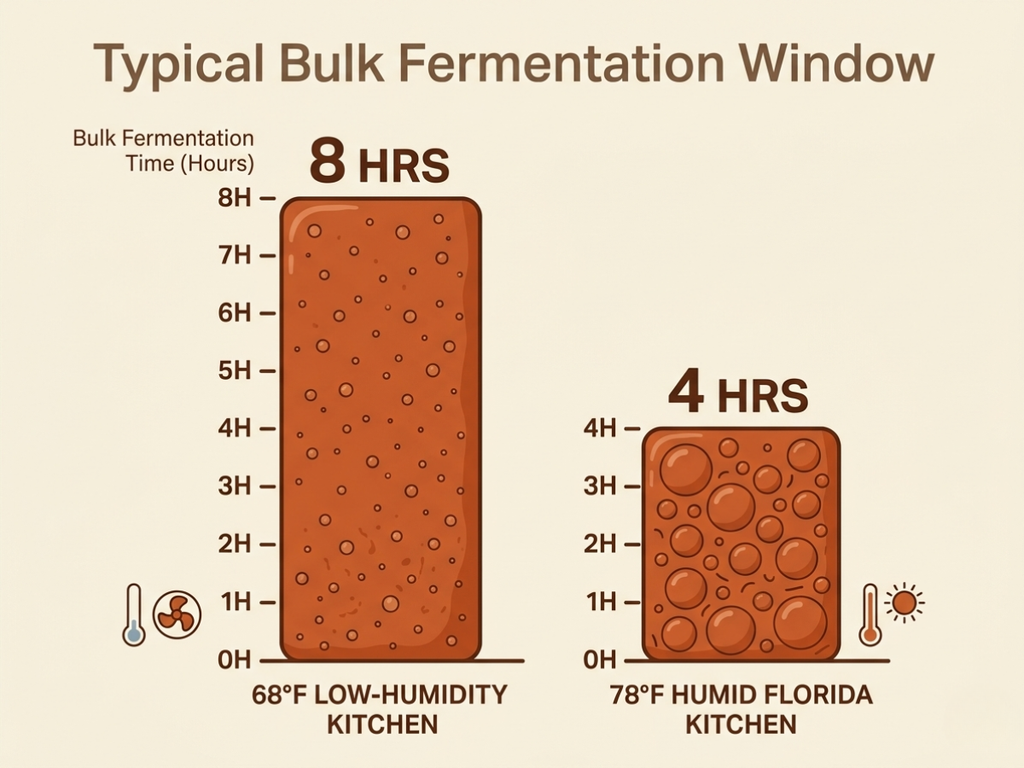
Every sourdough chart you’ve ever screenshotted assumes a kitchen that doesn’t exist in South Florida. “Bulk ferment 4 to 6 hours” was written by someone whose house sits at 68°F with the windows cracked. Mine sits at 78°F with the AC fighting a losing battle against August, and my dough doesn’t read the same chart I do.
Hydration and climate aren’t two separate topics. They’re the same variable measured from two different directions, and once you see how they interact, the guesswork mostly disappears.
The Short Answer
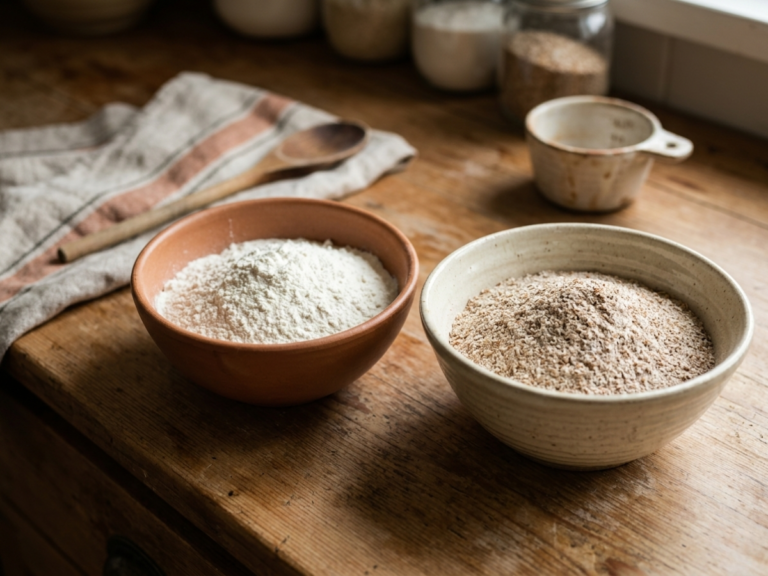
Hydration is the ratio of water to flour in your dough, written as a percentage of flour weight. A dough with 500g flour and 375g water is 75% hydration.
Climate doesn’t change that number on paper, but it changes how your dough behaves at that number. Heat speeds up fermentation and softens gluten structure. Humidity adds moisture your recipe never accounted for. Together, they mean the same 75% dough proofs faster and handles wetter in a Florida August than it does in a New England January.
The fix isn’t a new recipe. It’s adjusting the two variables you control (formula hydration and dough temperature) to compensate for the one you don’t (your kitchen).
What Hydration Actually Measures
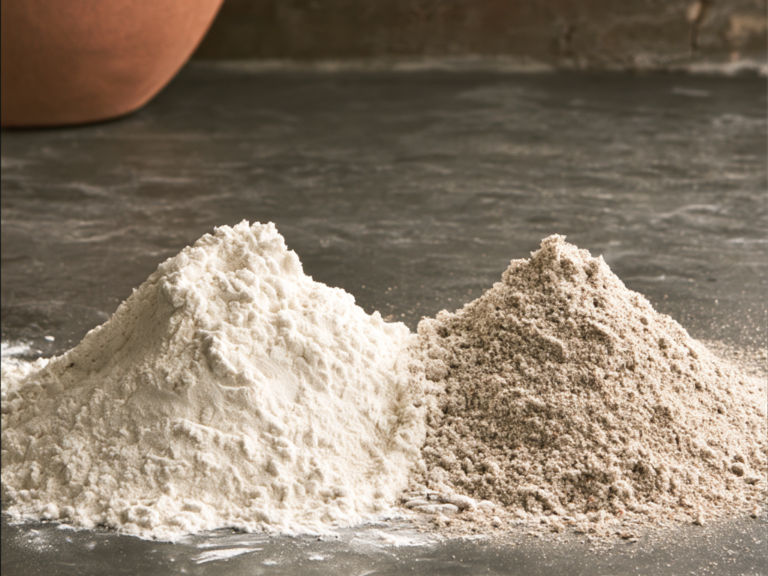
Baker’s percentage expresses every ingredient as a percentage of total flour weight, with flour always set at 100%. So a formula that calls for 500g flour and 375g water is 75% hydration, full stop, regardless of what your total loaf weighs.
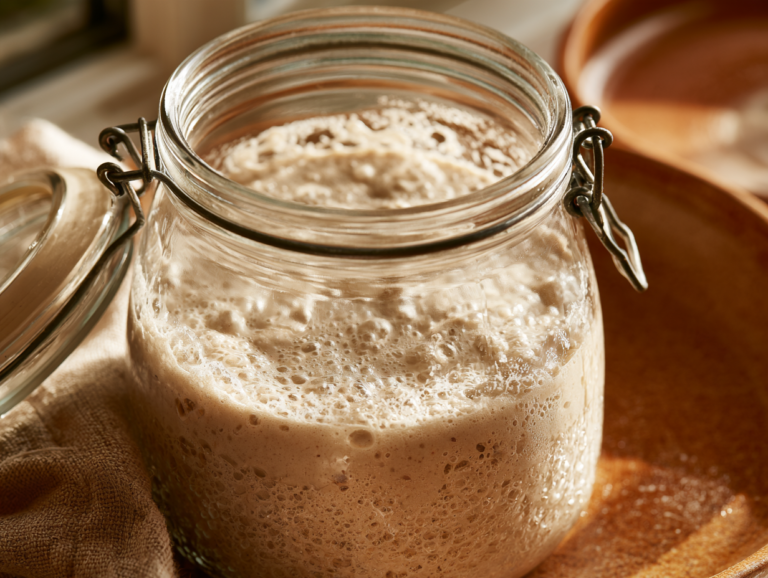
That water does three jobs inside the dough. It hydrates the flour’s proteins so they can link into gluten. It gives the enzymes already present in the flour (amylase, protease) a medium to move through and act on starch and protein. And it gives your starter’s wild yeast and bacteria a place to swim, feed, and multiply.
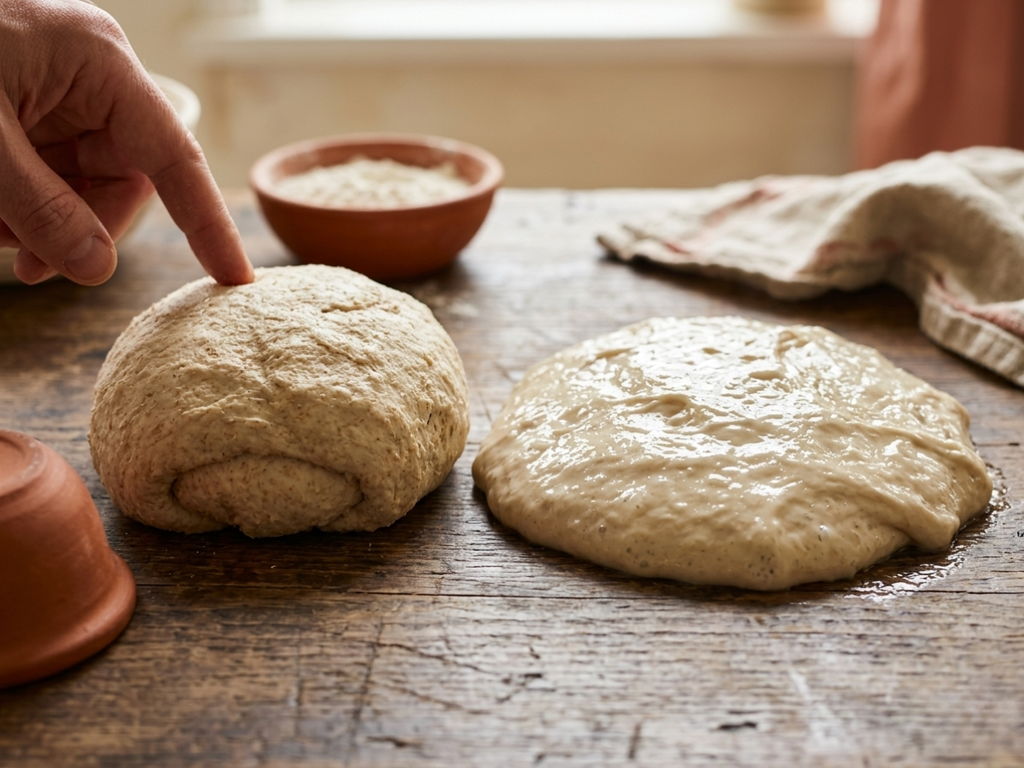
More water means a looser gluten network with more room to expand, which is why high-hydration doughs (75% and up) produce that open, irregular crumb people photograph. It also means faster fermentation, because dissolved sugars and enzymes move through a wetter dough more freely than a stiff one. Lower hydration (60-65%) gives you a tighter, more even crumb and a dough that’s considerably easier to shape. My Plain White Sourdough Loaf sits a bit above that middle ground, at about 71% (525g flour, 375g water), which still handles easily for a beginner while giving a more open crumb than a true low-hydration dough would.
What Climate Adds to the Equation
Temperature speeds up biology, not just chemistry
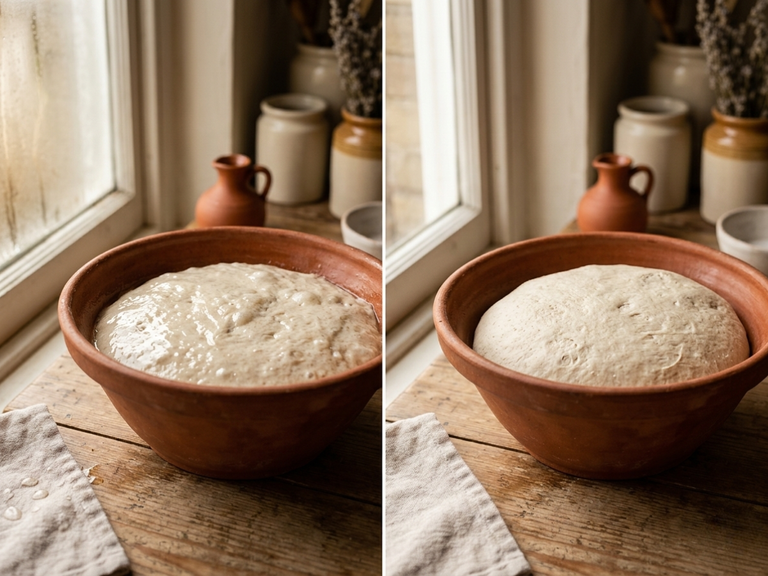
Fermentation is a biological process, and biological processes are famously temperature-sensitive. As a rough rule of thumb, microbial activity roughly doubles for every 10°C (18°F) rise in temperature, at least within the range your starter lives in. A dough fermenting at 68°F and one fermenting at 78°F aren’t running the same experiment at different speeds. That 10-degree gap alone speeds up your starter’s biological activity by something like 50%, purely from temperature. Stack on the humidity effect covered next, and in a genuinely humid kitchen, that combination is often enough to cut a full bulk fermentation window in half, which is exactly what the chart above shows.
This is the part most recipe cards leave out: the hours listed on a bulk fermentation step are only valid at the dough temperature the recipe was tested at. If your kitchen runs 10 degrees warmer, cut your expected time by something like a third to a half, and start checking the dough visually well before the clock says you should.
Humidity changes hydration without you adding a drop of water
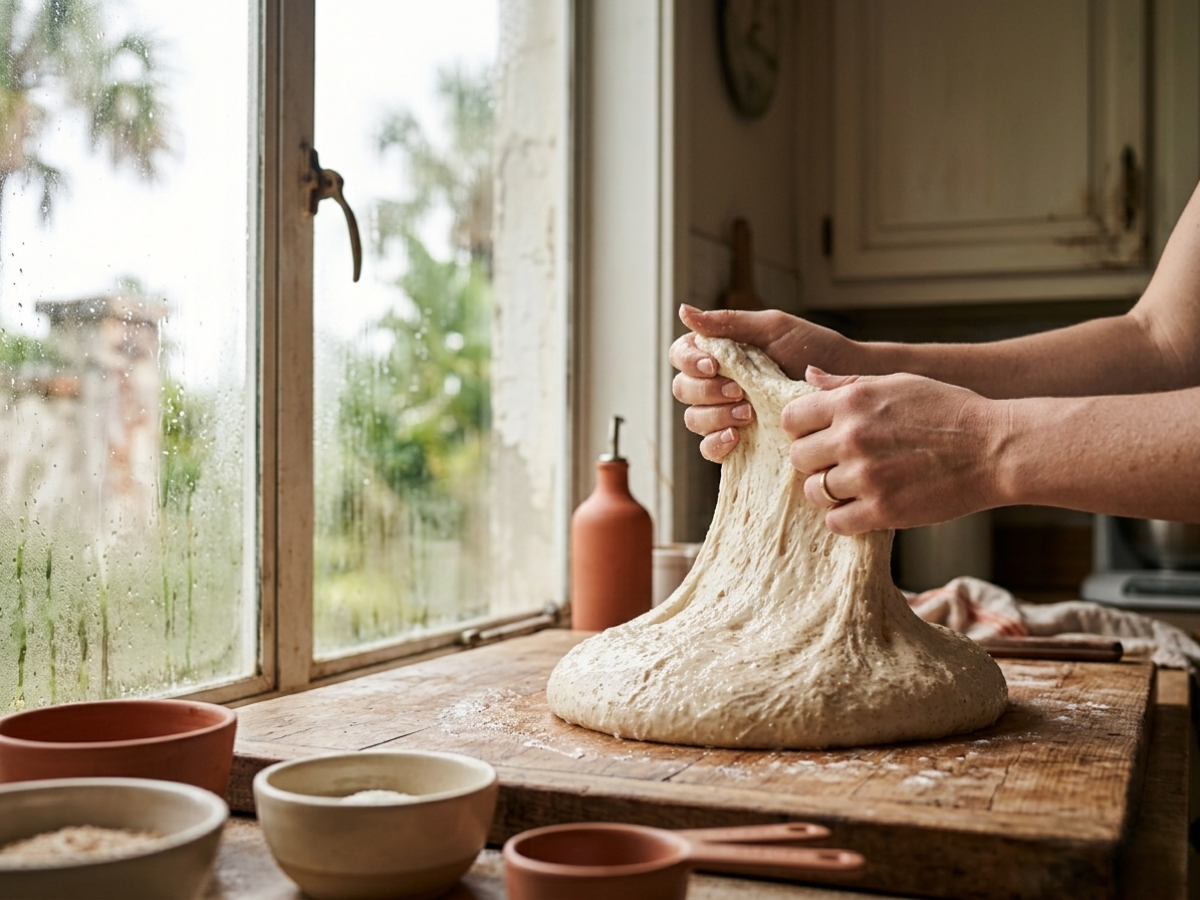
Flour is hygroscopic, meaning it absorbs moisture from the air around it. In a humid kitchen, your flour is already carrying more ambient water before it ever touches your mixing bowl, and your dough continues pulling moisture from the air while it ferments and proofs. The practical result is that a 75% hydration formula on paper can behave like a 78-80% dough on your counter, sticky, slack, and harder to shape, even though you measured every gram correctly.
Humidity also slows crust development in the oven. Extra ambient moisture in your kitchen, and often in your oven during the early bake, keeps the surface of the loaf softer for longer, which is part of why a hard, blistered crust is genuinely more difficult to achieve in South Florida than it is in a dry climate.
Why This Hits Different in a Florida Kitchen
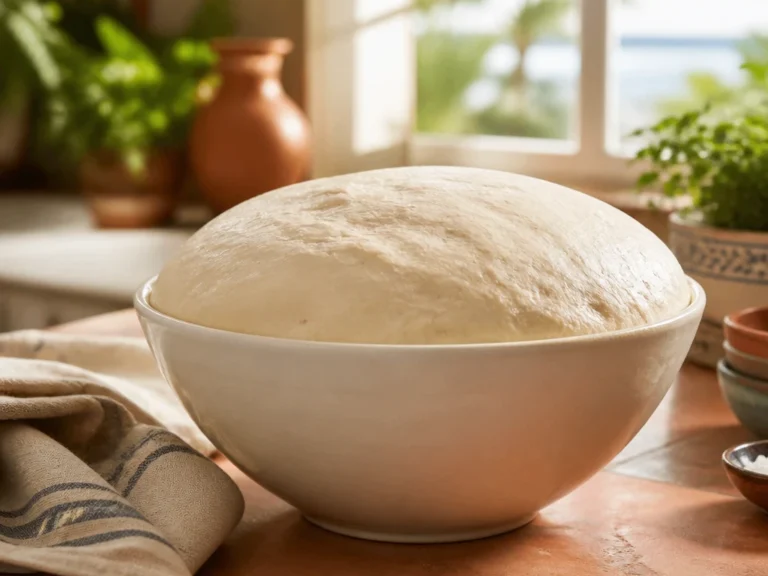
Stack these two effects and you get the specific headache of baking here. Warm ambient temperatures accelerate fermentation. High humidity raises effective hydration and softens the dough further. Air conditioning cycles on and off throughout the day, meaning your “kitchen temperature” isn’t one number, it’s a range that swings as the AC kicks on and off, which makes a fixed schedule even less reliable.
The net effect: your dough often finishes bulk fermentation faster than any national blog’s timeline promises, and it’s wetter and stickier at every stage than the photos suggest it should be.
Desi’s Note
In accounting, a budget variance isn’t a mistake. It’s the gap between what you planned for and what actually happened once real conditions hit the numbers. Hydration is your budget. Climate is the variance. You don’t throw out the budget when the variance shows up, you adjust for it and keep baking.
How to Adjust for Your Kitchen
Lower your formula hydration in peak humidity
If you’re consistently fighting a dough that’s slack, sticky, and hard to shape, drop your formula hydration by 3-5%. On a 500g flour recipe at 75%, that’s roughly 15-25g less water. This doesn’t fight your climate, it just accounts for the extra moisture your flour and dough are already pulling from the air.
Control dough temperature, not just room temperature
Use cool tap water, or water with a few ice cubes removed just before mixing, to bring your finished dough temperature down into the 75-78°F range even when your kitchen sits warmer than that. A kitchen thermometer inserted into the dough after mixing tells you more than the thermostat on your wall ever will.
Watch the dough, not the clock
Treat every posted fermentation time as a starting estimate, not a deadline. Look for dough that’s risen 50% in volume, feels airy and jiggly when you nudge the bowl, and shows visible bubbles at the surface and sides. In a hot, humid kitchen, that point can arrive two to four hours earlier than a recipe written in a cooler climate suggests.
Use the fridge as your climate control
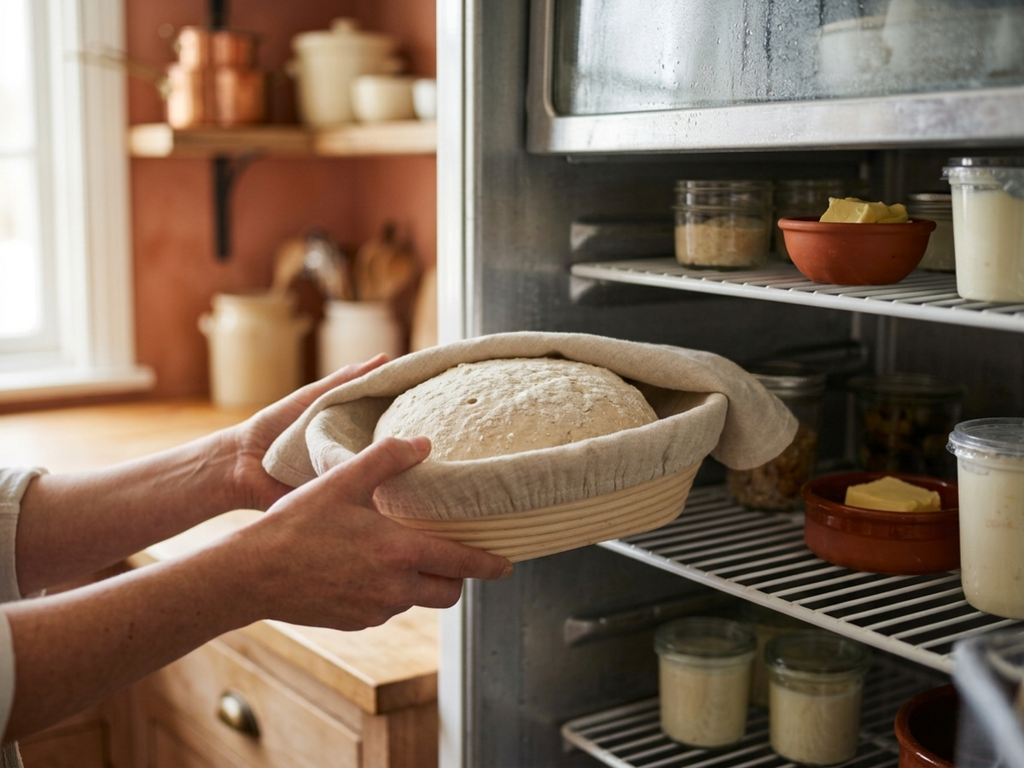
A cold retard, shaping the dough and letting it finish fermenting in the refrigerator, does two things at once. It slows fermentation to a manageable pace regardless of how warm your kitchen runs, and it gives you a flexible window to bake on your schedule instead of your dough’s.
Key Takeaways
- Hydration is a fixed ratio on paper. Climate determines how that ratio actually behaves in your bowl.
- Heat accelerates fermentation roughly exponentially, not linearly, so small temperature swings matter more than they seem like they should.
- Humidity raises your dough’s effective hydration even when your scale says otherwise, because flour absorbs ambient moisture.
- In hot, humid kitchens, expect faster bulk fermentation, stickier handling, and softer crusts than most recipes account for.
- Adjust the two things you control, formula hydration and dough temperature, rather than fighting the one you don’t.
If your dough has ever felt like it was fermenting on a different schedule than the recipe promised, it probably was, and now you know why. Once you start adjusting for your actual kitchen instead of an assumed one, the guesswork mostly goes away.
More Resources
Run your numbers through the Sourdough Calculator, and keep the Glossary of Sourdough Terms handy while you read.
Knead to Know?
New recipes, baking tips, and sourdough troubleshooting — delivered before your starter even finishes its next rise.
Get the latest insights, no spam — just new recipes and baking tips. Unsubscribe anytime. See our Privacy Policy.