Why Did My Sourdough Deflate After Scoring?
On This Page
There is nothing quite like watching a beautifully proofed loaf go flat the second your blade touches it. It happens fast, it’s demoralizing, and it usually means one specific thing went wrong before you ever picked up the lame.
The Short Answer
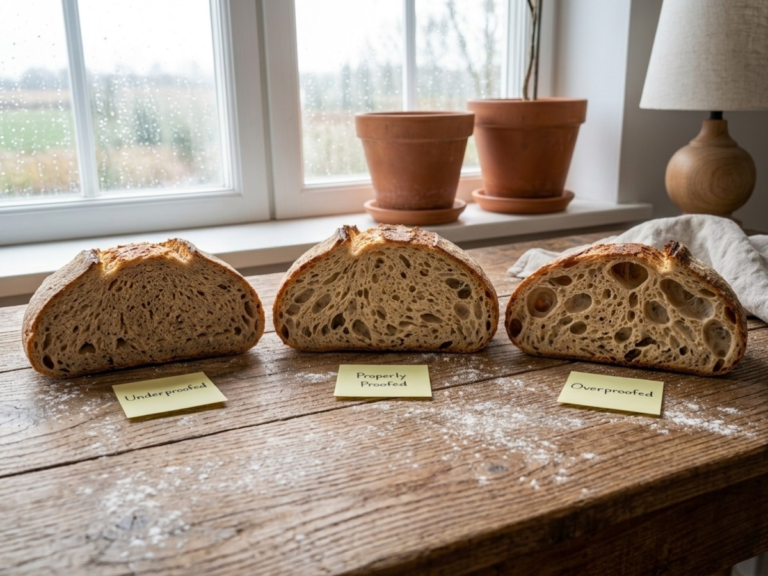
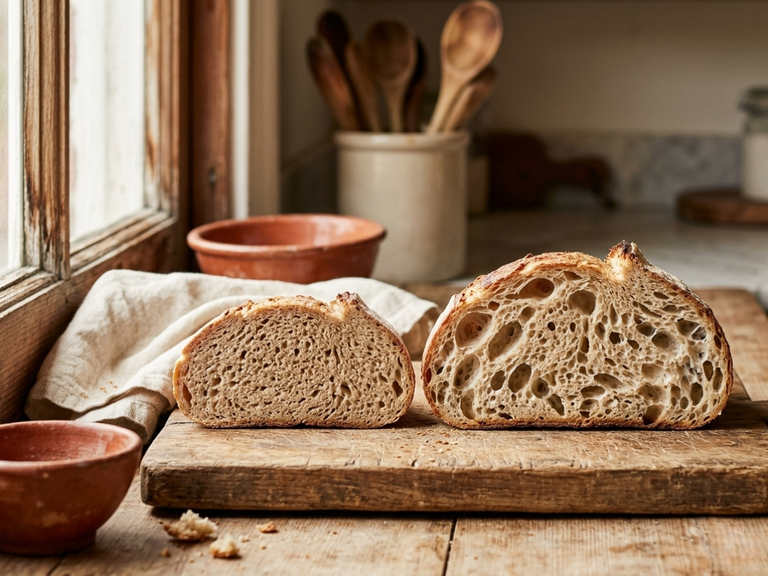
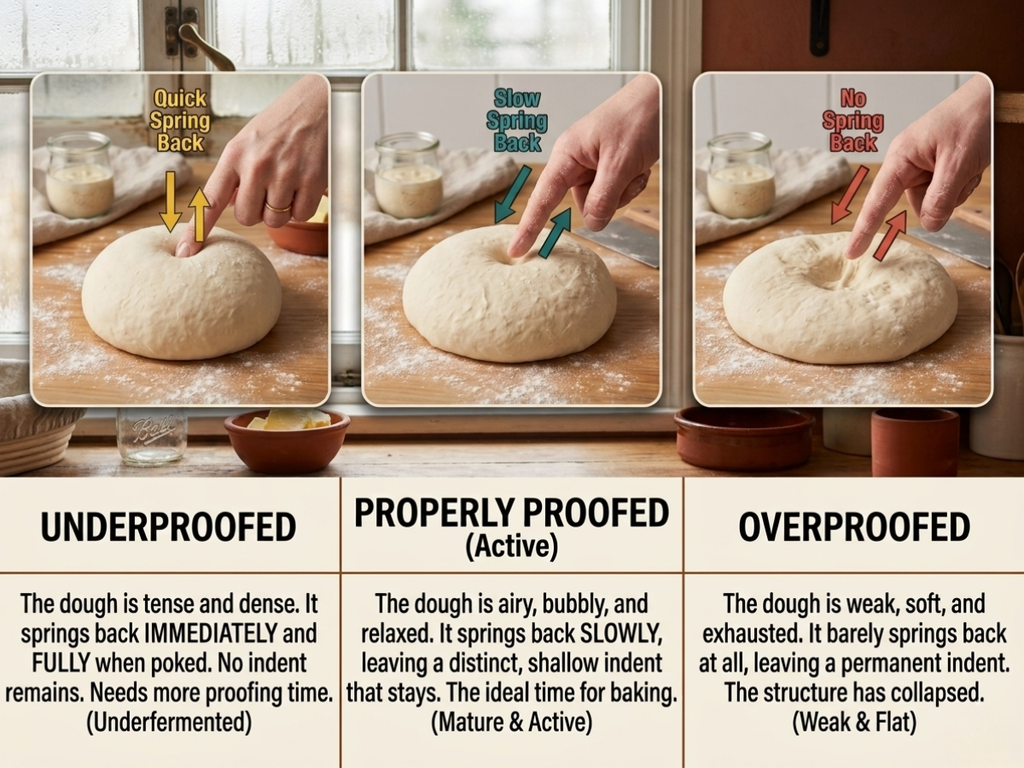
A loaf that deflates when scored is almost always overproofed. The dough’s gluten structure has weakened to the point where it can no longer hold gas, so any disturbance, including scoring, causes it to collapse.
What’s Going Wrong (and How to Fix It)
Problem #1
The dough was overproofed, meaning fermentation went on too long and the gluten network lost its strength
The Fix
Shorten your bulk fermentation and proof times, and rely on the poke test rather than the clock
Problem #2
The dough wasn’t shaped with enough tension to begin with, so it had a weak structural foundation
The Fix
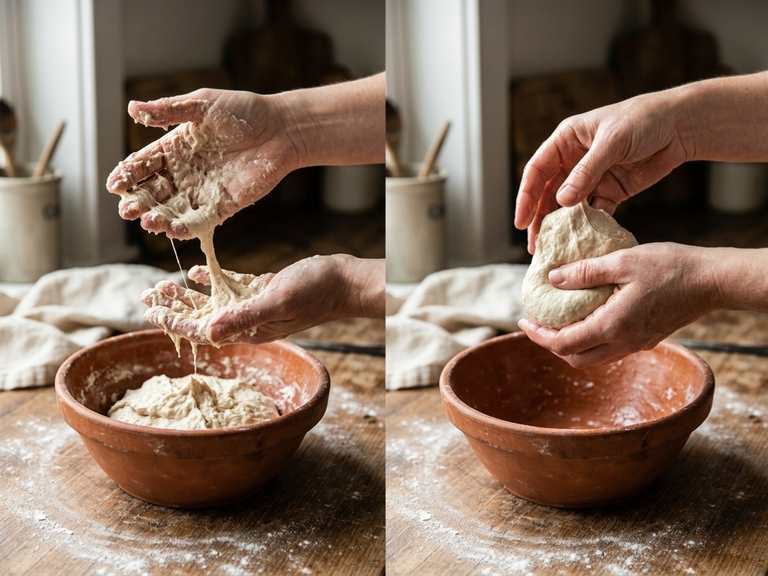
Shape with more tension during the final shaping step so the dough has a stronger outer structure. Work on a lightly floured or bare countertop, not a heavily floured one, so the dough can actually grip the surface. Cup the dough with both hands and drag it toward you in short strokes, letting the underside catch friction against the counter while the top stretches taut over it, rotating a quarter turn between drags until the whole surface feels smooth and snug. Pinch the bottom seam firmly closed so it doesn’t loosen back up during proofing
Problem #3
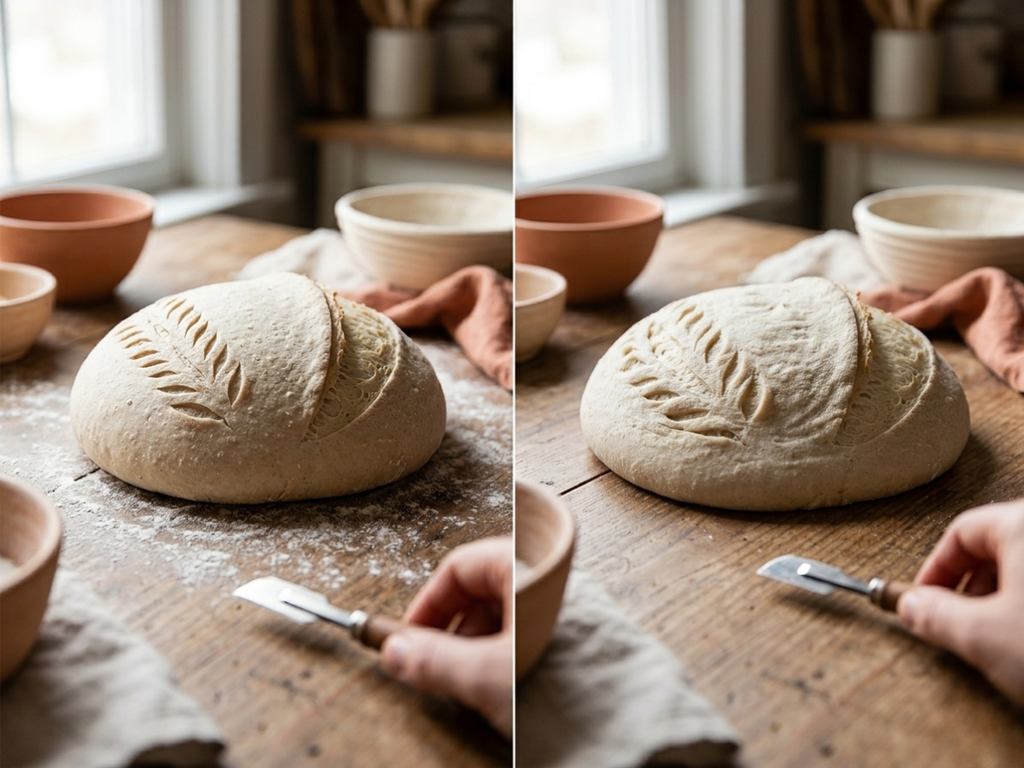
The score was too deep or too aggressive for how delicate the dough already was
The Fix
Score quickly and confidently with a light hand rather than a slow, deep cut
Problem #4
The dough sat out too long between shaping and baking, especially in a warm kitchen
The Fix
Get your shaped dough into the oven, or into the fridge for a cold retard, promptly, especially if your kitchen runs warm
Problem #5
Cold retard was skipped, which normally helps firm up the dough and make it easier to score without disturbing it
The Fix
Try a cold retard in the fridge overnight before baking. Cold dough holds its shape much better under the blade
Desi’s Note
I’ve scored a loaf and watched it sigh like it just found out about a tax deadline. It happens. Bake it, eat it, and adjust your timeline for next time. One deflated loaf isn’t a failed audit, it’s a rounding error.
Want To Know The Science Behind This?
If you want the deeper “why” behind what fermentation actually does to gluten structure over time, check out our Sourdough Science article: “What Fermentation Actually Does to Your Flour (The Real Science, Not the Wellness-Blog Version)” click here →.
More Resources
For a printable reference, grab the Crumb & Crust Diagnostic Quicksheet.
Knead to Know?
New recipes, baking tips, and sourdough troubleshooting — delivered before your starter even finishes its next rise.
Get the latest insights, no spam — just new recipes and baking tips. Unsubscribe anytime. See our Privacy Policy.