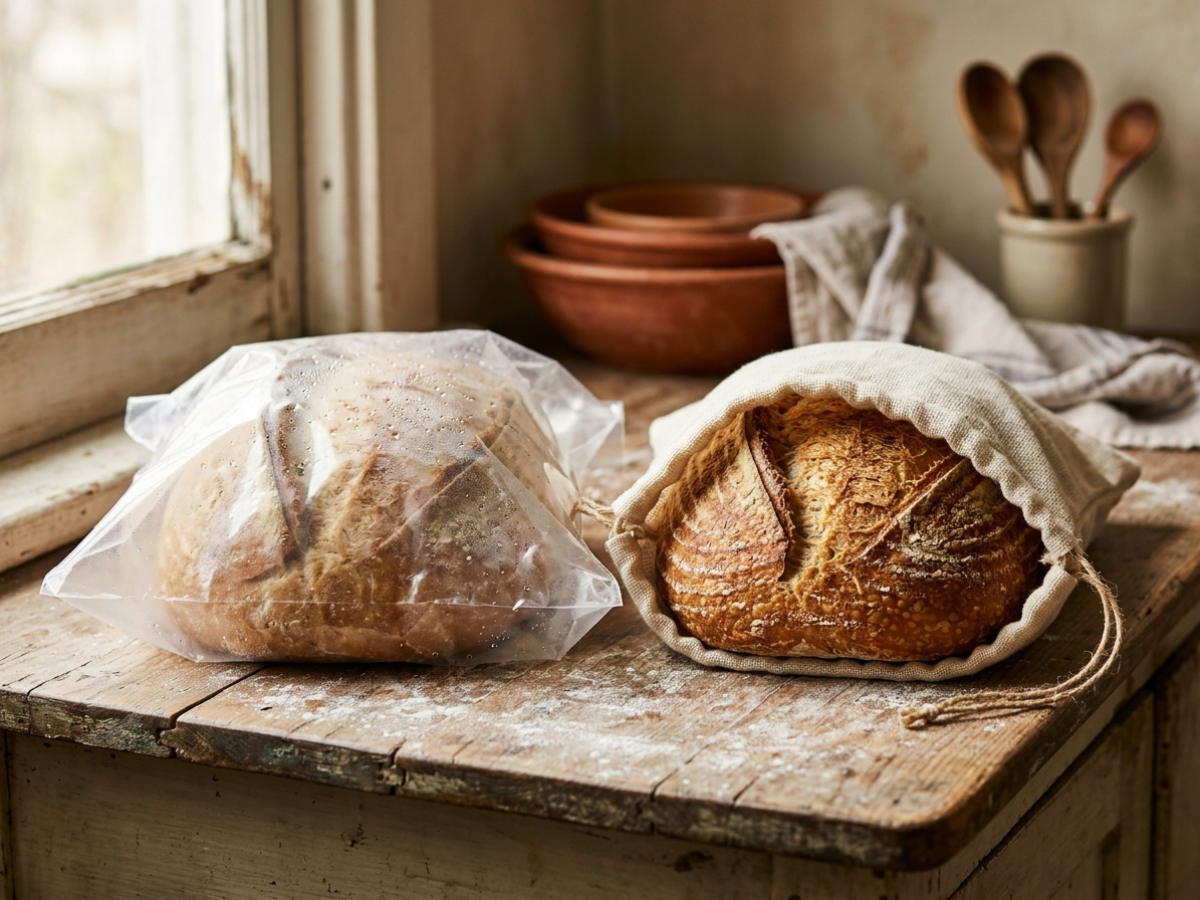
Why Does My Sourdough Go Soft or Moldy So Fast in a Humid Climate?
On This Page
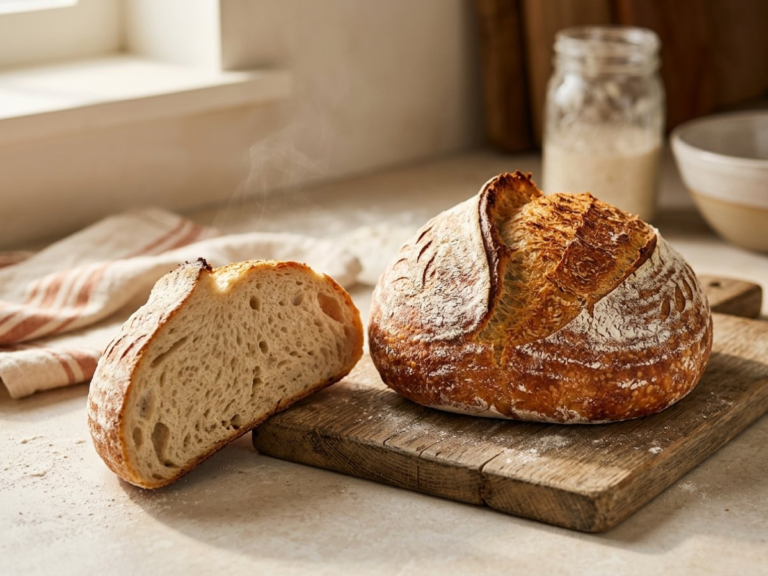
You finally get that shatter-crisp crust just right, set the loaf on the counter, and a few hours later it’s gone soft and chewy. Worse, a couple of days in, there are fuzzy spots you really didn’t want to see. This isn’t a baking mistake, it’s a storage mismatch. Humid climates need a genuinely different storage approach than the advice most recipes and blogs give you.
The Short Answer
In humid climates, your bread can’t release its own moisture into air that’s already close to saturated, so it reabsorbs ambient moisture instead, softening the crust and creating ideal conditions for mold. The fix is almost entirely about storage material, location, and timeline, not your baking technique.
What’s Going Wrong (and How to Fix It)
Problem #1
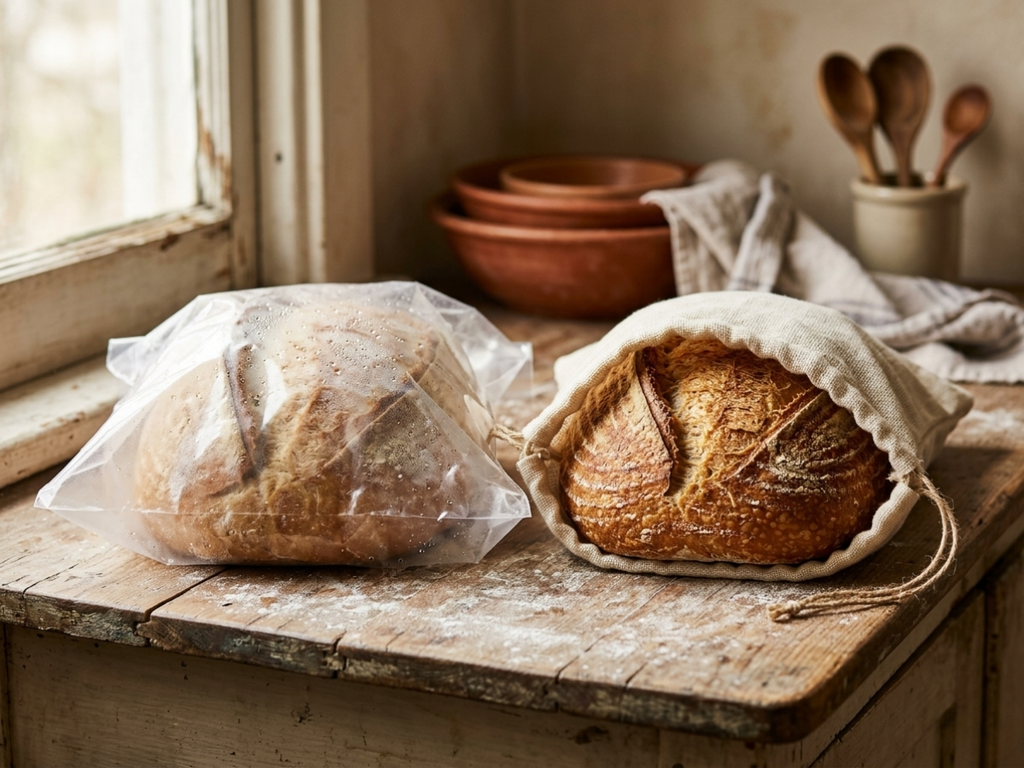
Humid air is already close to saturated, so your bread’s crust can’t release moisture into it the way it would in a drier climate. Instead, the crust pulls moisture back in from the air, turning soft and chewy within hours instead of staying crisp
The Fix
Store crusty loaves in a breathable material, a linen or cotton bread bag, or a paper bag, never plastic, which traps moisture directly against the crust and speeds up exactly the softening you’re trying to avoid. The crust will dry out a little faster this way than it would in plastic, but that’s the right trade-off in a humid climate
Problem #2
Warm, humid air is exactly the environment mold spores thrive in, so bread that might take five or more days to show mold in a cooler, drier kitchen can show it in as little as two days here
The Fix
If your kitchen regularly sits above 75°F with high humidity, plan around a much shorter countertop window and freeze whatever you won’t eat within about 2 to 3 days instead of waiting for it to actually go bad.
Problem #3
Where you store the loaf matters as much as what you store it in. A spot near the stove, dishwasher, or on top of the fridge creates a pocket of localized heat and humidity that speeds up both staling and mold, even if the rest of your kitchen is reasonably controlled
The Fix
Pick a cool, dry spot away from appliances and out of direct sunlight for your bread box or bag. If you don’t have a naturally cool spot to work with, freeze whatever you’re not eating right away instead of trying to stretch it out longer at room temperature. Freezing sidesteps the staling problem entirely rather than trading mold risk for stale bread
Problem #4
Standard storage advice like “just use a bread box” often assumes one with some ventilation. In humid weather, a sealed, airtight bread box behaves exactly like a plastic bag, trapping humidity against the crust instead of letting it escape
The Fix
Make sure whatever container you’re using actually has airflow, ventilation holes in a bread box, or a bag that’s closed loosely rather than sealed tight. If you’ve already sliced into the loaf, press the cut sides together and store it cut-side down on a board with a breathable cover, rather than leaving the whole cut face exposed to the air
Desi’s Note
In a Florida kitchen, plastic wrap is basically a mold incubator with extra steps. I switched to slicing and freezing my loaves the same day I bake them, even if I know I’ll eat a piece the next day. It keeps that just-baked freshness locked in for the day you actually thaw it, as if you baked it that same day, and freezing it has its own health benefits on top of that.
More Resources
Track every feeding with the free Starter Feeding & Discard Log.
Knead to Know?
New recipes, baking tips, and sourdough troubleshooting — delivered before your starter even finishes its next rise.
Get the latest insights, no spam — just new recipes and baking tips. Unsubscribe anytime. See our Privacy Policy.