
How Florida Heat Compresses Your Sourdough Schedule (and What to Do About It)
On This Page
- What actually compresses, and by how much
- Humidity is a second variable, not the same one as heat
- Side-by-side: the 9-to-5 schedule, temperate kitchen vs. Florida kitchen
- When to fight the heat, and when to just let it run
- Dough itself can help absorb some of the heat
- This changes with the seasons, not just the address
- A quick FAQ
Open the Bake-Day Timeline tab on our own Sourdough Calculator and look at the kitchen-temperature dropdown. Four options: Cool, Average, Warm, and Hot (79°F+). That last one has no ceiling. It doesn’t distinguish between a kitchen that’s warm-ish at 80°F and a Broward County kitchen in August that’s sitting at 88-90°F with the humidity fogging up the window over the sink. Both get the same schedule.
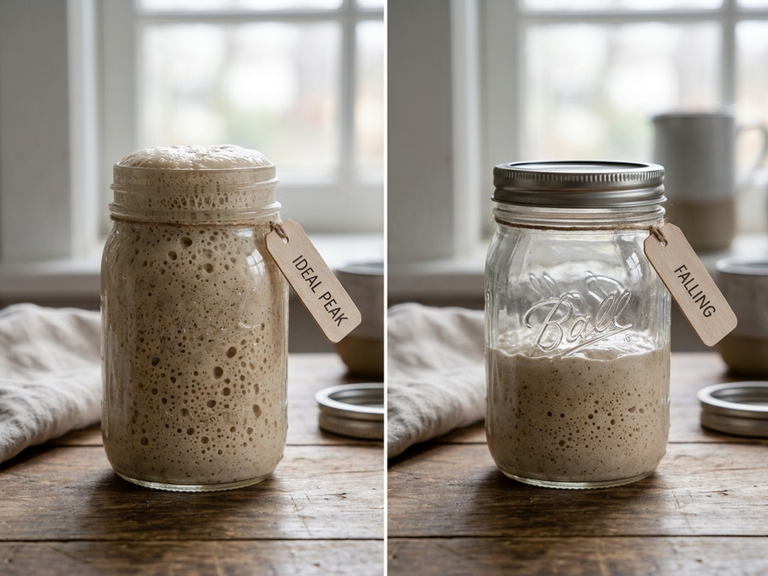
This post is what happens after that dropdown runs out of road. If you’ve ever fed your starter in the morning, gone to work, and come home to a jar that’s already fallen back on itself – or shaped a loaf expecting a slow overnight proof and found it blown past ready by bedtime – you’re not doing anything wrong. You’re just baking somewhere the calculator’s own math starts to break down, and this is the adjustment layer that picks up where it stops.
What actually compresses, and by how much
Fermentation speed roughly doubles for every 15-17°F of warmth, within a workable range – which means the jump from a “Warm” 76°F kitchen to a genuinely hot 88°F kitchen isn’t a small nudge, it’s most of a doubling. In practical terms, past about 85°F:
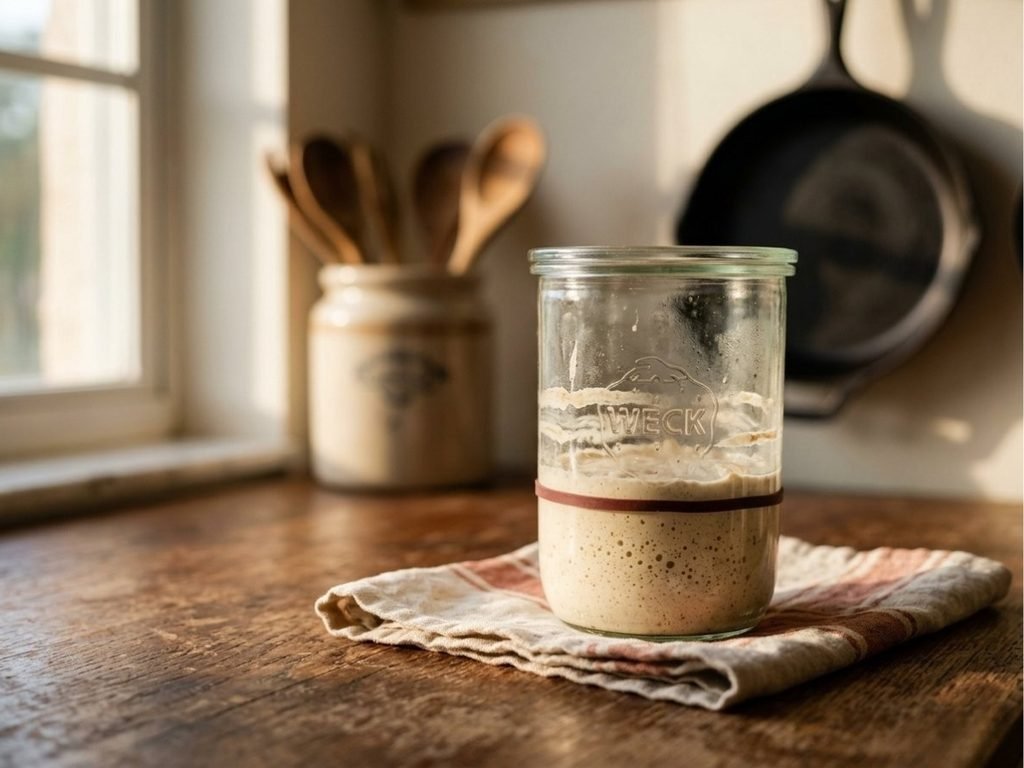
- Starter feeding cycles that take 8-10 hours to peak somewhere temperate can peak in 4-5 hours here – sometimes less if your kitchen runs on the hotter end or your starter’s especially vigorous.
- Bulk fermentation that runs 4-5 hours at “Average” temperatures can be functionally done in 2-2.5.
- Final proof – the stage with the least margin for error to begin with – can go from a comfortable hour-plus window to something closer to 30-40 minutes before a loaf tips from ready to over.
That last one is the real danger zone. A slow proof gives you a wide window to notice it’s ready and get it in the oven. A fast one in genuine heat can close almost as quickly as you can walk away and come back.
Humidity is a second variable, not the same one as heat
This is the part that’s easy to conflate and worth separating out, because your calculator’s “Hot” bucket is really only modeling temperature – it has no humidity input at all, and humidity changes things heat alone doesn’t.
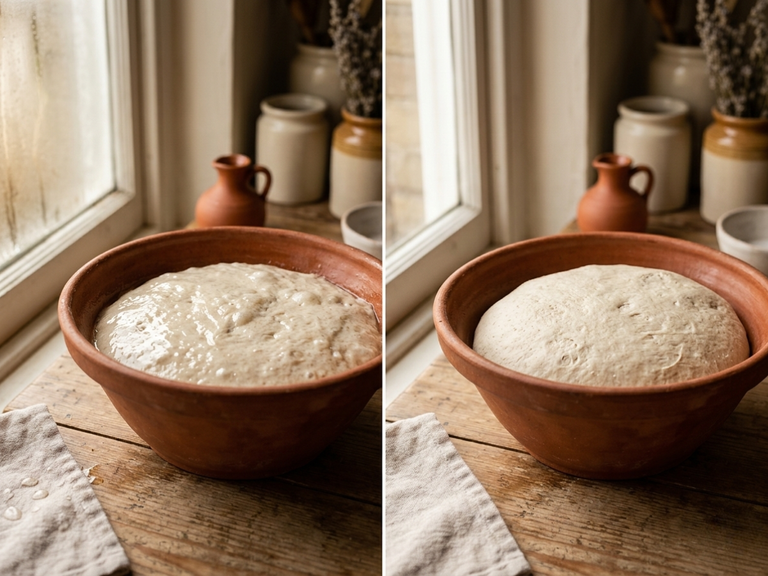
It changes how you judge readiness by feel. The usual cues – a slightly tacky but not wet surface, skin that’s started to dry and firm up a little as proofing finishes – behave differently when the air itself is already saturated. Dough surfaces stay tackier longer in humid air even as the inside is fully, or over-, fermented. If you’re used to reading dryness as a proofing cue, humid air will mislead you; lean more on the poke test (press gently – it should spring back slowly and leave a slight indent, not spring back instantly or not at all) than on how the surface looks or feels.
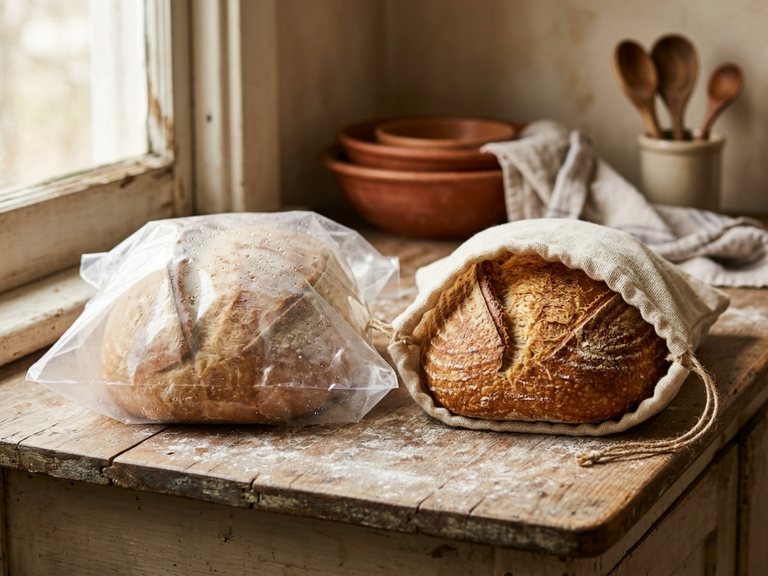
It changes what happens after the bake, not just during it. This isn’t a scheduling issue so much as a storage one, but it’s worth flagging here since it’s the same climate causing it: humid air is also why baked loaves can go soft or moldy fast in South Florida kitchens – we’ve written about that separately if that’s the problem you’re actually hitting.
Side-by-side: the 9-to-5 schedule, temperate kitchen vs. Florida kitchen
Here’s Part 1’s overnight schedule run twice – once as written for a moderate kitchen, once adjusted for a genuinely hot South Florida one. Same job, same hours out the door, same bake time. Just a faster clock underneath it.
| Step | Moderate kitchen (~72-75°F) | Florida kitchen (~87-90°F) |
| Feed starter | 7:00 AM | 7:00 AM |
| Starter ripe | ~3:00-5:00 PM | ~11:00 AM-12:30 PM – likely peaked and falling before you’re home |
| Mix dough | 5:30 PM | Earlier feed needed, or a leaner ratio to hold it – see below |
| Bulk ferment | 5:30-9:30 PM (~4 hrs) | ~2-2.5 hrs total – done well before 9:30 |
| Shape | 9:30 PM | Likely 7:30-8:00 PM instead |
| Final proof (fridge) | Overnight, wide window | Shape earlier and get it into the fridge sooner – the retard does more of the work here |
| Bake | 7:00 AM | 7:00 AM (fridge is what makes this still work) |
↔ Swipe to see all columns
The single biggest adjustment isn’t the bake – it’s the starter feed. A 7 a.m. feed on a normal weekday ratio can be over-ripe by the time a Florida baker gets home from work, which throws off everything downstream. Two fixes, and you likely only need one:
Feed a leaner ratio. Something like 1:8:8 or 1:10:10 instead of a standard everyday feed stretches out the rise and buys back some of that window, the same fix suggested in our piece on Florida starter behavior.
Or feed later in the day instead of the morning. If your schedule allows it, feeding at lunch or even right when you walk in the door (using a small amount of starter held over from the fridge) can land the peak closer to your actual mixing time than a 7 a.m. feed ever will in this kind of heat.
When to fight the heat, and when to just let it run
You have two honest options in a hot kitchen, and neither is wrong:
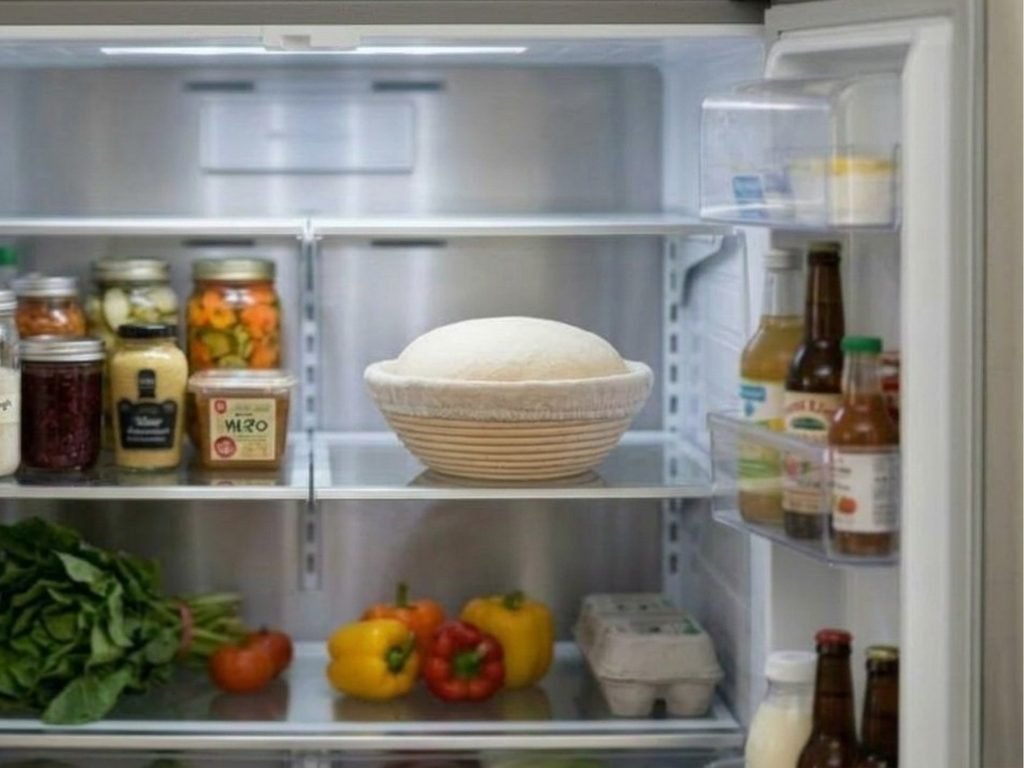
Fight it. Run the AC a little cooler on baking day, proof in the coolest room in the house, or use an insulated cooler with a couple of ice packs as an improvised cool box for bulk fermentation. This gets you closer to the timelines the rest of this series describes, at the cost of some extra effort and, often, a higher electric bill.
Work with it. Accept that your schedule runs faster than the examples in Parts 1 and 2, and shift your clock times earlier to match – feed earlier, plan to be home earlier for mixing, shape earlier in the evening. This is usually the lower-effort path, and once you know your kitchen’s actual rhythm, it stops feeling unpredictable and starts just being “how baking works here.”
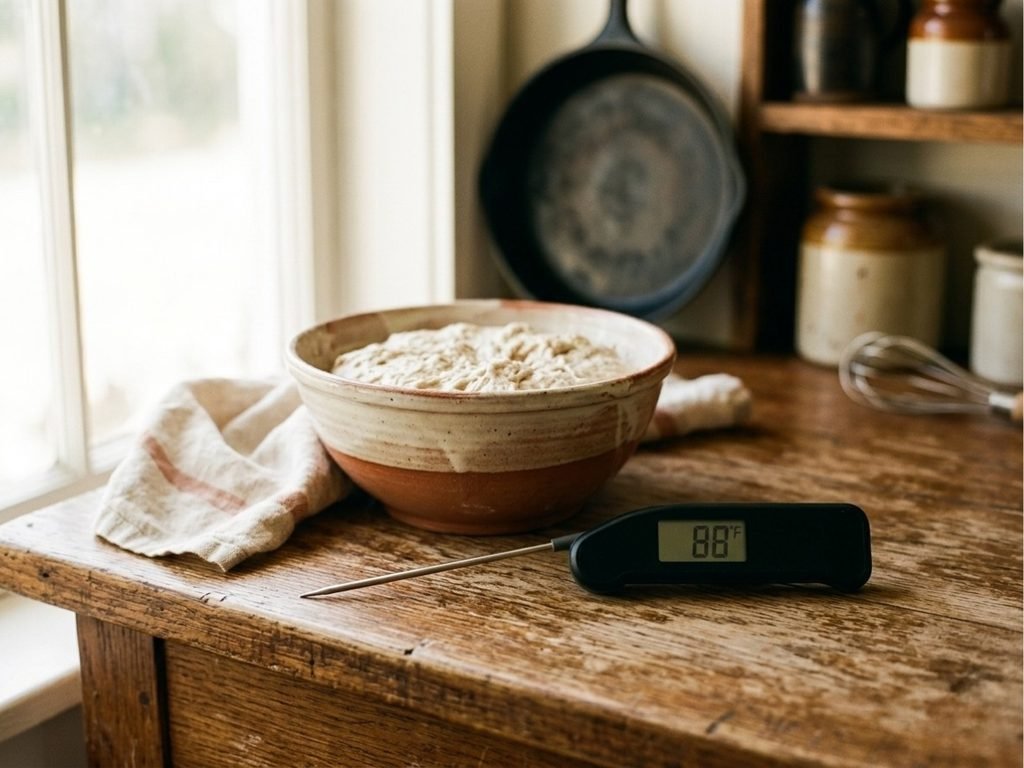
Either way, the fastest way to find your own numbers is to run a few bakes with a simple kitchen thermometer on the counter (not just guessing “it feels hot”) and note your own peak and bulk times against it. After two or three bakes you’ll have a personal answer more accurate than any bucket a dropdown could offer – including ours.
Dough itself can help absorb some of the heat
Beyond adjusting the clock, a couple of dough-level choices make a genuinely hot kitchen more forgiving, not just faster:
A slightly lower hydration. A wetter dough ferments faster and holds its shape less well – exactly the combination you don’t want stacked on top of heat that’s already accelerating things. Nudging hydration down a touch from your usual recipe buys back some structural margin for the same reason it’s worth considering on the same-day schedule in Part 2.
Bread flour’s extra structure matters more here than almost anywhere else in this series. A fast, hot fermentation asks more of the dough’s gluten structure in less time. The extra protein in bread flour versus all-purpose gives you more room to still get a good rise and shape even when the clock’s moving faster than you’d like.
Colder ingredients at mix time. Using cold water (or even briefly chilled flour) to mix can knock a few degrees off your dough’s starting temperature, buying back some time before it catches up to room temperature. It’s a small lever compared to the fridge retard, but a genuinely free one.
This changes with the seasons, not just the address
South Florida heat isn’t constant year-round, and it’s worth checking back in on your own numbers as the seasons shift rather than assuming August’s adjustments apply in January. A kitchen that runs a genuine 88-90°F in summer humidity can sit closer to 74-76°F during the cooler, drier months – closer to the calculator’s “Average” or “Warm” bucket than “Hot.” If you’ve dialed in a hot-season routine, expect to walk some of those adjustments back (a stronger starter feed, a longer bulk window) once the weather actually cools off, rather than running the compressed version year-round out of habit.
Tip
A few things that genuinely help in a hot kitchen (worth an Affiliate Picks block once real product links are ready):
A simple stick-on or stand-up kitchen thermometer – the single highest-value $10 purchase for anyone baking in heat, since “it feels hot” and “it’s 89°F” call for different adjustments.
A small dedicated proofing fridge or wine fridge – genuinely useful for anyone baking weekly in a kitchen this warm.
An insulated proofing box or cooler – the low-cost version of the above, and useful for the opposite problem (proofing somewhere warm in a house that runs cold from AC) too.
A quick FAQ
Is my starter “ruined” if it falls before I get home to feed it? No – a starter that’s fallen and gone hungry is hungry, not dead. Feed it as normal when you get to it; it may just need one extra feeding cycle to fully bounce back to peak strength.
Should I just always use the fridge retard if I live somewhere hot? For most of the year in South Florida, yes – treat the overnight cold-retard schedule from Part 1 as your default rather than your special case, since your kitchen is doing same-day speeds even when you didn’t plan for it.
Does air conditioning actually make a meaningful difference? Yes, more than people expect – a kitchen held at 74-76°F by AC behaves close to the “Average” bucket on our calculator, while the same room with the AC off in August can run 15°F+ warmer. If your AC cycles off overnight to save energy, that alone can meaningfully change your proofing window between when you shape and when you’d planned to bake.
This is Part 3 of Sourdough on a Real Schedule. Start with Part 1’s overnight 9-to-5 schedule or Part 2’s same-day version as your baseline, then use this post to adjust for real heat. For the starter-feeding side of hot-climate baking specifically, see Why Your Starter Behaves Differently in Florida Heat; for what humidity does after the bake, see Why Does My Sourdough Go Soft or Moldy So Fast in a Humid Climate?
Find Your Schedule
This is one of three built-in schedules. Answer three quick questions and see which one actually fits your day.
More Resources
Looking for a printable reference? Browse all six Printable Quicksheets, or dial in your own numbers with the Sourdough Calculator.
Knead to Know?
New recipes, baking tips, and sourdough troubleshooting — delivered before your starter even finishes its next rise.
Get the latest insights, no spam — just new recipes and baking tips. Unsubscribe anytime. See our Privacy Policy.

2 Comments