Sourness Control: The Levers That Actually Make Your Sourdough More (or Less) Tangy
On This Page
- The Short Answer
- Before You Touch Anything: Is Your Starter Even Healthy?
- Two Different Questions: Intensity vs. Character
- The Intensity Levers (How Sour, Period)
- The Character Levers (What Kind of Sour)
- Quick Reference: Dial It Up / Dial It Down
- Which Lever Should You Pull First?
- Try It Yourself: One Dough, Two Directions
- Key Takeaways
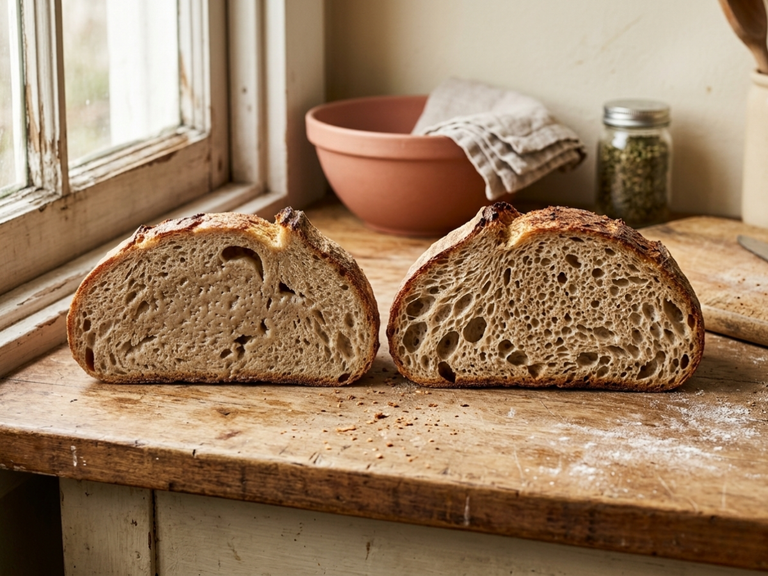
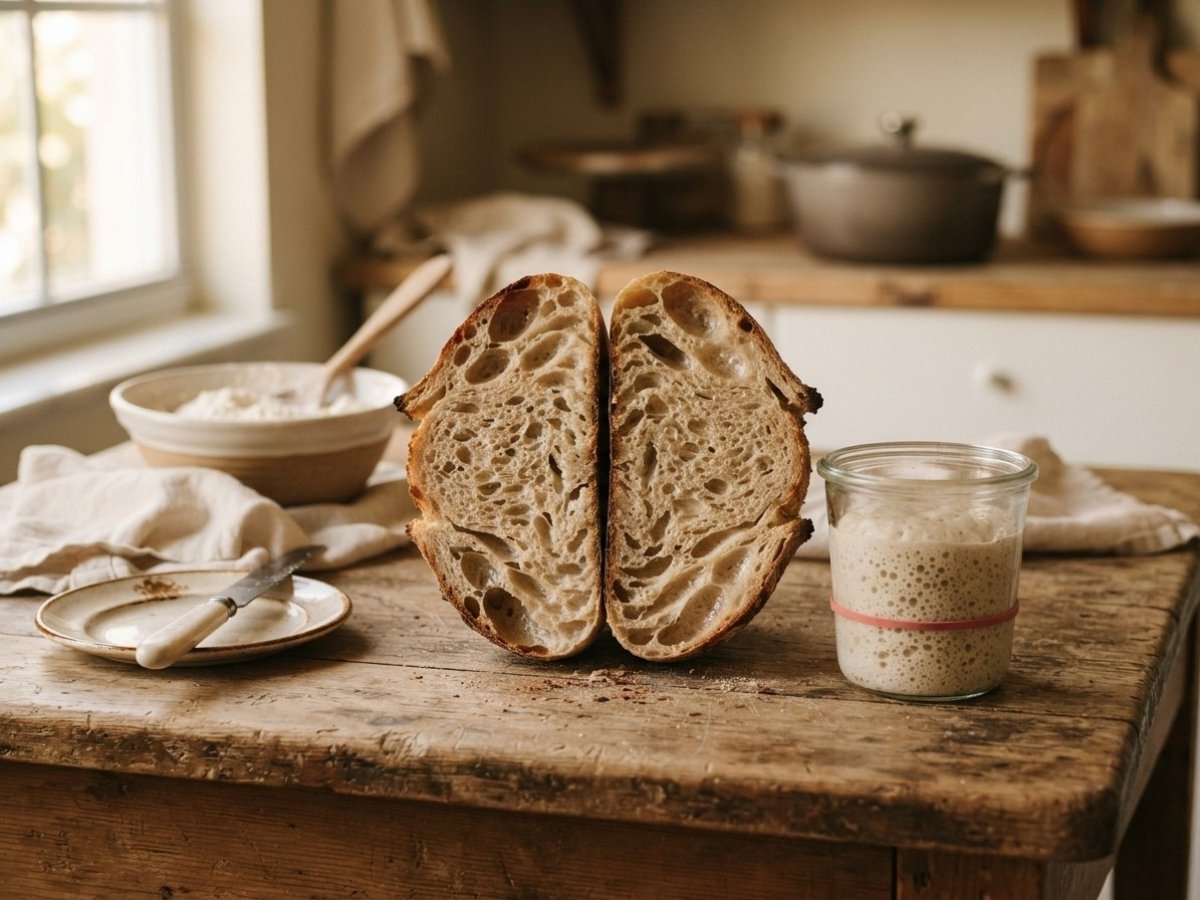
Two bakers, same starter, same recipe, same Saturday morning – and one loaf comes out mellow enough for a picky seven-year-old, and the other could pass for a vinaigrette. I get versions of this message constantly: “I followed the recipe exactly, why does my sourdough taste so different from last week?” The honest answer is that sourness isn’t one dial – it’s two. One set of choices controls how sour your bread gets. A completely different set of choices controls what kind of sour it tastes like. Mix those up – and almost every sourdough article on the internet does – and you end up changing five things at once, guessing at what worked, and never actually landing on “this is my sourdough.” This post untangles the two questions so you can adjust the one you actually mean to.
The Short Answer
Sourness has two separate settings: intensity (how sour, period) and character (what kind of sour). Intensity is controlled by time, temperature, and how ripe your starter or levain is when you use it – more of any of those, more sour. Character is controlled by hydration and flour type – a stiffer levain and whole-grain flour push toward a sharp, vinegary acidity; a wetter levain and white flour push toward a mild, yogurt-like tang. Want more sour? Give it more time. Want a different kind of sour? Change what you’re feeding it, not how long you’re waiting.
Before You Touch Anything: Is Your Starter Even Healthy?
One quick check before you touch any of the levers below: this post assumes your starter is already active, doubling reliably, and smelling like something you’d want to eat – not a stuck, sluggish, or genuinely “off” starter. If yours is inconsistent, start with Starter Microbiology 101, and if something smells specifically like nail polish or acetone, our post on why your starter smells like nail polish or vinegar – fix that first, because none of the levers below behave predictably on top of an unhealthy starter. If your starter’s fine and you just want to change the flavor of a loaf that’s already working, keep reading.
Two Different Questions: Intensity vs. Character
Here’s the tangle that trips up almost every sourdough sourness guide out there, including some genuinely good ones: one well-known series says a wetter levain makes bread more sour, and a stiffer one makes it milder. Other well-respected sources say close to the opposite – that stiff, low-hydration starters are the ones that read as more sour. Neither is wrong. They’re just answering two different questions without saying so.
Sourdough sourness comes from organic acids produced by the lactic acid bacteria (LAB) living alongside your yeast – mainly lactic acid (mild, yogurt-like) and acetic acid (sharp, vinegary, like actual vinegar, because it’s the same compound). Hydration doesn’t reliably change how much total acid gets produced. It changes which kind. A stiff, low-hydration levain has less available oxygen, which favors bacteria that produce more acetic acid – sharper. A wet, high-hydration levain has more oxygen moving through it, which favors bacteria that lean lactic – milder and rounder. That’s a character shift, not an intensity shift.
What actually sets the intensity – how much total acid accumulates, period – is almost entirely about time, temperature, and ripeness at the point you use it. A levain fermented for 4 hours at 90°F and used at its bubbly peak will taste different from one fermented for 14 hours at 65°F, retarded in the fridge, and used well past peak – regardless of whether either one was stiff or wet. Once you separate these two questions, the “contradiction” disappears: you can have a sharp-tasting mild loaf (stiff levain, short ferment) and a mellow-tasting intense loaf (wet levain, long cold ferment) – hydration set the character, time set the intensity.
The Intensity Levers (How Sour, Period)
These four levers move the total amount of acid in your dough. Push any of them up, and the loaf gets more sour, full stop – regardless of hydration or flour type.
Fermentation time (bulk + cold retard): This is the single biggest lever you have. Every extra hour of fermentation – especially in a cold retard (proofing the shaped loaf in the fridge overnight, sometimes for 24-48 hours) – gives the bacteria more time to produce acid. A same-day bake and an overnight cold-retarded bake, from the exact same dough, can taste like two different recipes.
Temperature: Warmer fermentation runs faster, but that doesn’t automatically mean more sour by the time you bake – it means the same amount of souring happens in less time. The real lever is temperature combined with how long you let it go: a long, cool, slow ferment tends to produce a more complex, more acidic result than a short, hot one, because the LAB get more total working hours before the yeast finishes the dough.
Starter/levain ripeness at mix time: A levain used right at its peak (just domed, still slightly convex) tastes noticeably different from the same levain left an hour or two past peak, once it’s started to collapse and smells sharper. Ripe-past-peak means more sour. Catching it earlier, while it’s still climbing, is one of the fastest ways to pull sourness back without changing your whole schedule.
Levain percentage / inoculation rate: A smaller amount of starter added to a larger amount of flour and water (a lower inoculation rate) ferments more slowly, and – given the same total time – tends to develop more complex acidity than a large, fast-moving levain that finishes before the bacteria have caught up. This is a subtler lever than the first three, but it’s why some bakers deliberately drop from 20% levain to 10% when they want more depth.
The Character Levers (What Kind of Sour)
These two levers don’t really change how much total acid you get – they change what that acid tastes like.
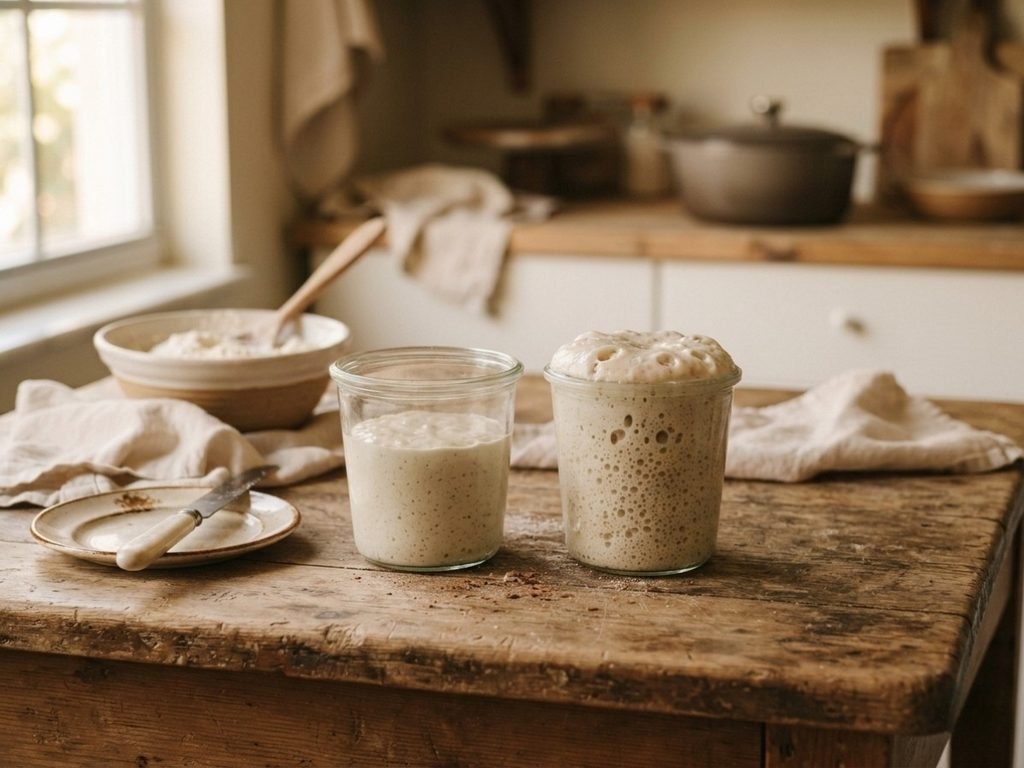
Hydration: A stiff levain (roughly 50-65% hydration – thick, almost dough-like) runs lower in available oxygen, which favors acetic-leaning bacteria: think sharp, bright, vinegar-adjacent tang. A wetter or liquid levain (100% hydration and up – pourable, like a thick pancake batter) runs higher in oxygen, favoring lactic-leaning bacteria: softer, rounder, more yogurt-like. Same total acidity, genuinely different flavor.
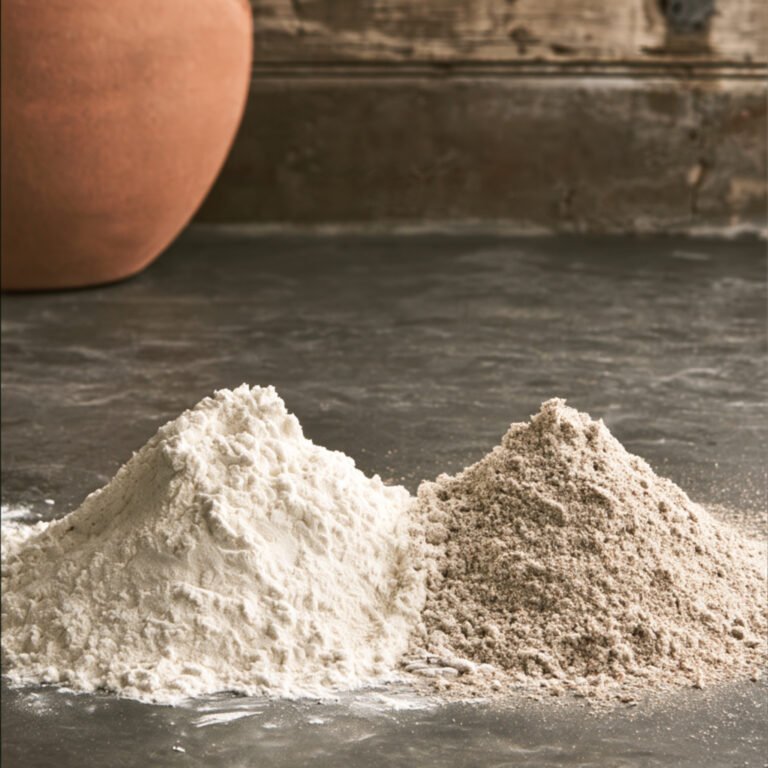
Flour type: Whole-grain and rye flours carry more minerals and bran than white flour, which gives the dough more buffering capacity – it can absorb more acid before the pH drops low enough to slow the bacteria down, which usually means more total sourness is possible before things self-limit. Rye specifically also nudges the character further toward acetic. That’s why a loaf with even 10-15% rye or whole wheat in the mix – whether that’s in the dough itself or just in how you feed your starter – tastes noticeably different from an all-purpose-flour loaf fermented on the exact same schedule. If you keep a rye-fed starter going, a bag of whole rye flour earns its shelf space fast; for the dough itself, a good bread flour gives you the structure to support a longer, more sour ferment without the loaf collapsing.
Quick Reference: Dial It Up / Dial It Down
| Lever | To dial it UP (more sour) | To dial it DOWN (milder) |
| Fermentation time | Extend bulk fermentation; add a 12-24hr+ cold retard | Shorten bulk; skip or shorten the cold retard |
| Temperature | Ferment longer at a cool room temp, or retard in the fridge | Ferment faster at a warm room temp, for less total time |
| Levain ripeness at mix time | Use levain past peak, once it's started to collapse | Use levain right at peak, or slightly before |
| Levain % (inoculation rate) | Use a smaller amount of levain (lower %) | Use a larger amount of levain (higher %) |
| Hydration (character, not intensity) | Use a stiffer levain (50-65%) for a sharper, acetic tang | Use a wetter levain (100%+) for a milder, lactic tang |
| Flour type (character, not intensity) | Add whole wheat or rye to the dough or starter feed | Use all white / bread flour throughout |
↔ Swipe to see all columns
Which Lever Should You Pull First?
If you only change one thing: for more sour, extend your cold retard by 12-24 hours before baking. It’s the lowest-effort, highest-impact lever, and it doesn’t require rebuilding your starter routine. For milder, do the opposite: shorten your bulk fermentation, and use your levain earlier, right as it peaks rather than after it’s started to fall – that alone tames most “too sour” complaints without touching your flour or hydration at all. Save hydration and flour-type changes for when you’ve already got the intensity where you want it and you’re chasing a specific character on top of that.
Try It Yourself: One Dough, Two Directions
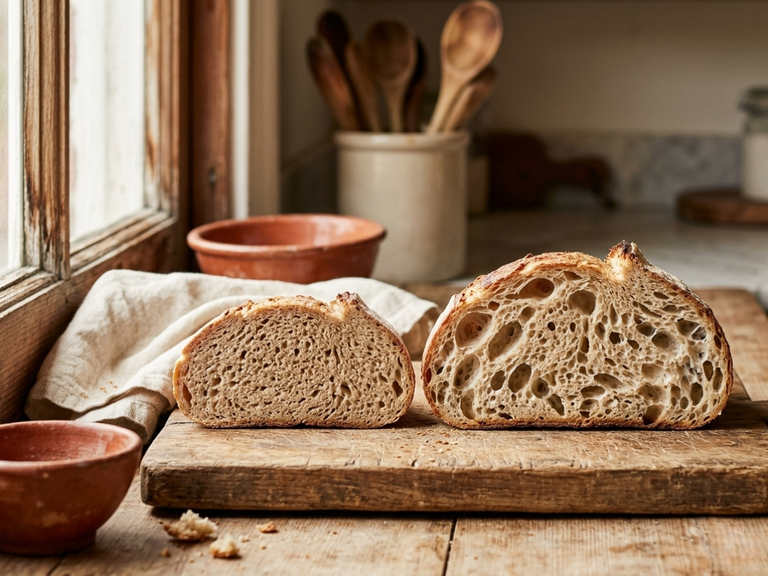
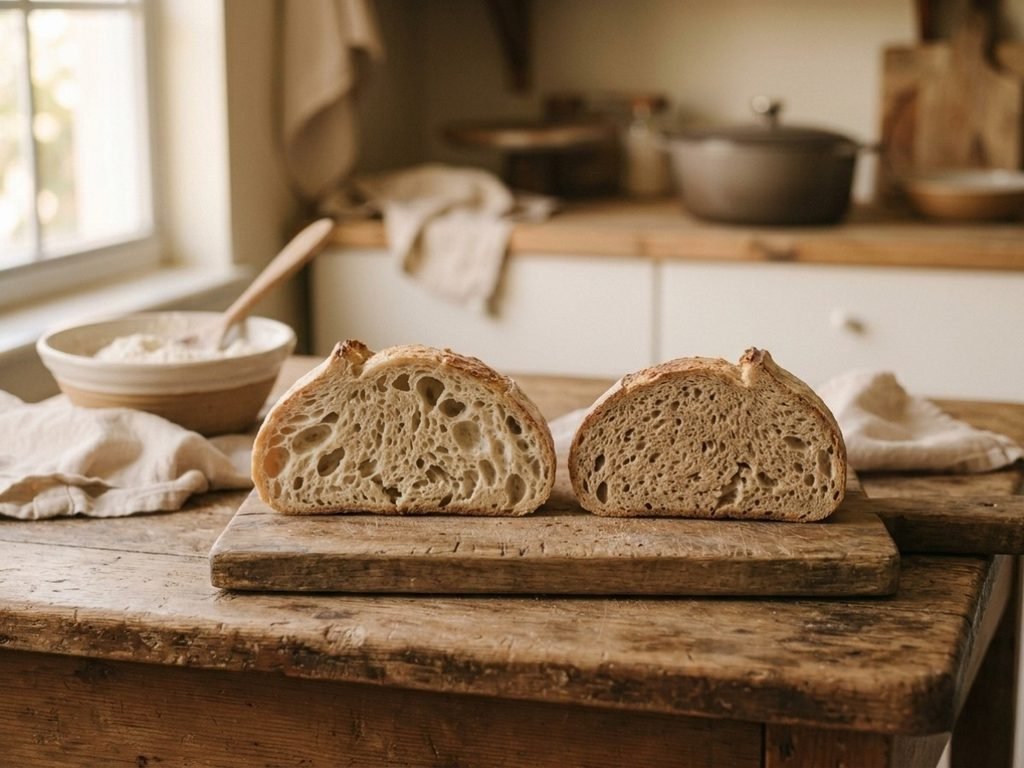
Want to see this in action without overthinking it? Take our Plain Sourdough Loaf recipe and bake it twice. First time, use your levain right at peak and skip the cold retard – straight to the oven after a same-day rise. Second time, use the exact same recipe, but retard the shaped loaf in the fridge for a full 24 hours before baking. Same flour, same hydration, same shaping – two genuinely different sourness levels, and you’ll taste exactly which lever you just pulled.
Key Takeaways
- Sourness has two separate settings: intensity (how much) and character (what kind) – and they’re controlled by different things.
- Time, temperature, and levain ripeness set the intensity. More of any of them means more sour.
- Hydration and flour type set the character. Stiffer + whole grain leans sharper/acetic. Wetter + white flour leans milder/lactic.
- The single biggest, lowest-effort lever for more sour is a longer cold retard. For milder, use a younger levain and shorten fermentation.
- Fix starter health first – these levers assume a starter that’s already active and consistent.
More Resources
Looking for a printable reference? Browse all six Printable Quicksheets, or dial in your own numbers with the Sourdough Calculator.
Knead to Know?
New recipes, baking tips, and sourdough troubleshooting — delivered before your starter even finishes its next rise.
Get the latest insights, no spam — just new recipes and baking tips. Unsubscribe anytime. See our Privacy Policy.