
Sourdough Crust Problems: Too Hard, or a Burnt Bottom with a Raw Middle
A crust that could double as a doorstop and a bottom that is scorched while the middle is still doughy look like opposite problems, but both come down to the same thing: how heat reaches the loaf. Find your symptom, match it to the cause, and change one thing at a time. Neither one is a dough problem, so you do not need to change your recipe.
Loaf too hard to slice nicely? Turn a stale loaf into sourdough bread pudding.
The Short Answer
An overly hard crust is usually too much direct heat, baking too long, or not enough steam early in the bake. A burnt bottom with a raw middle usually means the oven’s bottom heat is too intense for your bake time, often from baking on a thin pan or a rack set too low. Add steam for the first part of the bake, insulate the bottom, and check the inside of the loaf with a thermometer, not just the clock.
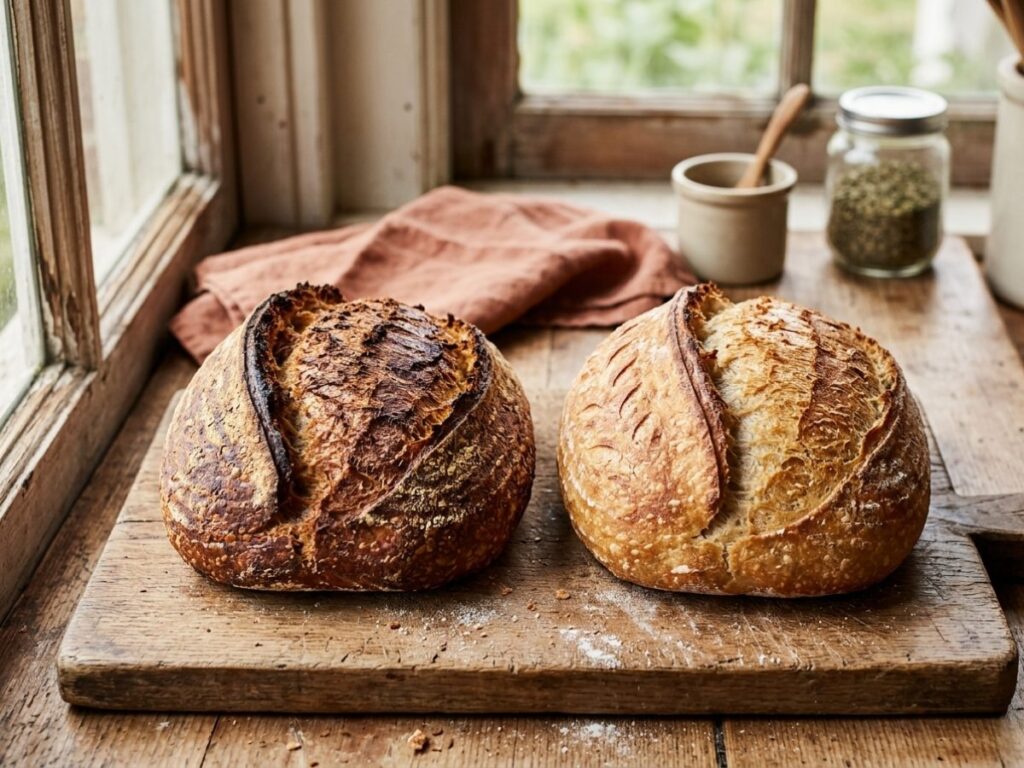
Start here: what is your crust doing?
- The crust is harder or thicker than you want. Jump to “Hard crust: three causes.” It is almost always a steam issue, not a dough issue.
- The bottom is dark or burnt, but the inside is still doughy. Jump to “Burnt bottom, raw middle: five causes.” It is a heat distribution problem, not a timing problem.
- The crust looks fine, but the crumb is gummy. Read the gummy crumb section of Dense, Gummy, or Sticky Sourdough? Causes and Fixes instead.
Hard crust: three causes
A hard crust is not wrong. Some people love that shatter. But if yours is harder than you want, it usually comes down to oven conditions, not your dough, and this is an easy one to fix.
Cause 1
There wasn’t enough steam in the oven during the first part of the bake, often because the Dutch oven lid came off too early, which lets the crust set and harden before it should.
The Fix
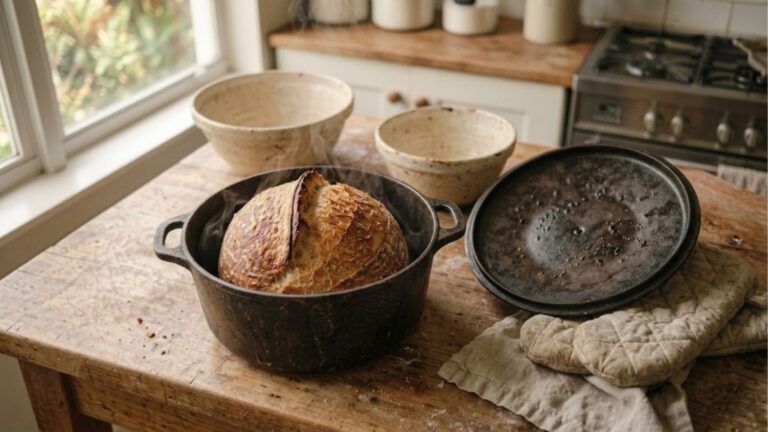
Bake covered in a Dutch oven for the first 30 minutes to trap steam, then uncover for the remainder to brown.
Cause 2
The loaf was baked too long or at too high a temperature for your specific oven. An oven running 15 to 25 degrees hotter than its dial suggests is more common than people think.
The Fix
Check your oven’s actual temperature with an oven thermometer, and pull the loaf a few minutes earlier next time if the crust is consistently too thick or dark.
Cause 3
The loaf was left uncovered too long during cooling in a very dry kitchen.
The Fix
For a softer finished crust, wrap the fully cooled loaf in a clean kitchen towel or paper bag overnight.
Free Email Course
If your bakes keep coming out different from one loaf to the next, check the starter first. The free 7-lesson email course builds a strong one in seven short emails.
Tools for this step
Two tools connect to the causes above. A decent loaf does not need either one.
Steam is the usual fix for a hard crust, and a heavy lidded pot holds it in. A 5 to 6 quart size fits most home loaves. If you already own an oven-safe pot with a tight lid, try that first.
Dutch oven

Desi Recommends
5.5-Qt Enameled Dutch Oven
- 5.5 qt
- Enameled
The budget way in: a 5.5 qt enameled cast iron pot that fits every loaf on this site at a fraction of the price of the big names.
Desi Recommends
6-Qt Enameled Dutch Oven
- 6 qt
- Enameled
I bake in a 5 qt oval and a 6 qt round depending on the loaf. A 6 qt round like this one suits a standard boule, and the tight lid traps steam for a crackly crust.
Checking the center temperature tells you when the loaf is done, so you stop adding minutes just to darken the crust.
Instant-read thermometer
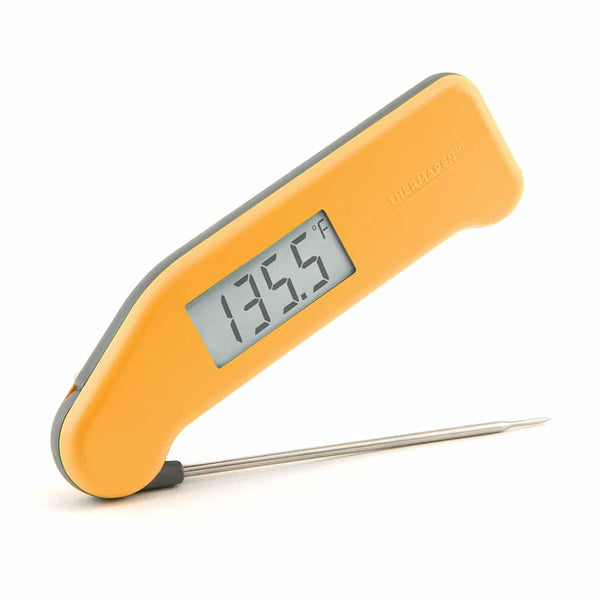
Classic Thermapen Instant-Read Thermometer
The time-tested Thermapen: full readings in 1 to 2 seconds, plus or minus 0.7 degrees F accuracy and a 1500-hour battery. A solid everyday step up from a budget probe, and it ships with a NIST-traceable calibration certificate.
As an Amazon Associate I earn from qualifying purchases.
Burnt bottom, raw middle: five causes
This is one of the more confusing problems out there because it seems backwards. How can the bottom be scorched while the middle is still doughy? It comes down to heat distribution, not timing.
Cause 1
The baking vessel or rack is positioned too low in the oven, putting the loaf too close to the bottom heating element.
The Fix
Move your oven rack to the middle or slightly lower-middle position rather than the very bottom.
Cause 2
A thin, dark Dutch oven or pan absorbs and radiates heat faster than a heavier or lighter-colored one.
The Fix
Place a baking sheet on the rack below your loaf to act as a heat buffer if the issue persists.
Cause 3
The loaf was pulled based on total time rather than internal temperature, so the outside looked done while the inside wasn’t.
The Fix
Check for doneness with an instant-read thermometer, aiming for 205 to 210°F internally, rather than relying on total bake time alone.
Cause 4
The oven was preheated at too high a temperature for too long before baking.
The Fix
If your Dutch oven runs hot, try lowering your oven temperature by 15 to 20 degrees and extending the bake time slightly.
Cause 5
There is no parchment or insulating layer between the dough and a very hot pan surface.
The Fix
Use parchment paper as a buffer between the dough and your baking vessel.
Quick answers
Is a hard crust a problem? Not necessarily. It is a matter of preference. If you want it softer, add steam early and wrap the cooled loaf in a towel or paper bag overnight.
How long should the loaf bake covered? About the first 30 minutes in a Dutch oven, then uncover to brown.
How do I know if my oven runs hot? Use an oven thermometer. Many ovens run 15 to 25 degrees hotter than the dial says.
What temperature should the inside of the loaf reach? Roughly 205 to 210°F.
Where should the oven rack go? The middle or slightly lower-middle position, not the very bottom.
Desi’s Note
A hard crust isn’t wrong. Some people love that shatter. But if it’s harder than you want, it’s almost always a steam issue, not a dough issue.
A burnt bottom with a raw middle is basically a depreciation problem. Your heat source is hitting that bottom crust faster than it should over the life of the bake. Buffer it, and the rest of the loaf gets a fair shot at catching up.
Want To Know The Science Behind This?
If you want the deeper “why” behind how humidity affects crust development in the oven, read our Sourdough Science article: “Hydration and Climate: The Two Numbers That Actually Control Your Fermentation Time”.
More Resources
For a printable reference, grab the Crumb & Crust Diagnostic Quicksheet. New to the terms? Jargon like crust, steam, internal temperature, and Dutch oven is explained in plain English in the full Sourdough Glossary. Still not sure what’s wrong? Go back to What’s Wrong With My Loaf? for the rest of the troubleshooting guides.
Knead to Know?
New recipes and sourdough troubleshooting, delivered before your starter even finishes its next rise.
Get the latest insights with no spam, just new recipes and baking tips. Unsubscribe anytime. See our Privacy Policy.