Baking Sourdough in Florida Heat and Humidity: Dough, Starter, and Storage
Almost every sourdough recipe online was developed somewhere cool and dry. A hot, humid kitchen changes how fast your starter peaks, how wet your dough feels, and how quickly a finished loaf goes soft or moldy. None of that is a mistake on your part. Find the part of the process that is giving you trouble, match it to the cause, and adjust one thing at a time.
Need timings that work in this heat? Find a sourdough schedule for your week.
The Short Answer
Heat and humidity speed up fermentation, add moisture to your flour and dough, and shorten the life of a finished loaf. Expect faster rises, a starter that peaks sooner and runs out of food sooner, slightly stickier dough, and bread that softens in hours and molds in as little as two days. Treat recipe timelines as estimates, keep your starter cooler, trim hydration slightly if the dough runs slack, and store bread in a breathable cover or the freezer.
Start here: what is the heat doing to your baking?
- Your dough rises faster than the recipe says, or feels wetter than described. Jump to “Dough in humidity: three causes.” Rely on the poke test, not the clock.
- Your starter peaks early, falls, or develops hooch. Jump to “Starter in Florida heat: four causes.” Smaller feedings and a cooler spot help.
- Your bread goes soft within hours, or grows mold in a couple of days. Jump to “Bread storage in humidity: four causes.” The fix is the storage material, location, and timeline.
Dough in humidity: three causes
I bake in South Florida, and following cool-climate recipes exactly, without adjusting, is a recipe for frustration. Humidity changes more than people expect.
Cause 1
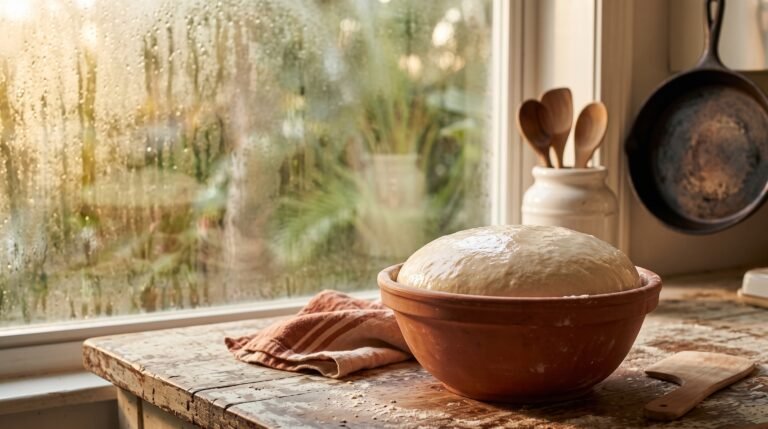
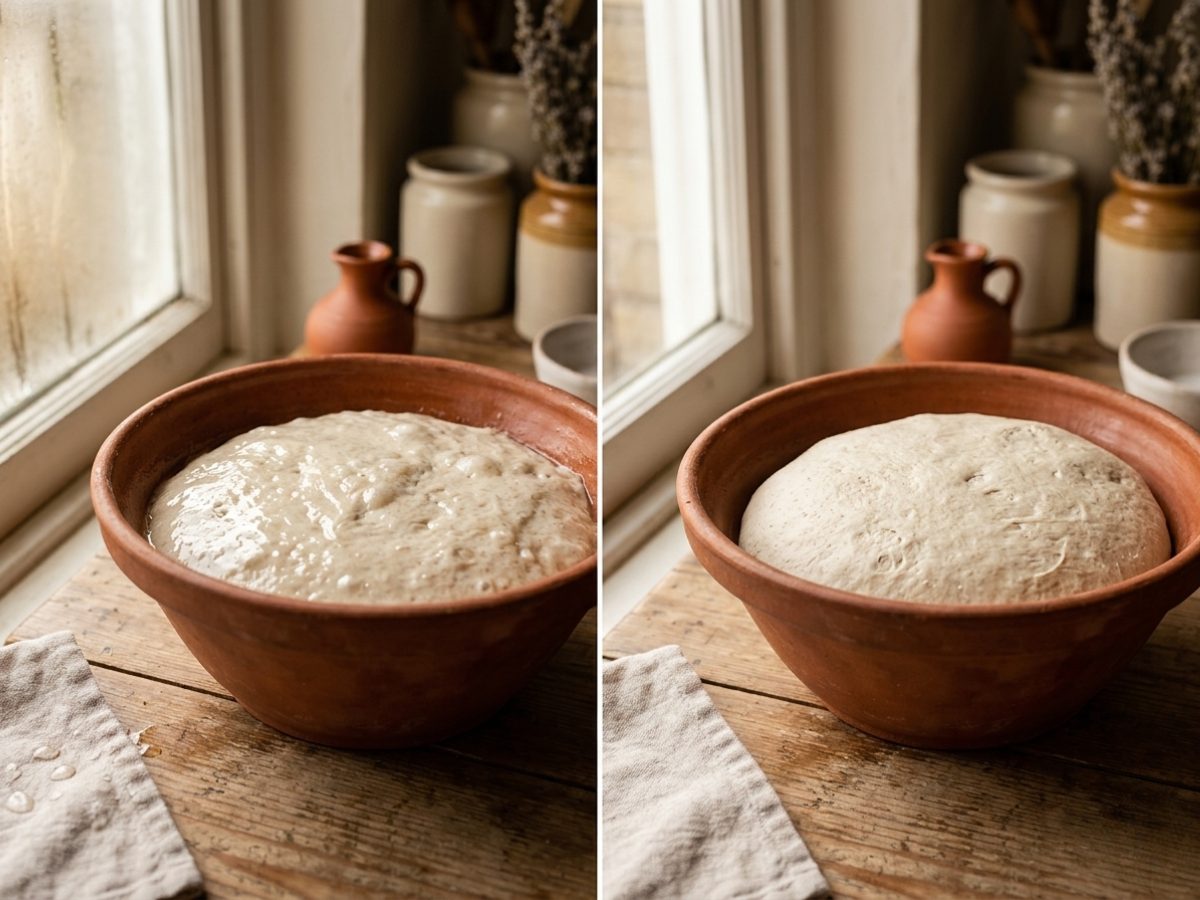
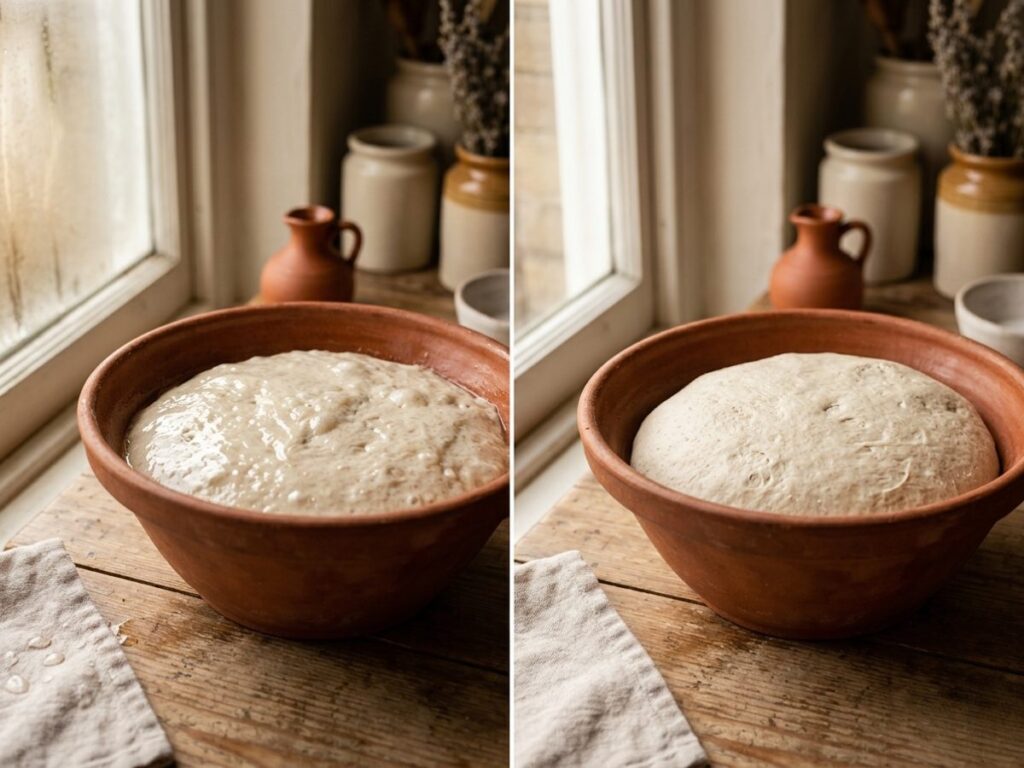
Fermentation speeds up significantly. Both starter activity and bulk fermentation respond directly to ambient warmth and moisture, so recipe timelines written for cooler, drier climates can run consistently faster here, sometimes by hours, not minutes. Dough left on a timer instead of watched directly can slide into overproofed territory fast.
The Fix
Treat every recipe’s stated proof time as a starting estimate, not a rule. Rely on the poke test and visual cues instead, move fermentation to a cooler part of your home or the fridge if you need more control, and bake earlier in the window than the recipe suggests. See how to tell underproofed from overproofed, and for a full adjusted timeline see How Florida Heat Compresses Your Sourdough Schedule.
Cause 2
Flour absorbs ambient moisture from the air before you even start mixing, which effectively raises your dough’s hydration without you adding a drop of extra water.
The Fix
Consider reducing hydration by a small amount if your dough consistently runs slack and sticky compared to the recipe’s description. If it is sticky rather than slack, see the sticky dough section of our dense, gummy, and sticky guide.
Cause 3
Starters kept at room temperature can become overactive and hungry faster than a typical feeding schedule accounts for.
The Fix
Feed your starter slightly more often if you keep it at room temperature, since it will burn through food faster in the heat. I strongly recommend keeping your starter in the fridge between bakes instead, and feeding it before you actually need to use it rather than every single day.
Free Email Course
A starter in a hot, humid kitchen runs fast and forgives very little. The free 7-lesson email course walks you through building one, with one short email a day.
Bakers at high elevation face a different variable than humidity, which this article on altitude and air pressure covers.
Reading your crumb: fermentation
Let the loaf cool for a full hour before you cut it, then find the closest match.
Swipe each row to see all three.
Under-fermented
Uneven bubbles and a dense, gummy crumb, with sometimes a few big tunnels under the top crust. The dough did not make enough gas before it went into the oven.
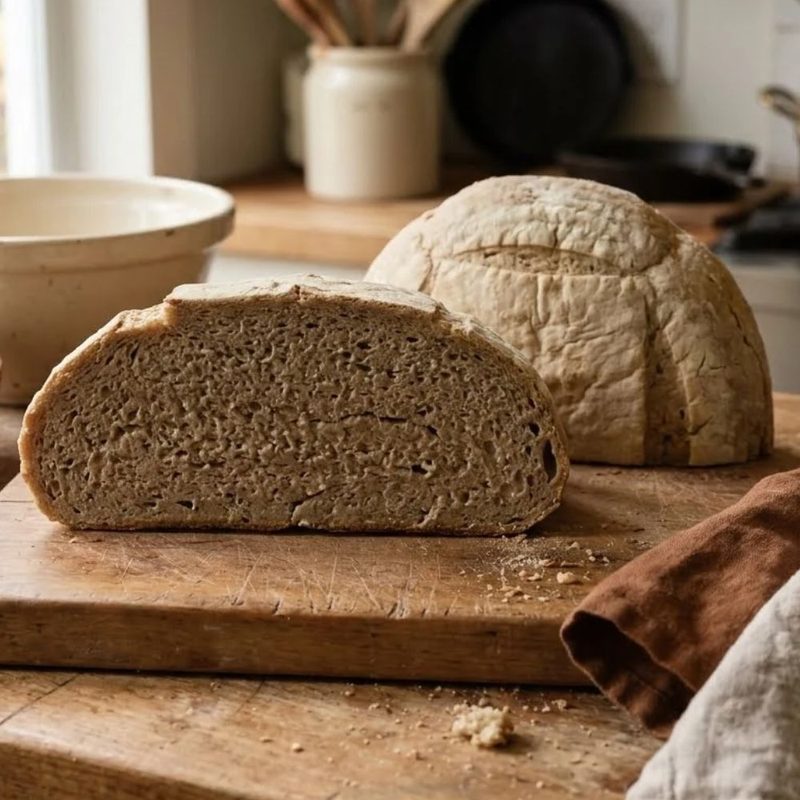
ExtremeVery dense and tight, with only tiny holes.
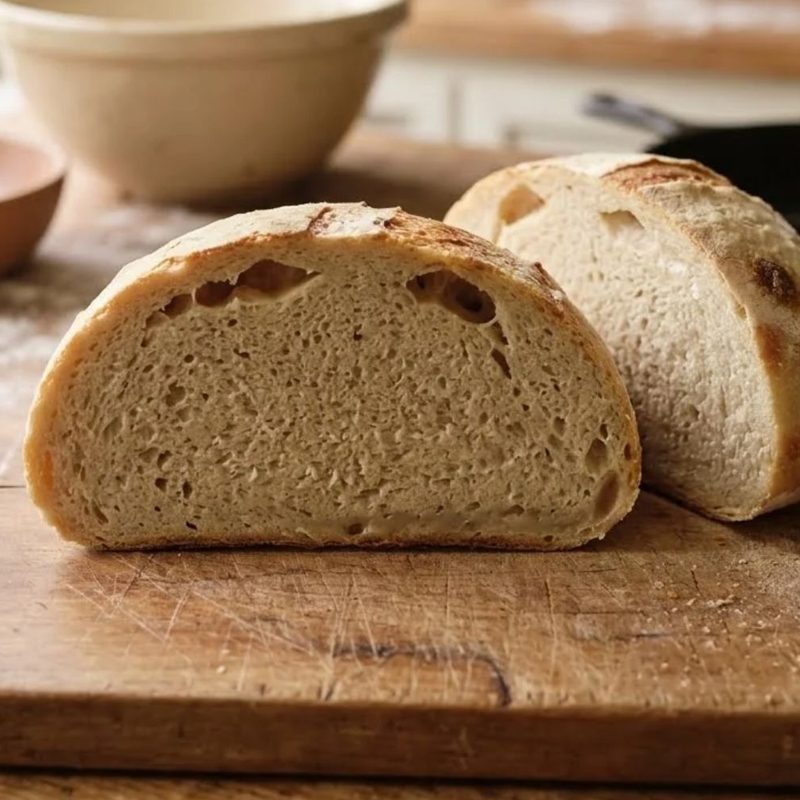
ModerateA few big tunnels over a tight, doughy crumb.
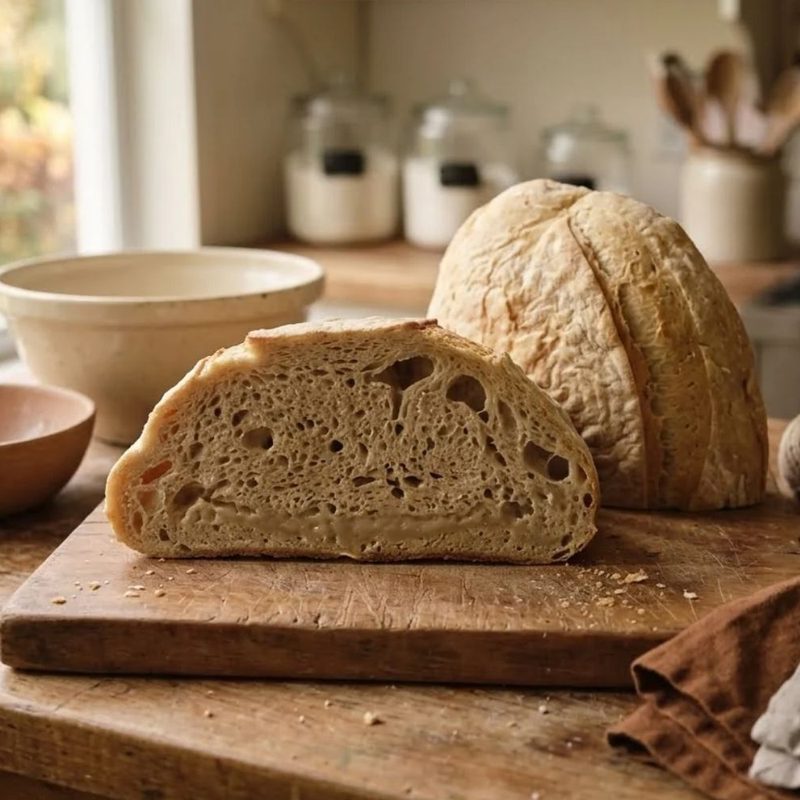
MildSome holes near the top and a gummy band along the bottom.
Nicely fermented
Bubbles of mostly similar size spread evenly through a light, springy crumb. An ear is a bonus, since a good loaf can bake without one.
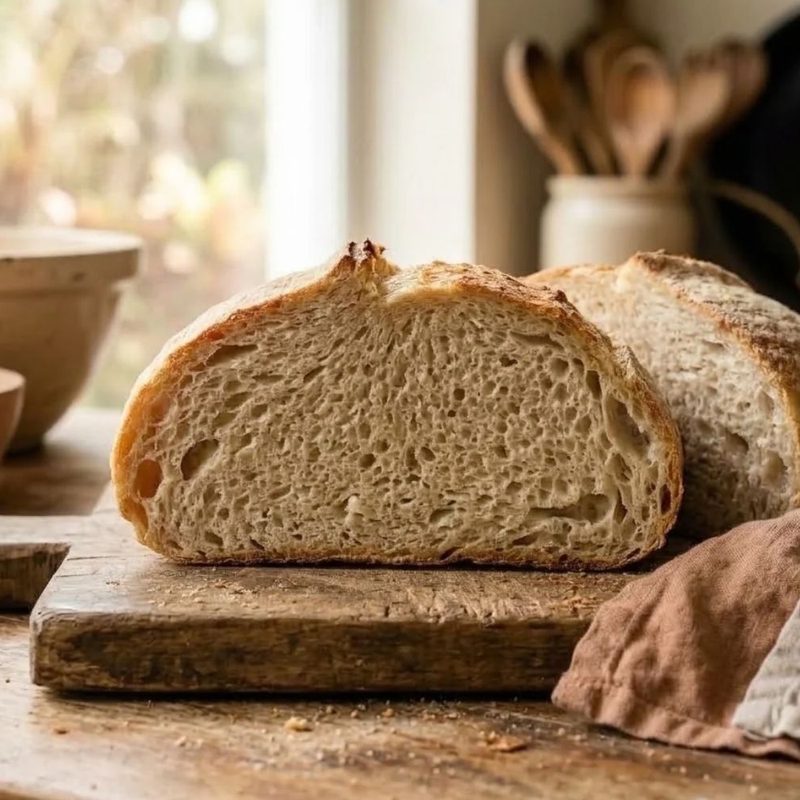
TighterA softer, tighter crumb with small, even holes.
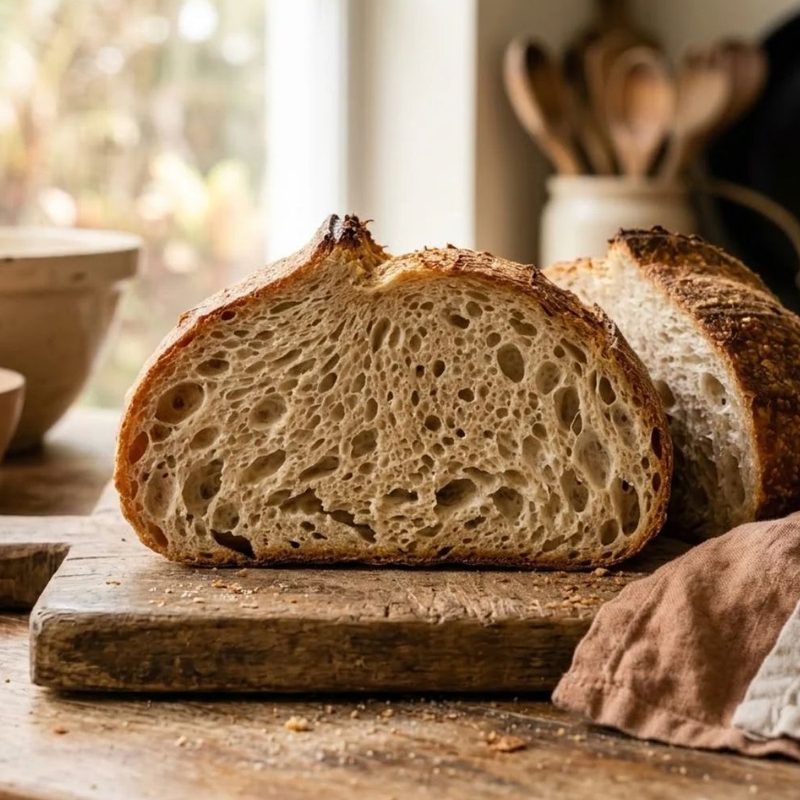
StandardEven, medium bubbles and a tall, rounded loaf. A good everyday crumb.
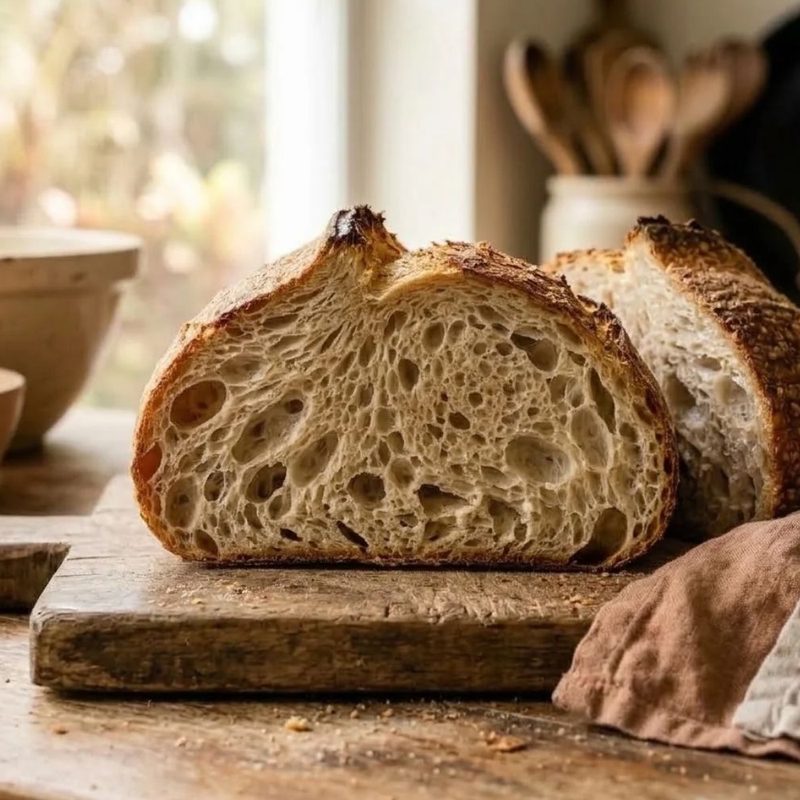
OpenLarge glossy bubbles with thin walls and an ear.
Over-fermented
The structure is weak and the holes are small and shriveled. The loaf spreads flat because the dough ran out of strength before it baked.
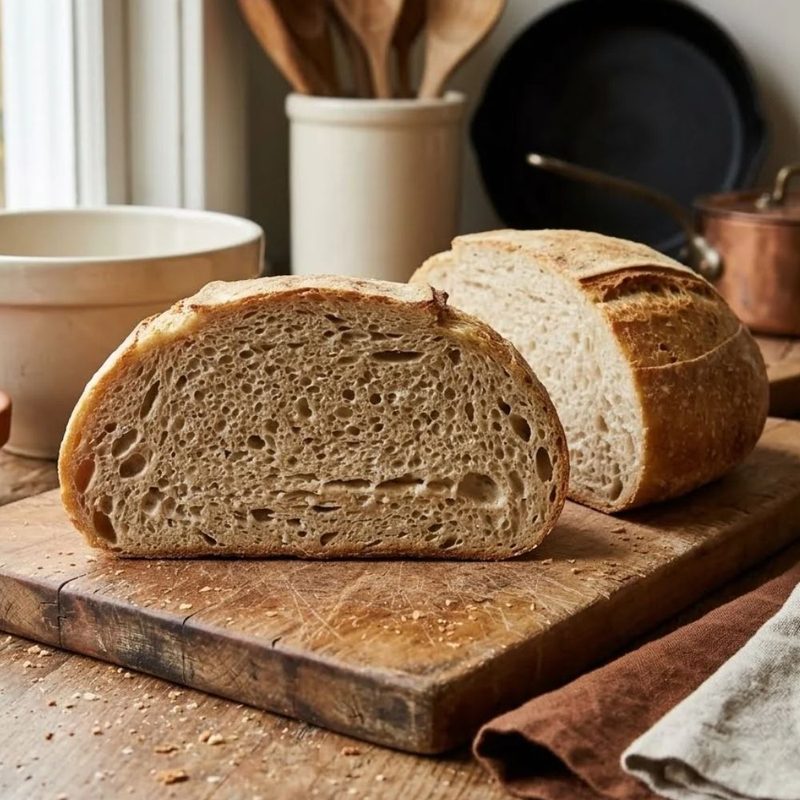
MildA soft, slightly damp crumb with small, tired-looking bubbles.
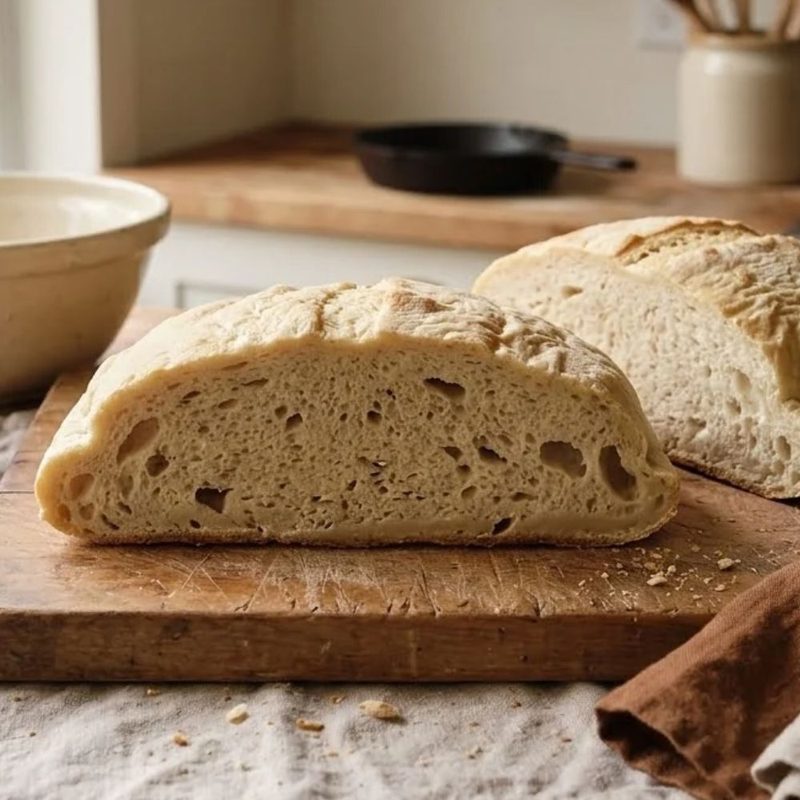
ModerateA pale, wide loaf with torn-looking holes and a gummy base.
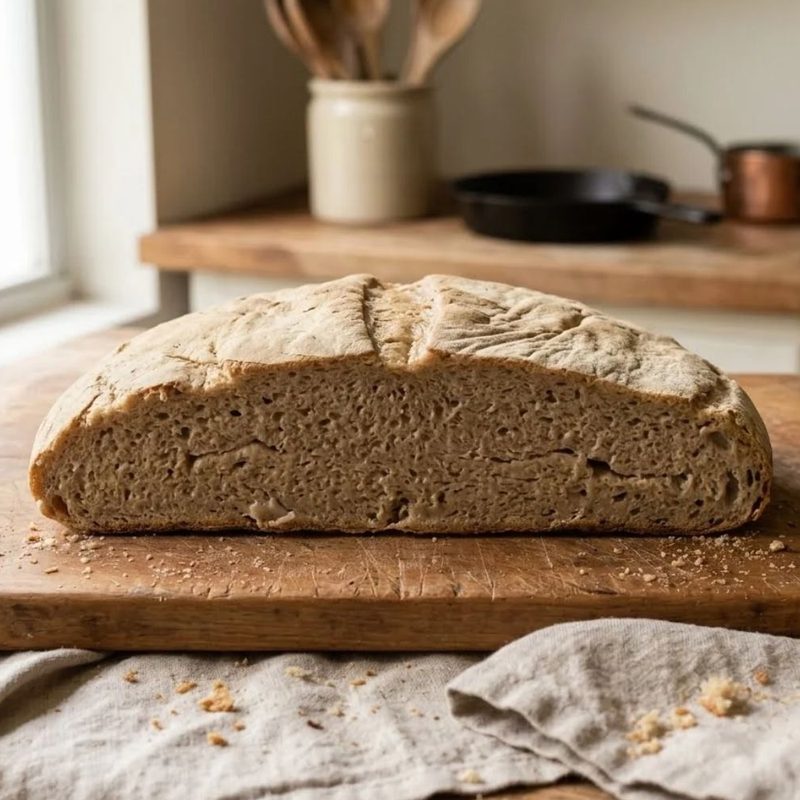
ExtremeA flat, spread loaf with a dense, damp crumb and no structure.
Starter in Florida heat: four causes
If you moved to Florida with a starter that behaved one way up north, or you started one here from scratch and it seems unusually fast and hungry, you’re not imagining it. Heat changes starter behavior more than almost any other single factor. If your starter is sluggish or smelly instead, start with Sourdough Starter Problems.
Cause 1
Wild yeast and bacteria activity accelerates directly with ambient temperature, and Florida kitchens frequently sit well above the 68 to 72°F range most starter guides assume.
The Fix
Use a smaller ratio of starter to flour and water at feeding, something like 1:10:10 instead of a stronger everyday ratio. It slows the whole cycle down slightly and gives you a wider window to catch peak activity.
Cause 2
A starter that peaks in 8 to 10 hours somewhere cooler might peak in half that time here, so you can easily miss the ideal window if you’re following a generic timeline.
The Fix
Check your starter more frequently through the day rather than assuming it will hold its peak for hours.
Cause 3
Starters can run out of food and start to fall or develop hooch faster.
The Fix
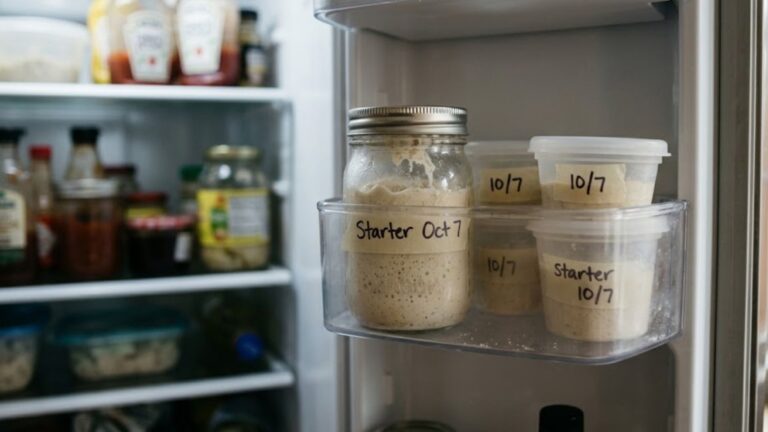
Keep your starter in the fridge between bakes if you can’t keep up with an accelerated room-temperature schedule, and pull it out to warm up and feed a day or two before you plan to bake.
Cause 4
Air conditioning cycling on and off creates temperature swings that a starter in a more climate-stable environment doesn’t experience.
The Fix
Find the most consistent spot in your kitchen, often away from windows and exterior walls, and keep your starter there.
Bread storage in humidity: four causes
You finally get that shatter-crisp crust just right, set the loaf on the counter, and a few hours later it’s gone soft and chewy. Worse, a couple of days in, there are fuzzy spots you really didn’t want to see. This isn’t a baking mistake, it’s a storage mismatch. Humid climates need a genuinely different storage approach than the advice most recipes give you. For the full storage walkthrough, see How to Store Sourdough in a Humid Climate.
Cause 1
Humid air is already close to saturated, so your bread’s crust can’t release moisture into it the way it would in a drier climate. Instead, the crust pulls moisture back in from the air, turning soft and chewy within hours instead of staying crisp.
The Fix
Store crusty loaves in a breathable material, a linen or cotton bread bag or a paper bag, never plastic, which traps moisture directly against the crust and speeds up exactly the softening you’re trying to avoid. The crust will dry out a little faster this way than it would in plastic, but that’s the right trade-off in a humid climate.
Cause 2
Warm, humid air is exactly the environment mold spores thrive in, so bread that might take five or more days to show mold in a cooler, drier kitchen can show it in as little as two days here.
The Fix
If your kitchen regularly sits above 75°F with high humidity, plan around a much shorter countertop window and freeze whatever you won’t eat within about 2 to 3 days instead of waiting for it to actually go bad.
Cause 3
Where you store the loaf matters as much as what you store it in. A spot near the stove, dishwasher, or on top of the fridge creates a pocket of localized heat and humidity that speeds up both staling and mold.
The Fix
Pick a cool, dry spot away from appliances and out of direct sunlight for your bread box or bag. If you don’t have a naturally cool spot, freeze whatever you’re not eating right away instead of trying to stretch it out longer at room temperature. Freezing sidesteps the staling problem entirely rather than trading mold risk for stale bread.
Cause 4
Standard advice like “just use a bread box” often assumes one with some ventilation. In humid weather, a sealed, airtight bread box behaves exactly like a plastic bag, trapping humidity against the crust instead of letting it escape.
The Fix
Make sure whatever container you’re using actually has airflow, ventilation holes in a bread box or a bag closed loosely rather than sealed tight. If you’ve already sliced into the loaf, press the cut sides together and store it cut-side down on a board with a breathable cover, rather than leaving the whole cut face exposed to the air.
Quick answers
Why does my bread go soft within hours? The crust reabsorbs moisture from humid air. Use a linen, cotton, or paper bag, never plastic.
How soon can mold show up? In as little as two days in a warm, humid kitchen, versus five or more in a cooler, drier one.
When should I freeze a loaf? If you won’t eat it within about 2 to 3 days.
What starter ratio slows a fast starter down? Something like 1:10:10 instead of a stronger everyday ratio.
Should I keep my starter on the counter? In Florida heat, the fridge between bakes is easier to manage. Feed it a day or two before you plan to bake.
Should I run a humidifier near my dough? In a humid Florida kitchen, no. The air already holds plenty of moisture, and too much of it is the usual problem. A humidifier only helps in a dry kitchen, where it keeps the dough surface from drying out while it proofs. Here is how to tell whether your kitchen is dry.
Desi’s Note
Every recipe on this site gets tested in an actual South Florida kitchen, humidity and all, because a timeline written for a cool, dry climate somewhere else isn’t much use to you if that’s not where your kitchen is.
My starter runs on a different schedule than most of the recipes I originally learned from ever accounted for. Once I stopped fighting the heat and started working with it, everything got a lot more predictable.
In a Florida kitchen, plastic wrap is basically a mold incubator with extra steps. I switched to slicing and freezing my loaves the same day I bake them, even if I know I’ll eat a piece the next day. It keeps that just-baked freshness locked in for the day you actually thaw it, as if you baked it that same day.
Want To Know The Science Behind This?
If you want the deeper “why” behind how hydration and climate interact to control your fermentation time, read our Sourdough Science article: “Hydration and Climate: The Two Numbers That Actually Control Your Fermentation Time”.
Ready to Build a Schedule Around This?
Once you know your dough and starter are running faster here, the next question is how that reshapes your whole bake day. How Florida Heat Compresses Your Sourdough Schedule (and What to Do About It) walks through the adjusted timeline for a hot kitchen, side by side with a temperate one. If you are shopping for gear, Sourdough in a Hot, Humid Kitchen: The Equipment That Actually Helps covers what is worth buying.
More Resources
Track every feeding with the free Starter Feeding & Discard Log, and use the Bake-Day Timeline Template to plan your timing. New to the terms? Jargon like fermentation, hydration, starter, bulk fermentation, poke test, peak, wild yeast, hooch, crust, and staling is explained in plain English in the full Sourdough Glossary. Still not sure what’s wrong? Go back to What’s Wrong With My Loaf? for the rest of the troubleshooting guides.
Knead to Know?
New recipes and sourdough troubleshooting, delivered before your starter even finishes its next rise.
Get the latest insights with no spam, just new recipes and baking tips. Unsubscribe anytime. See our Privacy Policy.