Reading Your Sourdough Crumb: What Fermentation Looks Like Inside the Loaf
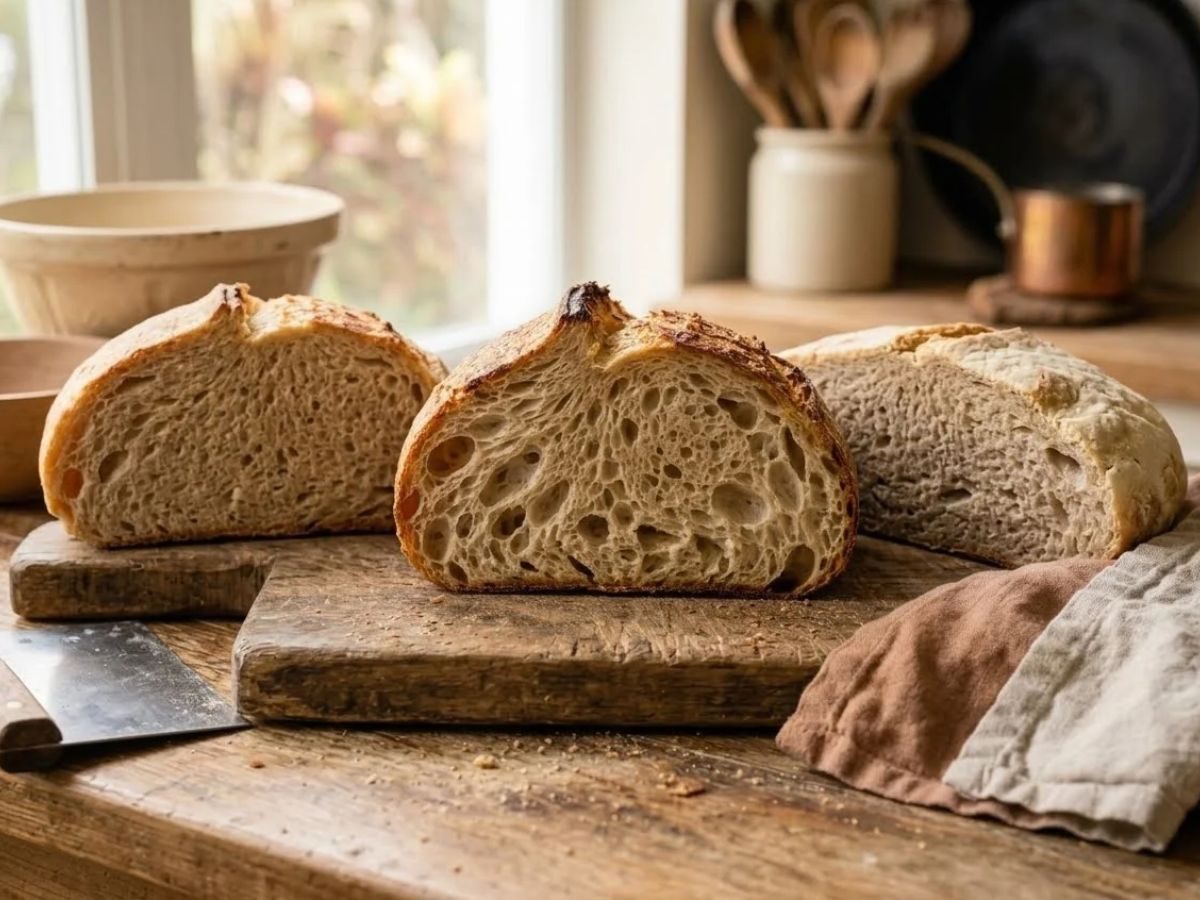
The crumb is the closest thing a loaf has to a receipt. Cut it open and it shows how long the dough fermented and how well it held its gas. It is an imperfect record, since hydration, flour, shaping and bake time all leave marks too, but it is a useful first clue.
Before you slice, let the loaf cool for a full hour. Cut a hot loaf and even a good crumb will look gummy and damp, which sends you hunting for a problem you do not have.

Match your crumb
Reading your crumb: fermentation
Let the loaf cool for a full hour before you cut it, then find the closest match.
Swipe each row to see all three.
Under-fermented
Uneven bubbles and a dense, gummy crumb, with sometimes a few big tunnels under the top crust. The dough did not make enough gas before it went into the oven.
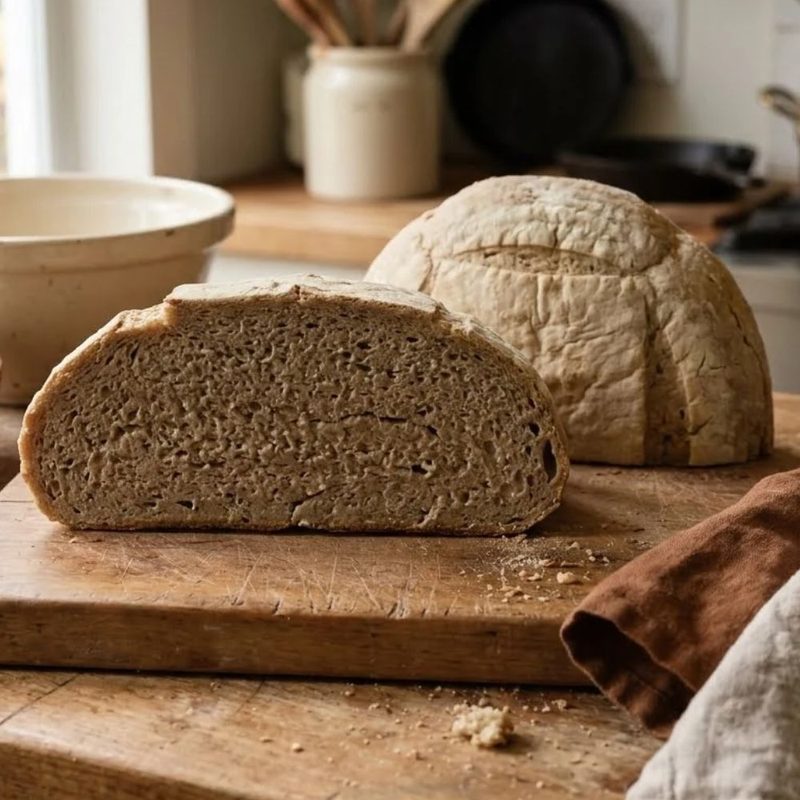
ExtremeVery dense and tight, with only tiny holes.
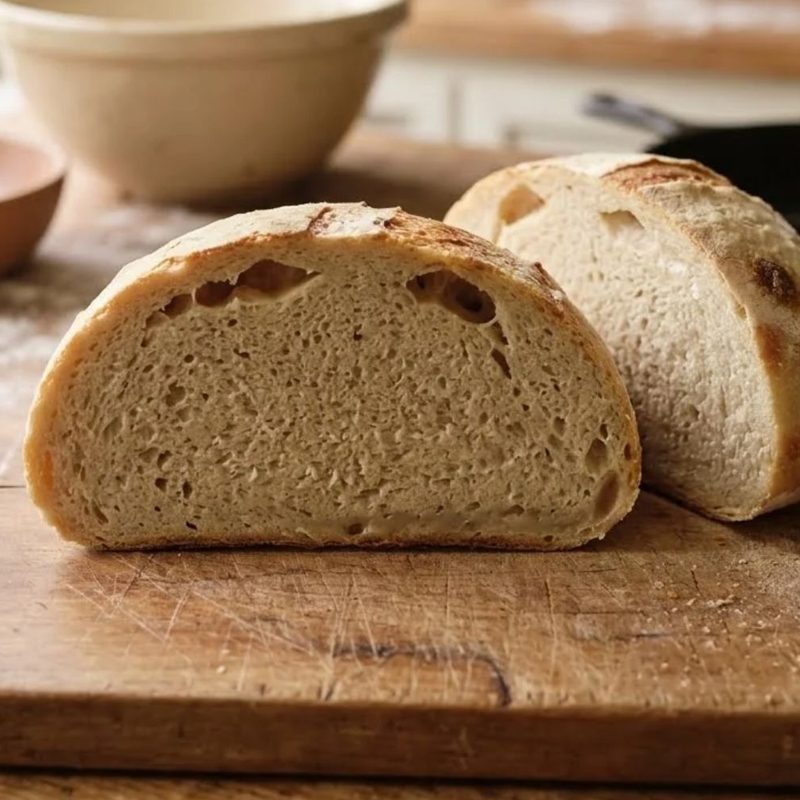
ModerateA few big tunnels over a tight, doughy crumb.
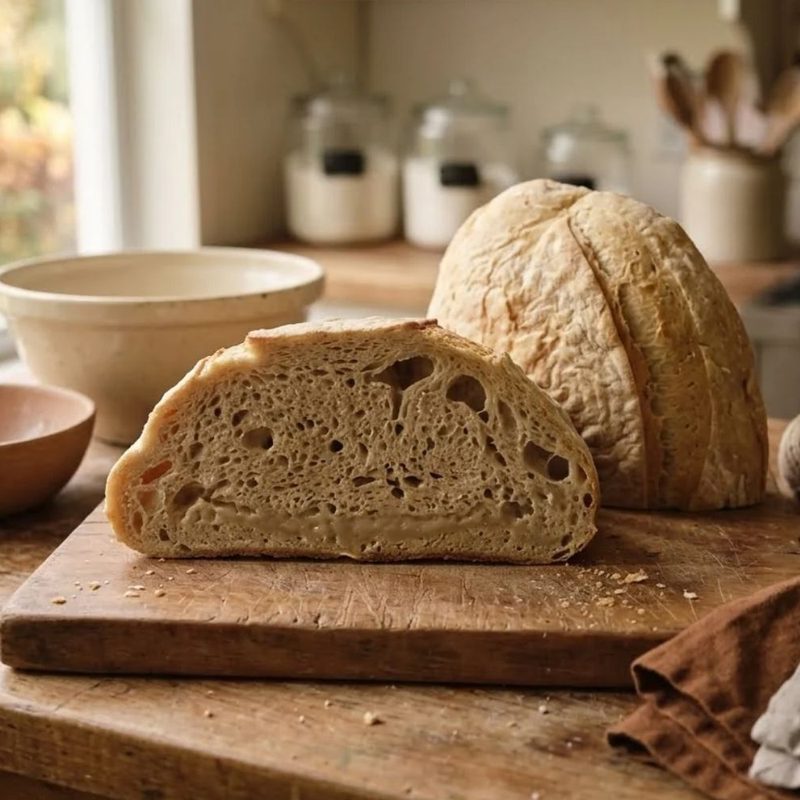
MildSome holes near the top and a gummy band along the bottom.
Nicely fermented
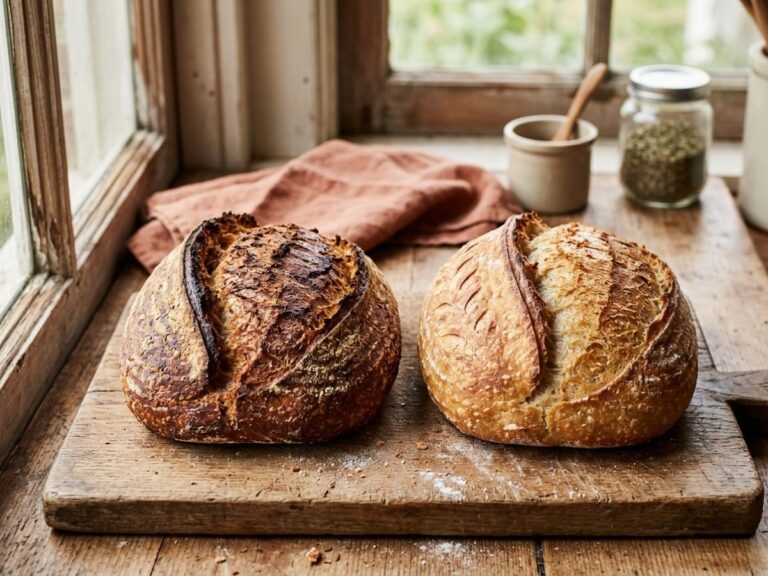
Bubbles of mostly similar size spread evenly through a light, springy crumb. An ear is a bonus, since a good loaf can bake without one.
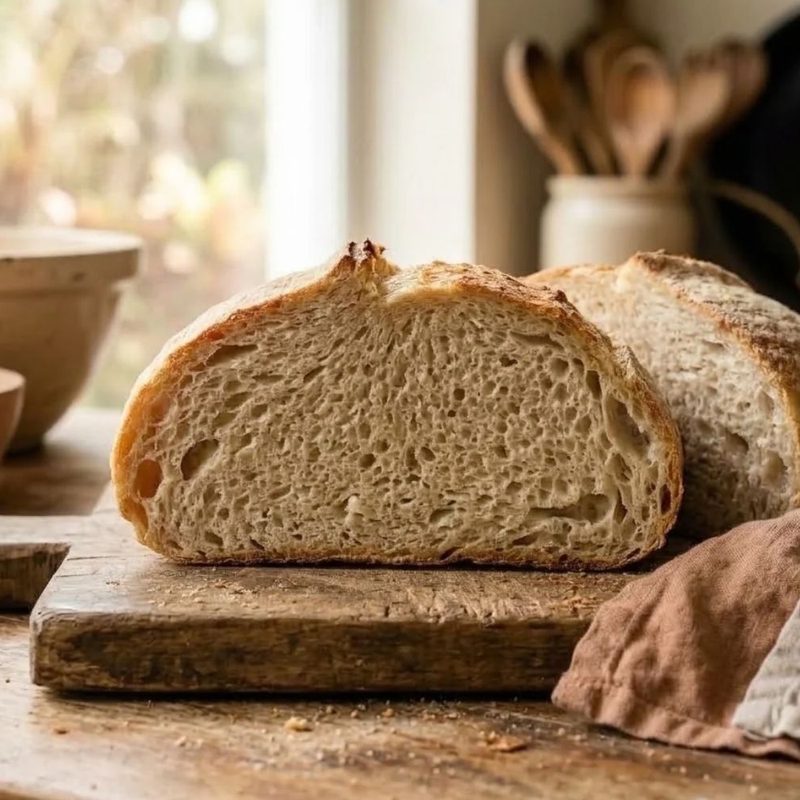
TighterA softer, tighter crumb with small, even holes.
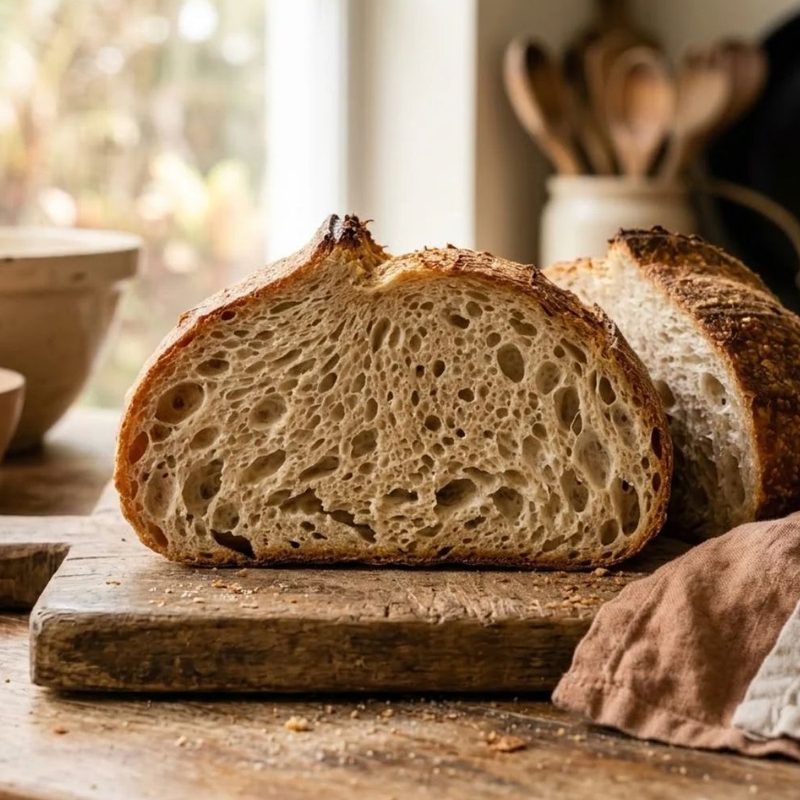
StandardEven, medium bubbles and a tall, rounded loaf. A good everyday crumb.
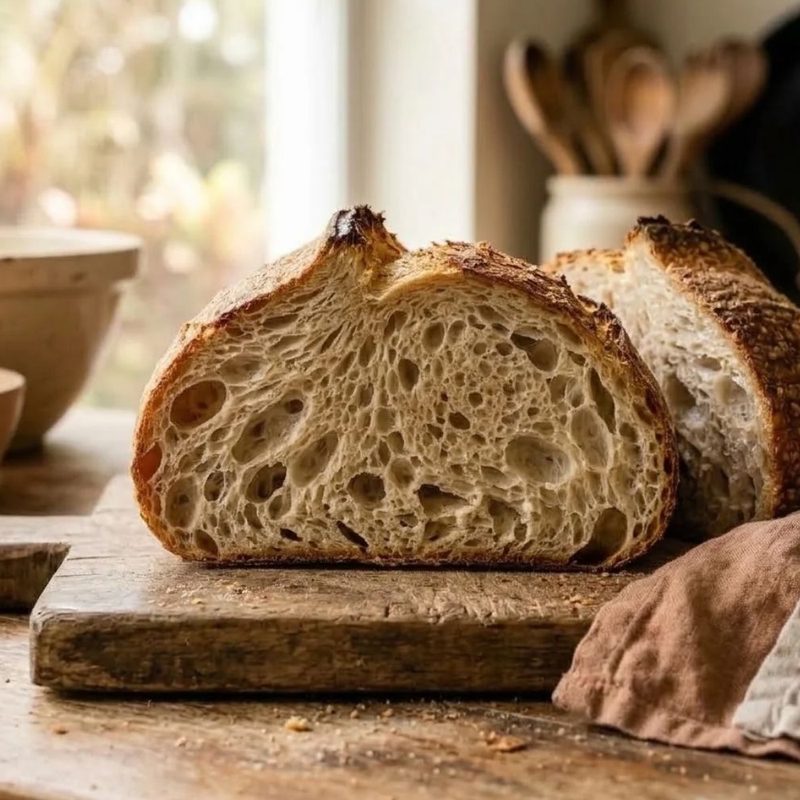
OpenLarge glossy bubbles with thin walls and an ear.
Over-fermented
The structure is weak and the holes are small and shriveled. The loaf spreads flat because the dough ran out of strength before it baked.
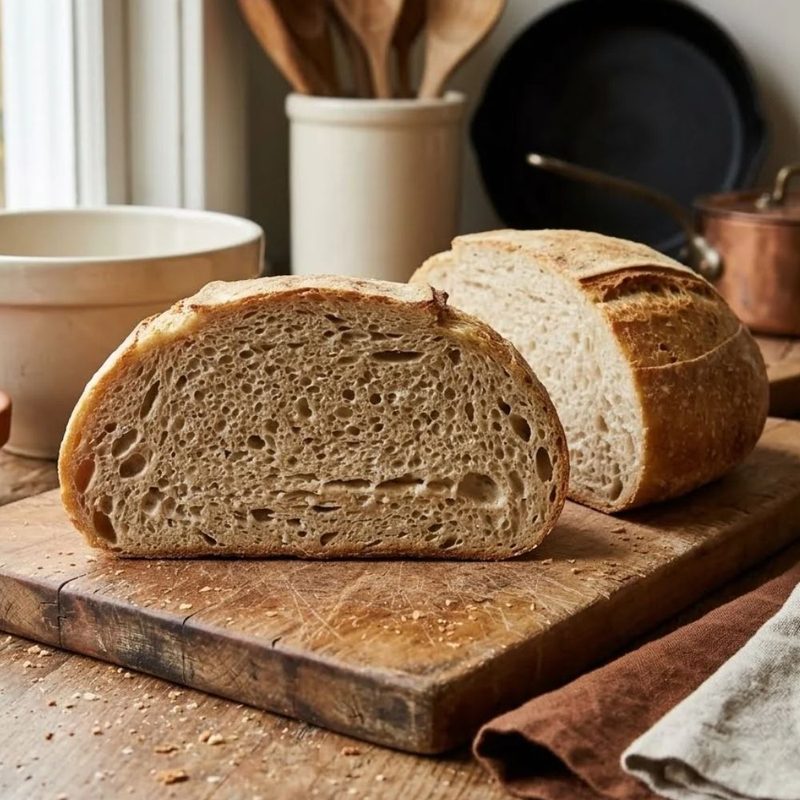
MildA soft, slightly damp crumb with small, tired-looking bubbles.
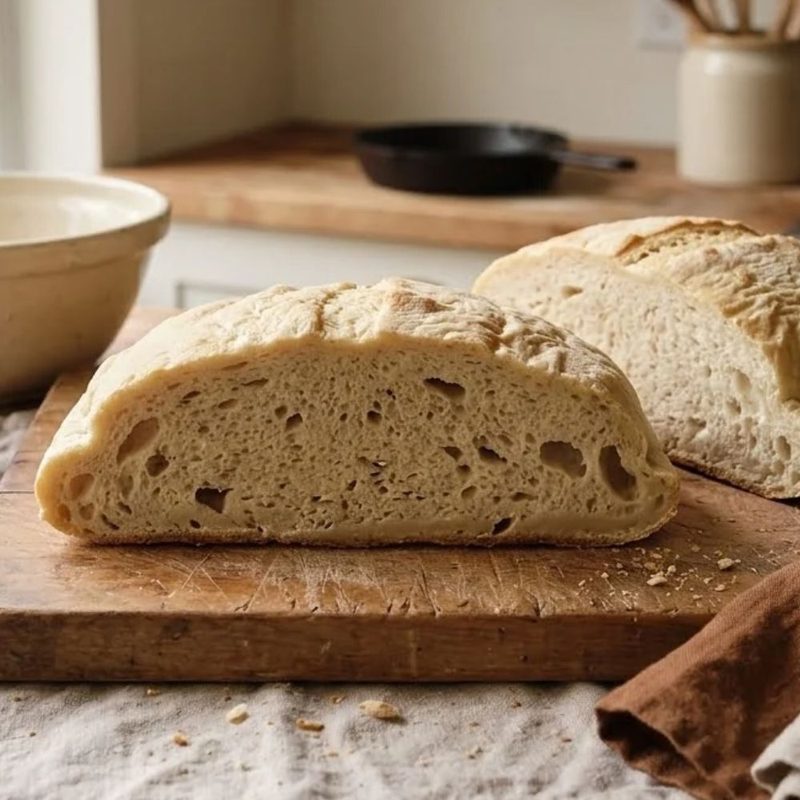
ModerateA pale, wide loaf with torn-looking holes and a gummy base.
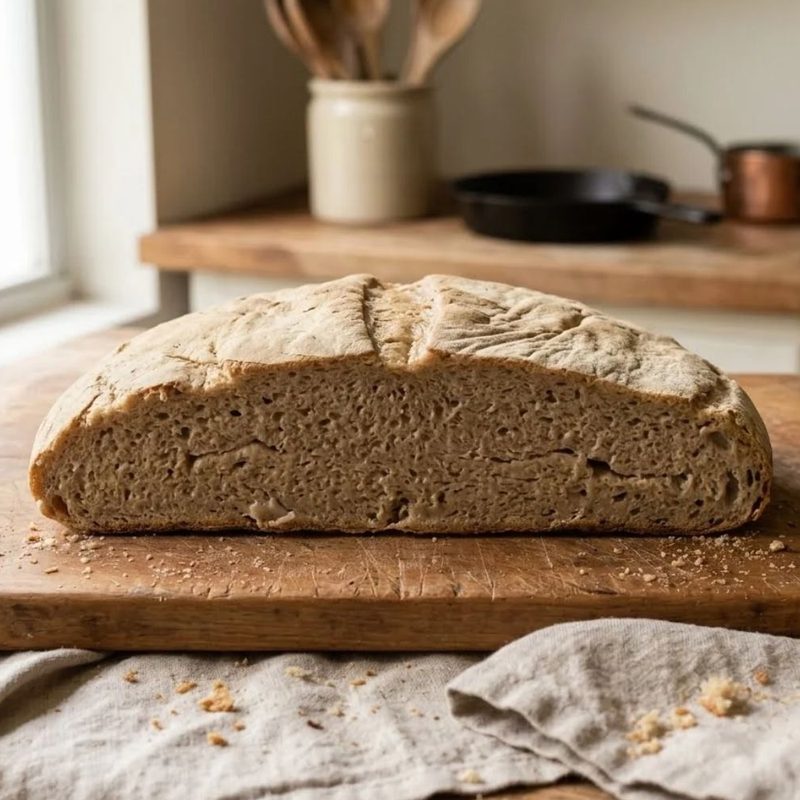
ExtremeA flat, spread loaf with a dense, damp crumb and no structure.
Under-fermented crumb
An under-fermented loaf has bubbles of very uneven size. You will often see a few big tunnels near the top over a tight, dense crumb that feels gummy, sometimes with a squat, heavy shape. The dough did not make enough gas, or it made it too late, so the loaf had little to push with in the oven.
The usual fix is more time or more warmth in bulk. Judge the dough, not the clock, and use the timing chart in Sourdough Bulk Fermentation Time by Temperature as a starting point. A gummy streak can also come from cutting the loaf too soon or underbaking it, so rule those out first.
Nicely fermented crumb
A well-fermented crumb has bubbles of mostly similar size spread evenly from crust to crust, with a light, springy feel and no gummy patches. A good loaf often has an ear, though a loaf can be perfectly fermented without one, so treat the ear as a bonus.
Over-fermented crumb
Over-fermented dough has run out of strength. The crumb looks soft and slightly collapsed, with small, shriveled bubbles. The loaf spreads and bakes flat with a pale crust. At the extreme end the crumb is damp and dense, with almost no oven spring.
The fix is a shorter bulk or a cooler dough, and a stretch in the fridge slows things down further. In a South Florida kitchen at 82 degrees, bulk can finish in far less time than a recipe written for 72 degrees expects, so check the dough early. The Florida heat guide covers dough temperature in detail.
On your next bake
The free Reading Your Bread guide covers the crust as well. Next bake, cut the loaf once it has cooled and find the closest tile. Then change one thing, such as bulk time by 30 minutes, and compare the next crumb to this one.
Knead to Know?
New recipes and sourdough troubleshooting, delivered before your starter even finishes its next rise.
Get the latest insights with no spam, just new recipes and baking tips. Unsubscribe anytime. See our Privacy Policy.