
Enriched Sourdough Problems: Why Your Rolls, Buns, and Sandwich Bread Will Not Rise or Turn Out Soft
An enriched dough is one with extras: butter, sugar, eggs, milk, or all four. Think cinnamon rolls, dinner rolls, milk bread, and soft sandwich loaves. These doughs are meant to bake up tender and rich, but they are less cooperative than a plain sourdough. They rise more slowly, brown more quickly, and can turn dense or dry if the timing is off.
If you are trying to work out why a plain loaf misbehaved, our guide to proofing and scoring problems is the better place to start. For soft, sweet, buttery bakes, read on.
The Short Answer
Enriched sourdough is slow because sugar, fat, and eggs hold back yeast and bacteria, so give it more time, a warm spot, and a lively starter. Add butter after the gluten has started to develop, proof until the dough is visibly puffy and springs back slowly, and bake at a moderate temperature until the center reaches about 190 degrees F so the crust does not get dark before the inside is done.
Start Here: What Is Your Bake Doing?
- The dough barely rises, even after many hours. Jump to Cause 1.
- The rolls came out heavy and tight. Jump to Cause 2.
- The dough is greasy, slack, or will not come together. Jump to Cause 3.
- The tops are dark but the middle is doughy. Jump to Cause 4.
- The bread tastes sour, or dries out by the next day. Jump to Cause 5 and Cause 6.
Why Enriched Dough Is Different
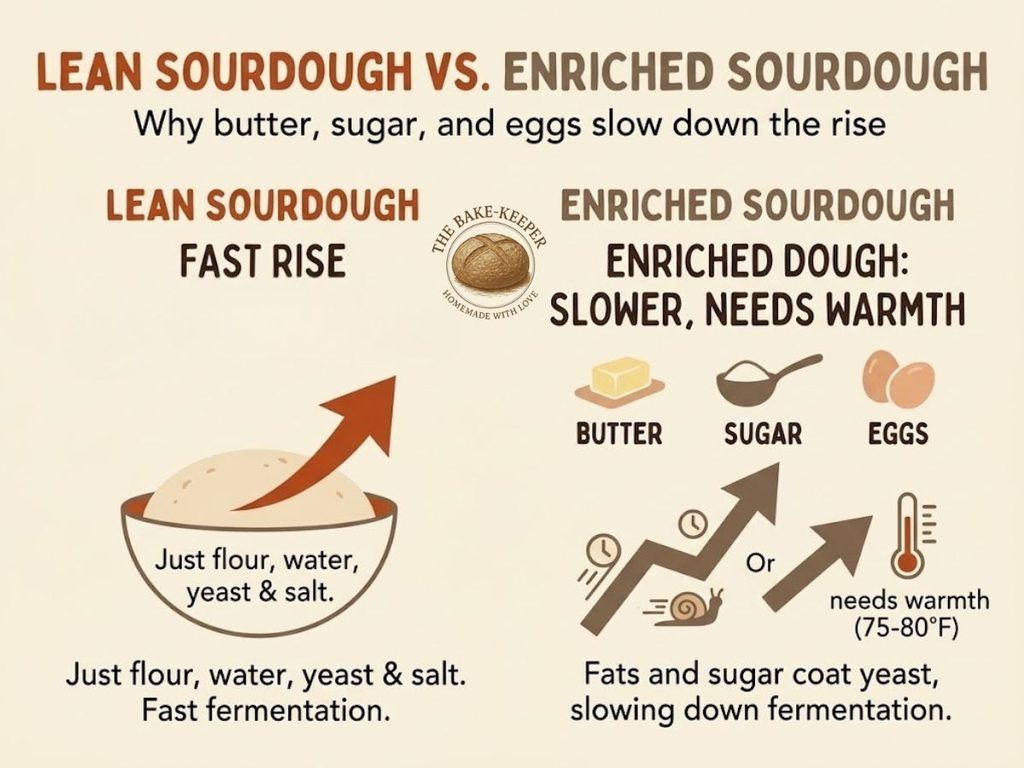
Sugar draws water away from the microbes in your starter, and fat coats the gluten strands, so both slow fermentation and gluten development. Eggs and dairy add richness and also soften the crumb. The result is a dough that takes noticeably longer to rise than a lean one and that needs more care when you add the fat. It also means these breads often benefit from a warm environment and a very active starter.
Enriched Sourdough Problems, Cause by Cause
Problem: Cause 1
The dough rises very slowly or seems to stall, even though the starter was healthy.
The Fix
Use a warmer environment, around 78 to 82 degrees F, and make sure your starter was at its peak when you mixed. Some bakers use a higher percentage of starter for enriched dough than for lean dough. A proofing spot such as an oven with just the light on, or a bowl set inside a larger bowl of warm water, can make a real difference. Be patient: a rise that takes 6 to 10 hours is not unusual.
Problem: Cause 2
The rolls or loaf came out dense and heavy.
The Fix
Most often the dough was underproofed. Enriched dough looks puffier but less dramatically risen than a lean loaf, so go by feel. After shaping, the dough should look visibly puffy, and a gentle poke should leave a dent that springs back slowly and only partway. If it springs back fast, give it more time.
Problem: Cause 3
The dough is greasy and slack, or the butter will not blend in.
The Fix
Add soft butter a little at a time after the dough has already come together and begun to build gluten. Keep mixing between additions until each piece is absorbed. If the dough gets warm and slippery, cover it and put it in the fridge for 20 to 30 minutes, then continue. Check that your butter is soft and pliable, not melted.
Problem: Cause 4
The tops and bottoms browned or burned before the center was cooked.
The Fix
Sugar, milk, and eggs make enriched doughs brown faster. Bake at a moderate temperature, usually 350 to 375 degrees F, and tent the pan loosely with foil once the tops are golden. Check doneness with a thermometer rather than color: enriched breads are done when the center reads about 190 degrees F.
Problem: Cause 5
The bread tastes sour or tangy when you wanted it mild and sweet.
The Fix
A long, warm ferment builds acidity, which can overwhelm a sweet bake. Use a younger, recently fed starter, keep the starter percentage moderate, and avoid letting the dough over-ferment. Chilling the dough overnight can add flavor too, but a short cold rest is usually plenty for a soft roll.
Problem: Cause 6
The bread is fine on day one but dry and stale on day two.
The Fix
Overbaking is the main reason. Pull the bread as soon as it hits temperature. Brushing the tops with melted butter right after baking keeps the crust soft, and a cooked flour paste called a tangzhong can help soft breads stay tender longer. Store the cooled bread in an airtight bag, or freeze portions for later.
Desi’s Note
Rich doughs reward patience more than any other bake I know. If the clock says your rolls should be ready and the dough still looks tired, trust the dough. Give it another hour in a warm spot.

Quick Answers
Can I add commercial yeast to speed things up? You can, but then it is no longer a pure sourdough bake. A pinch is a common compromise, and a strong, warm starter often does the job on its own.
Why did my dough turn out greasy on the outside? The butter was probably added too fast or the dough got warm. Chill it briefly and keep mixing.
What is a good first enriched recipe? Try the sourdough sandwich bread or the sourdough cinnamon rolls.
Related Reading
- Sourdough Sandwich Bread
- Sourdough Cinnamon Rolls
- Sourdough Milk Bread Loaf
- How Dough Type Changes Your Schedule
Rich dough takes its time, and a little warmth and patience go a long way.
More Resources
Looking for a printable reference? Browse all six Printable Quicksheets, or dial in your own numbers with the Sourdough Calculator.
A milk bread roll recipe is Japanese Milk Bread Dinner Rolls.
Knead to Know?
New recipes and sourdough troubleshooting, delivered before your starter even finishes its next rise.
Get the latest insights with no spam, just new recipes and baking tips. Unsubscribe anytime. See our Privacy Policy.