Steam and Oven Spring: What Happens to Sourdough in the First Fifteen Minutes of Baking
Put a shaped loaf in a hot oven and something dramatic happens. In the first ten to fifteen minutes it can grow noticeably taller and wider, opening along the score like a zipper. Bakers call this oven spring, and it is the reason a good loaf looks the way it does. For how to cut the score itself, see my sourdough scoring patterns guide.
Oven spring follows a short chain of physical events. Understanding them explains why a steamy, hot oven and a well-fermented dough both matter.
The Short Answer
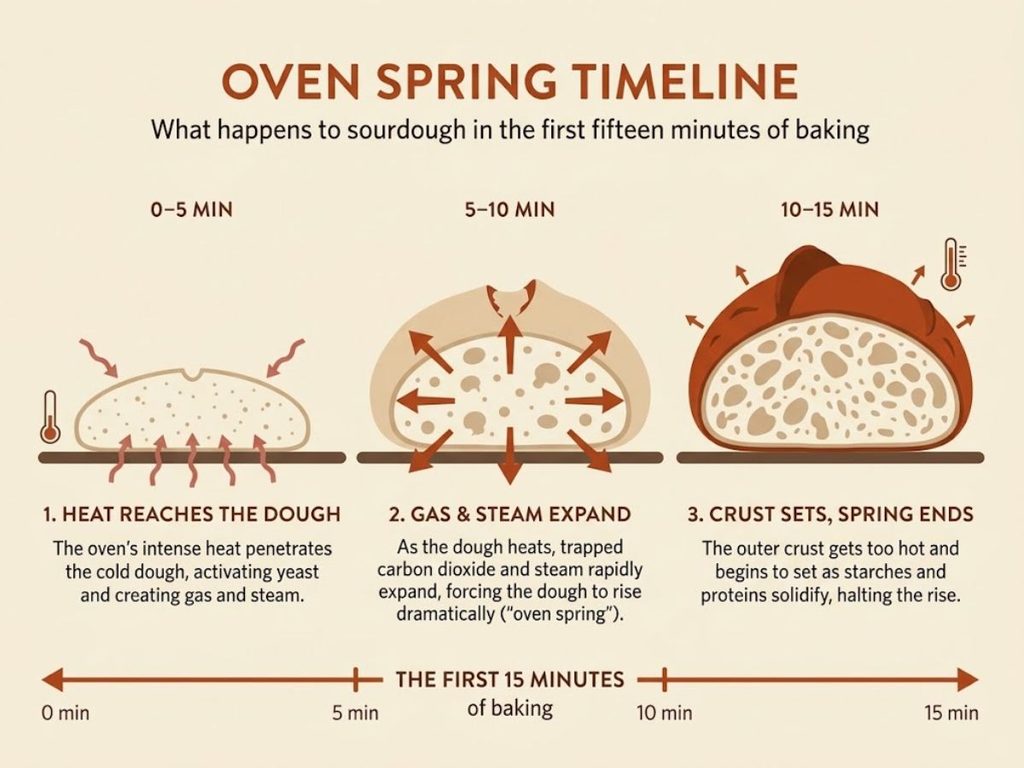
Oven spring is the final burst of rising that happens when dough meets high heat. Gas inside the dough expands, trapped water turns to steam, and yeast and bacteria work faster for a few minutes before the heat stops them. Steam keeps the outside of the loaf soft and stretchy so it can keep expanding. Once the crust finally sets, the rise stops and the crust browns.
What Happens, Minute by Minute
- The first minutes. The dough warms from the outside in. Gas bubbles already inside the dough expand as they heat, and the yeast speeds up for a short time.
- Steam and expanding gas. Water and alcohol in the dough turn into vapor, which pushes the structure outward. This is the main engine of oven spring.
- The yeast stops. As the inside of the loaf reaches roughly 140 degrees F, the yeast and bacteria die and fermentation ends.
- The crust sets. The surface dries out, the starches and proteins firm up, and the loaf stops growing. Browning follows as the crust gets hotter.
Why Steam Matters
A dry oven lets the surface of the dough dry out quickly. A dried crust sets early and becomes stiff, which stops the loaf from expanding and can cause it to tear in odd places. Steam does the opposite. It condenses on the cool surface of the dough, keeping the outside moist and stretchy for longer so the loaf can keep rising.
Steam also helps the surface starches turn glossy and gel-like. Later, when the steam is released, that layer dries into a thin, crisp, shiny crust with a deeper color.
How a Dutch Oven Creates Steam
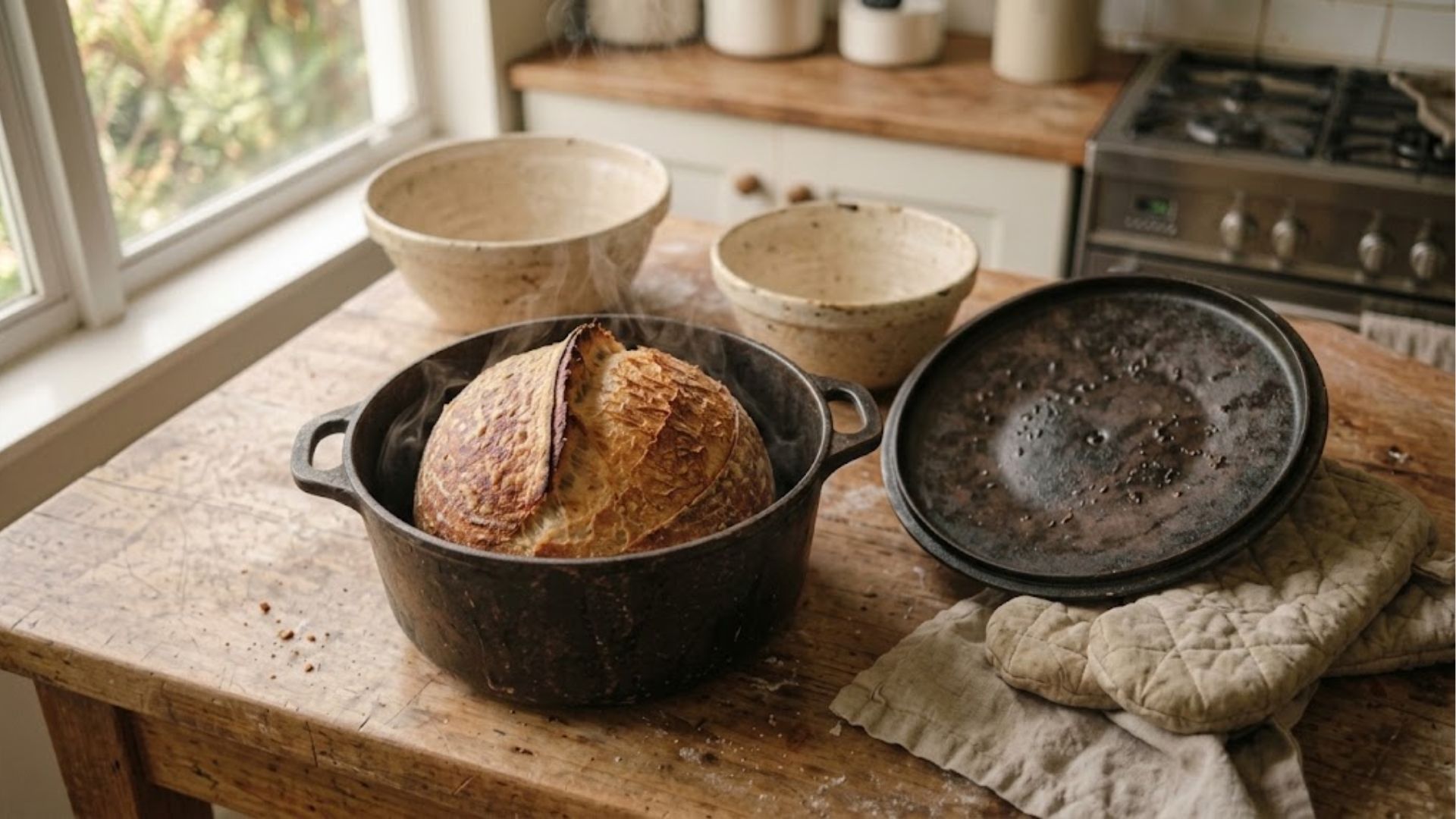
A heavy, lidded pot such as a Dutch oven traps the moisture that escapes from the dough as it bakes. Because the lid keeps that steam in, you get the effect of a professional steam-injected oven at home. After about 30 minutes, the lid comes off so the crust can dry, crisp, and brown.
Getting More Oven Spring
- Start with a well-fermented dough. Overproofed dough has little gas left to expand, and underproofed dough can burst in the wrong places.
- Build good surface tension during shaping so the loaf rises up instead of spreading out. See shaping and sticking problems.
- Preheat thoroughly. A hot pot or stone gives a fast start.
- Score with confidence, about a quarter inch deep, so the dough has a planned place to open.
- Create steam, with a covered pot, a pan of boiling water, or a spritz of water.
Desi’s Note
If your loaf is flat and the crust is pale, nine times out of ten the fix is in the fermentation or the preheat, not in some clever trick. A good loaf is mostly a good dough going into a very hot, steamy oven.
Common Questions
Do I need a Dutch oven? No. A baking steel or stone plus a tray of boiling water, or a covered roasting pan, can make steam as well.
Why is my crust pale? Usually the oven was not hot enough, or the lid stayed on too long. See crust problems.
What if my loaf bursts at the side? The score may be too shallow, or the dough was underproofed.
Related Reading
- Sourdough Crust Problems
- Sourdough Proofing and Scoring Problems
- Why Cooling Matters: Starch and Staling
- Gluten Development in Sourdough
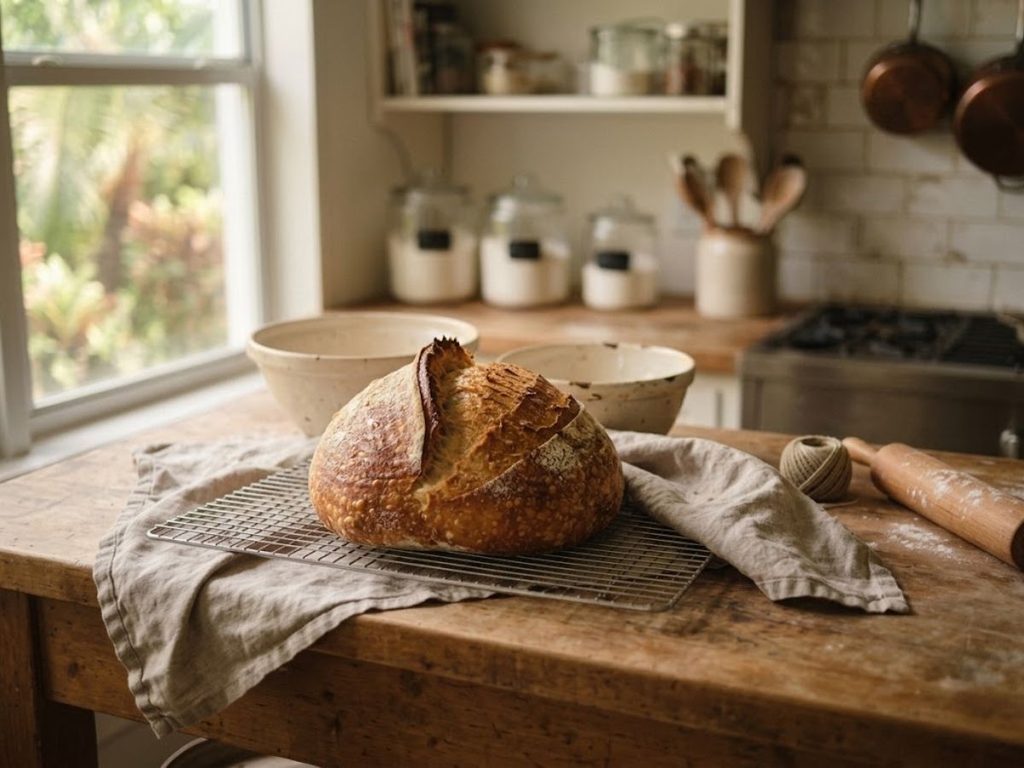
The loaf you see on the rack was made in the first fifteen minutes of the bake.
More Resources
Looking for a printable reference? Browse all six Printable Quicksheets, or dial in your own numbers with the Sourdough Calculator.
If you do not have a Dutch oven, see the baking sheet method.
Knead to Know?
New recipes and sourdough troubleshooting, delivered before your starter even finishes its next rise.
Get the latest insights with no spam, just new recipes and baking tips. Unsubscribe anytime. See our Privacy Policy.