
Starter Jars and Climate Control: Warming vs Cooling
The jar your starter lives in, the temperature it lives at, and the honest answer to whether a $150 warmer belongs in a kitchen that is already 79 degrees. Spoiler: in South Florida you are shopping for the other direction.
Some links on this page are affiliate links. As an Amazon Associate I earn from qualifying purchases. If you buy through a link I may earn a small commission at no extra cost to you. Full disclosureA sourdough starter is a jar of flour, water and a population of yeast and bacteria that respond to one thing above all others: temperature. Every warmer, proofer and insulated crock on the market is a way of controlling that number. The trouble is that almost all of them were designed for a kitchen that runs 65 to 70 degrees F, and the advice that comes with them (“find a warm spot”) is actively harmful in a kitchen that runs 78 to 82. This guide covers the jar itself first, because that is cheap and matters every day, then walks through the temperature tools from the point of view of a baker whose starter is too fast, not too slow.
The Jar: What Actually Matters
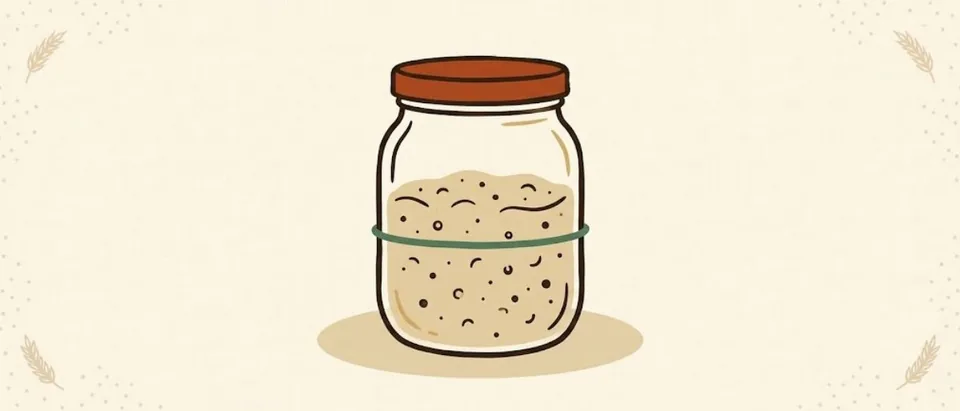
Straight sides, so you can mark the level after a feed with a rubber band and see at a glance how far it has risen. Clear glass, so you can read the bubble structure from the side (the top surface lies, since it domes and then flattens while the inside is still busy). Wide mouth, so a spatula reaches the bottom corners and you are not leaving a ring of old starter to go off. A size that gives the starter room to double or triple without climbing out: for a starter you maintain at 50 to 100 grams, a 16 ounce (about 500 ml) jar is right. For a cottage baker keeping 300 grams or more, a quart. And a lid that does not seal: a loose-fitting lid, a canning lid without the ring, or a square of cloth with a band. A starter produces gas, a fast summer starter produces a lot of it, and a clamp-lid jar that seals has been known to pop. Plastic deli containers work fine and are what a lot of professional kitchens use. They are just harder to read through and scratch over time.
Keep two identical jars. Feeding into a clean jar every time, rather than scraping down the same one, is the single habit that stops the crust of dried starter around the rim and the faint sour-sock smell that comes with it, and in humid air that crust grows things fast. The crusty jar goes in the dishwasher. No special cleaning, no bleach, just hot water and a cycle.
Keep two identical jars
Buy two of the same size on the same day. This one has no threads for dried starter to collect in, and the lid squeezes clean.

Sourhouse Sourdough Starter Jars
Clear borosilicate glass with no threads for starter to gunk up, and a soft silicone lid that lets gas out. Easy to clean, and the flat bottom sits well on a warming base. Our link takes 10% off at checkout.
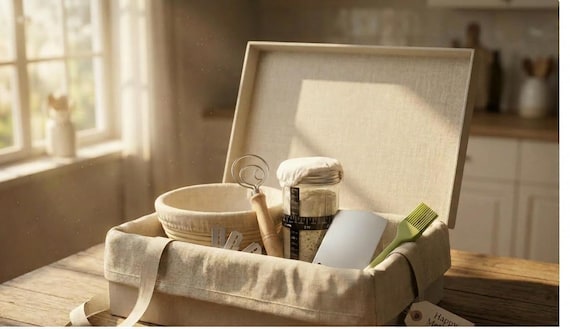
The New Baker’s Gift Bundle
A 9-piece set plus 1 oz of dry starter for anyone just starting out: banneton with liner, glass starter jar, bench and bowl scrapers, dough whisk, lame, brush and spatula, from a small Etsy shop. Gift-ready packaging is an option at checkout.
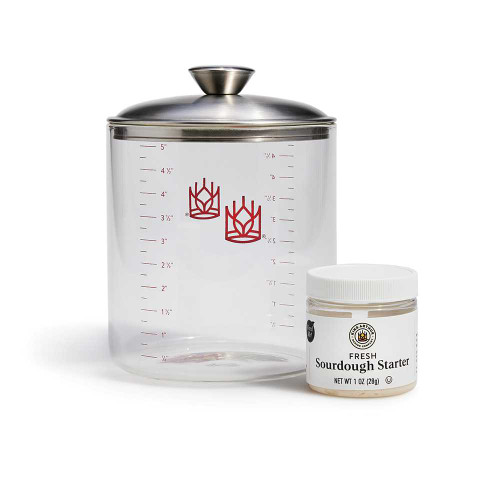
Fresh Sourdough Starter and Glass Sourdough Crock Set
A fresh, active sourdough starter paired with a glass crock to keep it in. A quick start for bakers who would rather skip the weeks of building a starter from scratch, and a nice gift for a new sourdough baker.

Classic Fresh Sourdough Starter
A fresh, ready-to-feed sourdough starter shipped to your door. If you would rather not wait through the first week of building your own, this gets you baking sooner.
Why Temperature Is the Whole Game
Yeast and bacteria in a starter are most active between roughly 75 and 82 degrees F, and the balance between them shifts with temperature: warmer favors the bacteria that produce the sharper, more acetic sourness and makes everything peak faster. Cooler slows the whole system and leans milder. At 68 degrees a 1:1:1 feed might peak in eight to ten hours. At 80 degrees the same feed peaks in four and is collapsing by six. That is the entire reason northern bakers buy warmers and we do not: their starter is sluggish and unpredictable in a cold kitchen, ours is sprinting and we are trying to find the brakes. The full write-up on why your starter behaves differently in Florida heat has the detail. What follows is the equipment side.
Measure before you buy anything
A starter's pace follows its temperature, so check the real number first. An instant-read thermometer gives you the jar and water temperature in seconds, and a fridge thermometer shows whether your fridge holds the cold you think it does.
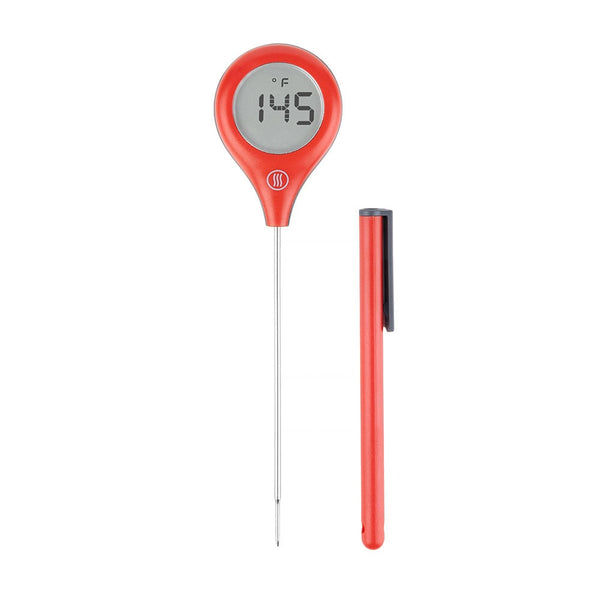
ThermoPop 2 Instant-Read Thermometer
The budget way to stop guessing. Fast, accurate, and easy to read when you are checking a loaf, a cookie, or your dough temperature on a hot day.
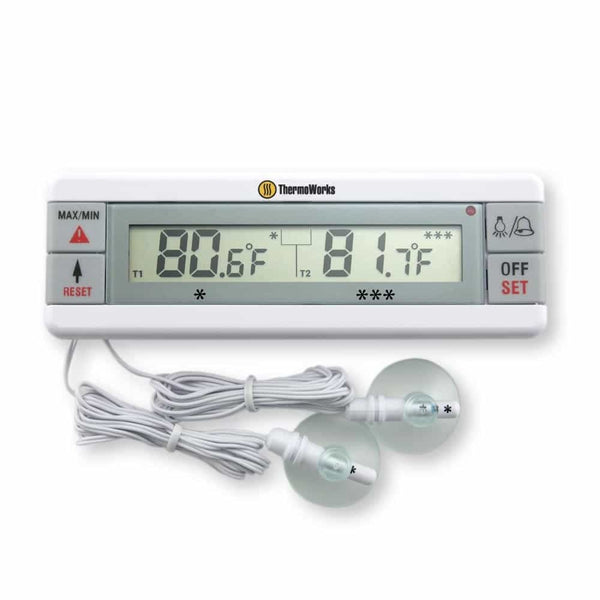
ThermoWorks Fridge/Freezer Thermometer
Two probes, one display: it tracks your fridge and freezer and sounds an alarm if either drifts out of the range you set. Handy for knowing what your fridge is really doing when dough retards overnight.
Warmers: Who They Are For
A starter warmer is a small insulated housing, usually with a glass or ceramic shell, that holds a jar somewhere in the mid 70s to low 80s. The best known one, Sourhouse’s Goldie, holds what it calls the “Goldilocks zone,” roughly 75 to 82 degrees, and it does it beautifully for a kitchen that sits at 65 in January. If your kitchen is already in that range for most of the year, a warmer gives you nothing you did not have, and if you run it in a hot kitchen it just makes sure the starter can never cool below the fast end of the range. The honest recommendation for a Gulf Coast or South Florida kitchen: do not buy a warmer. If you live somewhere with real winters and your kitchen drops below 68 for months at a time, a warmer earns its spot on the counter and is a much better tool than the oven-light trick, which usually runs 85 to 95 degrees and cooks a starter.
Cooling: The Upgrade That Actually Helps Here
Start with technique, because it is free and it is most of the fix. Feed with less ripe starter: a 1:5:5 or 1:10:10 feed (one part starter to five or ten parts each of flour and water) takes longer to peak than 1:1:1 and gets you through a workday. Use cool water, straight from the fridge in summer. Keep the jar out of the sunny end of the counter and away from the oven and the dishwasher. And lean on the refrigerator: a starter kept in the fridge and fed once a week is perfectly healthy, and a starter pulled out the night before a bake, fed once at room temperature and used at its peak the next morning is how most of us bake here from May to October.
When technique is not enough, or you want a starter at the mild, slow end for flavor, the tools run from cheap to serious. A cooler with a frozen water bottle holds the low 60s for most of a day and is a fine starter box on the hottest afternoons. A small wine fridge set to 55 to 58 degrees is the sweet spot for a slow, mild starter and a long bulk ferment, and it is the one piece of climate equipment I would buy before anything else. The one dedicated starter appliance that is actually built for us is Brod and Taylor’s Sourdough Home, a small countertop unit that both heats and cools, down into the low 40s, so you can hold a starter at 55 for a slow weekly cycle or at 75 for a bake-day build regardless of what the kitchen is doing. Think of it as a starter-sized wine fridge with a precise dial. It is expensive and optional, but it is the only “starter gadget” I would put on a hot-kitchen list.
The one starter appliance that cools
Holds a jar anywhere from 41 to 122 degrees F, so it can slow a starter in July or warm it in January. It is made for a starter jar, not for dough.
Desi Recommends
Brod & Taylor Sourdough Home
A starter warmer and cooler that holds a jar anywhere from 41 to 122 degrees F, so you can slow a starter down in a hot kitchen or warm it up in a cold one. Made for a starter jar, not for proofing dough.
| Tool | Direction | Holds | Right for | Cost |
|---|---|---|---|---|
| Smaller inoculation (1:5:5, 1:10:10), cool water | Slows | n/a | Every warm kitchen, every day | Free |
| Refrigerator, weekly feeds | Cools | 34 to 42 F | Anyone who does not bake daily | Free |
| Cooler with a frozen bottle | Cools | Low 60s for hours | Hottest afternoons, power outages | Under $40 |
| Wine or dorm fridge | Cools | 50 to 58 F | Slow, mild starter; long bulk; multiple jars | $100 to $200 |
| Sourdough Home (heats and cools) | Both | Low 40s to 120s F | Precise control of one jar in any season | About $150 |
| Goldie-style warmer | Warms only | 75 to 82 F | Kitchens under 68 F in winter | $100 to $150 |
| Oven with the light on | Warms, badly | Often 85 to 95 F | Nobody; it cooks the starter | Free and not worth it |
Price ranges are approximate at the time of writing and are given to help you compare tiers, not as quotes; check the retailer for current pricing.
Reading a Starter in a Fast Kitchen
Because everything happens quickly here, learn the signs rather than the clock. A starter is ready to use when it has risen to its peak and the surface is domed and just beginning to flatten, with a web of bubbles visible through the glass side. Past peak, the dome sinks, the texture turns soupy, and a layer of grey liquid (hooch) may appear. It is still alive and fine to feed, but a loaf mixed with it will be sour and sluggish. In a hot kitchen that window can be an hour wide, which is why the rubber band and the straight-sided jar matter: you want to glance at it and know. Thermometer in the jar once in a while, too. If the starter itself reads 80 or above, move it somewhere cooler before you adjust anything else. If it is runny or watery, that is usually the heat talking. Why is my sourdough starter runny or watery works through it, and if it has stopped rising altogether, start with sourdough starter not rising.
More gear guides
The rest of the equipment series, one decision per guide.
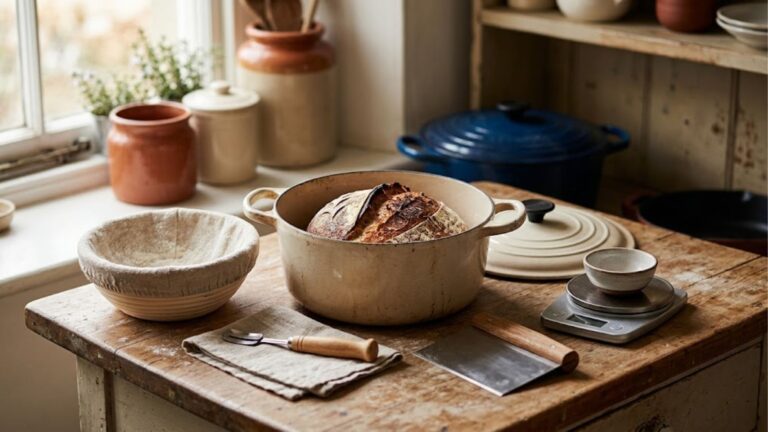
Sourdough Equipment Guide
The full tiered list: what to buy first, what to skip, and the Dutch oven size table.
Read the guide →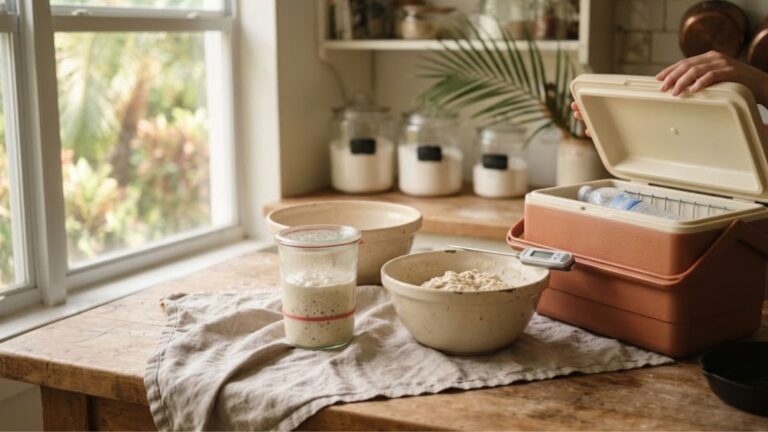
Sourdough in a Hot, Humid Kitchen
What changes when your kitchen is 79 degrees, and the gear that actually helps.
Read the guide →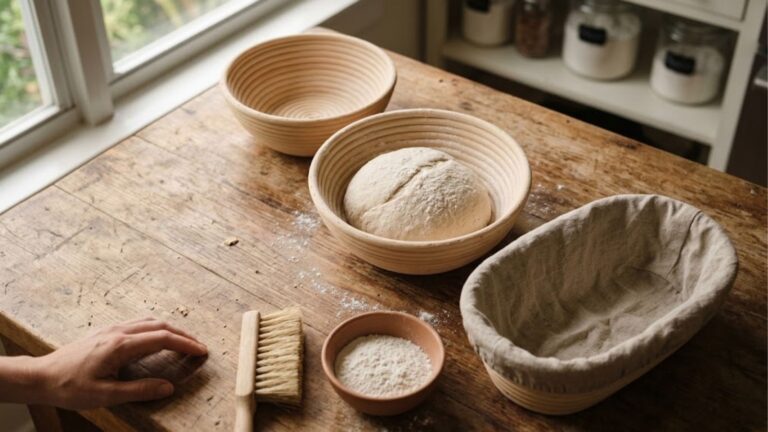
Banneton Sizing and Care
Size chart by dough weight, liners, and keeping mold out in wet air.
Read the guide →
Scoring Tools
UFO vs straight lames, left-handed options, and scoring sticky summer dough.
Read the guide →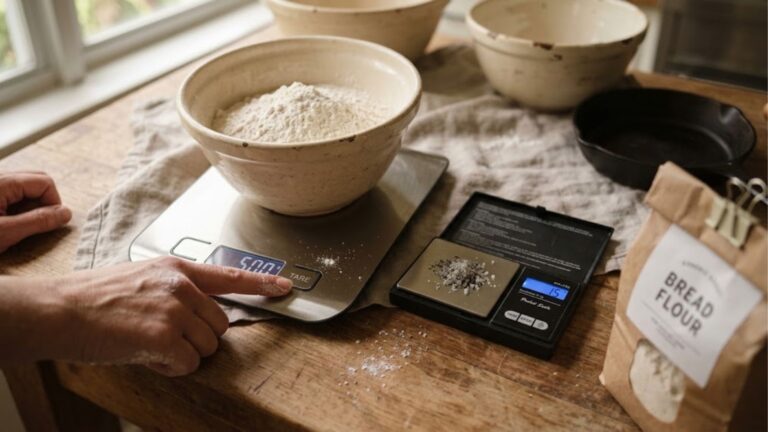
Kitchen Scales for Sourdough
The two-scale setup, the auto-off problem, and legal-for-trade scales for sellers.
Read the guide →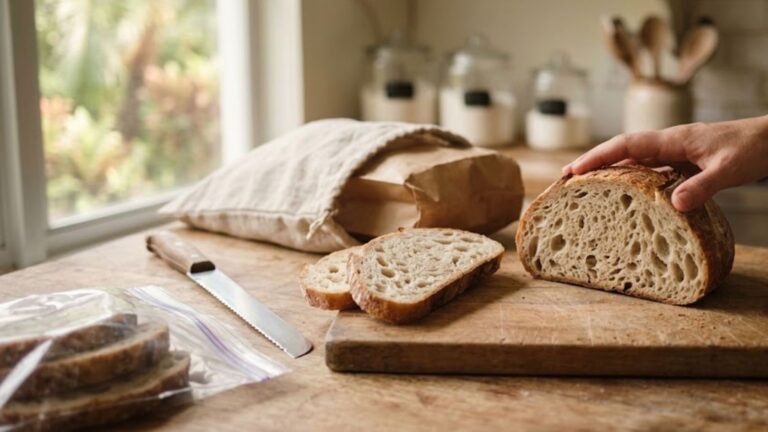
Storing Sourdough in a Humid Climate
Keeping crust and crumb mold-free in wet air, plus the bread knife that does not crush it.
Read the guide →
Pizza Stone vs. Baking Steel
Which one actually belongs in your oven, tested side by side.
Read the guide →Keep Going
Everything about keeping a starter alive long term, including drying a backup before hurricane season, is in how to maintain and revive your starter and how to dehydrate and rehydrate your starter. The rest of the warm-weather toolkit is in Sourdough in a Hot, Humid Kitchen, and the Starter Troubleshooting quicksheet is the printable version of all of this.