
Scoring Tools Guide: UFO vs Straight Lames, Left-Handed Options, and Sticky Dough
A clean score is half blade and half dough. Here is how the different lames actually behave, which ones work in a left hand, and why summer dough drags no matter what you cut it with.
Some links on this page are affiliate links. As an Amazon Associate I earn from qualifying purchases. If you buy through a link I may earn a small commission at no extra cost to you. Full disclosureScoring is the step people blame their tools for and their dough is usually the culprit. But the tool does matter, mostly in how it fits your hand and how it meets a soft surface, and the right one makes the bad days less bad. This guide covers the three families of lame, the left-handed question nobody writes about, blade care, and the specific problem of scoring a dough that is stickier than the recipe promised because your kitchen is 80 degrees.
What a Score Is Actually Doing
A score is a controlled weak spot. In the first ten minutes of the bake the loaf expands fast (oven spring), and it will burst somewhere. The score tells it where. A shallow cut at a low angle (around 30 degrees to the surface, a quarter inch deep) lifts a flap that bakes into an ear. A deep vertical cut opens wide and flat. Decorative scoring is very shallow, barely through the skin, and relies on a cold, firm dough surface. Everything about tool choice follows from that: you need a blade sharp enough to cut skin without dragging, and a handle that lets you hold a consistent angle. For depth, angle and pattern choices, see my guide to sourdough scoring patterns.
The Three Kinds of Lame
The straight lame is a razor blade mounted flat on a stick. It is the cheapest, the easiest to replace blades on, and the most forgiving for decorative work because the blade sits flat against the dough. It is also the hardest to get an ear with, because a flat blade wants to cut straight down. You have to deliberately tilt your wrist. The curved lame bends the blade over a bowed holder so the leading edge enters at a shallow angle by default. It is the ear tool. One confident stroke along the length of a batard and the flap lifts on its own. It is also directional, which matters for left-handers (below). The handheld or UFO style (Wire Monkey’s UFO is the one most people mean) holds a standard razor blade in a small wooden or resin disc that you grip like a guitar pick, so your fingers are an inch from the dough instead of eight. Control goes up dramatically, especially for curves and small details, and the blade angle is whatever your hand makes it. It is the one I reach for most, and the one I would hand a beginner who has already scored a few loaves and wants to stop tearing them.
| Type | Best at | Weak at | Left-handed? | Price range |
|---|---|---|---|---|
| Straight stick lame | Decorative patterns, budget, blade swaps | Ears without wrist work; fingers far from the dough | Yes, fully symmetric | Under $15 |
| Curved stick lame | Ears on batards and boules in one stroke | Tight curves, detail; blade bows one way | Only if you can flip the blade or buy a left-bowed one | $10 to $25 |
| Handheld / UFO | Control, curves, detail, shallow cuts on soft dough | Long straight slashes take a little practice | Yes, fully symmetric | $25 to $45 |
| Bare razor blade or sharp knife | Emergencies | Everything else; blades are dangerous to hold | n/a | Free |
Price ranges are approximate at the time of writing and are given to help you compare tiers, not as quotes; check the retailer for current pricing.
Start here
A lame with spare blades is the whole entry ticket. Replace the blade every 8 to 10 loaves, sooner in humid air.

Wire Monkey UFO Bread Journey Lame Kit
A razor-blade lame in a grip disc that keeps your fingers well clear of sticky dough. Comes with a pouch and a 5-pack of blades, and our link takes 10% off at checkout.

Wire Monkey Goose Bread Lame
A stick-style lame in solid American black walnut with no protruding knobs to catch your dough, and a handle that lets you slash up or down. Our link takes 10% off at checkout.

Astra Razor Blades 5-Pack for Bread Lames
Thin, double-edged blades that part the dough instead of dragging it. They fit any lame that takes a standard double-edged razor blade, and a fresh one is the cheapest upgrade you can make.

King Arthur Straight Walnut Lame
A straight scoring lame with a walnut handle and replaceable blade, for the clean, confident slashes that let a loaf open up in the oven. A step up from a plain razor blade.
Slicing the finished loaf
A serrated, offset-handle knife slices crusty loaves cleanly without crushing the crumb. A handmade bow knife does the same job with a light sawing stroke.

Offset Bread Knife
A serrated knife with an offset handle that keeps your knuckles clear of the board while you slice a crusty loaf. Worth having if you bake rustic bread, because a dull knife crushes the crumb.

Handmade Bread Bow Knife
A wooden bow frame holding a serrated US stainless steel blade, made by a family workshop in the Appalachian foothills. It saws through a crusty sourdough loaf with a light back-and-forth stroke, and you choose the wood.
Left-Handed Scoring
Nobody mentions this and it trips up a lot of left-handed bakers: a curved lame is handed. The blade bows so that, pulled toward a right-hander’s body, the leading edge enters at the shallow angle that makes an ear. Hold the same tool in your left hand and pull, and the blade is now presenting its trailing edge first. It plows instead of slicing, and you get a drag and a tear and a conclusion that you are bad at scoring. You are not. You have three fixes. First, most curved lames let you remove the blade and remount it so the bow faces the other way. That is a 30 second job with the blade’s paper wrapper still on. Second, buy a straight lame or a UFO style, both of which are symmetric and do not care which hand holds them. For a left-handed baker this is the easier answer and the UFO is the better tool anyway. Third, if you love a particular curved lame, a few makers sell left-bowed versions. Ask before you buy, because listings rarely say.
The direction of the cut also matters for lefties. Right-handed instructions say to score “away from you” or “left to right” on a batard. Mirror them. What stays the same for everyone: the cut runs slightly off the center line so the ear has somewhere to open, the blade angle is shallow, and the stroke is one motion, not a saw.
Scoring Sticky Summer Dough
Here is the humid-kitchen truth: in July my dough drags on any blade if I score it at room temperature. The surface is tacky, the skin is thin because the dough proofed fast, and the blade pulls the dough instead of parting it. The fixes are about the dough, in this order. Proof the shaped loaf in the fridge for at least an hour, and ideally overnight. A cold dough has a firm, dry skin and scores like butter. Score straight out of the fridge, do not let it sit on the counter. Dust the surface with a thin layer of rice flour and brush off the excess so the blade meets flour, not tack. Wipe the blade and dip it in cold water between cuts for decorative work. A wet blade slides. And accept that a summer loaf gets one confident slash, not a wheat-stalk pattern. Save the artwork for a January loaf or a dough that has had a long cold retard.
If the dough is sticky because it overproofed, no blade will save it: the score will deflate the loaf rather than open it. The tell is a dough that does not spring back at all when you poke it. Bake it anyway, score shallowly, and read why did my sourdough deflate after scoring before the next one.
Blade Care in a Humid Kitchen
Razor blades rust. In a dry kitchen a blade stays sharp for ten or twelve loaves. In ours, a blade left in the lame in a drawer develops orange spots within two weeks and a dull, rough edge that drags. Rinse the blade, dry it completely, and store the lame in a dry drawer or a small sealed tin with a silica packet, not in the utensil crock by the sink. Change blades when a cut starts to catch rather than glide. Standard double-edge razor blades are a few cents each and fit every lame on this page. Snap used blades in half with pliers and tape them into a piece of cardboard before they go in the trash, or keep a blade bank. A loose razor in a trash bag is a bad surprise for someone.
How to Score an Ear (the Short Version)
Cold dough, dusted. Hold the blade at about 30 degrees to the surface, tilted so the top edge leans away from the cut. Start a thumb’s width in from one end, cut a slight arc that runs a little off center, a quarter inch deep, in one stroke that takes under a second. Into the hot pot immediately. The ear forms because the thin flap of dough you lifted dries and lifts in the steam while the body of the loaf expands underneath it. If you are not getting one, the usual suspects are a blade too vertical, a dough too warm, or an oven without enough steam. What’s Wrong With My Loaf goes through each.
More gear guides
The rest of the equipment series, one decision per guide.
Sourdough Equipment Guide
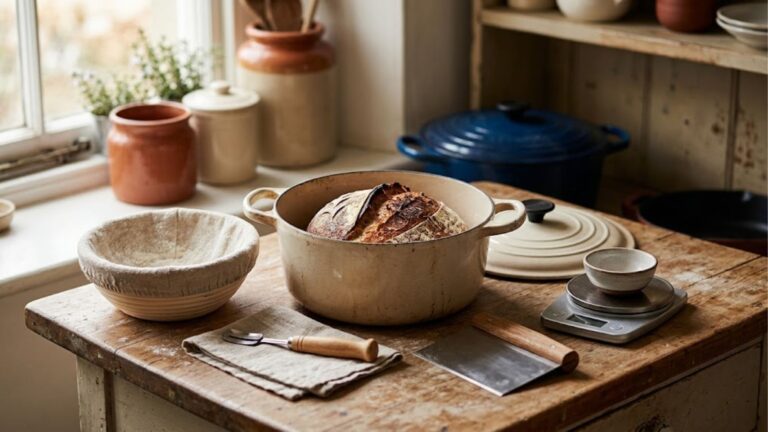
The full tiered list: what to buy first, what to skip, and the Dutch oven size table.
Read the guide →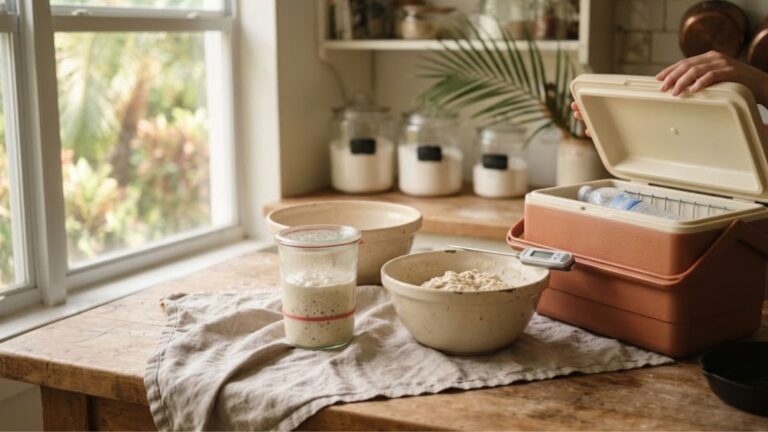
Sourdough in a Hot, Humid Kitchen
What changes when your kitchen is 79 degrees, and the gear that actually helps.
Read the guide →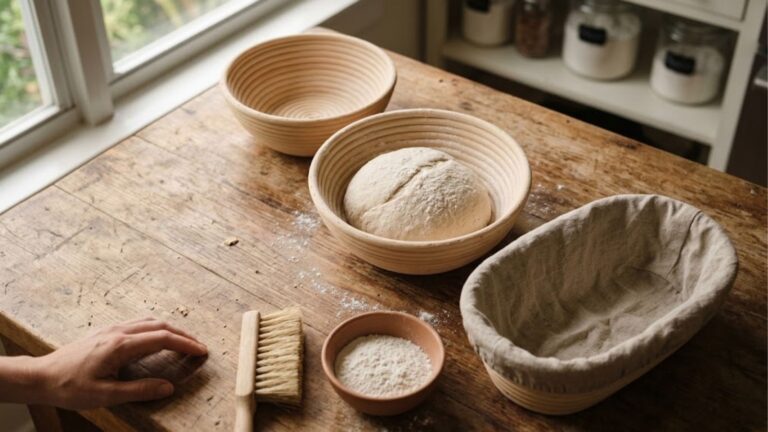
Banneton Sizing and Care
Size chart by dough weight, liners, and keeping mold out in wet air.
Read the guide →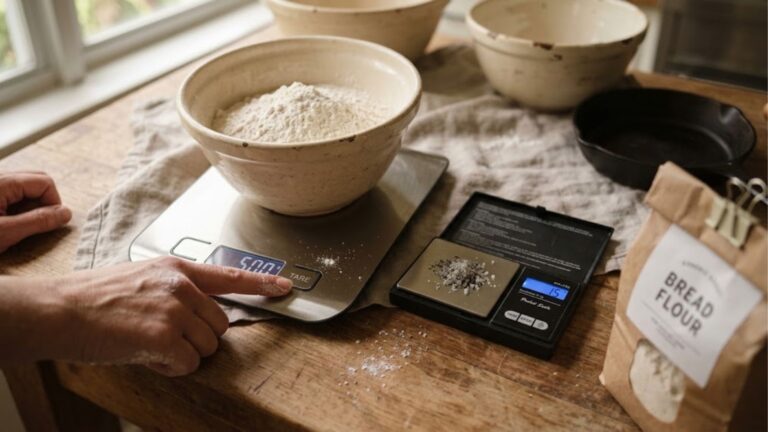
Kitchen Scales for Sourdough
The two-scale setup, the auto-off problem, and legal-for-trade scales for sellers.
Read the guide →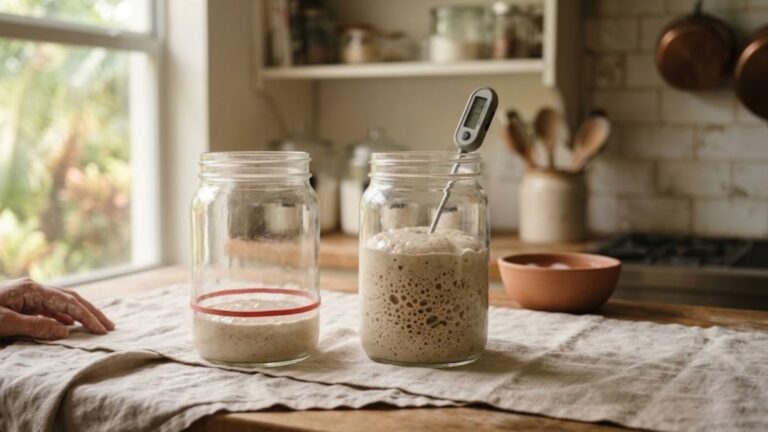
Starter Jars and Climate Control
The right jar, and why a Florida kitchen shops for cooling, not warming.
Read the guide →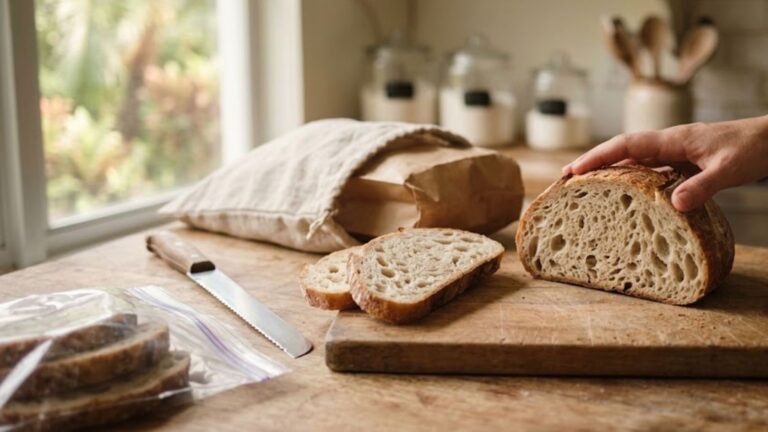
Storing Sourdough in a Humid Climate
Keeping crust and crumb mold-free in wet air, plus the bread knife that does not crush it.
Read the guide →
Pizza Stone vs. Baking Steel
Which one actually belongs in your oven, tested side by side.
Read the guide →Keep Going
Scoring faults are diagnosed in What’s Wrong With My Loaf. The rest of the warm-weather toolkit, including why the fridge is your most important scoring tool, is in Sourdough in a Hot, Humid Kitchen, and the full tiered gear list is the Sourdough Equipment Guide.