How Dough Type Changes Your Schedule: Lean, Whole Wheat, Rye, and Enriched
Once you have a schedule that works for your favorite loaf, it is tempting to use it for everything. Then you try a whole wheat loaf and it over-proofs, or you mix an enriched dough and it never seems to rise.
The reason is simple: different doughs run on different clocks. What the dough is made of changes how fast it ferments, so a schedule built for a white loaf needs a tune-up before it works for anything else.
The Short Answer
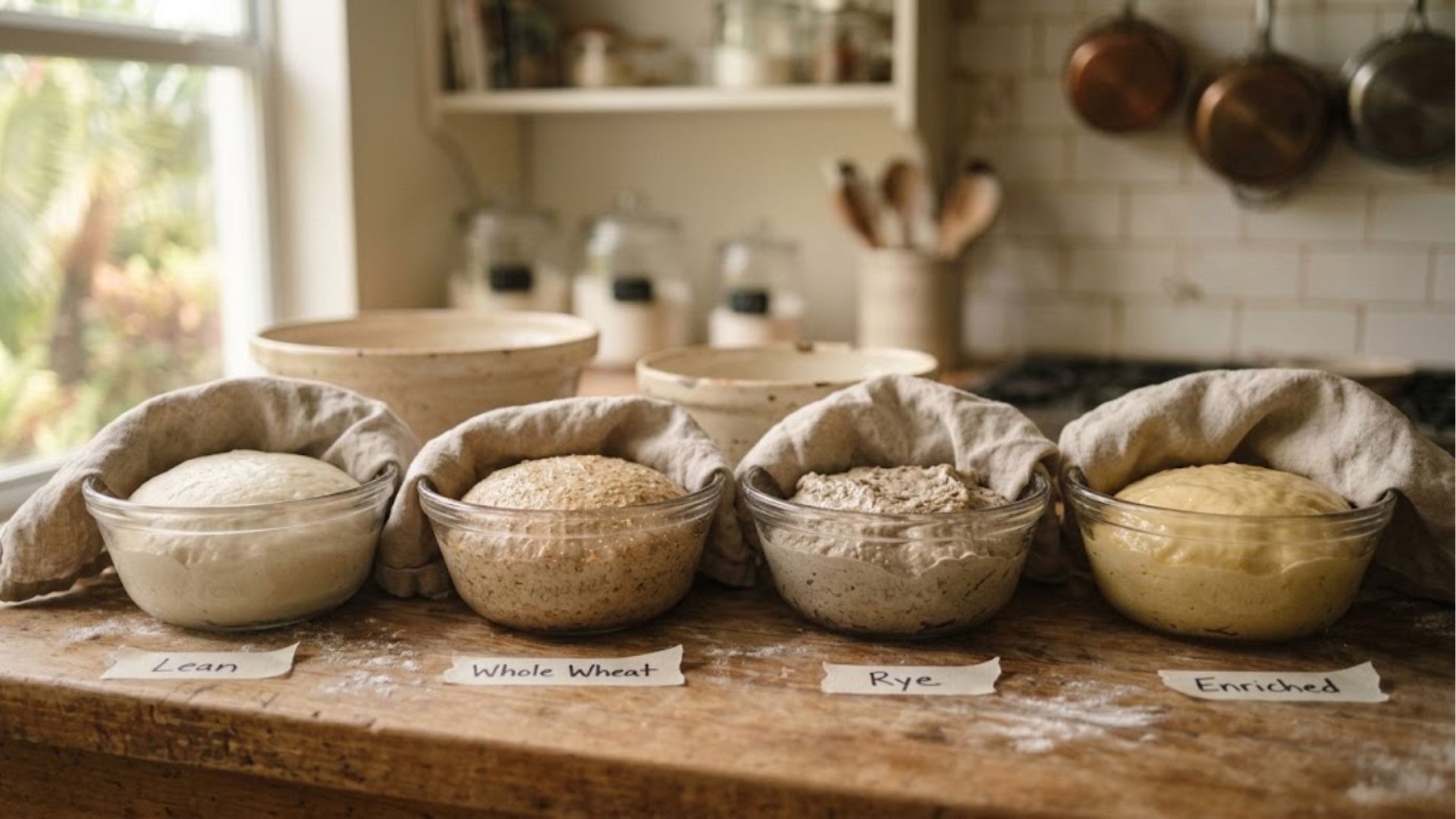
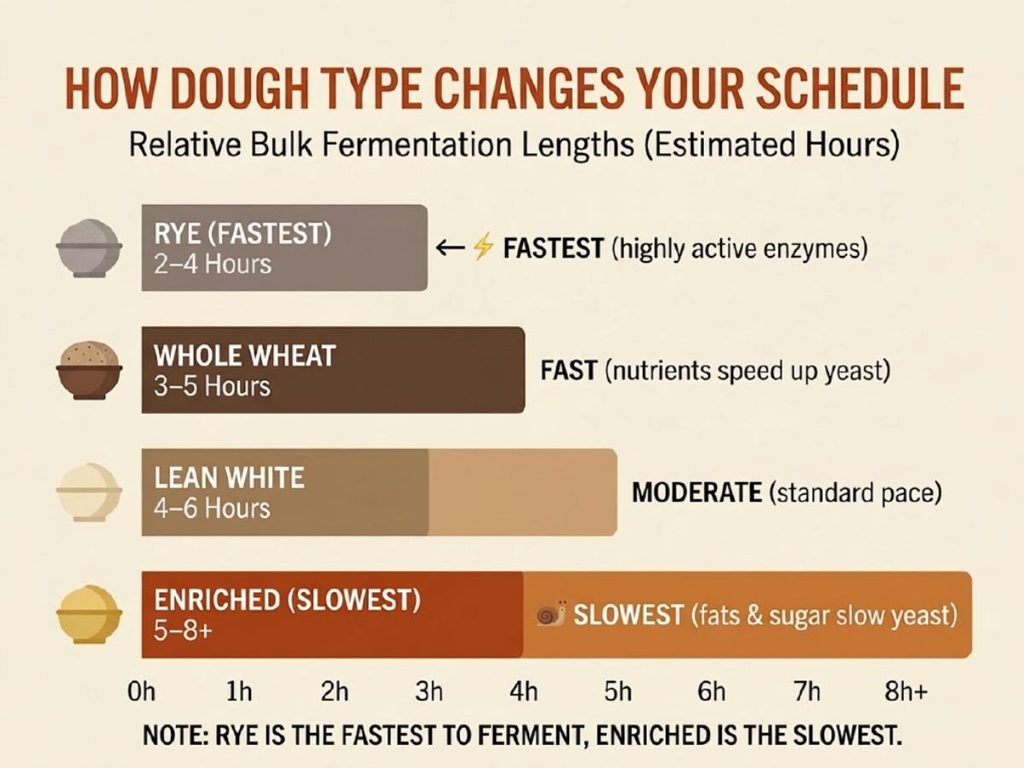
Whole wheat dough ferments faster than white dough because the bran and germ feed the microbes, and it absorbs more water. Rye ferments even faster and gets sticky and weak, so it needs a short schedule. Enriched doughs with butter, milk, eggs and sugar ferment more slowly and often benefit from an overnight rest in the fridge. Start with the times below, then rely on how the dough looks.
Why Dough Type Matters
Fermentation speed depends on what the yeast and bacteria have to work with, and what gets in their way. Whole grains offer extra food, while sugar, fat and eggs can slow microbes down. Gluten also matters, because a weak or sticky dough cannot hold gas for long.
| Dough | Bulk (warm kitchen) | Final proof | Watch for |
| Lean white | About 4 to 6 hours | 1 to 2 hours, or cold overnight | The standard timeline |
| Whole wheat (50 to 100%) | About 3 to 5 hours | About 45 to 90 minutes | Thirstier dough; over-proofs more quickly |
| Rye-heavy | About 2 to 4 hours | About 45 to 60 minutes | Sticky, weak structure; limited rise |
| Enriched (butter, milk, sugar) | About 5 to 8 hours, or overnight in the fridge | 2 to 4 hours | Slow to start; benefits from a cold rest |
| High-inclusion (seeds, nuts, fruit) | Similar to lean white | 1 to 2 hours | Add-ins can affect hydration |
↔ Swipe to see all columns
Treat these times as starting points. Temperature, levain amount and flour all change them.
Whole Wheat
Whole wheat dough absorbs water for a while after mixing, so it can feel dry at first and then loosen. Give it a longer rest before judging the texture, and watch the clock closely during bulk. It ferments faster than white dough, and because bran can cut gluten strands, over-fermented whole wheat can turn dense and sad.
Try our Whole Wheat Sourdough Loaf, and read Ash Content for the science of why whole grains ferment faster.
Rye
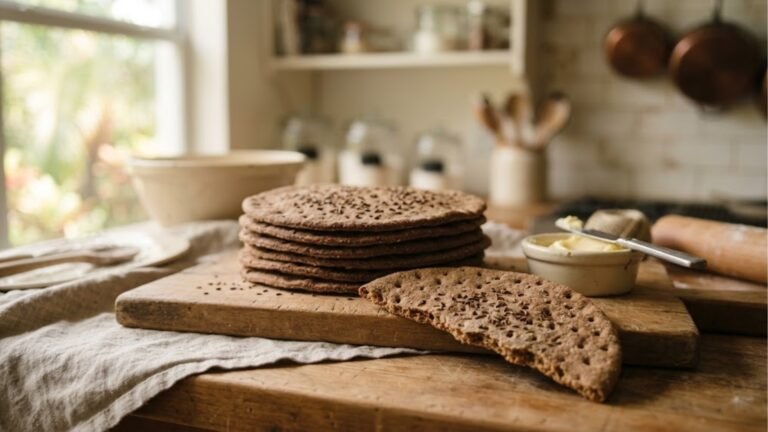
Rye is a very different dough. It contains less gluten-forming protein and more of a sticky compound that holds water, so it never gets stretchy the way wheat dough does. It also ferments rapidly. Keep the bulk short, handle it with wet hands or a wet scraper, and judge readiness by a slightly domed top and visible bubbles rather than a big rise.
Enriched Doughs
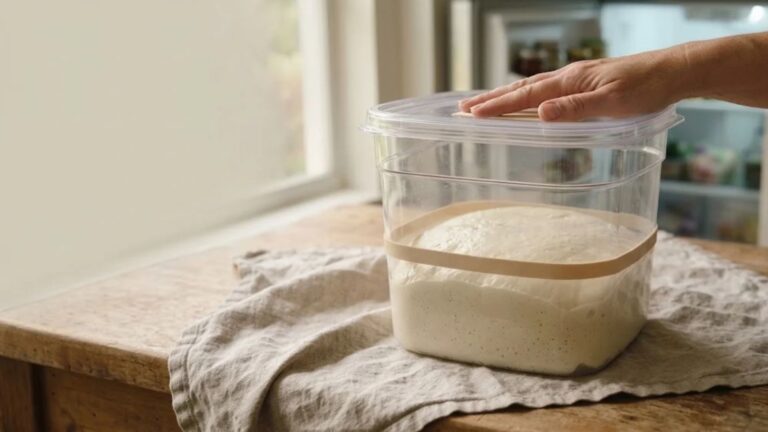
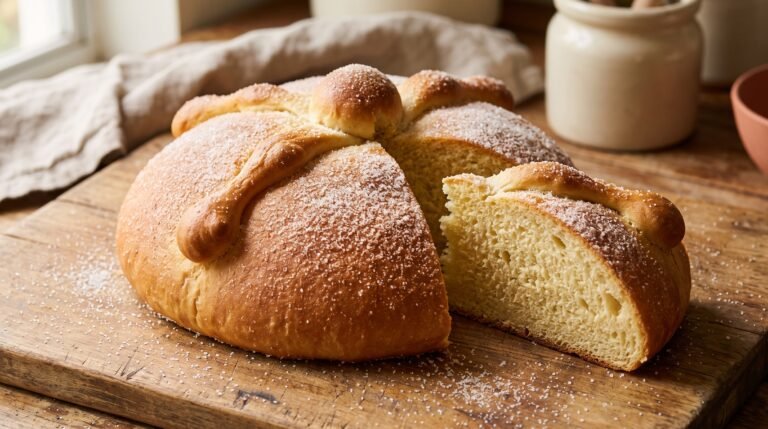
Butter, milk, sugar and eggs make a soft, tender dough, but they also slow the microbes down. A sandwich loaf or a batch of rolls may need several more hours of bulk and a longer final proof. A cold rest in the fridge overnight is a good friend here, because it firms up the dough, makes it easy to shape and builds flavor.
See our Sourdough Sandwich Bread and Sourdough Cinnamon Rolls for recipes that follow this approach.
Desi’s Note
If you are ever unsure how a new dough will behave, bake a small test batch first. Shape two small rolls from your next loaf’s dough and watch how they proof. It is a cheap way to learn how a flour or an add-in changes your timing.
How to Adjust Your Schedule
- For whole grain and rye: shorten the bulk and the final proof, and consider a cold proof so you can control the timing.
- For enriched doughs: lengthen the bulk, add a cold rest and use a slightly larger levain.
- For anything new: compare how the dough looks to a lean white dough at the same stage.
- Always: let the dough, not the clock, decide when each stage is finished.
Common Questions
Can I blend flours? Absolutely. A loaf with 20 or 30 percent whole wheat or rye sits between the two extremes, so adjust halfway.
Does a stiff dough behave differently? Yes. Lower hydration slows fermentation, so see Hydration and Climate.
Related Reading
- Which Sourdough Schedule Fits Your Life?
- Sourdough Rye Loaf
- Sourdough Proofing and Scoring Problems
- Cool Kitchen Schedule
A new dough deserves a new clock, so watch the dough and let it set the pace.
More Resources
Looking for a printable reference? Browse all six Printable Quicksheets, or dial in your own numbers with the Sourdough Calculator.
Knead to Know?
New recipes and sourdough troubleshooting, delivered before your starter even finishes its next rise.
Get the latest insights with no spam, just new recipes and baking tips. Unsubscribe anytime. See our Privacy Policy.