
Sourdough Pizza, Focaccia, and Flatbread Problems: Snap-Back Dough, Dense Crumb, and Pita That Will Not Puff
Pizza, focaccia, and flatbreads are some of the most forgiving ways to bake with sourdough, and they are also where small problems show up fast. A pizza dough that fights you or a pita that refuses to puff can make a beginner wonder what went wrong.
The good news is that these problems have a short list of causes. This guide walks through the ones we see most often. If you are new to sourdough baking in general, you might also like our guide to dense, gummy, or sticky sourdough.
The Short Answer
Most flatbread problems come down to three things: dough that is too tight and needs to rest, dough that was not fermented long enough to get airy, and an oven or pan that was not hot enough. Let tight dough rest and warm up before shaping, give focaccia a long proof and a gentle hand, and preheat your oven and baking surface for a full 45 to 60 minutes.
Start Here: What Is Your Dough Doing?
- The dough shrinks back when I stretch it. Jump to Cause 1.
- Focaccia is dense, with no open bubbles. Jump to Cause 2.
- Pizza is soggy or gummy in the middle. Jump to Cause 3.
- Pita, naan, or flatbread will not puff or turns out like a cracker. Jump to Cause 4.
- The crust is pale with no char, or the bottom is burnt or greasy. Jump to Cause 5 and Cause 6.
Why These Doughs Are Different
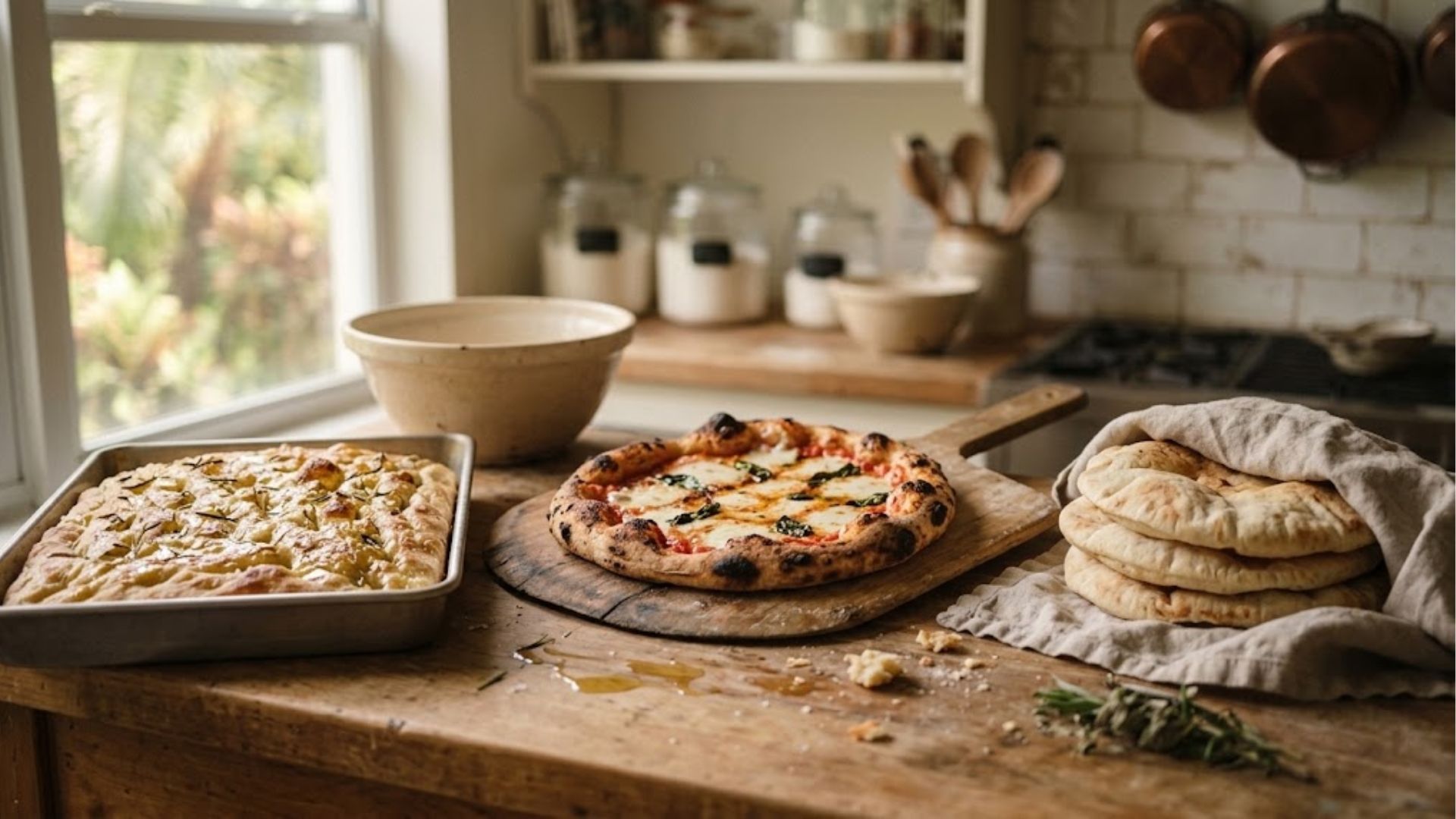
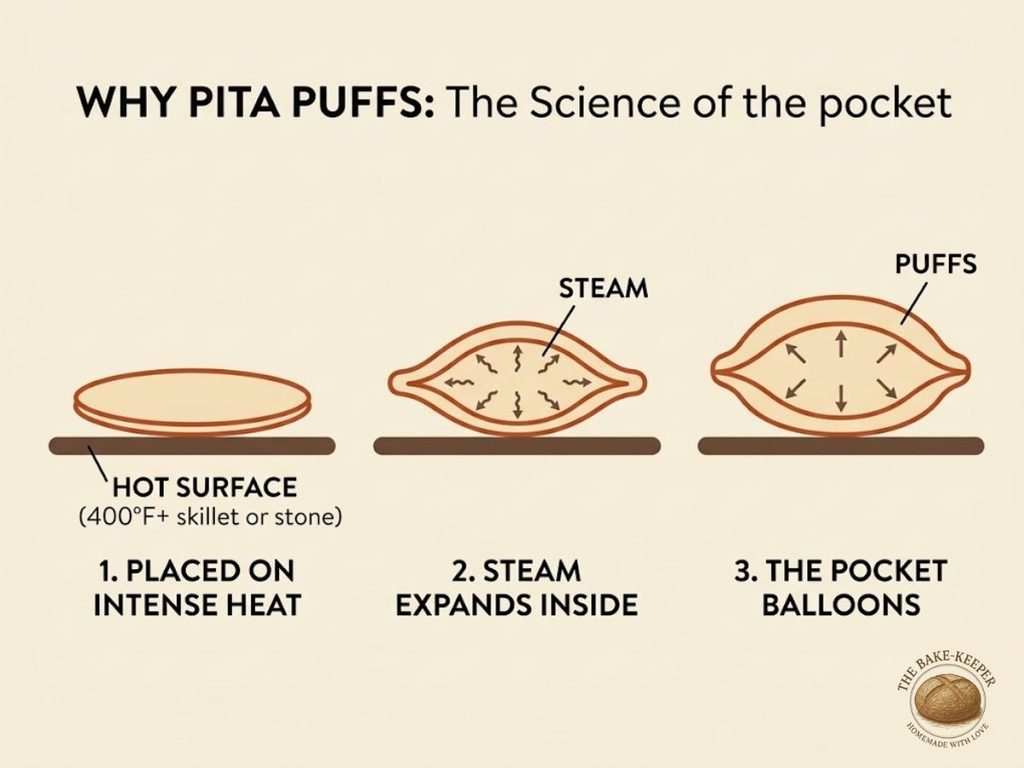
Flatbreads bake fast and hot, so there is very little time for the oven to fix a problem. Pizza and focaccia depend on a strong, extensible dough, which means gluten that has had time to relax. Focaccia in particular relies on high hydration and a long fermentation to build the big bubbles that give it its open, airy crumb. Pita puffs because steam from a hot, thin round of dough pushes the top and bottom apart, so the heat matters as much as the dough.
Flatbread Problems, Cause by Cause
Problem: Cause 1
The pizza dough shrinks back every time you stretch it.
The Fix
The gluten is too tight and needs to relax. Let the dough balls rest, covered, for 20 to 30 minutes at room temperature, then try again. If your dough was cold from the fridge, let it come up toward room temperature first. Stretch with your fingertips from the center out and avoid pressing the air out of the edge.
Problem: Cause 2
The focaccia is dense and tight, with no big bubbles.
The Fix
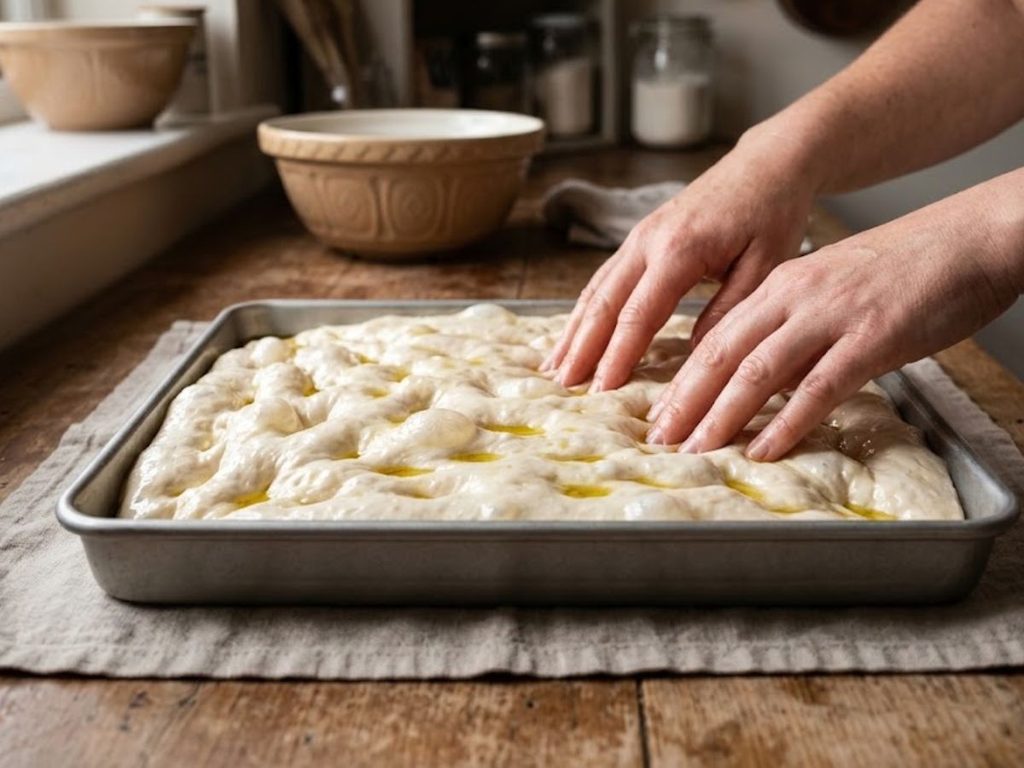
Give it a longer, gentler fermentation. Focaccia should be very wet and sticky, so do not add extra flour. Let it proof in an oiled pan until it is visibly puffy and jiggly, which can take several hours, then dimple it with oiled fingers and let it rest again before baking. Our sourdough focaccia recipe gives a full timeline.
Problem: Cause 3
The pizza is soggy or gummy in the middle.
The Fix
Use a lighter hand with sauce and wet toppings, and pre-cook watery vegetables. Bake on a very hot surface, such as a baking steel or stone that has been preheated for at least 45 minutes, or use the hottest setting your oven offers. A thin, even layer of toppings lets the heat reach the dough.
Problem: Cause 4
The pita or naan will not puff, or the flatbread turns out dry and cracker-like.
The Fix
Roll the dough to an even thickness, about one-eighth inch for pita, and do not use too much flour on the bench because the dry surface can stop it from puffing. Bake on a surface that is blazing hot, then cover cooked pieces with a towel so the steam keeps them soft. If the dough keeps tearing, rest it a few minutes and roll again.
Problem: Cause 5
The crust is pale and there is no char or spotting.
The Fix
The oven is not hot enough. Preheat as high as it will go, 500 degrees F or more if your oven allows, with the baking surface inside. Place the pizza on the upper-middle rack and, if needed, finish it for a minute under the broiler. For skillet flatbreads, use cast iron and let it heat until it is hot enough that a drop of water sizzles away.
Problem: Cause 6
The bottom of the focaccia is burnt, or the whole thing is greasy.
The Fix
Use a pan that suits the oven, and lower the rack if the bottom is browning too fast. A glass or dark pan runs hotter than a light aluminum one. Use enough olive oil to keep the dough from sticking and crisp the base, but not so much that it pools. Let the bread cool on a rack so steam does not make the underside soggy.
Desi’s Note
Flatbreads are the best place to practice because there is so little to lose. Make a small batch, change one thing, and taste the difference. That is the whole education.
Quick Answers
Should the dough be at room temperature for pizza? Yes, a cold dough is tight and snaps back. Let it rest first.
Can I use discard for flatbread? Yes, discard flatbreads work well, but they lack the lift of a ripe starter. See our sourdough flatbread for one example.
Do I need a pizza stone? It helps, but a heavy upside-down baking sheet, preheated, is a good stand-in.
Related Reading
Hot ovens, rested dough, and a little patience: that is nearly all flatbread asks.
More Resources
Looking for a printable reference? Browse all six Printable Quicksheets, or dial in your own numbers with the Sourdough Calculator.
Knead to Know?
New recipes and sourdough troubleshooting, delivered before your starter even finishes its next rise.
Get the latest insights with no spam, just new recipes and baking tips. Unsubscribe anytime. See our Privacy Policy.