Why Sourdough Needs to Cool: Starch, Staling, and Why the Fridge Is the Wrong Place
Everyone who bakes bread has done it: pulled a golden loaf from the oven, sliced it immediately, and found a gummy, damp middle. Everyone has also found a loaf that tasted wonderful on Saturday and felt like cardboard by Monday. Both problems come from the same place, the starch inside the bread.
The Short Answer
A loaf is not finished baking when it leaves the oven. Inside, the starch is soft and still holding a lot of moisture, so slicing too early squishes it into a gummy mass. As the bread cools, the starch firms up and the moisture redistributes, which is why you should wait at least an hour. Later, the starch slowly recrystallizes in a process called retrogradation, which is the main reason bread goes stale. It happens fastest at refrigerator temperatures, so store bread at room temperature or freeze it.
Humid kitchen? Baking Sourdough in Florida Heat and Humidity covers why loaves go soft or moldy there.
What Starch Does in the Oven
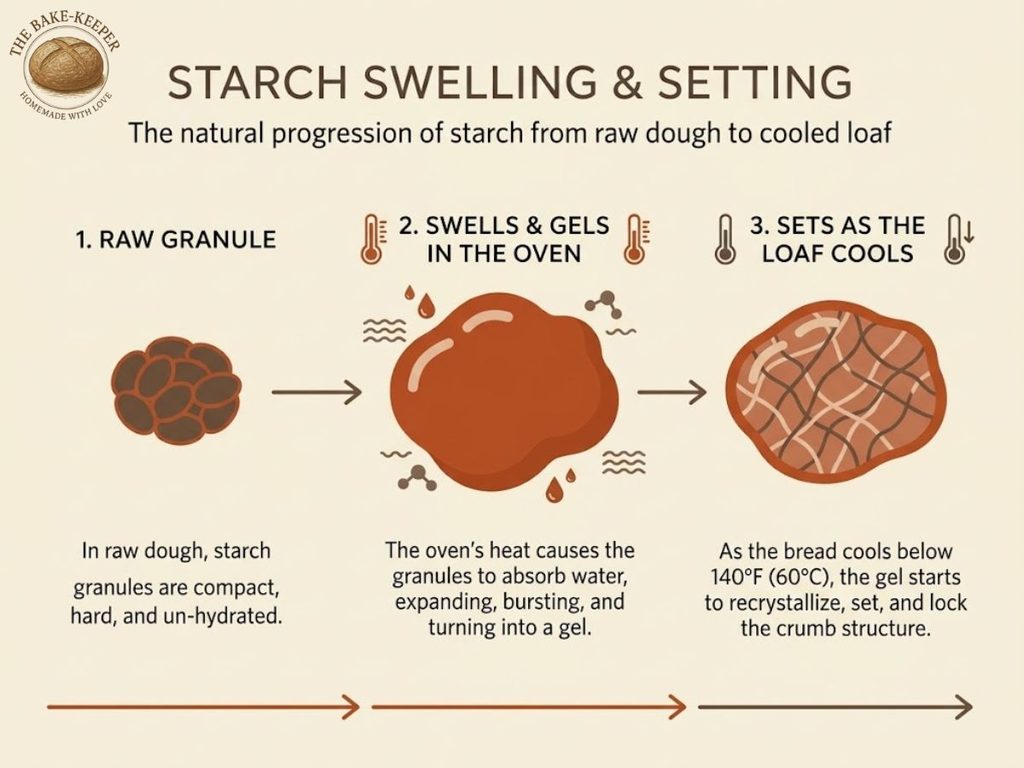
Flour is mostly starch. In the oven, as the inside of the loaf heats up, starch granules absorb water and swell until they burst and gel, a process called gelatinization. This begins at temperatures somewhere in the range of 140 to 160 degrees F and is what turns a wet dough into a bread crumb.
When the loaf comes out, the gelatinized starch is still hot and soft, with steam trapped inside. It has not yet set into its final structure. Cut into it now and the crumb smears against the knife, giving that sticky texture people mistake for underbaking.
What Happens as the Loaf Cools
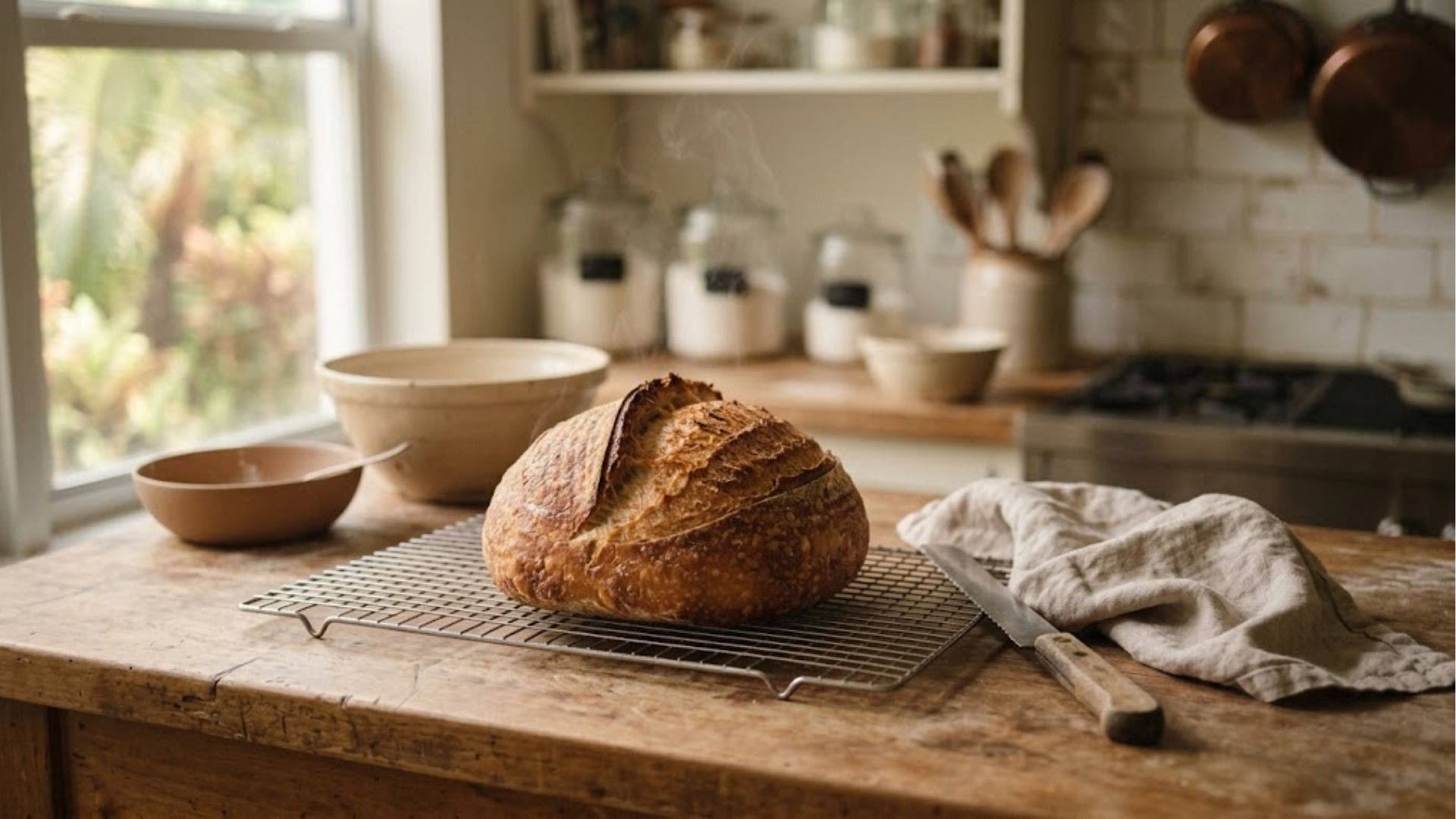
As the loaf cools, the gel firms up and the crumb becomes sliceable. Steam escapes through the crust, and moisture moves from the wet center toward the drier outside. A loaf cooled on a wire rack gets airflow all around it, so the crust does not turn soggy. Most lean loaves are ready to slice in about an hour. Large, wet, or high-rye loaves benefit from longer.
How Long to Wait, by Loaf
The right wait depends on how much water the loaf holds and how big it is. Treat these times as a rough guide, since ovens and flours vary.
| Loaf | Earliest slice | Better |
|---|---|---|
| Lean boule or batard, 800 to 900 g | 1 hour | 3 hours |
| Whole wheat or high-hydration loaf | 90 minutes | 3 hours |
| Pan loaf or enriched loaf (milk, butter, egg) | 2 hours | 3 hours |
| High-rye loaf | Several hours | Next day |
If you slice early anyway, cut only what you need and store the rest cut side down. The remaining crumb keeps setting while you eat.
Is It Done, or Just Hot?
A gummy middle has two common causes: a loaf sliced too early and a loaf pulled from the oven too soon. An instant-read thermometer tells them apart. Lean sourdough is generally done when the center reads 205 to 210°F (96 to 99°C), and enriched loaves are done at about 190°F (88°C). If the center was well under 200°F, the crumb will stay damp however long it cools. If it hit the target and still turned out gummy, look at proofing instead, which the dense, gummy, or sticky sourdough guide walks through.
Why Bread Goes Stale
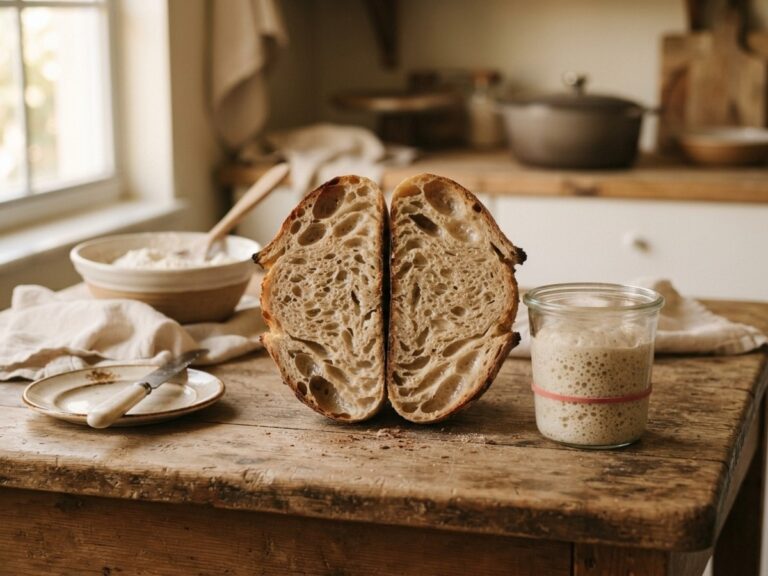
Staling is not simply drying out. It is mainly a structural change called starch retrogradation. Over hours and days, the starch molecules that were loosened during baking slowly line up and recrystallize, which turns the crumb firm and dry in feel even when little moisture has been lost.
Retrogradation happens fastest at cool, but above freezing, temperatures, which is exactly the range of a refrigerator. That is why a loaf stored in the fridge often goes stale faster than one left on the counter. Freezing, on the other hand, stops the process almost completely.
Why Sourdough Keeps Longer
Sourdough tends to stay fresh a little longer than commercially yeasted bread. The acids produced during fermentation, along with the longer ferment, are thought to slow staling and discourage mold. The effect is modest, but most bakers notice the difference.
How to Store Bread Well
- Cool completely before wrapping or bagging.
- Day one and two: store cut side down on a board, or in a paper or linen bag, at room temperature.
- Beyond two days: slice and freeze, and toast slices straight from the freezer.
- Do not refrigerate. Freeze what you will not eat within two days. See our storage lesson for the full guide.
- Refresh a stale loaf by moistening the crust and warming it in a hot oven for 5 to 10 minutes. Warming reverses some of the firmness for a short time.
Desi’s Note
I know the smell of a fresh loaf is nearly impossible to resist. Pour a cup of coffee, set a timer for an hour, and let the bread finish its work. It tastes better, and it slices cleaner.
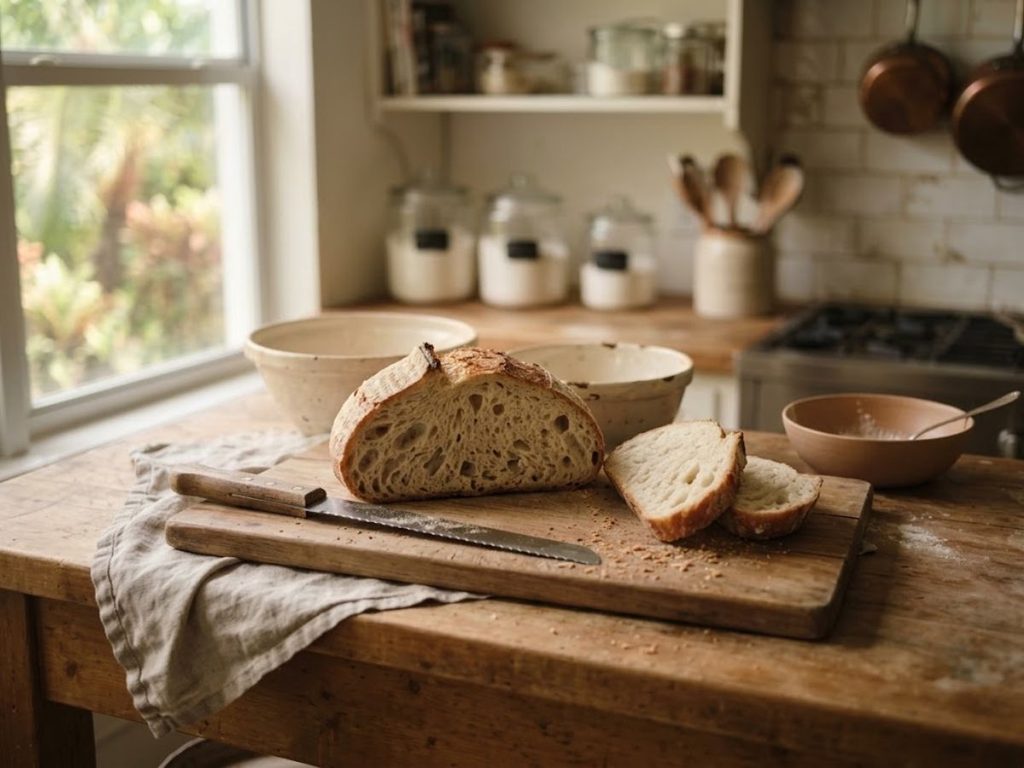
Cooling and Storing in a Humid South Florida Kitchen
In a humid kitchen the crust takes moisture back from the air as it cools, so a loaf can go from crackly to leathery on the rack within an hour or two. Cool it in the driest spot you have, away from the stove and any sunny window, and leave it uncovered until it is fully cool.
The same warm, damp air that softens the crust also speeds up mold, so the two-day counter window above is the most you should count on here. Slice and freeze whatever you will not eat in that time. The refrigerator is still the wrong place for bread, because it sits in the range where starch stales fastest, so the freezer is the answer in a Florida kitchen.
Common Questions
How long should I wait? At least an hour for most loaves. A big, dense, or rye loaf can take longer.
Is a gummy crumb always from slicing too early? Not always. Underproofing can cause it too. See dense, gummy, or sticky sourdough.
Can I reheat bread? Yes. A hot oven for a few minutes restores some freshness, but only for a short time.
Does sourdough really stay fresh longer than yeast bread? Usually a little. The acids from fermentation are the leading explanation, but the effect is modest and varies by recipe. Treat it as a small bonus and store the loaf the same way.
Why is the crust soft after the loaf has cooled? Humid air. The crust reabsorbs moisture, especially in summer. Warm the loaf on the oven rack at a high temperature for 5 to 10 minutes and it crisps again for a day.
Can I speed up cooling? A fan on low across the rack should help, because moving air carries moisture off the crust. Keep the loaf on the rack and out of the airflow of a vent, which can dry the crust unevenly.
Is a warm slice ever worth it? For the end heel, maybe. It is the driest part of the loaf and holds up best. Leave the rest of the loaf whole until it has cooled.
Related Reading
- How to Store (and Freeze) Your Sourdough
- Steam and Oven Spring
- Sourdough Crust Problems
- Dense, Gummy, or Sticky Sourdough
Let it cool: the loaf is still finishing.
More Resources
Looking for a printable reference? Browse all six Printable Quicksheets, or dial in your own numbers with the Sourdough Calculator.
Knead to Know?
New recipes and sourdough troubleshooting, delivered before your starter even finishes its next rise.
Get the latest insights with no spam, just new recipes and baking tips. Unsubscribe anytime. See our Privacy Policy.