
Sourdough Shaping and Sticking Problems: Dough That Sticks to the Banneton, the Bench, and Your Hands
Shaping is the moment most new bakers dread. The dough sticks to the bench, to your hands, and then to the banneton, and by the time you turn it out onto the baking sheet it has lost its shape. It is frustrating, and it happens to nearly everyone.
The good news is that sticking has a short list of causes, and every one of them has a fix. If your trouble is a loaf that spreads instead of rising, our guide to proofing and scoring problems covers that. This one is about handling.
The Short Answer
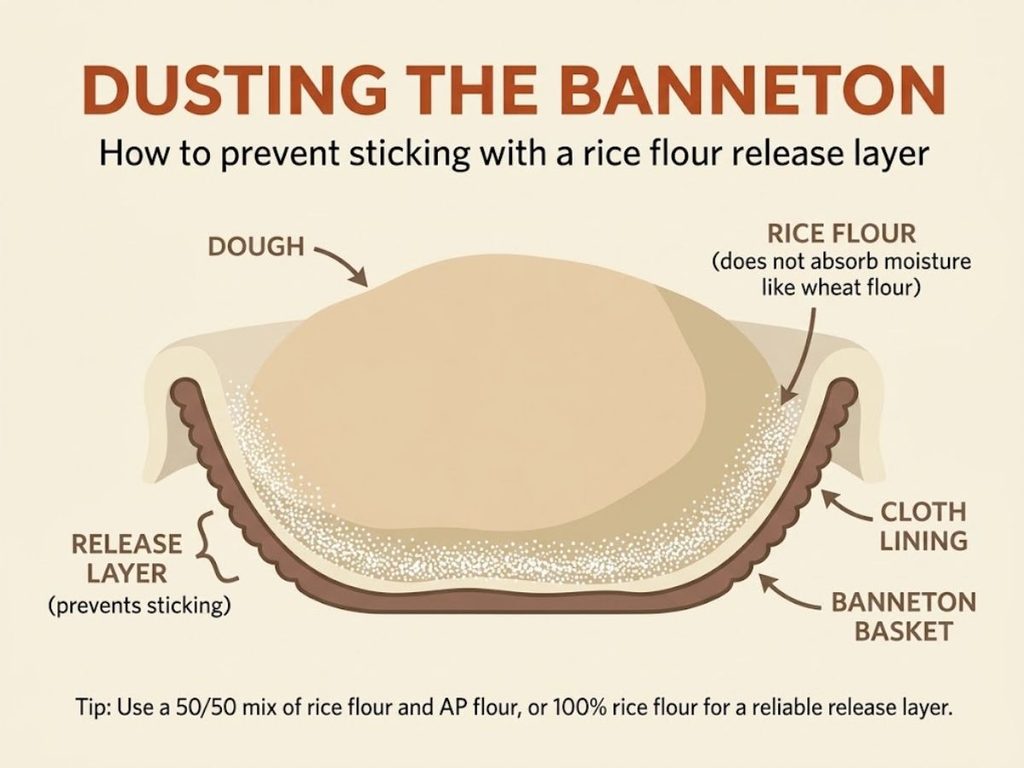
Dough sticks when the surface is wet and the tools are dry. Dust your banneton generously with rice flour, which does not absorb moisture the way wheat flour does, use a damp hand or bench scraper rather than lots of flour on the bench, and chill the dough briefly if it feels slack. Shaping tension, a sealed seam, and a hot preheated pot do the rest.
Start Here: Where Is Your Dough Sticking?
- It will not come out of the banneton. Jump to Cause 1.
- It sticks to the bench and my hands while I shape. Jump to Cause 2.
- The surface tears or the shape collapses. Jump to Cause 3.
- The shape is loose and the loaf spreads out flat. Jump to Cause 4.
- The loaf sticks to the pot or bursts open along the seam. Jump to Cause 5 and Cause 6.
Why Sourdough Dough Sticks
Sourdough dough is often high in hydration, which makes it wet and tacky. Wetter dough has a gentler surface tension and clings to anything dry or rough. The fix is rarely to add more flour to the dough, because extra flour changes the crumb. Instead, the trick is to change what the dough touches: the right dusting, slightly damp hands, and the right resting time.
Sticking and Shaping Problems, Cause by Cause
Problem: Cause 1
The dough sticks to the banneton and tears when you turn it out.
The Fix
Dust the basket more heavily than feels reasonable, using rice flour or a mix of rice flour and wheat flour, and rub it into every groove. A new banneton needs to be seasoned by dusting it repeatedly, and a cloth liner should be well floured. If the dough still sticks, let it chill in the fridge for 20 to 30 minutes first, because cold dough releases more easily.
Problem: Cause 2
The dough sticks to the bench and your hands while shaping.
The Fix
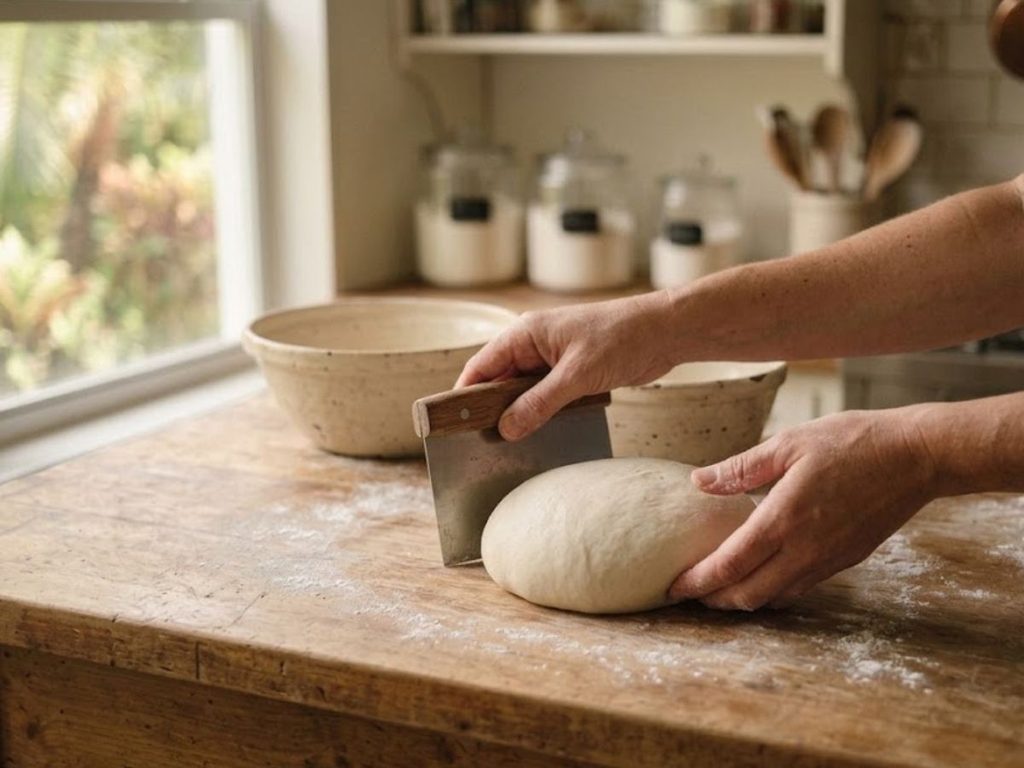
Work with slightly damp hands and a bench scraper rather than adding flour. A small amount of flour on the bench is fine, but too much gets worked into the dough and can leave streaks. Make sure the dough has had enough strength built up during bulk fermentation, because stronger dough is less sticky. Cold dough from the fridge is also easier to handle.
Problem: Cause 3
The surface tears, or the dough will not hold together.
The Fix
Overproofed dough can be fragile and tear, while tight, underrested dough tears because the gluten has not relaxed. If the dough resists, give it a 20 to 30 minute bench rest, covered, and try again. If it feels gassy and fragile, shape it quickly and gently and bake it sooner.
Problem: Cause 4
The shaped loaf has no tension and spreads out flat when it hits the pot.
The Fix
Tension comes from technique. After the pre-shape rest, fold the dough into a tight package and drag it toward you across the bench so the surface skin tightens. You should feel it resisting. Avoid overworking it, since too much handling pushes out the gas. A bench scraper makes this easier.
Problem: Cause 5
The loaf sticks to the pot, the parchment, or the pan.
The Fix
Preheat the pot with the oven so the dough sets on contact. Bake on a sheet of parchment paper, using it as a sling to lower the loaf in. A little semolina or rice flour under the dough helps too. If you bake directly in a pot, dust the bottom lightly.
Problem: Cause 6
The loaf splits open along the seam, or bursts on the side.
The Fix
Place the loaf seam side up in the banneton, so the seam ends up on the bottom after you flip it. Pinch the seam closed firmly before the final proof. A confident score on top, about a quarter inch deep, gives the dough a place to expand so it does not burst somewhere else.
Desi’s Note
The first time you turn out a loaf cleanly, it feels like a small miracle. Until then, do not worry about a stuck loaf. Scrape it out, shape it again, and bake it anyway. It will still taste like bread.
Quick Answers
Is rice flour really better than wheat flour? Yes for dusting. It does not absorb water as readily, so it keeps a dry layer between the dough and the basket.
Should I wet my banneton? No. Keep it dry and floured.
What if the dough still will not release? Try freezing the shaped dough for 15 minutes, then turn it out. It should pop out easily.
Related Reading
- Sourdough Proofing and Scoring Problems
- Dense, Gummy, or Sticky Sourdough
- Plain Sourdough Loaf
- The Sourdough Gear You Actually Need
Sticking is a handling problem, and handling is something you learn with your hands.
More Resources
Looking for a printable reference? Browse all six Printable Quicksheets, or dial in your own numbers with the Sourdough Calculator.
Knead to Know?
New recipes and sourdough troubleshooting, delivered before your starter even finishes its next rise.
Get the latest insights with no spam, just new recipes and baking tips. Unsubscribe anytime. See our Privacy Policy.