Gluten Development in Sourdough: Why Folds Work Better Than Kneading
Ask ten bakers how to make strong sourdough dough and you will hear ten answers: knead it, fold it, let it rest, let it ferment longer. They are all right, because they are all different routes to the same place. That place is a network of gluten, strong enough to trap gas and stretchy enough to expand.
Understanding how that network forms makes every sourdough recipe easier to follow, and it explains why a few quiet folds can do the work of ten minutes of kneading.
The Short Answer
Gluten forms when two wheat proteins, glutenin and gliadin, meet water and are gently stretched into orderly strands. Kneading speeds this up, but time and water do much of it on their own. Stretch and folds, spaced out over the first hours of bulk fermentation, build strength with less effort and less damage to the delicate dough. Most doughs need about three to four sets.
What Gluten Actually Is
Gluten is not an ingredient in the flour. It is something that forms when you add water. Wheat flour contains two proteins, glutenin and gliadin. Glutenin gives dough its strength and elasticity, and gliadin gives it extensibility, which is the ability to stretch without tearing. When water reaches them, they link together into a stretchy web. Working the dough lines these strands up and builds more bonds, so the network becomes stronger and more organized.
Why Folds Work
Traditional kneading uses vigorous work to build the web in a few minutes. Sourdough has a few reasons to prefer a gentler route. The dough is often wetter, which makes kneading messy. A long fermentation also lets the dough strengthen on its own, and the acid from the starter can eventually weaken the network if it is overworked.
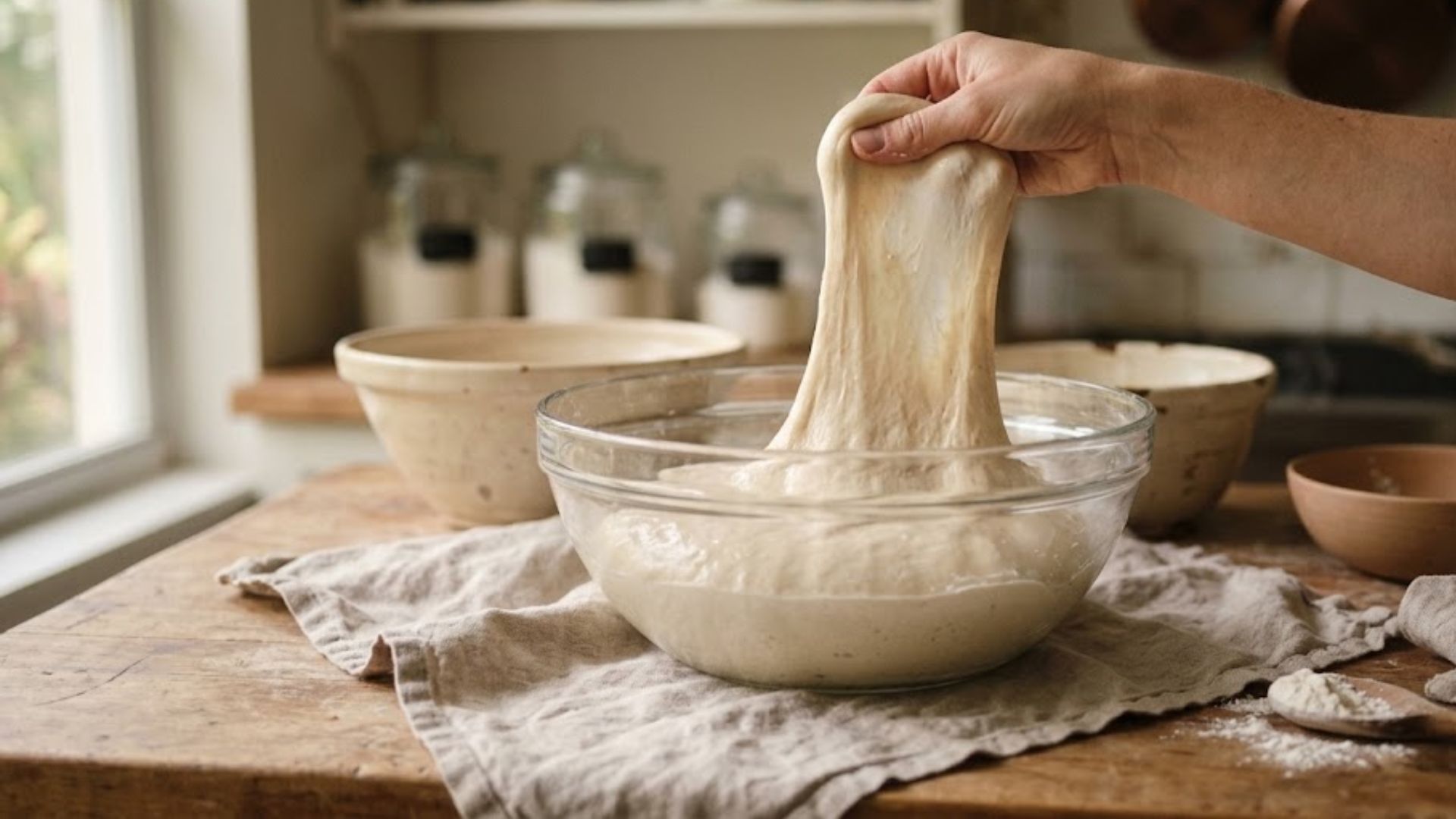
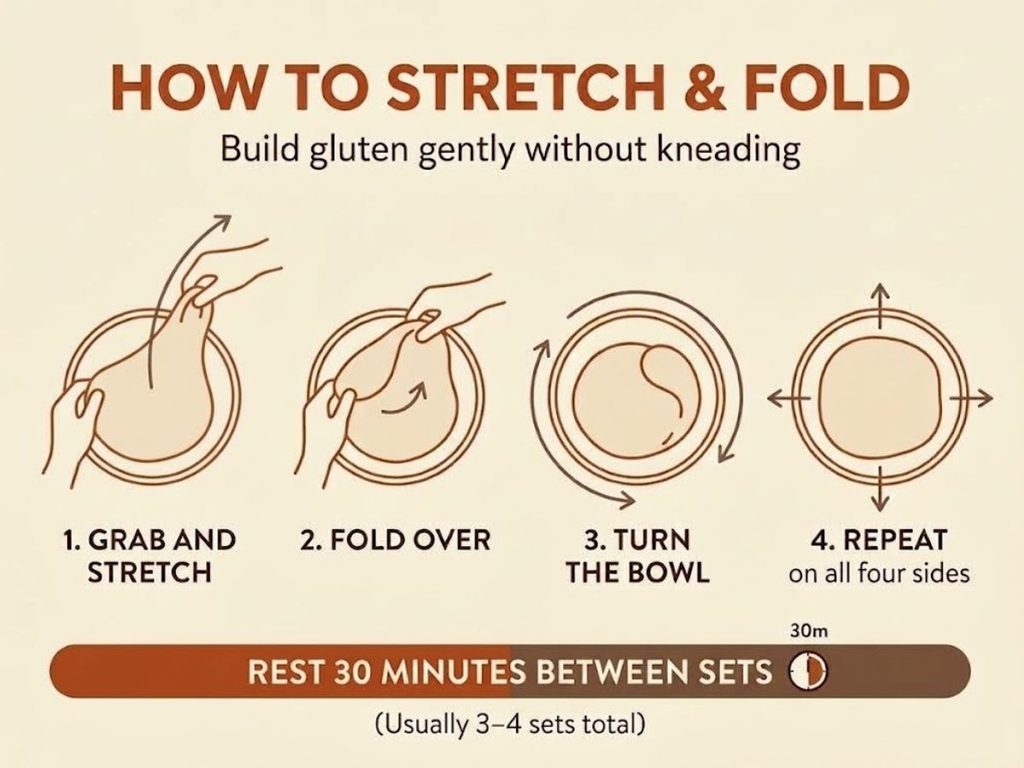
A stretch and fold is a simple motion: grab one side of the dough, stretch it up gently, and fold it over the center, then rotate the bowl and repeat a few times. Each fold lines the strands up, evens out gas and temperature, and adds strength. The rest between folds gives the gluten time to relax and rebuild.
A Simple Fold Schedule
| When | What to do | What you should notice |
| After mixing | Rest 30 minutes | The dough is shaggy and loose |
| Set 1 | Four stretch and folds | The dough starts to hold together |
| Set 2, 30 minutes later | Four stretch and folds | Smoother, more elastic |
| Set 3, 30 minutes later | Three or four folds | Noticeably stronger, springs back |
| Set 4, 30 minutes later (optional) | Two or three gentle folds | Domed, airy, jiggles when moved |
| After that | Leave it alone to finish bulk | The dough should be puffy and bubbly |
↔ Swipe to see all columns
How to Tell When It Is Strong Enough
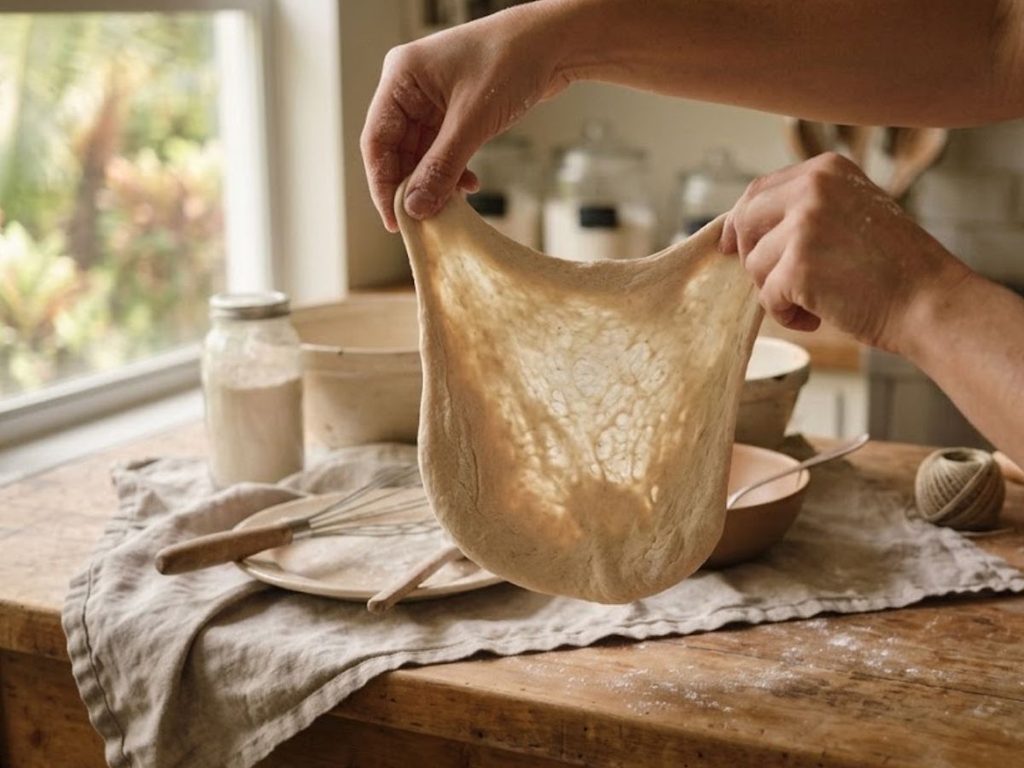
- Windowpane. Take a small piece of dough and gently stretch it. If it stretches thin enough to see light through without tearing, the gluten is well developed.
- It holds its shape. The dough should mound slightly rather than flowing flat.
- It pulls away from the bowl in a smooth sheet when you stretch it.
Desi’s Note
You do not need to get this perfect. If a set of folds gets skipped, add one later or let the dough rest a little longer. Gluten is more forgiving than any recipe makes it sound.
Common Questions
Can I knead instead? Yes. Short slap-and-fold kneading on the counter for a few minutes works too, especially for lower-hydration doughs.
Can I overdo the folds? It is possible to overwork dough, especially late in bulk, which pushes out gas. Be gentle and stop when the dough feels strong.
What if my dough is slack even after folds? It may be overproofed or too wet for your flour. See dense, gummy, or sticky sourdough.
Related Reading
- Autolyse Explained
- What Fermentation Actually Does to Your Flour
- Sourdough Shaping and Sticking Problems
- Plain Sourdough Loaf
Strength comes from water, time, and a gentle hand.
More Resources
Looking for a printable reference? Browse all six Printable Quicksheets, or dial in your own numbers with the Sourdough Calculator.
Knead to Know?
New recipes and sourdough troubleshooting, delivered before your starter even finishes its next rise.
Get the latest insights with no spam, just new recipes and baking tips. Unsubscribe anytime. See our Privacy Policy.