
Autolyse Explained: What a Rest Before Mixing Actually Does to Your Dough
Many sourdough recipes begin with the same odd instruction: mix the flour and water, then walk away for 30 minutes to an hour before you do anything else. That rest has a name, autolyse, and it is one of the simplest techniques a baker can use. It takes no effort, no equipment, and no skill, and it makes dough easier to handle.
Here is what is going on inside the bowl while you are waiting, and how to decide when to use it.
The Short Answer
Autolyse is a rest period after you mix flour and water, before you add the starter and salt. During the rest, the flour absorbs water, enzymes begin to work, and gluten starts to form on its own. The result is a dough that is more extensible, easier to shape, and needs less handling. A rest of 20 to 60 minutes is typical, and it is especially helpful for whole grain flours.
Where the Idea Comes From
The French baking professor Raymond Calvel is generally credited with describing the technique, which he used to avoid overmixing dough in commercial bakeries. He found that resting flour and water before mixing in the rest of the ingredients gave a smoother, more extensible dough with better flavor and a more open crumb. The word comes from Greek and means self-digestion, which is a bit dramatic for what is basically a soak.
What Happens During the Rest
Three things happen while the flour and water sit together.
- The flour hydrates. Starch and protein particles take up water. Fully hydrated flour is easier to work with and less sticky than a dough that is still absorbing water.
- Gluten begins to form. When wheat proteins are wet, they link up into gluten without any kneading at all. Time and water do some of the work that your hands would otherwise do.
- Enzymes get started. Naturally present enzymes begin to break down starch into sugars and proteins into smaller pieces. This can make the dough more stretchy, and it feeds the fermentation to come.

How to Do It
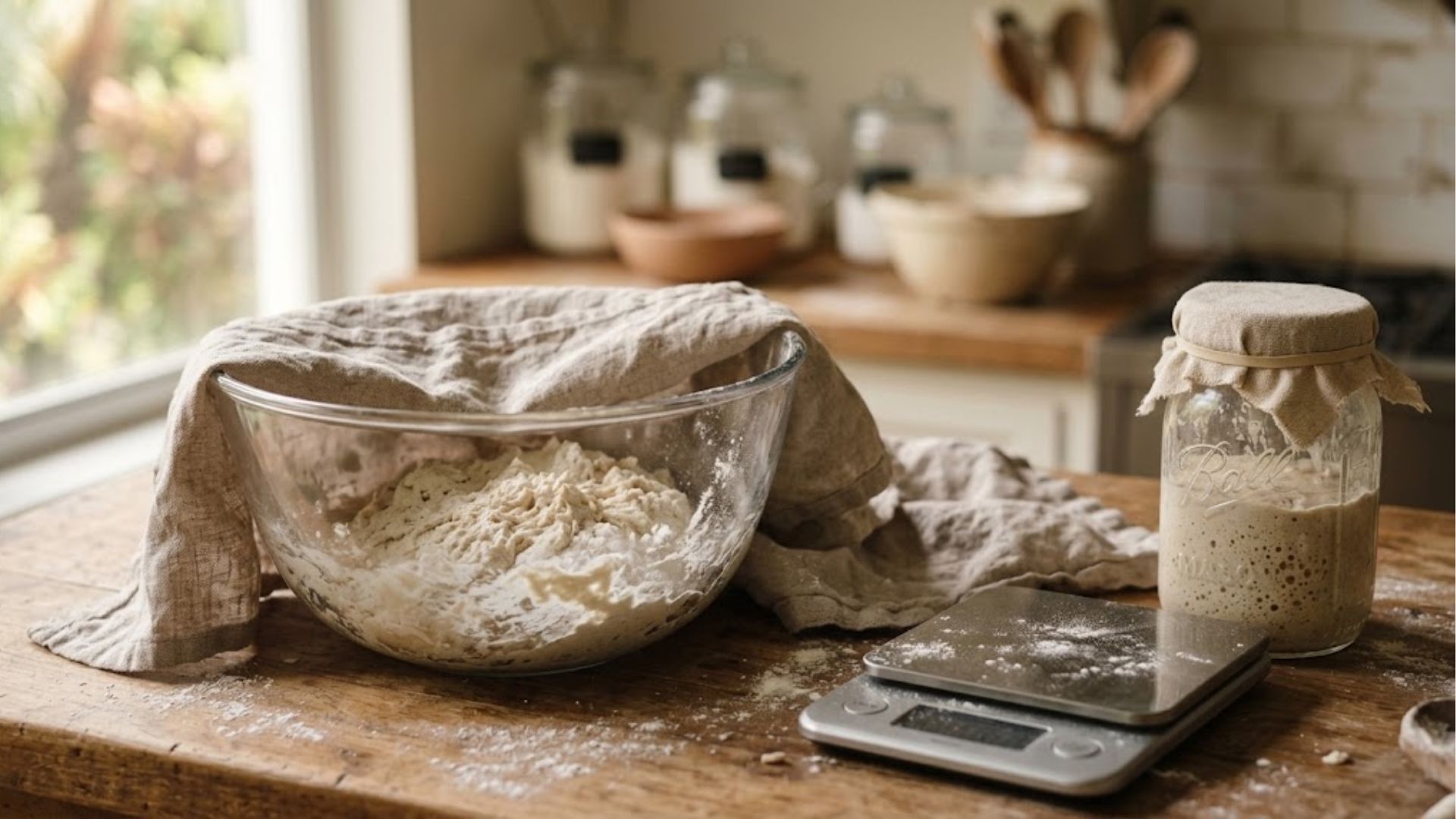
- Weigh the flour and water in a bowl and mix until no dry flour remains. The dough will look rough and shaggy, and that is fine.
- Cover the bowl and leave it for 20 to 60 minutes at room temperature.
- After the rest, add the starter and salt, and mix them in by squeezing and folding until they are evenly distributed.
- Continue with your normal folds and bulk fermentation.
Some bakers add the starter before the rest and add only the salt afterward. This is sometimes called a fermentolyse. It works, but fermentation starts earlier, so keep an eye on the clock.
When It Helps Most
Autolyse is especially useful with whole wheat and other whole grain flours, because the bran needs time to soften and absorb water. It also helps with high-hydration doughs, which can be hard to handle, and with doughs that you want to mix by hand without a long kneading session. For a plain white loaf at moderate hydration, the benefit is smaller, and skipping it will not ruin your bread.

Desi’s Note
If I am short on time, autolyse is the first thing I skip, and the last thing I regret skipping. If I have an extra half hour while the kitchen is quiet, I use it every time. It is the easiest upgrade in bread baking.
Common Questions
Does autolyse make bread less sour? It does not change sourness much on its own, since the starter is not in the dough yet. Sourness is driven mainly by fermentation time and temperature. See Sourness Control.
Why add the salt after the rest? Salt tightens gluten and slows enzymes, so many bakers hold it back until the rest is over.
How long is too long? Beyond a couple of hours, the enzymes can start to weaken the dough, especially in a warm kitchen. Thirty to sixty minutes is a safe window.
Related Reading
- What Fermentation Actually Does to Your Flour
- Hydration and Climate: The Two Numbers That Control Your Fermentation Time
- Gluten Development in Sourdough
- Whole Wheat and Rye Sourdough Problems
Flour and water, left alone: it turns out that is a technique.
More Resources
Looking for a printable reference? Browse all six Printable Quicksheets, or dial in your own numbers with the Sourdough Calculator.
Knead to Know?
New recipes and sourdough troubleshooting, delivered before your starter even finishes its next rise.
Get the latest insights with no spam, just new recipes and baking tips. Unsubscribe anytime. See our Privacy Policy.