
Milling Your Own Flour at Home: Is a Grain Mill Worth It?
Affiliate Note
As a NutriMill affiliate, I earn a commission on qualifying purchases made through the links on this page, at no extra cost to you. I have not tested these machines myself. Everything below comes from the manufacturer’s published specifications and from what experienced home millers report, and I say so where it matters.
Most sourdough bakers never need to think about a grain mill, and nothing on this site requires one. But if you have ever wondered what bread tastes like when the flour was whole wheat berries an hour earlier, a countertop mill is the piece of gear that makes it possible. Here is how to decide whether it is worth the counter space, and how to choose one.
The Short Answer
A home grain mill turns whole wheat berries into flour on demand. Impact mills are fast and affordable, stone mills are slower and quieter, and the right pick depends on what you bake and how much you want to spend. Fresh-milled flour behaves differently from store-bought whole wheat: it takes more water, ferments faster and needs a gentler hand, so plan to adjust your usual dough rather than swap it in one for one.
Do You Actually Need a Grain Mill?
No. Good bread comes from good flour, a healthy starter and a patient ferment, and every recipe here is written for flour you can buy at the store. A mill is a hobby upgrade, not a missing step.
It starts to make sense if you bake whole grain loaves often, if you want to work with grains that are hard to find already milled, or if you simply enjoy the process. It makes less sense if you bake mostly with white bread flour, since you would still be buying that. If you are curious but unsure, start with the Whole Wheat Sourdough Loaf made with store-bought flour, and buy a mill only once you know you want more of that style.
Impact Mill or Stone Mill?
Home mills fall into a few families, and the differences are practical rather than mystical. Impact mills spin metal fins at high speed. They are fast and produce uniform flour, but they are loud and the flour comes out warmer. Stone mills grind between two stones, so they run slower and quieter and keep the flour cooler, although they can struggle with oily or damp grains. Steel burr mills sit in between and are the usual choice for oily seeds.
For a sourdough baker working with wheat, spelt and similar dry grains, either an impact or a stone mill does the job. Choose the impact style if speed and price matter most, and the stone style if noise and range matter more.
The NutriMill Lineup
NutriMill sells three grain mills that suit bread baking. Prices below are what the NutriMill store listed at the time of writing, and sale pricing changes, so check the cart before you buy. All three are built for dry, non-oily grains and beans, and none of them is meant for oily seeds.
The Classic is an impact mill and NutriMill’s long-running best seller. It is the all-rounder: it mills wheat and other non-oily grains, beans and legumes with simple controls, which is why it is the default pick on this page.
The Impact is the compact, lower-priced option, built specifically around bread flour. If your plan is to mill hard wheat for loaves and little else, this is the one to look at first.
The Harvest is the stone mill of the three, with corundum stones in a bamboo housing. It costs the most and is the one to consider if you want one mill for bread flour, pastry flour and legumes, and prefer the quieter style.
Grain mills from NutriMill
Classic, Impact and Harvest
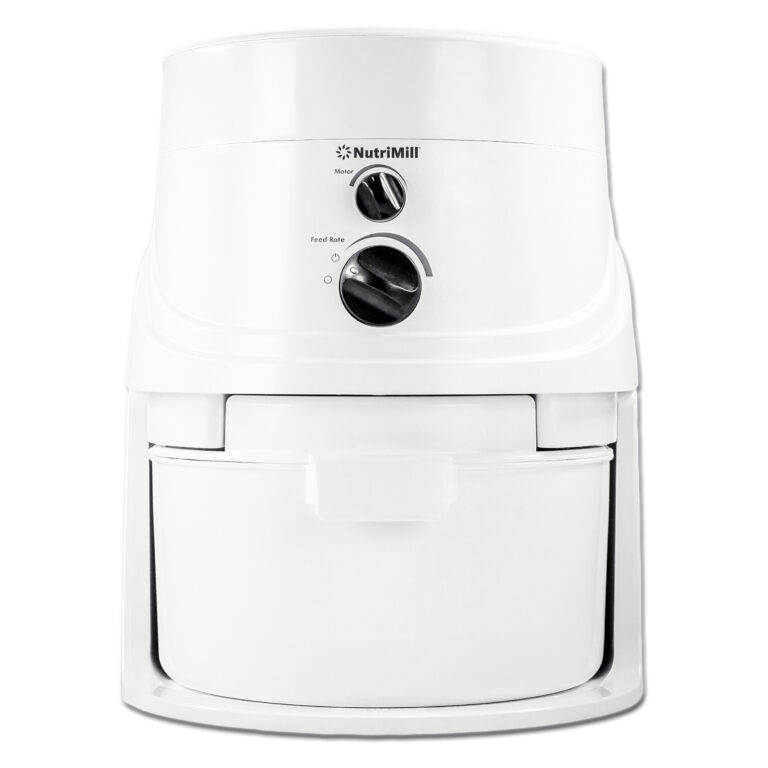
NutriMill Classic Grain Mill
A high-speed impact mill and NutriMill’s best seller for over 20 years. It turns wheat and other non-oily grains and beans into fresh flour, with controls that are simple enough for everyday baking. Use code BAKEKEEPER at checkout for $20 off.

NutriMill Impact Grain Mill
A compact impact mill built around bread flour, with a flour texture aimed at loaves that rise well. The most affordable of the NutriMill mills we feature. Use code BAKEKEEPER at checkout for $20 off.
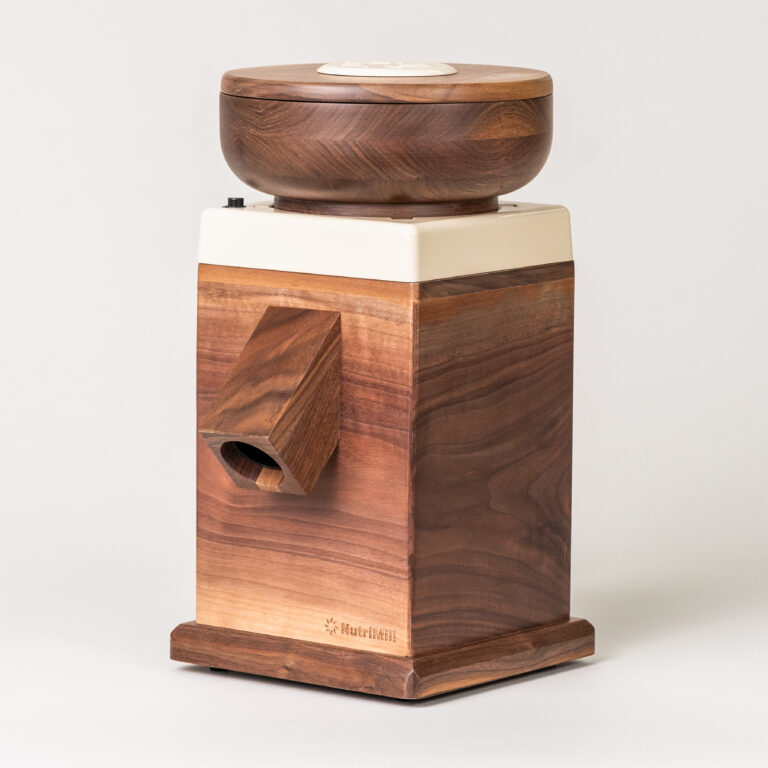
NutriMill Harvest Grain Mill
A stone mill with corundum stones in a bamboo housing, for bakers who want one mill for bread flour, pastry flour and legumes alike.
What Changes in Your Dough
Experienced bakers who work with fresh-milled flour describe the same handful of differences, and they are worth knowing before your first bake.
- More water. Fresh-milled whole grain flour tends to absorb more water than store-bought whole wheat, and the coarser particles need time to soften. Bakers commonly allow an autolyse of 30 to 90 minutes before mixing.
- A faster ferment. The dough tends to move faster than a store-bought flour dough, so watch the dough rather than the clock and expect a shorter bulk.
- Less proofing. Over-proofed fresh-milled doughs lose spring, so many bakers stop bulk fermentation earlier than they would for white flour and keep the final proof short.
- Blend to start. If the dough turns slack, adding some white bread flour helps it hold together. Many first loaves use a blend, with a portion of fresh-milled flour and the rest bread flour, before moving to a full whole grain loaf.
The method for the Whole Wheat Sourdough Loaf and the Sprouted Whole Wheat Sandwich Loaf is a sensible starting point. Keep the structure and adjust the water and timing as you learn how your own flour behaves.
Storing Berries and Fresh Flour
Whole wheat berries keep far longer than flour does, which is a big part of why people mill at home. Because freshly milled flour includes the oils from the germ, it is best used soon after milling and, if you have leftovers, stored in a sealed container in the refrigerator or freezer. Mill what you plan to bake in the next day or two and keep the rest as berries.
A Mixer for Big Batches
I mix my sourdough by hand and the recipes here assume you will too. Heavy whole grain doughs and big batches are where a dedicated dough mixer starts to earn its place. The Bosch Universal Plus, sold through NutriMill, uses a dough hook designed to mimic hand kneading, and the manufacturer lists a range from a single loaf, about 3 cups of flour, up to 14 one-pound loaves. That is more capacity than a home baker needs, which makes it a better fit for cottage-bakery volume or a freezer full of dough than for a weekly loaf.
A heavy-duty mixer
Bosch Universal Plus
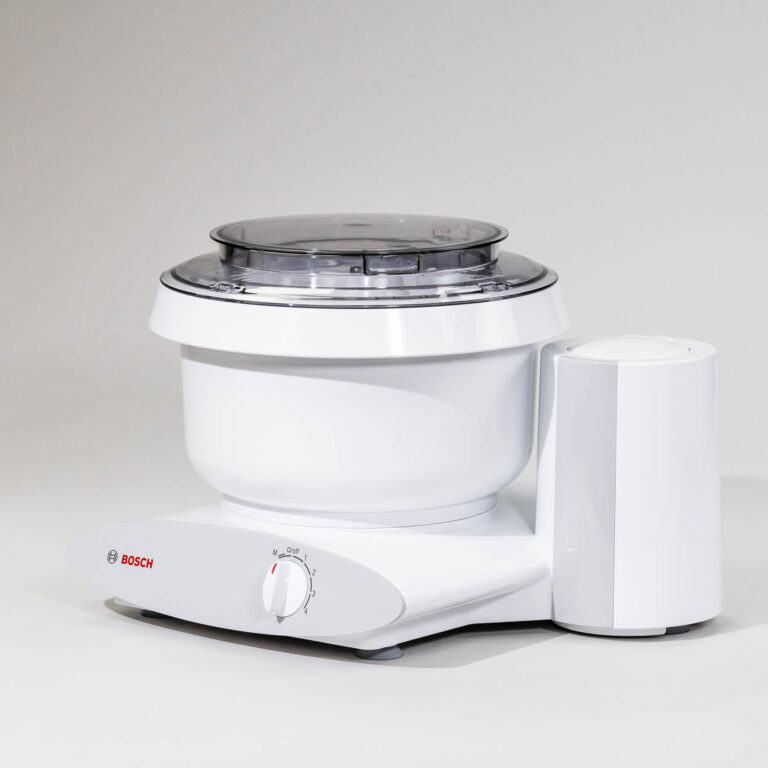
Bosch Universal Plus Stand Mixer
A 6.5-quart mixer with a dough hook designed to mimic hand kneading, from a single loaf (about 3 cups of flour) up to 14 one-pound loaves. A big-batch mixer for bakers who outgrow hand mixing. Use code BAKEKEEPER at checkout for $20 off.
The Reader Discount Code
Use code BAKEKEEPER at the NutriMill checkout for $20 off the Classic, the Impact and the Bosch Universal Plus. The Harvest is not part of that offer. Offers can change, so the cart is the final word on what applies.
Key Takeaways
- A grain mill is optional. Every recipe on this site works with store-bought flour.
- Impact mills are fast and affordable; stone mills are quieter and slower. Neither suits oily seeds.
- Expect to add water, allow a longer soak and shorten the ferment when you switch to fresh-milled flour.
- Store wheat berries rather than flour, and mill small batches.
- A dough mixer is a volume tool, not a requirement for good sourdough.
A mill cannot rescue a bad starter, though it can make a good bake more interesting. Start small, take notes, and let the flour teach you.
Knead to Know?
New recipes and sourdough troubleshooting, delivered before your starter even finishes its next rise.
Get the latest insights with no spam, just new recipes and baking tips. Unsubscribe anytime. See our Privacy Policy.