Sourdough Starter Feeding Ratios Explained: 1:1:1, 1:5:5, and 1:10:10
Every starter guide hands you a feeding ratio sooner or later. Feed it 1:1:1. Feed it 1:5:5. Someone in a forum swears by 1:10:10 and a jar in the fridge. They sound like passwords, and almost nobody explains why one is right for you and another is not.
The good news is that a feeding ratio is only three numbers. Once you know what each number does, you can choose a ratio for your schedule instead of copying whatever the last recipe said.
The Short Answer
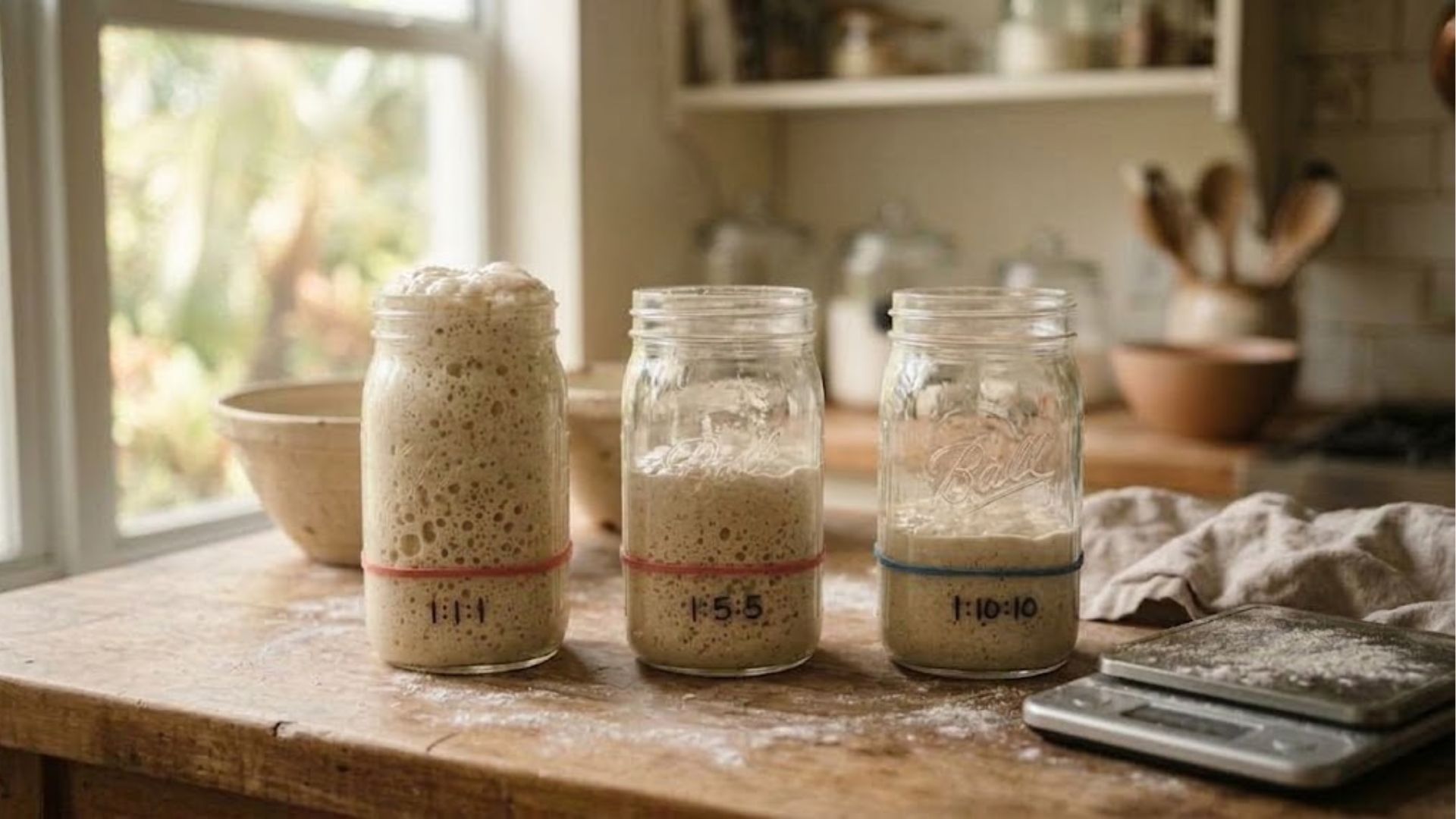
A feeding ratio is starter : flour : water, measured by weight. A 1:1:1 feed (for example 20 g starter, 20 g flour, 20 g water) wakes a starter up and peaks quickly, often within a few hours in a warm kitchen. Bigger feeds such as 1:5:5 or 1:10:10 dilute the starter in more fresh flour and water, so it peaks later, which is how you fit feedings around a workday or a night’s sleep.
Equal weights of flour and water keep your starter at 100% hydration no matter which ratio you choose. While your starter is young, stay with 1:1:1 or 1:2:2. Once it is strong, move to a bigger ratio for a slower, more predictable rhythm.
How to Read a Feeding Ratio
The three numbers always run in the same order: starter, flour, water. In a 1:1:1 feed you add as much flour and as much water as you have starter. In a 1:5:5 feed you add five times as much flour and five times as much water as you have starter.
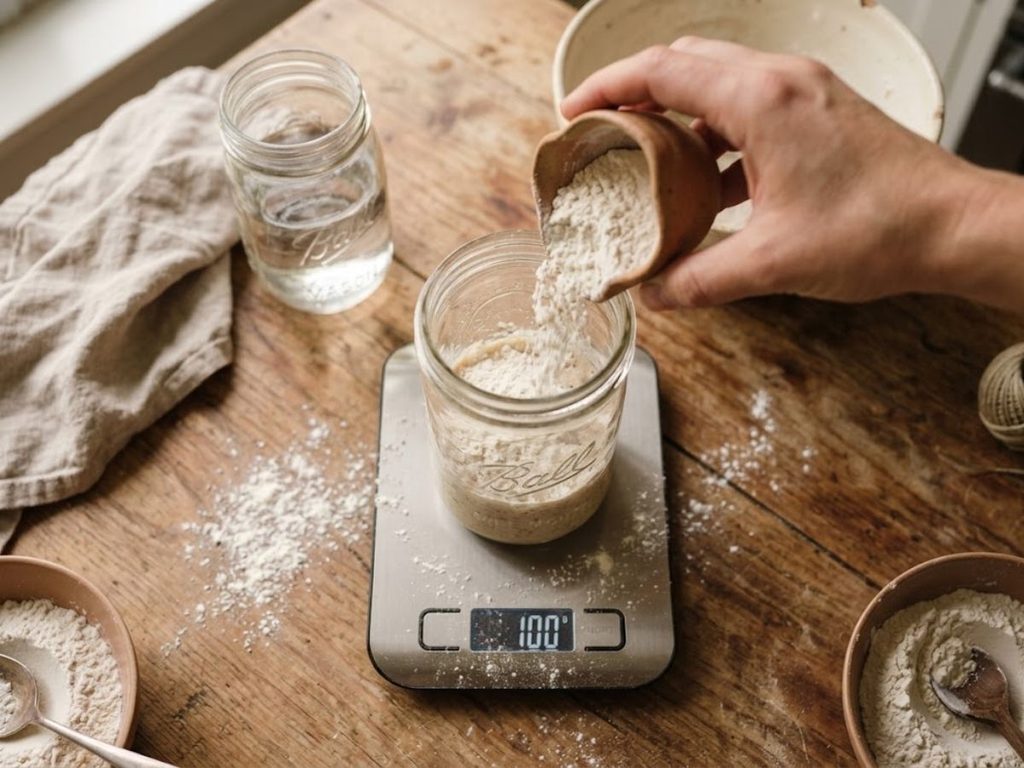
Because everything is measured by weight, a kitchen scale makes this simple. Cups and spoons vary too much from one scoop to the next, and a starter fed by the cup will behave differently from week to week.
| Ratio | Starter | Flour | Water | Total | Typically used for |
| 1:1:1 | 20 g | 20 g | 20 g | 60 g | Waking up a new or sluggish starter |
| 1:2:2 | 20 g | 40 g | 40 g | 100 g | Steady daily feedings on the counter |
| 1:5:5 | 20 g | 100 g | 100 g | 220 g | Feeding before work, or before the fridge |
| 1:10:10 | 10 g | 100 g | 100 g | 210 g | Overnight feedings and long gaps |
↔ Swipe to see all columns
Why a Bigger Feed Peaks Later
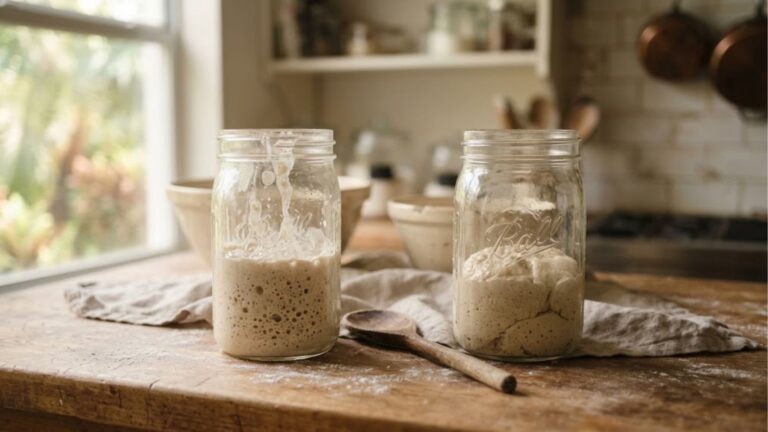
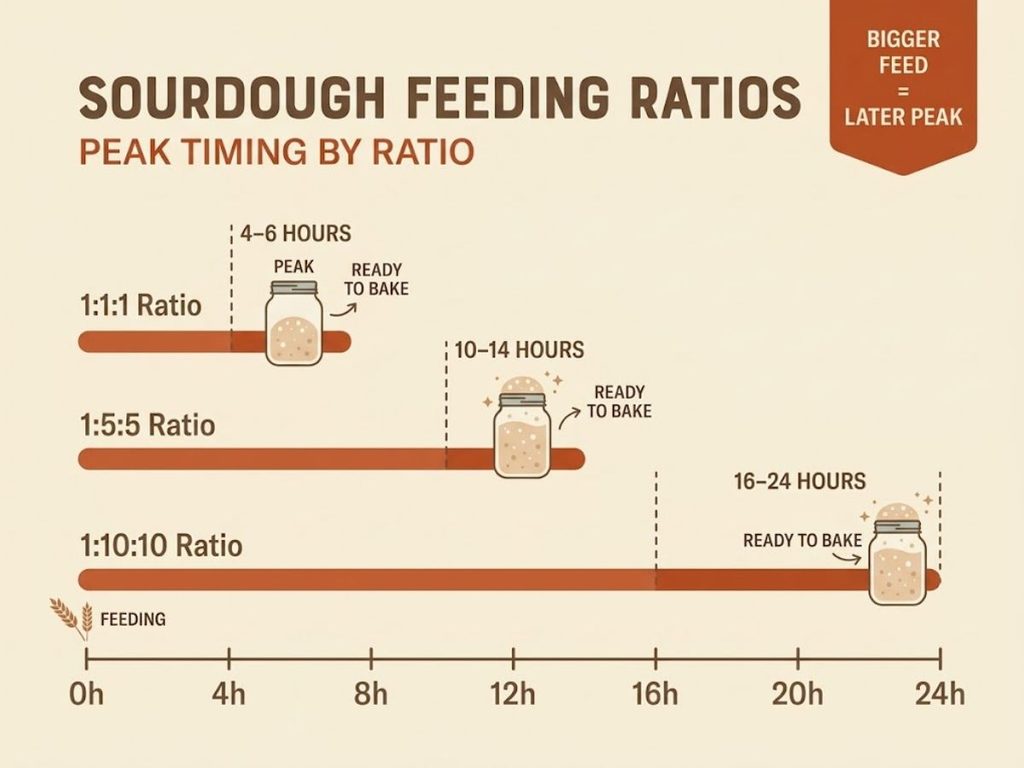
Think of your starter as a small crowd of wild yeast and bacteria. A 1:1:1 feed gives that crowd a little fresh food, and because there is so little of it, they get through it quickly and the starter rises and peaks fast. A 1:5:5 feed spreads the same crowd across five times as much food. It takes them longer to multiply and work through all of it, so the peak arrives later and the rise is taller.
In a kitchen around 75 to 78 degrees F, a 1:1:1 feed often peaks in roughly 4 to 6 hours, a 1:5:5 in about 8 to 12, and a 1:10:10 can take 12 hours or longer. Those numbers are a starting map, not a promise. Temperature, flour type, and the age of your starter all move them, so watch your own jar for a few feedings and write down what you see.
Picking the Ratio That Fits Your Day
The right ratio is the one that makes your starter peak when you are actually available to use it. A few common situations:
- Waking up a new or sluggish starter: use 1:1:1 or 1:2:2 and feed once or twice a day in a warm spot. Small, frequent feeds keep it working steadily.
- Baking regularly and keeping the starter on the counter: 1:2:2 once or twice a day works well, or 1:5:5 once a day if you prefer a calmer rhythm.
- Feeding in the morning so it peaks when you are home: try 1:5:5 and check it around the time you expect to be back.
- Feeding at bedtime for a morning bake: 1:10:10 usually gives a starter that is ready (or just past peak) by breakfast.
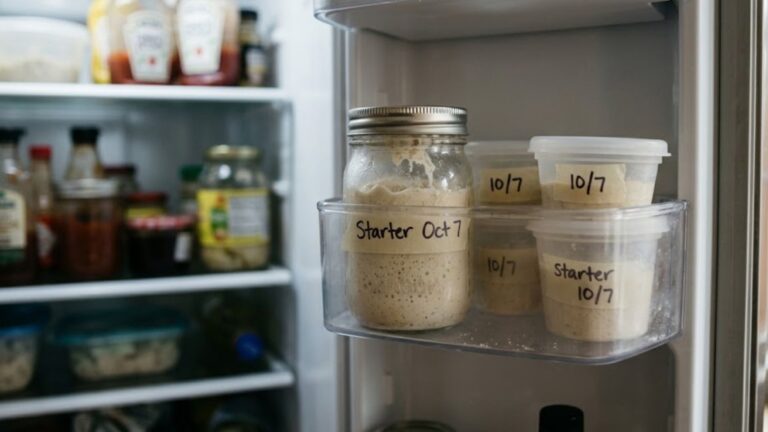
- Resting the starter in the fridge between bakes: feed it 1:5:5, let it sit out for an hour or two so it gets going, then refrigerate.
The Math, Without the Headache
If a recipe asks for a certain amount of ripe starter and you want to feed to that amount, divide the total by the sum of the ratio parts. Say you need 150 g of starter and you are feeding 1:2:2. The parts add up to 5 (1 + 2 + 2), so each part is 30 g: 30 g starter, 60 g flour, and 60 g water.
It is smart to make a little more than the recipe needs so you always have some left to feed again. The Sourdough Calculator will do the arithmetic if you would rather not.
Desi’s Note
As a CPA, I am biased toward anything you can write as a ratio, but the trick is the same for everyone: change one thing at a time. Pick a ratio, hold it for a week, and watch the jar. If you change the ratio, the flour, and the spot on the counter all at once, you will never know which one made the difference.
Keeping Hydration Steady
Whatever ratio you use, equal parts flour and water by weight gives you a starter at 100% hydration, which is soft and pourable like thick pancake batter. If you ever want a thicker starter, you reduce the water rather than changing the ratio. We cover that in stiff versus liquid starters, and the Feeding & Hydration Cheat Sheet puts the common feeds on one printable page.
Common Questions
Do I have to discard before feeding? Most bakers do, because otherwise the jar grows out of hand and the feed has to get bigger and bigger to keep the ratio. A small amount of starter fed at a big ratio keeps the jar manageable. If discarding bothers you, the Discard, No Guilt guide has ways to put it to use.
Can I change ratios whenever I like? Yes. Starters are forgiving. Expect the peak time to shift, and give the starter a feeding or two to settle into the new rhythm.
Does the ratio change how sour my bread is? It can nudge it. Longer, cooler fermentations tend to lean more tangy, while shorter, warmer ones tend to taste milder. The Sourness Control guide covers every lever.
What if my starter peaks and falls before I am ready? Use a bigger ratio next time, or move it somewhere cooler, so the peak arrives later.
Related Reading
- How to Maintain (and Revive) Your Starter
- How to Tell When Your Starter Is Ready to Bake With
- Starter Feeding & Discard Log (printable)
- Sourdough Starter Problems: Not Rising, Runny, or Smelling Off
Pick a ratio, write it on the jar, and let your starter show you what it does.
More Resources
Looking for a printable reference? Browse all six Printable Quicksheets, or dial in your own numbers with the Sourdough Calculator.
Knead to Know?
New recipes and sourdough troubleshooting, delivered before your starter even finishes its next rise.
Get the latest insights with no spam, just new recipes and baking tips. Unsubscribe anytime. See our Privacy Policy.