Which Flour Should You Feed Your Sourdough Starter? All-Purpose, Bread, Whole Wheat, or Rye
Walk down the flour aisle and you will find a dozen bags that could all, technically, feed a sourdough starter. All-purpose, bread, whole wheat, rye, spelt. Which one is right?
If the starter turns thin after a feed, here is why your sourdough starter is runny. Shopping for someone who bakes? See our gift ideas for the sourdough baker in your life.
The honest answer is that almost any wheat flour works, and your starter will happily live on it. The better question is what you want your starter to do. Each flour changes how quickly it rises, how thick it gets, and how it tastes, and once you know the differences you can pick on purpose.
The Short Answer
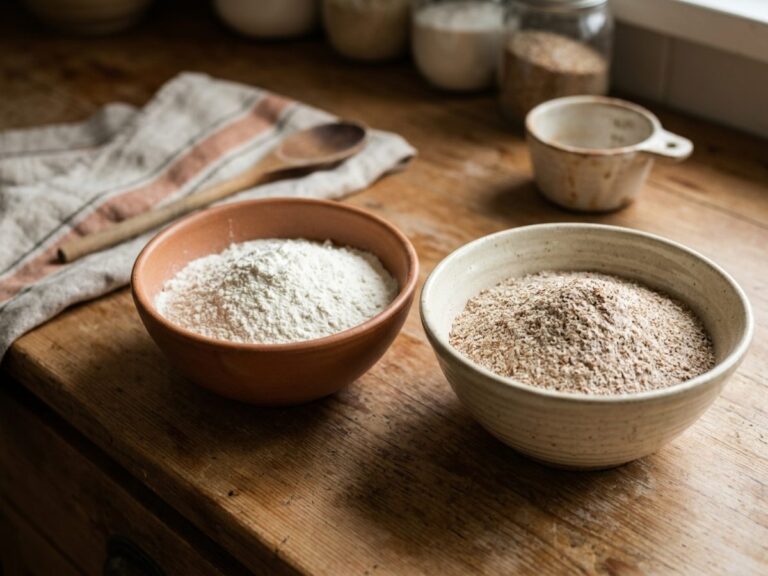
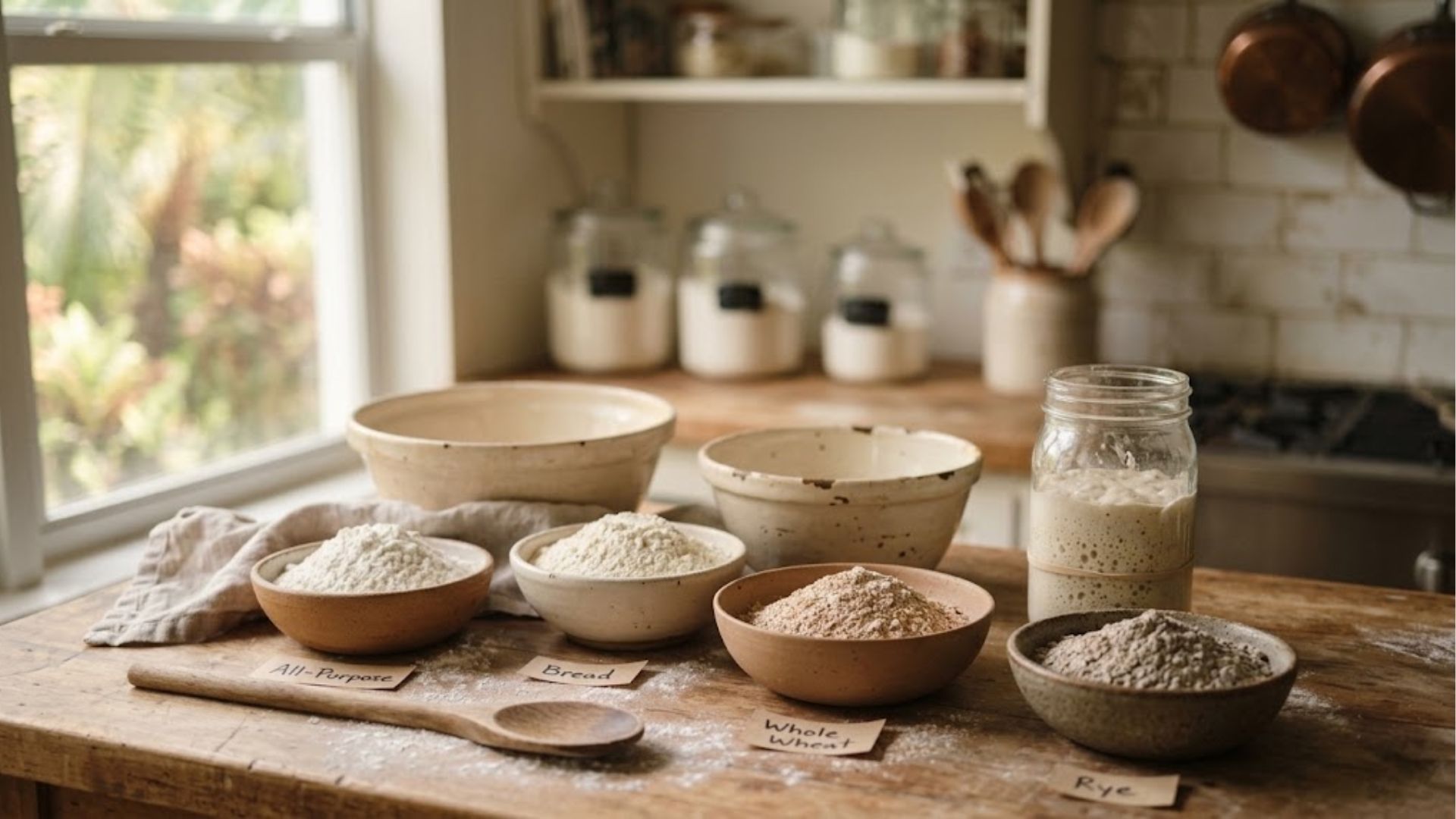
For most home bakers, plain unbleached all-purpose or bread flour is the easy, dependable choice. Whole wheat and rye are more nutrient-rich and give the wild yeast and bacteria more to work with, so a starter fed with them usually rises faster and smells and tastes a little bolder. A popular middle road is mostly white flour with a spoonful of whole wheat or rye mixed in. Whatever you choose, being consistent matters more than which flour wins, so keep feeding the same thing and switch gradually if you change.
What Flour Actually Does to a Starter
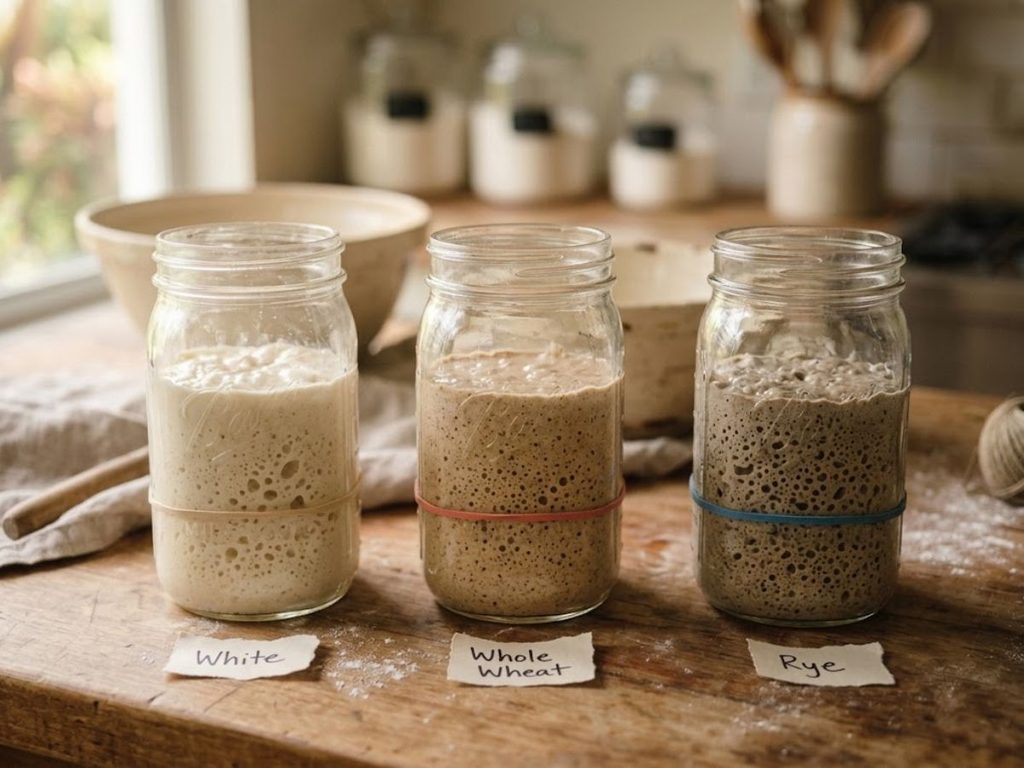
A starter is a living culture, and flour is its food. White flours are mostly starch with the bran and germ sifted out. Whole grain flours keep the bran and germ, which bring extra minerals, enzymes and fiber. That extra material is easy fuel for the microbes in your jar, so whole grain starters tend to wake up quickly and ferment faster.
Whole grains also soak up more water than white flour. If you feed equal weights of whole wheat flour and water, the starter will be noticeably thicker than the same feed made with all-purpose flour. If it feels more like paste than batter, add a little more water.
The Flours, Side by Side
| Flour | How it behaves in a starter | Good for |
| All-purpose (unbleached) | Steady and predictable, milder flavor, rises at a calm pace | Everyday feeding for most bakers |
| Bread flour | Similar to all-purpose, a little thicker and slower to loosen | Bakers who mostly bake lean loaves and like a sturdier starter |
| Whole wheat | Fast, bubbly and thirsty; bolder, nuttier smell | Reviving a slow starter or adding flavor |
| Rye | Very fast and active, sticky, with a distinct tang | Giving a stubborn starter a boost |
| Spelt or other ancient grains | Active but delicate; can break down quickly | Experimenting once your starter is strong |
↔ Swipe to see all columns
A Simple Default That Works
If you want one answer, try this: feed your starter unbleached all-purpose or bread flour, and replace about 10 to 20 percent of it with whole wheat or rye. For a 100 g feed of flour, that means roughly 80 to 90 g white flour and 10 to 20 g whole grain.
This gives you most of the vigor of a whole grain starter without the thick, thirsty texture, and it keeps your starter’s flavor mild enough to suit nearly any recipe. If your starter ever turns sluggish, increase the whole grain portion for a few feedings and watch it perk up.
How to Switch Flours Without a Setback
A starter can adapt to a new flour, but a sudden switch can make it slow down for a feeding or two. Make the change gradually:
- Replace about a quarter of the flour in the next feeding with the new flour.
- Move to half and half over the next few feedings.
- Continue in steps until you are feeding only the new flour.
- Watch the thickness. Whole grains need a little more water to feel the same.
Desi’s Note
You do not have to feed your starter the same flour you bake with. Many bakers keep a small, happy starter on one dependable flour and then use whatever flour the recipe calls for when they build the dough. Keep the jar simple and let the dough be creative.
Warm Kitchens Change the Math
Whole grain starters work fast, and heat speeds everything up even more. In a hot kitchen a starter fed with whole wheat can peak and collapse before you are ready. If that sounds familiar, switch to mostly white flour, use a bigger feeding ratio, or move the jar somewhere cooler. Our Florida heat guide goes into the details of keeping a starter calm in the warmth.
Common Questions
Does the flour need to be organic? No. Organic flour is a personal choice and not a requirement. What matters more is that the flour is fresh and that you stay consistent.
Is bleached flour okay? It can work, but many bakers choose unbleached flour because it is less processed and tends to give starters a more reliable start.
Can I use gluten-free flour? Gluten-free starters are possible but behave differently, and this guide covers wheat-based starters only.
Related Reading
- Sourdough Starter From Scratch
- Ash Content: The Flour Number Nobody Explains
- Sourdough Starter Feeding Ratios Explained
- Whole Wheat Sourdough Loaf
The best flour for your starter is the one you will feed the same way, week after week.
More Resources
Looking for a printable reference? Browse all six Printable Quicksheets, or dial in your own numbers with the Sourdough Calculator.
For milling your own flour at home, see Is a Grain Mill Worth It.
Knead to Know?
New recipes and sourdough troubleshooting, delivered before your starter even finishes its next rise.
Get the latest insights with no spam, just new recipes and baking tips. Unsubscribe anytime. See our Privacy Policy.