Lesson #2: Feed It, Watch It, Don’t Panic: Day 3 to Ready
Picking up where Day 1 and 2 left off, this is the stretch where your starter actually starts to show up.
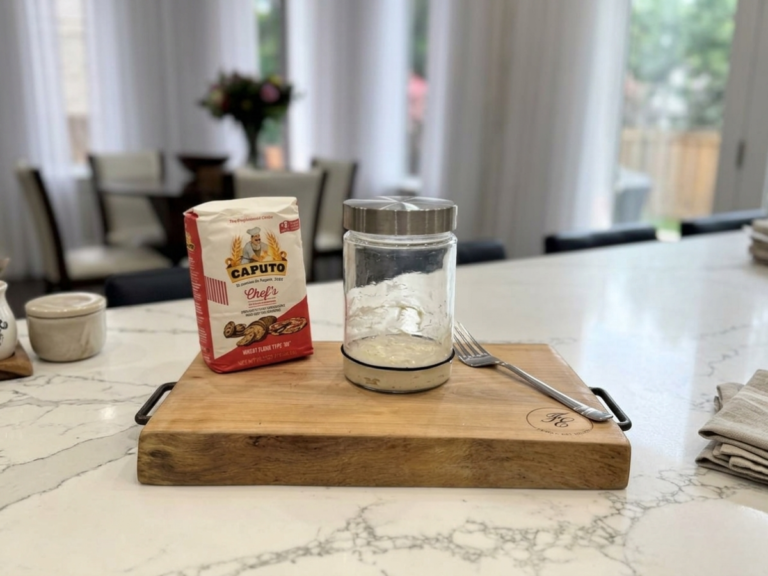
If you’ve made it through the first two days, you’re past the boring part. Starting today, keep repeating the same move: discard down to 50 g, then stir in 50 g water and 50 g flour, cover loosely, and give it another 24 hours on the counter. This is the routine for every day from here until your starter tells you it’s ready.
Desi’s Note
This is the stretch where most people either fall in love with the process or convince themselves they broke something. You didn’t. A starter finding its rhythm is supposed to look a little chaotic.
Day 3
🫧 The First Hints of Life
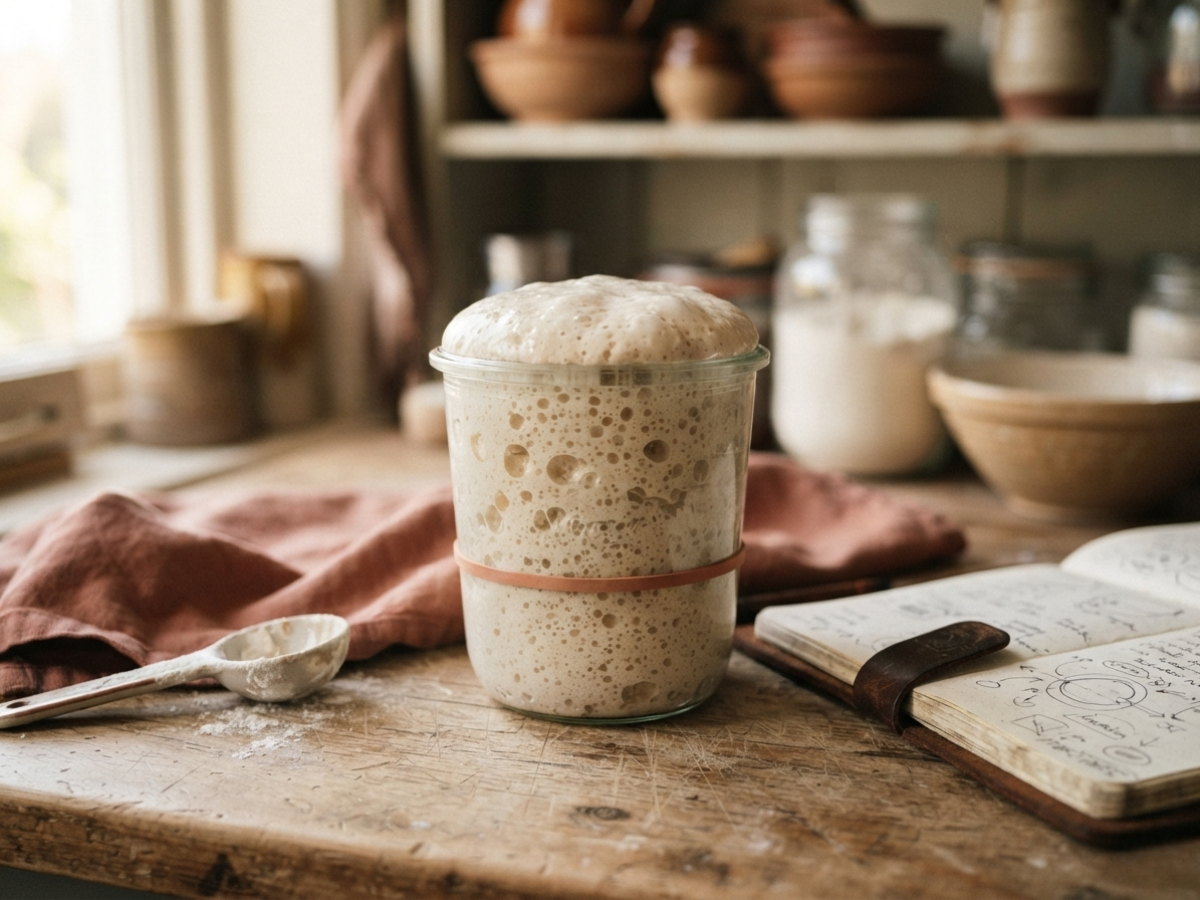
Somewhere around today you may start noticing small changes, a few bubbles on the surface, a slightly sour smell, maybe a touch of rise against your rubber band. Or you might see nothing at all yet. Both are within range this early. Keep discarding and feeding on schedule regardless of what you’re seeing.
Day 4
📈 Watching It Climb
This is usually when things pick up. In my kitchen, which sits around 78 to 80 degrees with fairly high humidity, my starter doubled outright by this point. Cooler or drier kitchens tend to run a day or two behind that, which is completely fine. Keep an eye on the rubber band marker rather than the clock.
🎯 Getting to the Finish Line
A single big rise is encouraging, but it isn’t your green light. What you’re actually waiting for is three days in a row where the starter roughly doubles (or more) and shows bubbles throughout, not just a few on top.
✅ Ready When
- Three days in a row of a strong rise
- Starter roughly doubles (or more) each time
- Bubbles show up throughout, not just on top
Keep doing the same discard-and-feed routine daily until you hit that three-day streak. Mine took six days total to get there. Depending on your kitchen and flour, yours could land anywhere between one and two weeks, and that’s a normal range, not a sign anything’s off.
🧺 Once It’s Ready to Bake
Once you’ve got that three-day streak of a strong, bubbly rise, your starter is ready to bake with. You’ll have roughly 150 g on hand after that last feeding (50 g starter plus 50 g water plus 50 g flour).
🧑🍳 Bake Right Away
You can start your baking masterpiece right away.
❄️ Save It for Later
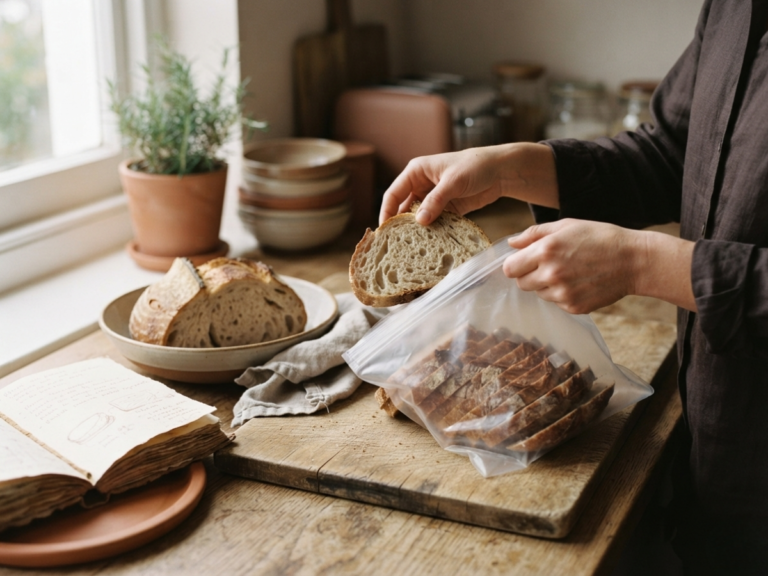
Not ready to get started? Put your starter in the fridge and make your bread the next day. You don’t have to rush, it’ll stay active there for a day or two.
What’s Next
In two days, the next email covers all the tools you’ll actually need to bake your bread, so you’re set up and ready before your starter’s finish line hits. Keep an eye on your inbox.
More Resources
Looking for a printable reference? Browse all six Printable Quicksheets, or dial in your own numbers with the Sourdough Calculator.
Knead to Know?
New recipes, baking tips, and sourdough troubleshooting — delivered before your starter even finishes its next rise.
Get the latest insights, no spam — just new recipes and baking tips. Unsubscribe anytime. See our Privacy Policy.