

How to Freeze a Sourdough Starter (and Keep It Alive While You Are Away)
A starter is a living thing, and living things do not take holidays. If you are heading out of town, or you simply want a break from the feeding routine, you have good options. You can park your starter in the fridge, freeze a backup, or dry some for the shelf.
The trick is matching the method to the length of your absence, and knowing how to wake the starter up when you are back. Here is how to do both.
The Short Answer
For up to a couple of weeks, feed your starter well, then keep it in the fridge. For several weeks, feed it a thicker mix so it lasts longer in the cold. For a month or more, freeze small portions or dry some as a backup. When you return, let the starter warm up, feed it, and expect it to need two or three feedings before it is back to full strength.
Choosing a Method
| Away for | Best method | How to prepare | Recovery |
| A few days | Counter, with a bigger feed | Feed 1:5:5 or 1:10:10 before you leave | Usually ready on return |
| One to two weeks | Fridge | Feed 1:5:5, let it rise for an hour or two, then refrigerate | One or two feedings |
| Two to four weeks | Fridge, thicker starter | Feed to a stiffer hydration, then refrigerate | Two or three feedings |
| A month or more | Freezer or dried flakes | Freeze portions or follow our dehydrating guide | Several feedings; keep a backup |
↔ Swipe to see all columns
Keeping Your Starter in the Fridge
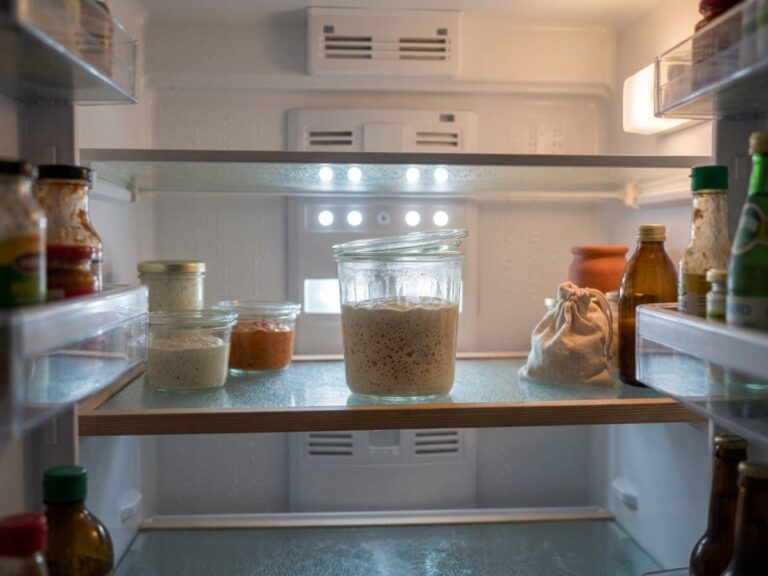
Cold slows fermentation dramatically, which is why the fridge works for time off. Feed your starter as you normally would, preferably at a bigger ratio such as 1:5:5, and leave it at room temperature for an hour or two so it begins to bubble. Then put the lid on loosely and refrigerate.
If you will be gone for longer than a couple of weeks, make the feeding stiffer by using less water. A thicker starter has less water for the microbes to move through and tends to last longer between feedings. For a refresher on hydration, see Stiff Starter vs. Liquid Starter.
When you open the jar after a long rest, you may see a gray or tan liquid on top. That is called hooch, and it simply means your starter ran out of food. It is harmless, and you can stir it back in or pour it off before feeding.
Freezing a Starter
Freezing is a safe backup plan for long absences. Some of the microbes will die, and enough survive that a frozen starter can usually be revived.
- Feed your starter and let it become active first.
- Spoon small portions into freezer-safe containers, leaving a little room for expansion.
- Label each one with the date and keep a few portions rather than one big one.
- Freeze for up to a few months. Longer is possible, but the older the sample, the longer it may take to recover.

Waking It Back Up
Whether your starter spent a month in the fridge or a season in the freezer, the revival follows the same pattern:
- Thaw or warm: move frozen starter to the fridge overnight, then let it sit out at room temperature until it softens. Chilled starter simply needs an hour or two on the counter.
- Feed small: discard most of it, then feed with 1:1:1 or 1:2:2 using fresh flour and water.
- Repeat: feed again every 8 to 12 hours, or whenever it peaks. A starter that was resting a long time may need two or three rounds before it rises predictably.
- Bake when it is ready: once it reliably doubles in a few hours and smells pleasantly tangy, it is ready to bake with.
The Maintain (and Revive) guide walks through the feeding side in more detail.
Other Ways to Cover a Trip
- Hand it to a friend. Give a trusted baking friend a jar and a note with the feeding ratio. You can pick up a healthy starter when you return.
- Make a dried backup. Our dehydrating guide shows how to store dried starter flakes for the long term.
- Keep two storage methods. A fridge jar and a frozen or dried backup means one mishap never wipes out your culture.
Desi’s Note
Please keep a backup, whichever method you choose. A starter is easy to protect and a pain to rebuild, and a spoonful tucked in the freezer is the cheapest insurance in the kitchen.
When to Throw It Out
A little hooch or a sharp smell is normal for a resting starter. Fuzzy mold, or pink or orange streaks, is not. If you see either, discard the starter and begin again with a fresh jar or a backup. Our starter problems guide explains how to tell the difference.
Related Reading
- How to Maintain (and Revive) Your Starter
- How to Dehydrate (and Rehydrate) Your Starter
- Sourdough Starter Feeding Ratios Explained
- Starter Troubleshooting Quicksheet
A rested starter is not a lost starter: give it a few feedings and it will pick right back up.
More Resources
Looking for a printable reference? Browse all six Printable Quicksheets, or dial in your own numbers with the Sourdough Calculator.
Knead to Know?
New recipes and sourdough troubleshooting, delivered before your starter even finishes its next rise.
Get the latest insights with no spam, just new recipes and baking tips. Unsubscribe anytime. See our Privacy Policy.