Can You Use Tap Water for a Sourdough Starter?
Somewhere in almost every starter guide there is a line telling you to use filtered water, usually with no explanation attached. If your tap water smells faintly of a swimming pool, that line can feel like a verdict on your whole setup.
I went looking for what is actually known. The evidence is thinner than the confident advice online suggests, and the part that matters most to a Florida baker is a disinfectant most people have never heard of.
The Short Answer
Yes, for most kitchens. A 2024 study found that chlorinated water at the levels found in U.S. tap water did not noticeably change the bacteria in developing starters. The open question is chloramine, a different disinfectant that does not leave water when you boil it or let it stand. If your starter was healthy and then stalled, run the side by side jar test below before you buy anything.
Two Disinfectants With Different Habits
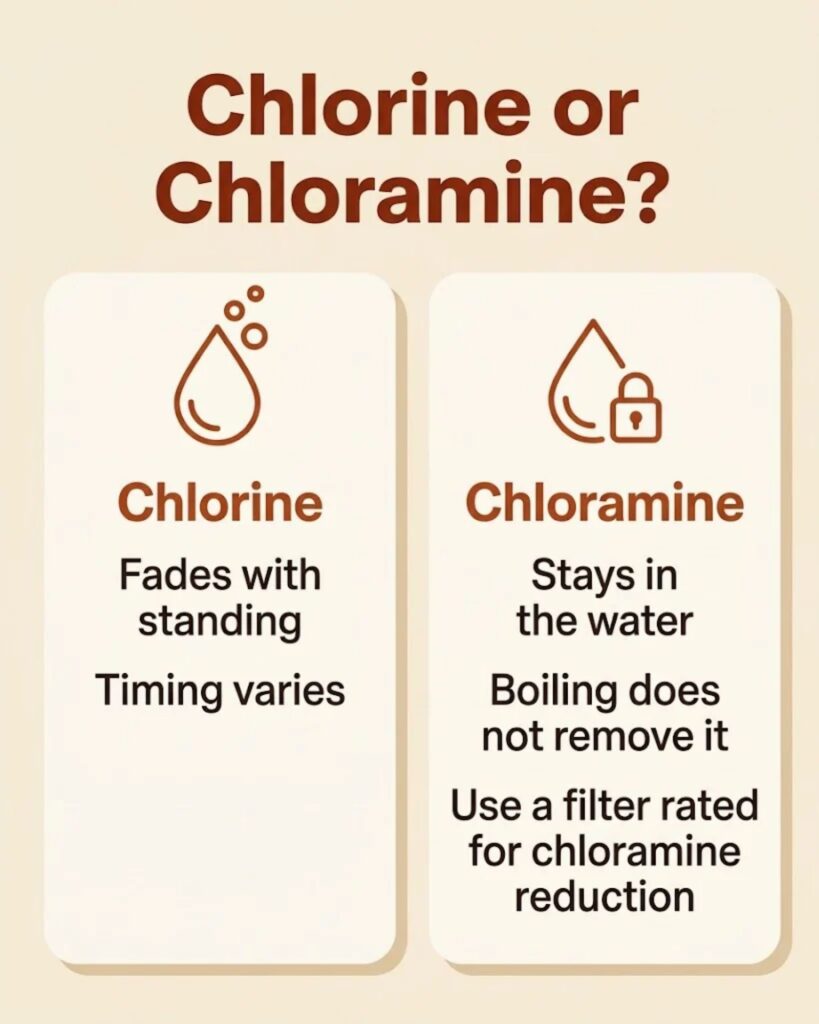
Utilities add one of two things to keep water safe on its way to your faucet. Chlorine has been used for more than a century. Chloramine, which is chlorine combined with ammonia, has been in use since the 1930s, and EPA Region 9 describes it as a weaker disinfectant that holds up longer in the pipes. Federal rules cap both at 4.0 mg/L, and EPA says neither poses a health concern at drinking water levels.
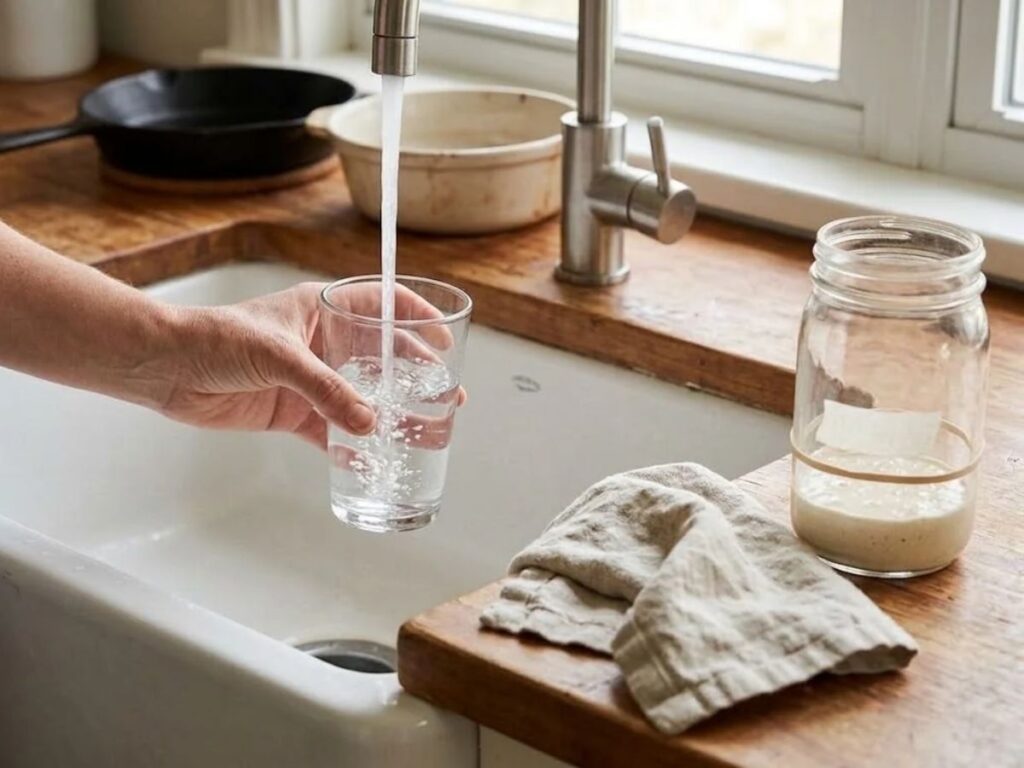
The difference that matters for your jar is what happens once the water leaves the tap. Chlorine drifts off if you let water stand, and Bakery Bits, a UK baking supplier, puts the time at 24 to 48 hours uncovered. Chloramine does not. EPA states that boiling does not remove it and that it does not dissipate on standing.
What the Evidence Says About Starters
The best data I found is a small 2024 study in Microbiology Spectrum by Lau and colleagues. They fed 18 starters for seven days with water dosed at either 0.5 or 4.0 mg/L of free chlorine, plus a control with none. Those two doses are roughly the low and high residuals in finished U.S. drinking water. The bacterial communities came out essentially the same in every group, with the same Latilactobacillus species leading at the end.
That is reassuring, and it has limits. The study tested free chlorine only, so chloramine was never in the jar. It looked at bacteria and not yeast, and it did not measure how high the starters rose. The authors also saw one genetic marker climb at the highest dose and say they did not test whether it matters in bread. I read it as evidence that ordinary chlorine is unlikely to wreck a starter, with the rest still open.
The chloramine side rests on weaker ground. An Ask Extension answer reports anecdotes that leftover chloramine can stall fermentations like sourdough and beer. It suggests bottled water for roughly the first week of a new starter, since young starters are the most sensitive, and says established ones can likely cope with tap water. It also claims a boil of about 60 minutes can remove chloramine, which contradicts EPA. Florida bakers on the Fresh Loaf describe stalled starters that recovered on filtered water, but forum reports are anecdotes and not controlled tests.
Florida Water Is Its Own Case
Miami-Dade normally disinfects with combined chlorine, which is another name for chloramine, and once a year it switches to free chlorine for two weeks. This year that ran from September 28 to October 11, according to the county notice. If your starter was cruising along and slowed in late September or early October, the water may have changed under you, which is one reason the test below is worth running.
I suspect heat is the more common cause in a South Florida kitchen, so I would rule out temperature and feeding ratio first. The guides on baking in Florida heat and humidity and feeding ratios cover both.
Other utilities differ, so check yours. The annual water quality report your utility publishes, often called a Consumer Confidence Report, lists which disinfectant it uses and the average level. A phone call to the utility works too.
Your Fixes, Compared
If you decide water is worth fixing, these are the options I found, and what each one does for each disinfectant.
| Fix | Removes chlorine | Removes chloramine | My take |
|---|---|---|---|
| Standing uncovered for 24 to 48 hours | Yes | No | Fine if your utility uses free chlorine. |
| Boiling | Yes | EPA says no | One extension source says an hour of boiling works. I would not rely on that. |
| Standard pitcher filter | Varies by model | Not certified for it | Look for a chloramine claim on the box. |
| Catalytic carbon filter | Yes | Yes | The long term fix if your utility uses chloramine. |
| Campden tablet | Yes | Yes | Sold for winemaking. Dose figures vary widely, so start low. |
Bottled spring water sidesteps the question for most people, and it is the easiest choice for a brand new starter. Campden tablets are the potassium metabisulfite tablets sold for winemaking. Wikipedia lists one tablet per 20 US gallons (75 L), while Bakery Bits suggests a quarter tablet per 5 L, so the figures differ by nearly a factor of four. I have not seen anyone test this in starters, so if you try it, start with the lower dose and run the jar test.
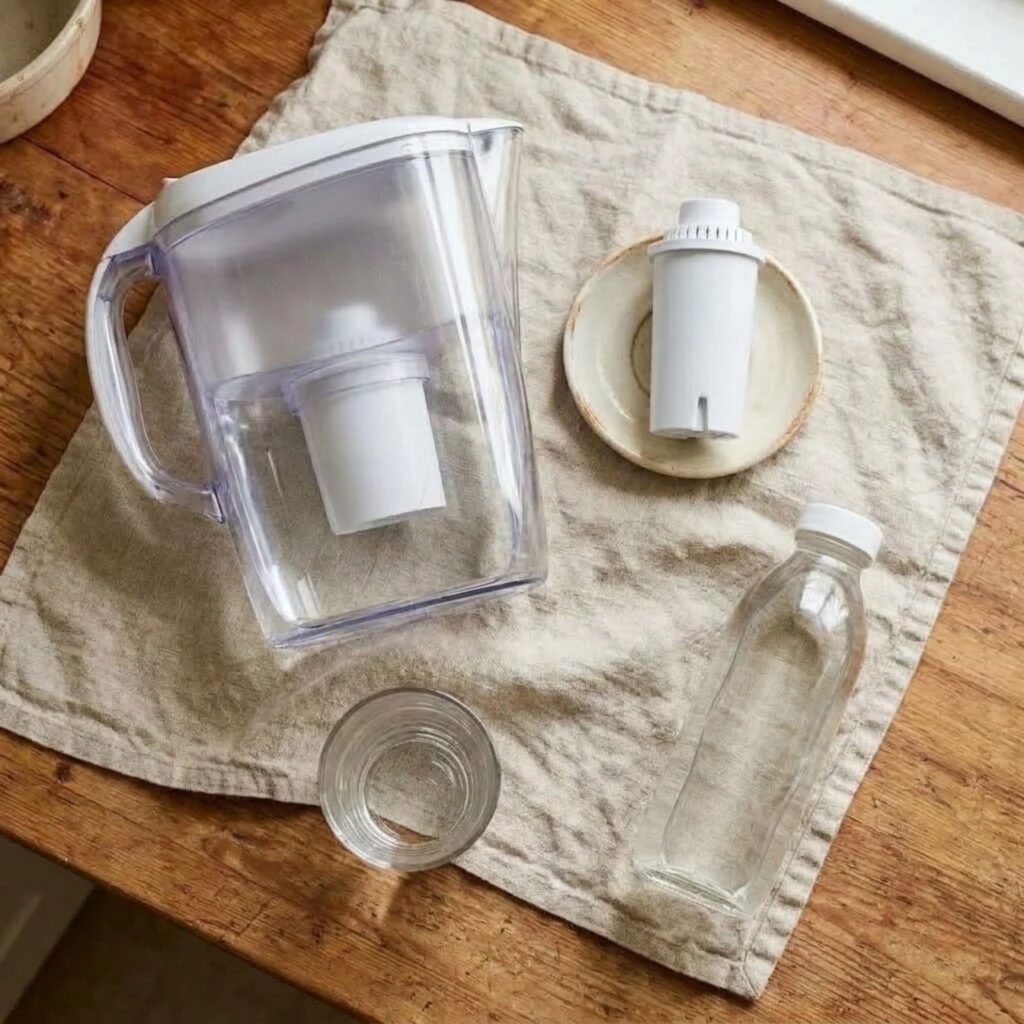
Filters with a chloramine claim
Both chloramine claims are the makers' own and I have not tested either one. The faucet filter costs less, and the pitcher needs nothing fitted to the tap.
Desi Recommends
Home Master Countertop Faucet Filter (Catalytic Carbon)
A countertop faucet filter built around a catalytic carbon block, which the maker says removes chloramine as well as chlorine. It attaches to the faucet, so check that yours takes this style of attachment first.
Desi Recommends
Clearly Filtered 10-Cup Water Filter Pitcher
A 10 cup filter pitcher with an independently certified chlorine claim. The maker also says it reduces chloramine, though that claim has not been certified. Each filter is rated for about 100 gallons.
A Side by Side Test You Can Run This Week
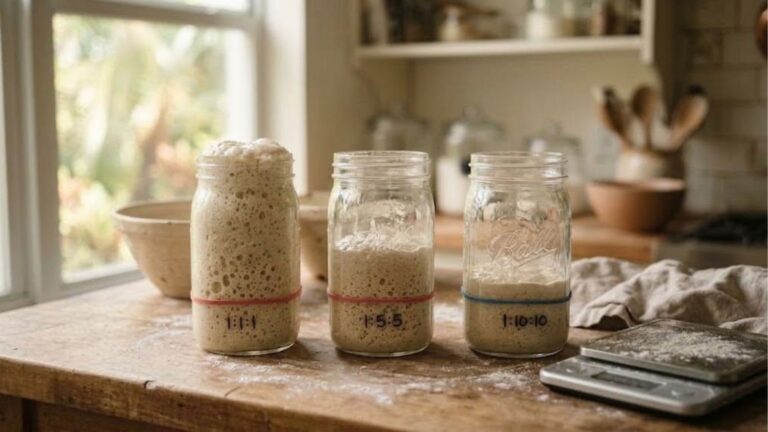
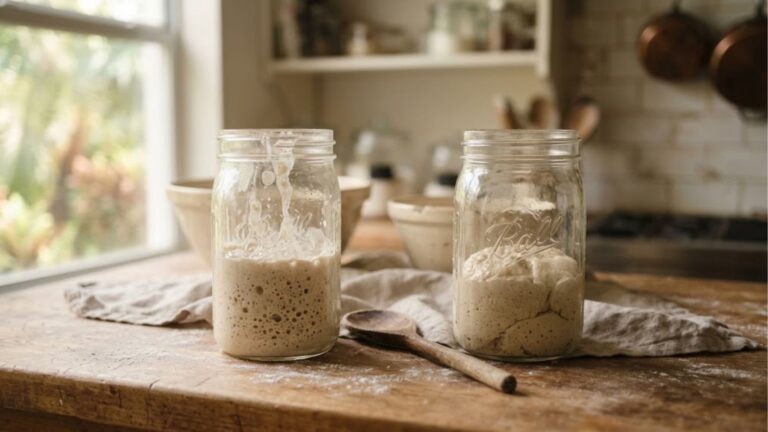
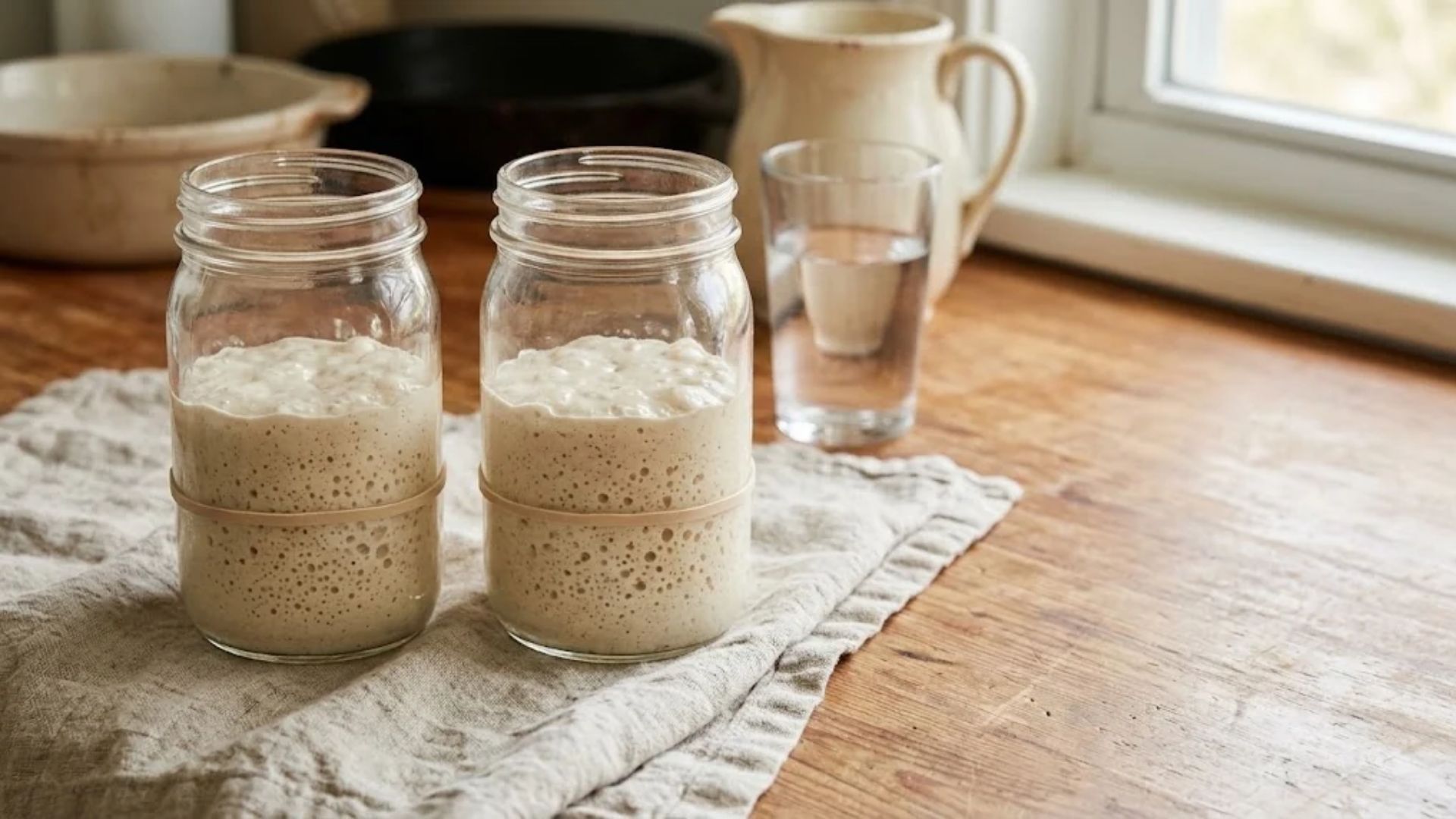
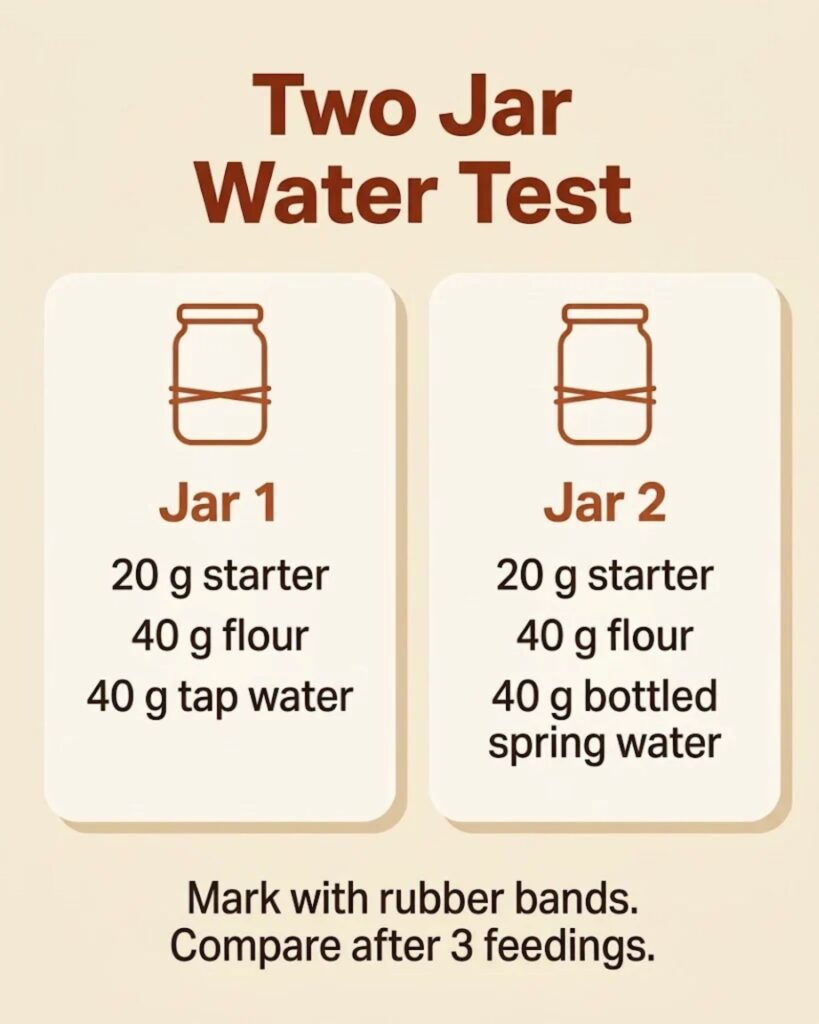
Take a mature, active starter and split it into two clean jars. Into each jar put 20 g of starter and 40 g of the same flour. Add 40 g of tap water to one jar and 40 g of bottled spring water, or water from a catalytic carbon filter, to the other.
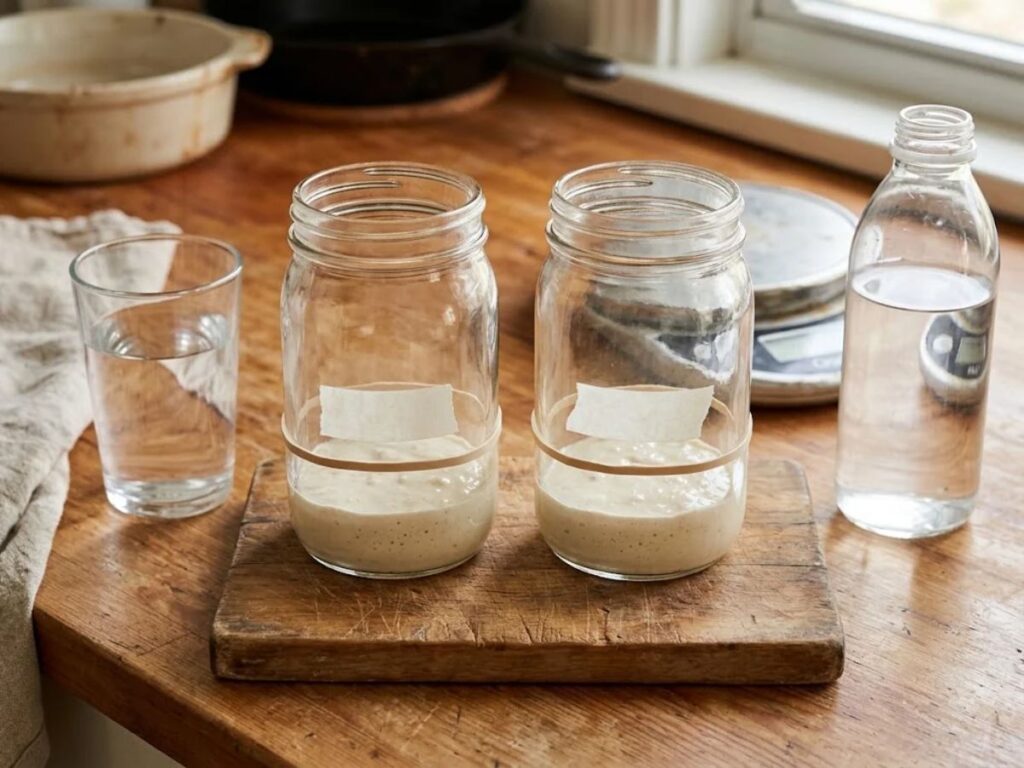
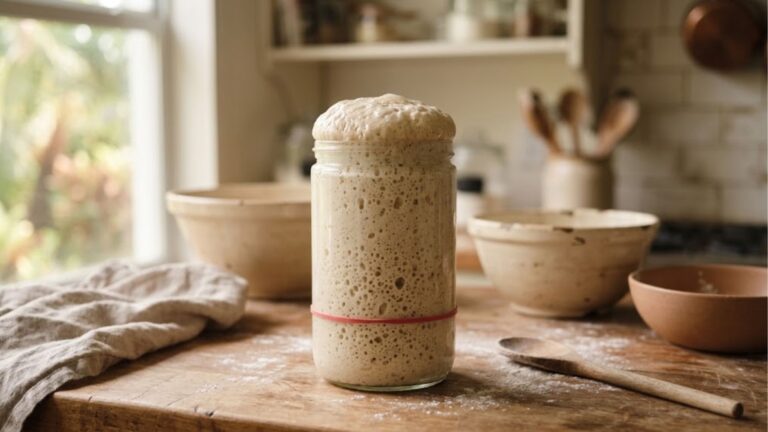
Mark each level with a rubber band and keep the jars side by side so they share the same temperature. Feed them identically for three feedings. Watch how high each one rises and how long it takes to get there. If the second jar clearly outperforms, your tap water is part of the story. If the two match, your water is fine and the cause lies somewhere else, so head to Sourdough Starter Problems for the next suspect.
Desi’s Note
Change one thing at a time. If you swap the water and the flour in the same week, you will never know which one fixed it. The rubber band does not lie, so let it settle the argument.
For the two jar test
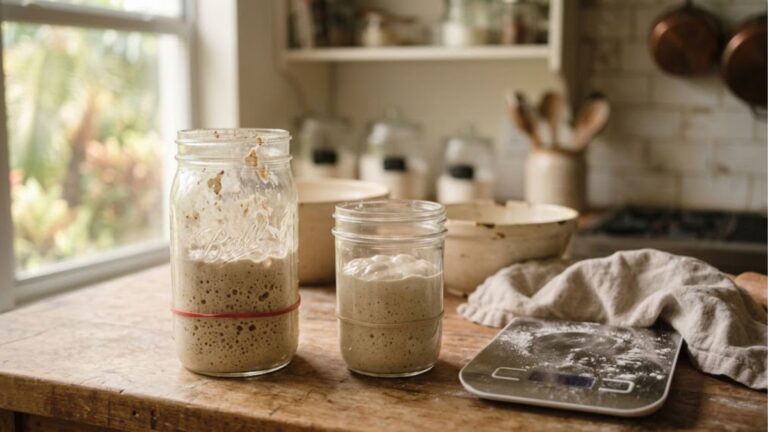
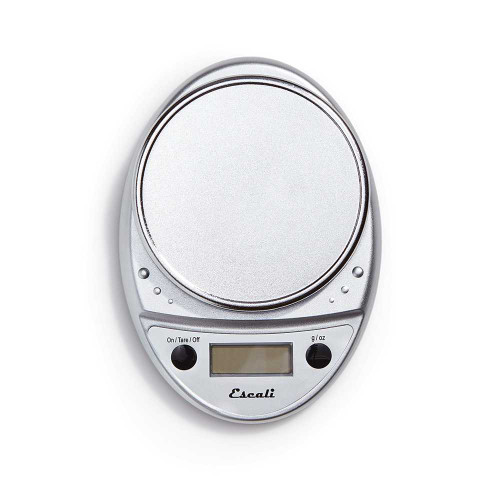
Matching jars keep the comparison fair, and a gram scale keeps both feedings identical.
Desi Recommends
Ball Wide Mouth Pint Jars (12-Count)
Straight-sided wide mouth pint jars, sold by the dozen with lids and bands. Enough for a side by side water test, with spares left for the starter itself.
Essential Digital Scale
A straightforward digital scale for weighing flour, water and starter in grams. Weighing instead of scooping is the single biggest upgrade for consistent bread, and this one keeps it simple.
Common Questions
Does boiling tap water fix it?
Boiling drives off chlorine. For chloramine, EPA says it does not work, so if your utility uses chloramine, boiling is the wrong tool.
What about the dispenser in my fridge?
It depends on the filter inside. Check its spec sheet for a chloramine reduction claim. One review site I read notes that neither Brita pitcher filter is certified for chloramine, so the claim is never automatic.
Is distilled water okay?
Some bakers avoid it because it has no minerals. I did not find solid evidence either way, so I would keep it as a backup.
Do I still need to think about water once my starter is mature?
Probably less. The study’s developing starters came through chlorine fine, and the extension answer says established starters can likely cope. If yours reliably doubles after a feeding, leave the water alone. How to tell when your starter is ready shows what reliable looks like.
Related Reading
- Sourdough Starter Problems: Not Rising, Runny, or Smelling Off
- How to Maintain (and Revive) Your Starter
- How to Tell When Your Sourdough Starter Is Ready
- The Best Flour to Feed Your Sourdough Starter
Run the two jars for three feedings and let the rubber bands decide.
More Resources
Looking for a printable reference? Browse all six Printable Quicksheets, or start with the Starter Troubleshooting Quicksheet.
Knead to Know?
New recipes and sourdough troubleshooting, delivered before your starter even finishes its next rise.
Get the latest insights with no spam, just new recipes and baking tips. Unsubscribe anytime. See our Privacy Policy.