Stiff Starter vs. Liquid Starter: How Hydration Changes Your Sourdough
Most recipes treat a sourdough starter as a loose, pourable batter. Then one day you read about a stiff starter, a thick, dough-like ball that keeps in the jar, and wonder whether you have been doing it wrong.
You have not. Both are real starters. The difference is hydration, the ratio of water to flour, and it changes how fast the starter works, how it tastes, and how long it can sit between feedings.
The Short Answer
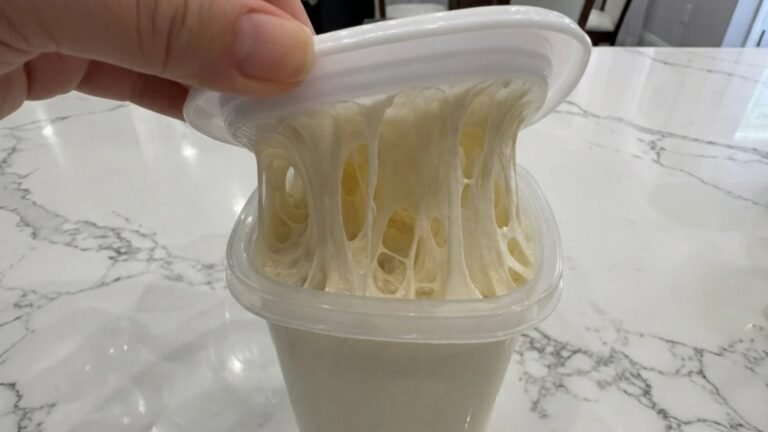
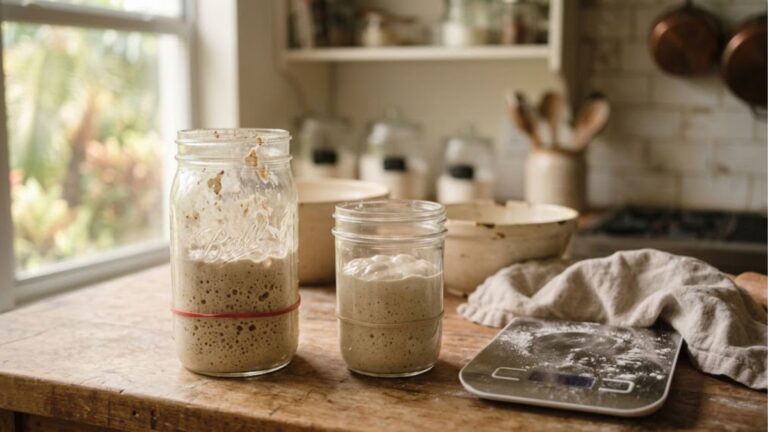
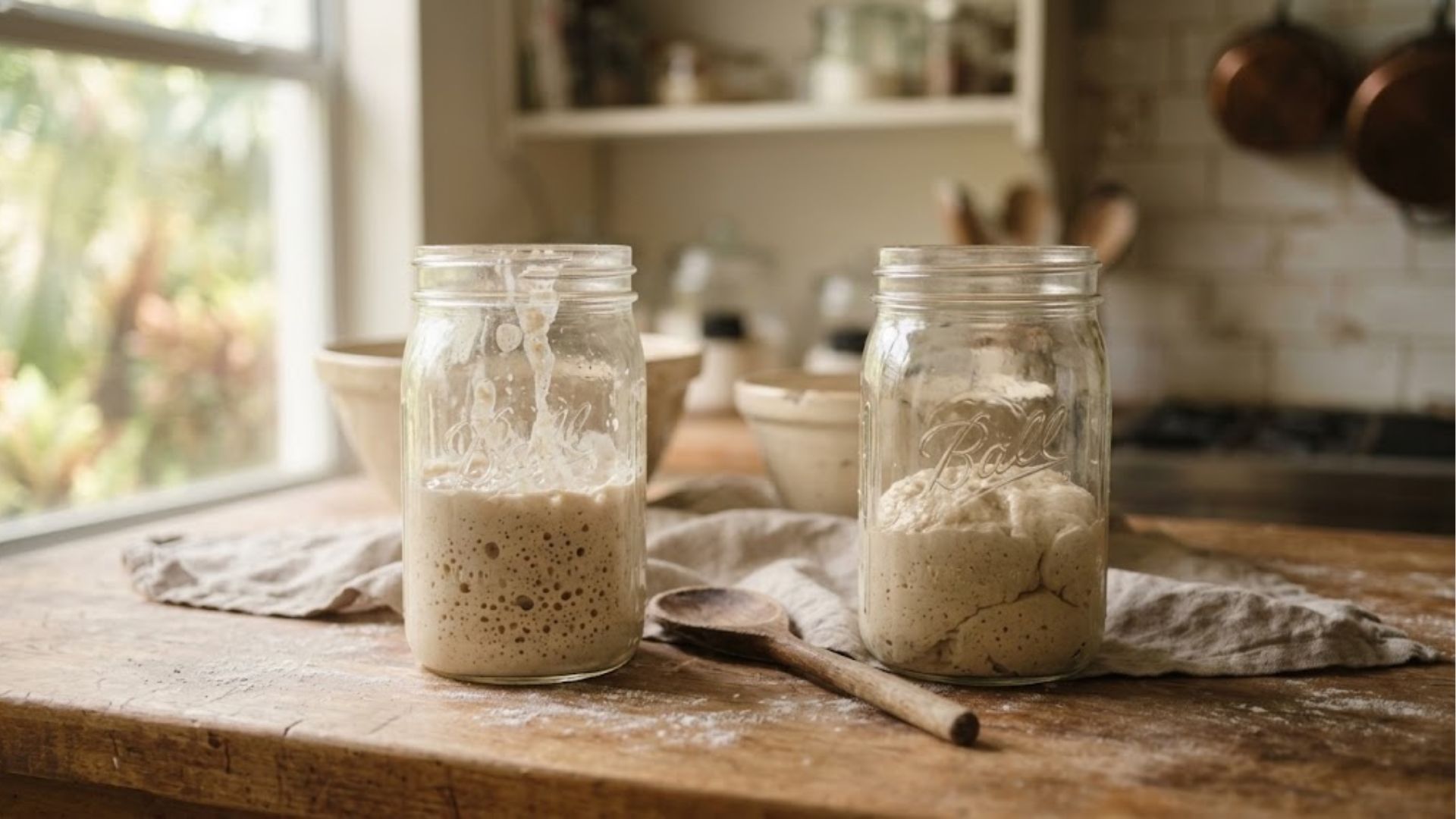
A liquid starter is usually 100% hydration, meaning equal weights of flour and water, and it is the style most recipes assume. A stiff starter has less water, often around 50 to 65% hydration, so it feels like a thick dough. Stiff starters ferment more slowly, can wait longer between feedings, and are often described as tasting tangier, while liquid starters are quick, easy to stir and gentler in flavor. Either one will raise bread, so choose the one that matches how you bake. A liquid starter should still pour like a thick batter. If yours is closer to cream, the fixes for a runny starter are in the starter problems guide.
What Hydration Means
Hydration is the weight of water divided by the weight of flour, shown as a percentage. If you mix 50 g flour with 50 g water, that is 100% hydration. If you mix 50 g flour with 30 g water, that is 60%.
Because the starter is itself made of flour and water, converting one to the other is a matter of how you feed it. The starter you already have simply gets fed with a different balance of flour and water.
| Feed (starter : flour : water) | Example weights | Resulting hydration | Texture |
| 1:1:1 | 10 g : 10 g : 10 g | 100% | Thick pancake batter |
| 1:5:3 | 10 g : 50 g : 30 g | about 64% | Soft, sticky dough |
| 1:4:2 | 10 g : 40 g : 20 g | about 56% | Firm, almost kneadable ball |
↔ Swipe to see all columns
Liquid vs. Stiff: What Changes
- Speed: A liquid starter moves quickly and peaks sooner after a feeding. A stiff starter works more slowly because the microbes move through thicker material, so it peaks later.
- Feeding schedule: A stiff starter can often wait longer between feedings, which makes it handy if you are away or bake less often.
- Flavor: Bakers commonly report that stiffer starters lean more tangy and vinegary, while wetter starters taste milder and more yogurt-like. Treat this as a tendency rather than a rule, since flour, temperature and timing also matter.
- Handling: A liquid starter pours and mixes into dough easily. A stiff starter needs a little more effort to break up and combine.
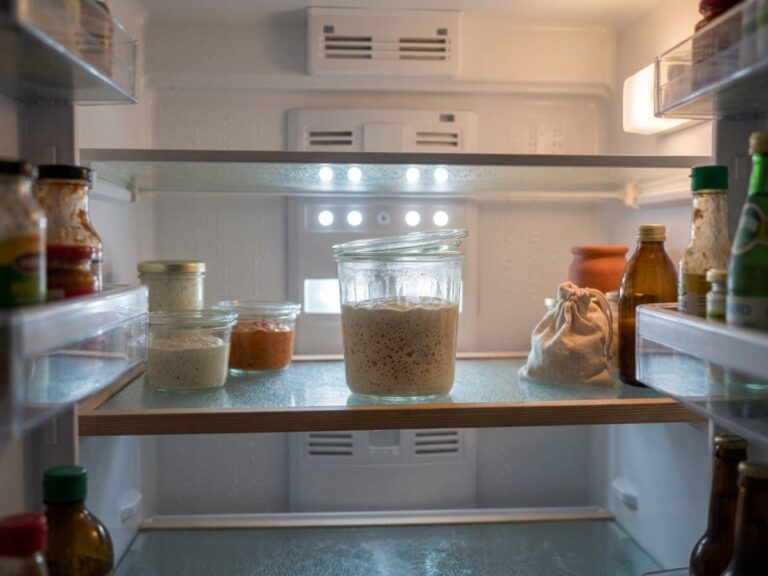
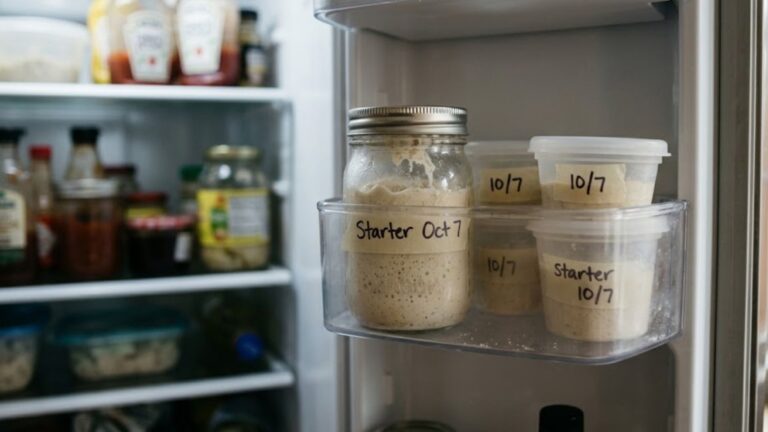
- Storage and travel: A stiff starter is easier to store in the fridge and can be tucked into a small container for a trip.

How to Convert a Liquid Starter to a Stiff One
You do not need to start over. Take your regular 100% starter and feed it with less water. For example:
- Keep just 10 g of your ripe starter.
- Add 40 g flour and 20 g water for a firm starter at roughly 56% hydration, or 50 g flour and 30 g water for a softer one around 64%.
- Mix until it forms a ball, press it into a small jar or bowl, and let it rise at room temperature.
- Repeat the feeding a few times, and expect the rise to look slower and more subtle than a liquid starter, because there is less water to stretch.
To go back to a liquid starter, simply feed it equal weights of flour and water again.
Using a Stiff Starter in a Liquid-Starter Recipe
Most recipes are written for a 100% starter, so a stiff starter carries more flour and less water than the recipe expects. As a rough guide, for every 100 g of a 60% hydration starter you use, hold back about 12 g of flour and add about 12 g of extra water. The Sourdough Calculator can work out the exact numbers if you enter your starter’s hydration.
Desi’s Note
If you are new to starters, begin with a liquid one. It is easy to read, easy to feed and matches almost every recipe you will find. Try a stiff starter later, when you want something that is more patient between feedings.
Common Questions
Is one more powerful than the other? Not really. Both leaven bread. A stiff starter is slower, not weaker, and you may need to build it up a little earlier in your schedule.
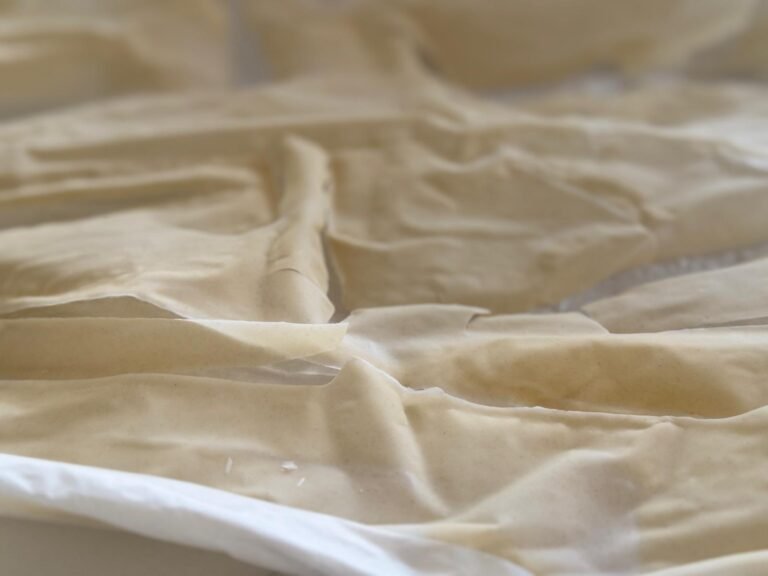
How do I know a stiff starter is ready? Look for a domed, slightly cracked or bubble-pocked surface and a lighter, airy texture when you pull it apart. We cover the signs in How to Tell When Your Starter Is Ready to Bake With.
Can I switch back and forth? Yes. Starters adapt quickly, and a single feeding at a new hydration is enough to begin the change.
Related Reading
- Sourdough Starter Feeding Ratios Explained
- Hydration and Climate: The Two Numbers That Control Fermentation Time
- Feeding & Hydration Cheat Sheet
- How to Maintain (and Revive) Your Starter
Thick or thin, a starter is just flour and water doing what it does best.
More Resources
Looking for a printable reference? Browse all six Printable Quicksheets, or dial in your own numbers with the Sourdough Calculator.
Knead to Know?
New recipes and sourdough troubleshooting, delivered before your starter even finishes its next rise.
Get the latest insights with no spam, just new recipes and baking tips. Unsubscribe anytime. See our Privacy Policy.