

Levain vs. Starter: What Is the Difference and When Should You Build One?
Bake from enough sourdough recipes and the vocabulary gets confusing. One recipe says use your active starter. Another says build a levain the night before. A third says leaven. Are these three different things?
Mostly, no. They are close relatives, and once you see how they fit together, you will know exactly what the recipe wants from you.
The Short Answer
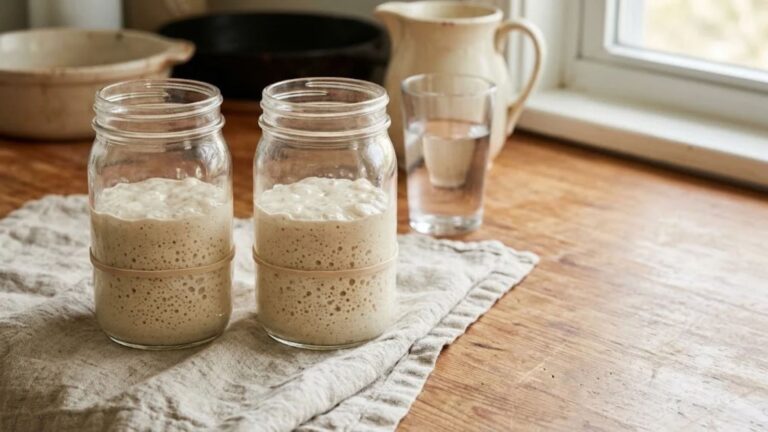
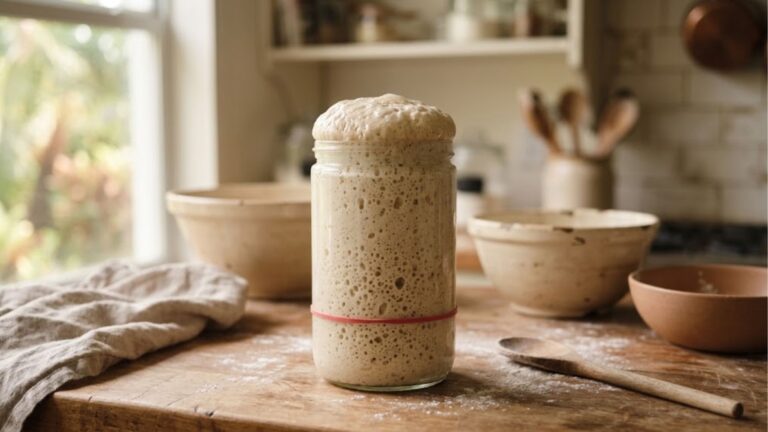
Your starter is the long-lived culture you keep and feed from week to week. A levain is a portion of that starter that you feed into a bigger batch, on a schedule, for one specific bake. The levain goes into your dough, while the original starter stays safely in its jar. Building a levain lets you control the flour, the temperature and the timing, without changing your everyday starter.
Starter, Levain, and Leaven
- Starter: your permanent culture, fed regularly and kept in a jar.
- Levain: a small build made from a spoonful of starter, fed with fresh flour and water, to use in a specific recipe. In French baking the word also refers to a sourdough culture in general, which is one reason the terms overlap.
- Leaven: an older, general word for anything that makes dough rise, and in sourdough it usually means the same fermented mix as a levain.
Why Build a Levain at All?
If your starter is lively and you can use it straight from the jar, you may never need a levain. But there are good reasons to build one:
- It protects your starter. You take a spoonful for the levain, and the main jar keeps its usual diet and rhythm.
- It fits your schedule. You choose how big to feed it and how warm to keep it, so it peaks exactly when you want to mix.
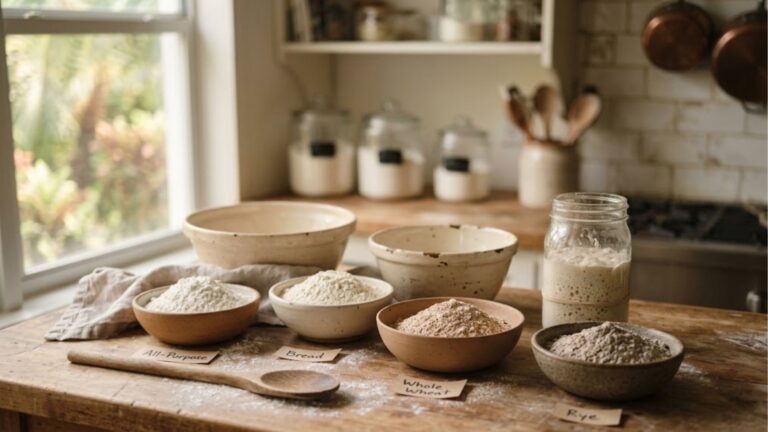
- It lets you pick the flour. A levain made with some whole wheat or rye can add flavor and vigor without changing your starter’s regular flour.
- It makes the right amount. Rather than feeding a jar of starter far bigger than you need, you build just enough for the dough.
Three Easy Ways to Build a Levain
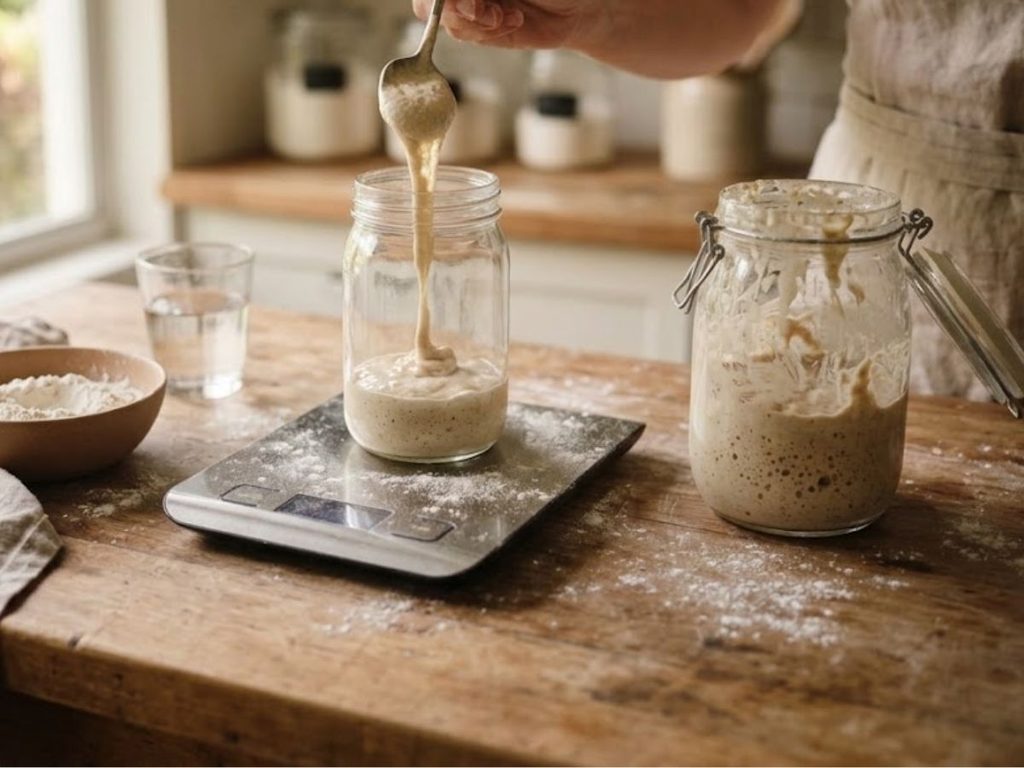
These builds all start with a small amount of ripe starter. Adjust the totals to match your recipe, and keep a little extra so you can set some aside to feed your starter again.
| Build | Ratio | Example | Time to ripe (approx.) |
| Overnight, cool | 1:5:5 | 10 g starter, 50 g flour, 50 g water | 10 to 12 hours |
| Same-day, warm | 1:1:1 | 20 g starter, 20 g flour, 20 g water | 4 to 6 hours |
| Stiff levain | 1:4:2 | 10 g starter, 40 g flour, 20 g water | Longer, often 8 to 12 hours |
↔ Swipe to see all columns
The timings here are only a guide. Temperature changes everything, so use the signs in How to Tell When Your Starter Is Ready to Bake With to judge when your levain is ripe.
How Much Levain Do You Need?
Look at your recipe to see how much levain it calls for, then work backward. If the recipe needs 100 g of levain and you want to save 20 g to start your next one, you need to make 120 g. A 1:5:5 build with 10 g of starter makes 110 g, so you would round up to 12 g of starter, 54 g of flour and 54 g of water, which is close enough to 1:5:5 for the build to behave the same way.
If you would rather skip the arithmetic, the Sourdough Calculator will do it for you.
Desi’s Note
Do not let the vocabulary make baking feel harder than it is. If a recipe says starter, use your ripe starter. If it says levain, mix a small batch from your starter and let it ripen. Either way, the thing that matters is that it is bubbly and at its peak when it goes into the dough.
Common Questions
Can I use my starter directly instead of building a levain? Yes, if it is active and ripe. A levain is a convenience and a control, not a requirement.
Do I have to discard? Building a levain means you are feeding a small amount, so there is very little waste. Anything you do not use goes back into your starter or into a discard recipe.
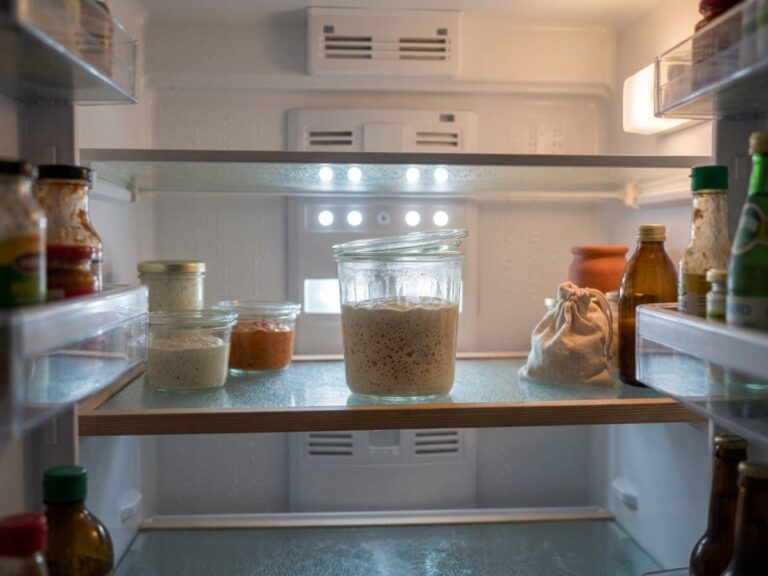
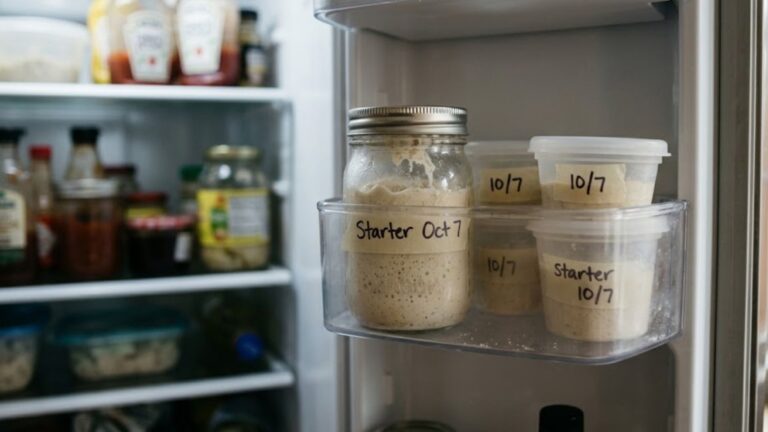
Can I build a levain from my starter in the fridge? Yes. Take a spoonful straight from the jar, let it warm up for a bit and build the levain from there, though it may take a little longer to get going.
Related Reading
- Sourdough Starter Feeding Ratios Explained
- Stiff Starter vs. Liquid Starter
- Which Sourdough Schedule Fits Your Life?
- Bake-Day Timeline Template
A levain is just your starter, dressed up for one very specific job.
More Resources
Looking for a printable reference? Browse all six Printable Quicksheets, or dial in your own numbers with the Sourdough Calculator.
Knead to Know?
New recipes and sourdough troubleshooting, delivered before your starter even finishes its next rise.
Get the latest insights with no spam, just new recipes and baking tips. Unsubscribe anytime. See our Privacy Policy.