Whole Wheat and Rye Sourdough Problems: Why Your Whole-Grain Loaf Is Dense, Dry, or Gummy
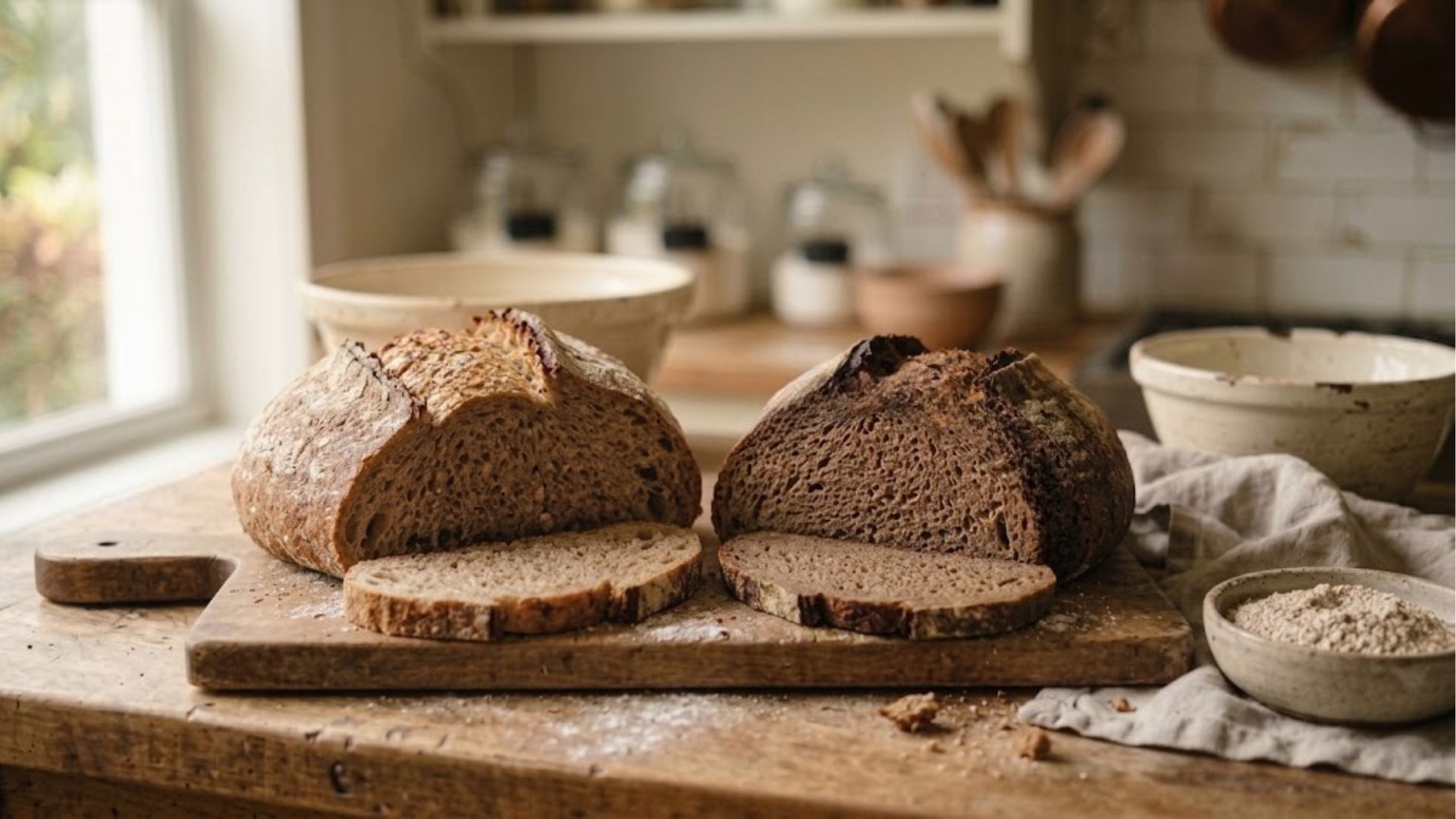
Switch from white flour to whole wheat or rye and the dough you know stops behaving the way you expect. It drinks more water, ferments faster, feels different in your hands, and bakes into a crumb that can be dense and dry, or strangely gummy. None of that means you did something wrong. Whole grains simply follow different rules.
This guide covers the most common whole-grain problems, why each one happens, and what to change. If your trouble is general, such as a weak starter or a loaf that will not rise, start with our guide to dense, gummy, or sticky sourdough and come back here when the flour itself looks like the culprit.
The Short Answer
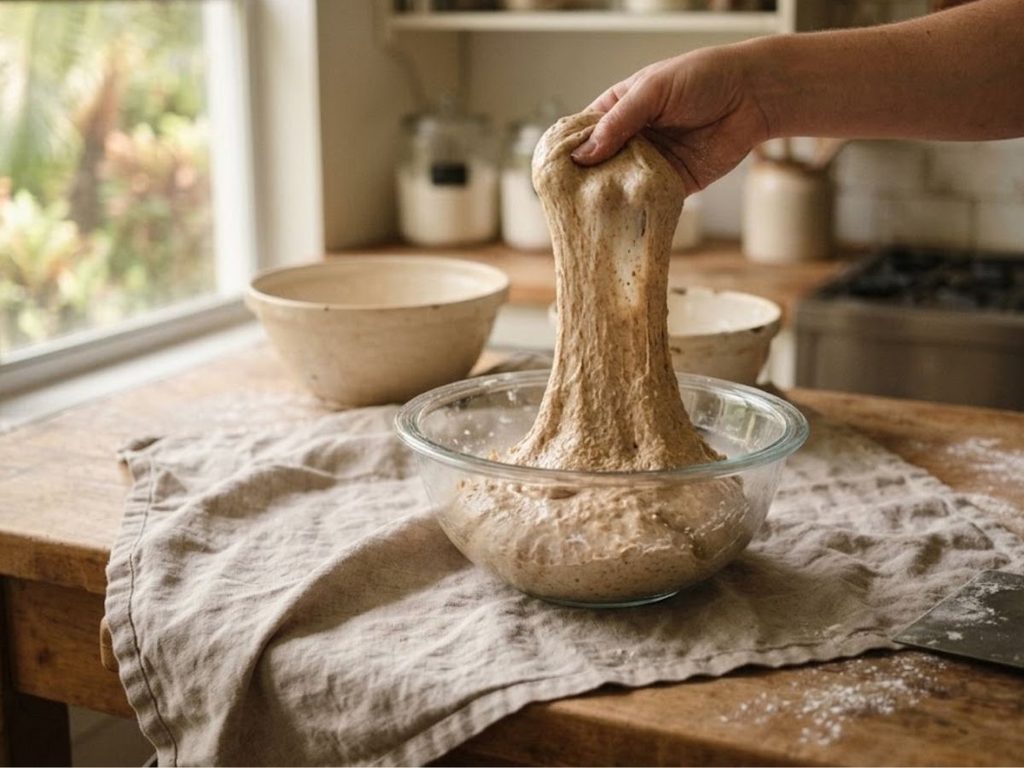
Whole wheat needs more water and a shorter, gentler fermentation than white flour, because the bran absorbs liquid and cuts at gluten while the germ and bran feed fast fermentation. Rye needs a different approach altogether: it has very little gluten, so it relies on acidity and a long cooling period to set. Add water in small steps, shorten bulk fermentation, handle rye gently and with wet hands, and wait for the loaf to cool fully before slicing.
Start Here: What Is Your Loaf Doing?
- Heavy, tight, and short, with a dry crumb. The dough was probably too stiff for the flour. Jump to Cause 1 and Cause 2.
- Flat or collapsed, with a gummy or sour crumb. Whole grain ferments fast and it likely overproofed. Jump to Cause 3.
- Rye dough that is sticky and will not hold a shape. That is normal rye behavior. Jump to Cause 4.
- Rye loaf that is damp or gluey inside, even though the crust is dark. It needs more time to cool and set. Jump to Cause 5.
- Bitter or musty taste. Check the flour first. Jump to Cause 6.
Why Whole Grains Behave Differently
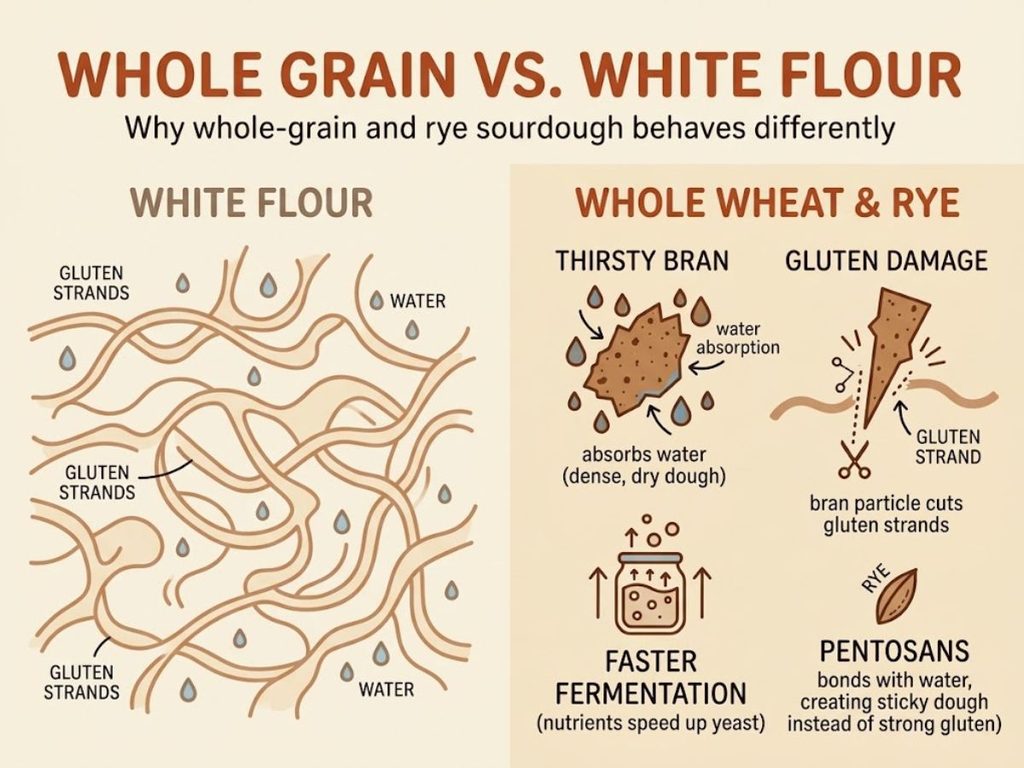
Whole wheat flour keeps the bran and germ that white flour leaves behind. The bran is thirsty, so it pulls water away from the starch and gluten. It is also made of sharp little particles that can interrupt gluten strands, which is why whole wheat loaves are often denser. The germ and bran also carry more minerals, sugars, and enzymes, which means a whole-grain dough tends to ferment faster than a white one at the same temperature.
Rye is different again. It contains very little of the gluten-forming protein that wheat has, so rye dough gets its structure from starch and from gums called pentosans. Rye is also high in an enzyme that breaks starch down, which is why rye bread can turn gummy if the dough is not acidic enough or the loaf is cut too early. Sourdough is actually well suited to rye, because the acidity slows that enzyme.
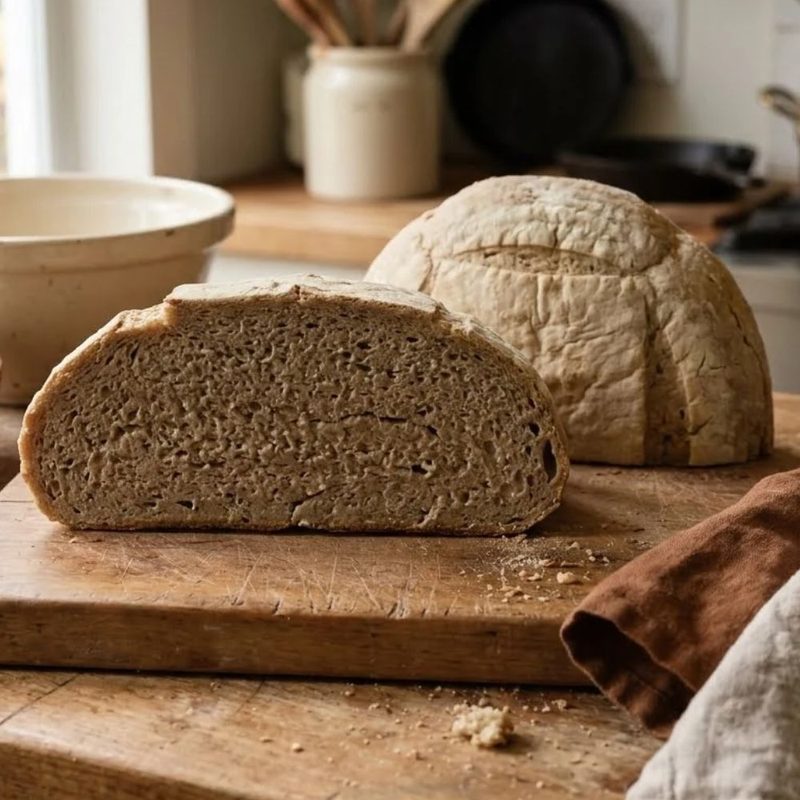
Whole grain and rye crumbs run denser and closer than white flour crumbs, even when fermentation is right. Use the tiles below to judge the stage, and expect your loaf to look about one step tighter than the picture.
Reading your crumb: fermentation
Let the loaf cool for a full hour before you cut it, then find the closest match.
Swipe each row to see all three.
Under-fermented
Uneven bubbles and a dense, gummy crumb, with sometimes a few big tunnels under the top crust. The dough did not make enough gas before it went into the oven.
ExtremeVery dense and tight, with only tiny holes.
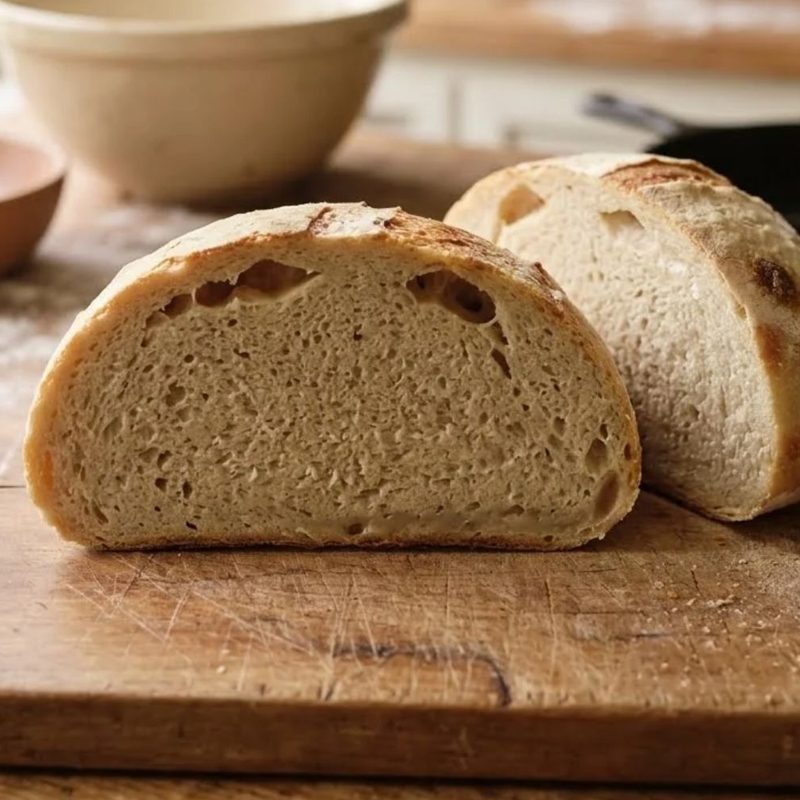
ModerateA few big tunnels over a tight, doughy crumb.
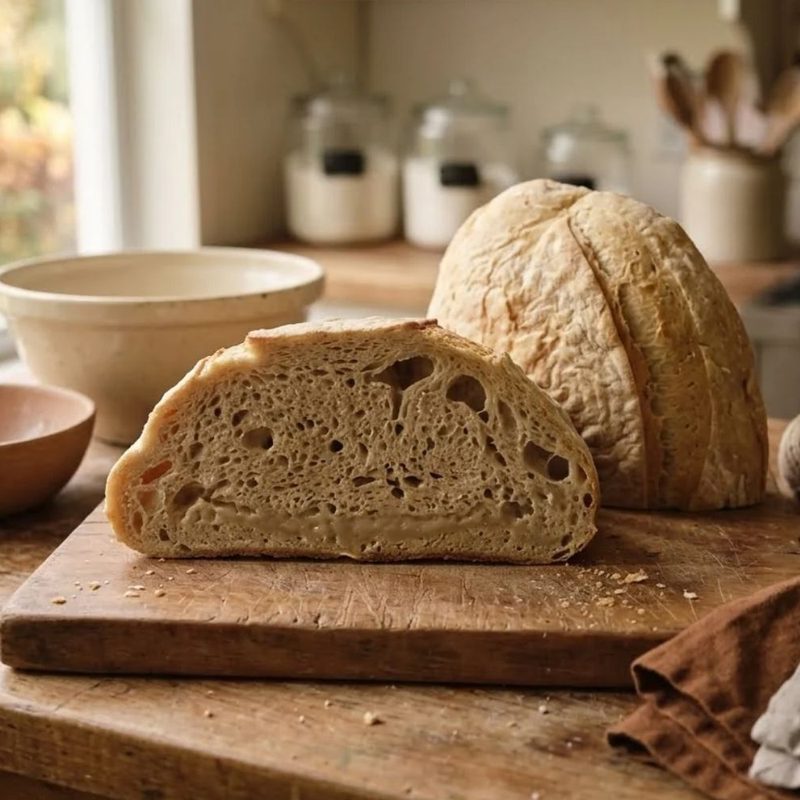
MildSome holes near the top and a gummy band along the bottom.
Nicely fermented
Bubbles of mostly similar size spread evenly through a light, springy crumb. An ear is a bonus, since a good loaf can bake without one.
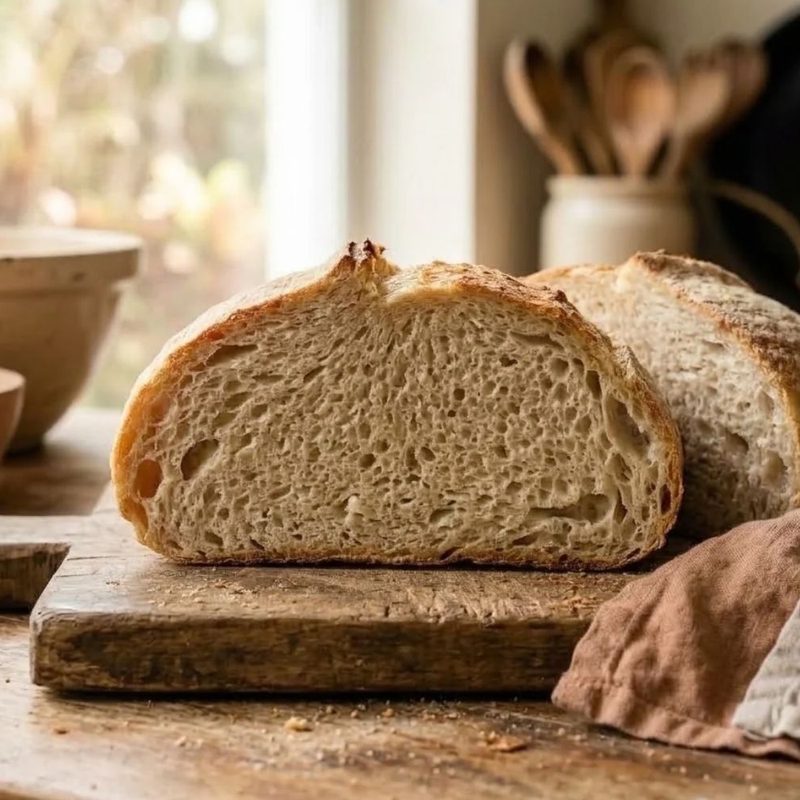
TighterA softer, tighter crumb with small, even holes.
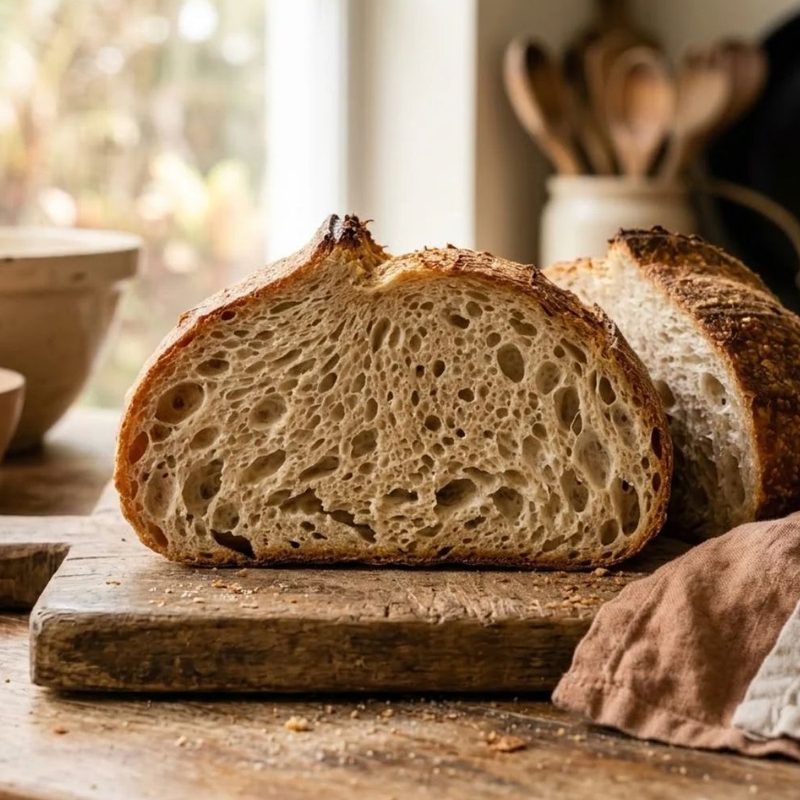
StandardEven, medium bubbles and a tall, rounded loaf. A good everyday crumb.
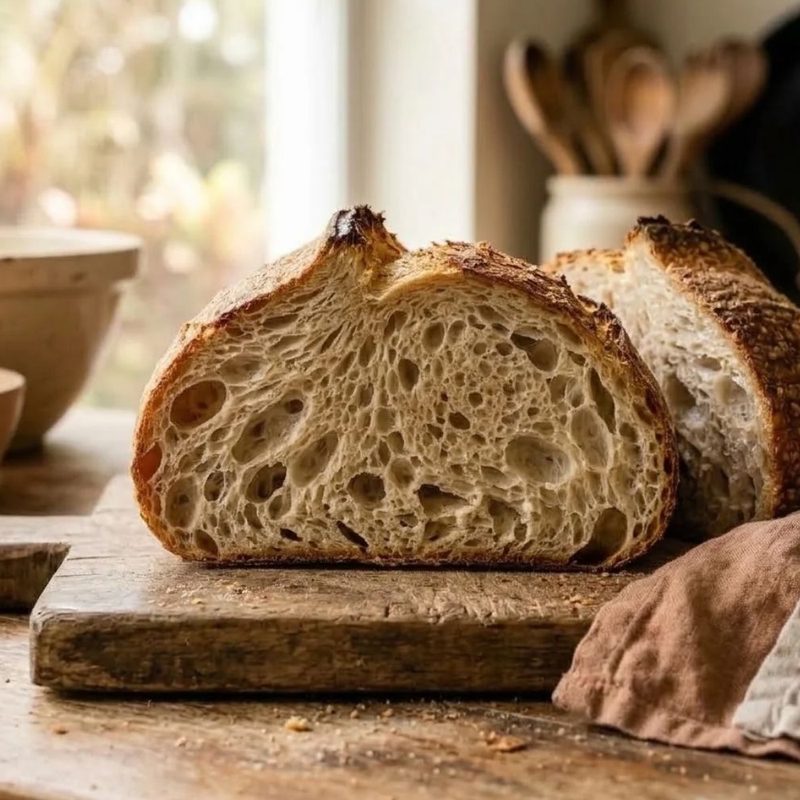
OpenLarge glossy bubbles with thin walls and an ear.
Over-fermented
The structure is weak and the holes are small and shriveled. The loaf spreads flat because the dough ran out of strength before it baked.
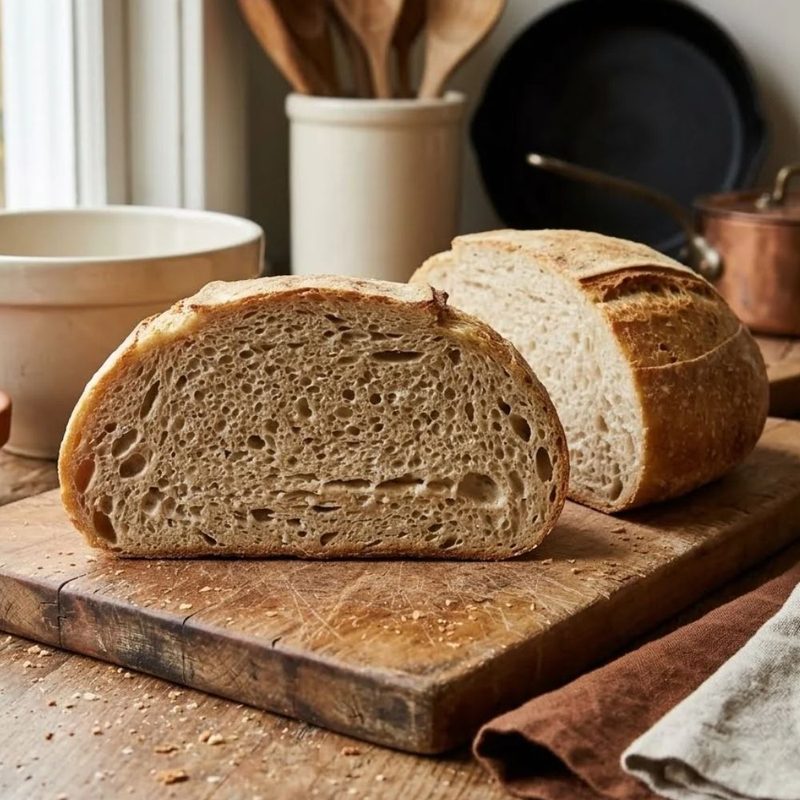
MildA soft, slightly damp crumb with small, tired-looking bubbles.
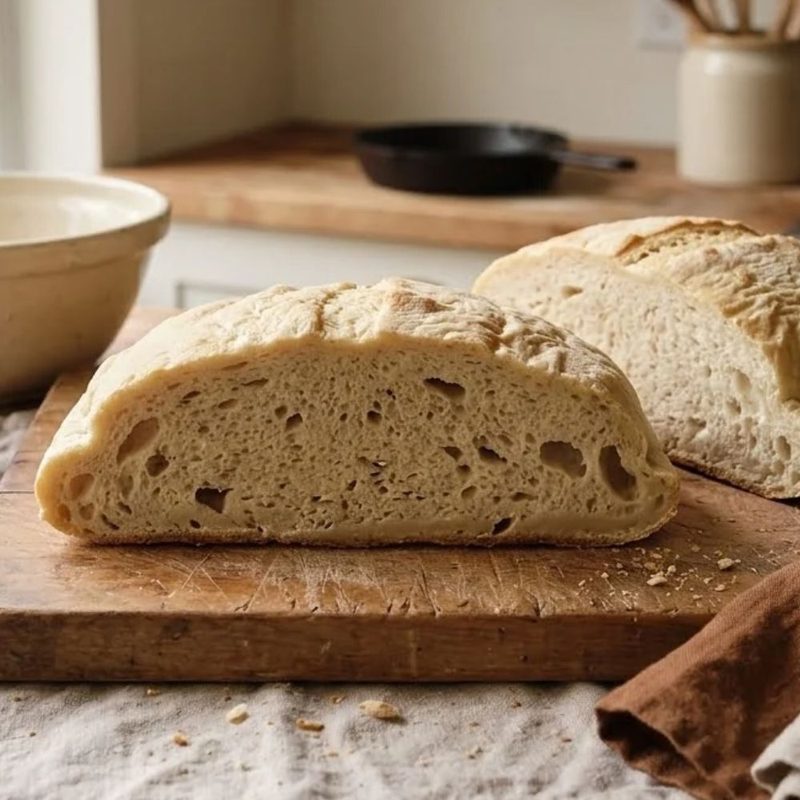
ModerateA pale, wide loaf with torn-looking holes and a gummy base.
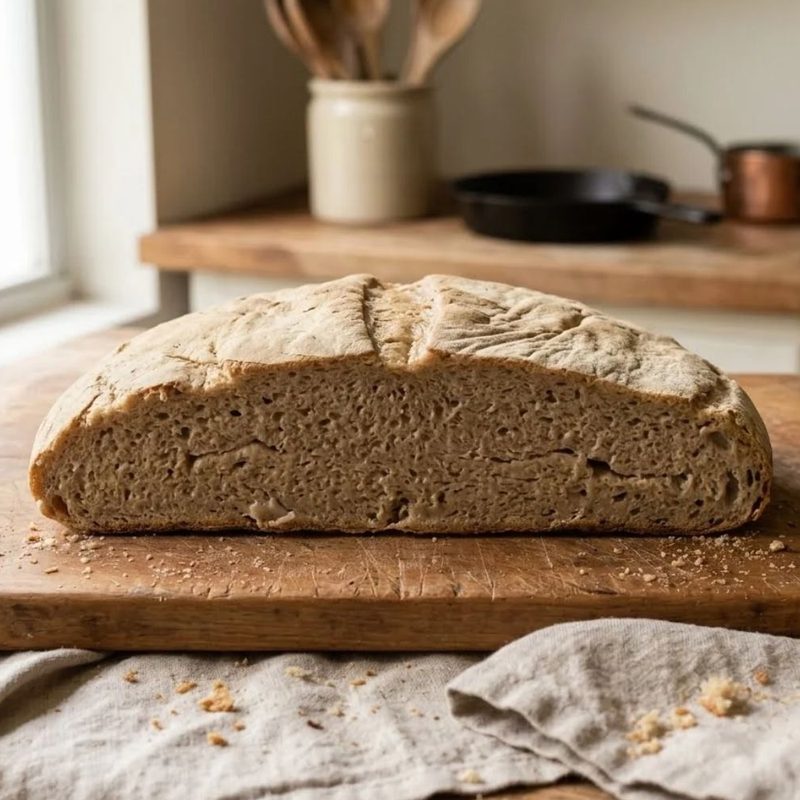
ExtremeA flat, spread loaf with a dense, damp crumb and no structure.
Whole Wheat and Rye Problems, Cause by Cause
Problem: Cause 1
The dough was too dry for the amount of whole grain. The loaf is dense and short, and the dough felt stiff and hard to stretch.
The Fix
Add water as you add whole grain. A good starting point is about 2 teaspoons of extra liquid for every cup of whole wheat flour, which works out to roughly 10 grams of water per 100 grams of flour swapped. Add it in two steps, holding back a little, and keep going until the dough feels supple instead of stiff.
If you are moving to whole wheat for the first time, swap in only 25 to 30 percent of your flour at first and build up from there.
Problem: Cause 2
The bran never had time to soften. The loaf bakes up dry and crumbly, and the crumb feels rough.
The Fix
Give whole grain flour a head start. Mix the flour and water first and let them rest for 30 to 60 minutes before you add the starter and salt, which is an autolyse. A soaker works too: pour hot water over the whole wheat portion and let it sit for several hours or overnight. Soft bran means a softer crumb.
Problem: Cause 3
Whole grain dough ferments faster than white, so the loaf overproofed. It spreads, collapses when scored, or tastes sharply sour.
The Fix
Shorten the bulk fermentation and watch the dough, not the clock. Whole wheat doughs often need a bulk that is noticeably shorter than a white-flour recipe in the same kitchen. Look for a rise of around 30 to 50 percent, a domed surface, and a dough that jiggles when you move the bowl. Our guide to reading proofing and scoring problems walks through the poke test.
Problem: Cause 4
The dough is rye or high-rye, and it is sticky, will not hold a shape, and sticks to your hands and bench.
The Fix
This is rye being rye. It is not you. Rye has little gluten to build strength, so do not keep kneading and folding in hope of changing it. Use wet hands or a damp bench scraper instead of extra flour, shape lightly, and proof in a well-floured or rice-floured banneton or a loaf pan. For a first rye loaf, keep it to 20 or 30 percent rye so the white flour carries some of the structure.
Problem: Cause 5
The rye loaf looks baked but the inside is damp and gluey.
The Fix
Rye starch needs time to finish setting. Let the loaf cool completely, and for a high-rye loaf wait several hours or even until the next day before cutting. Wrap it in a clean towel once it has cooled so the crust does not get hard. Also check that the dough had enough acidity, which a ripe sourdough starter provides, because acid holds back the starch-eating enzyme.
Problem: Cause 6
The loaf tastes bitter or musty, or just oddly bland.
The Fix
Whole grain flour goes stale faster than white because the oils in the germ can turn rancid. Smell your flour. It should smell sweet and nutty, not like old paint or cardboard. Store whole wheat and rye in the freezer or the refrigerator in an airtight container, and use fresh flour from a source that turns its stock quickly.
Desi’s Note
If I could give one tip to anyone starting out with whole grains, it would be to change one thing at a time. Raise the whole wheat a little, raise the water a little, and shorten the bulk a little. Whole grains forgive small steps and punish giant leaps.
Quick Answers
How much whole wheat should I start with? Twenty-five to thirty percent of the total flour is a comfortable first step. Many bakers find fifty percent a good everyday blend.
Do I need more water for rye? Rye absorbs a lot of water too, but it is so soft that high-hydration rye dough can be hard to handle. Rye breads often bake in a loaf pan for that reason.
Can I just swap whole wheat into my white recipe one for one? You can, but expect to add water and shorten the bulk. See our whole wheat sourdough loaf and sourdough rye loaf for worked examples.
Related Reading
- Dense, Gummy, or Sticky Sourdough? Causes and Fixes
- Whole Wheat Sourdough Loaf
- Sourdough Rye Loaf
- How Dough Type Changes Your Schedule
Whole grains play by their own rules, and once you know them, they bake some of the best bread there is.
More Resources
Looking for a printable reference? Browse all six Printable Quicksheets, or dial in your own numbers with the Sourdough Calculator.
Knead to Know?
New recipes and sourdough troubleshooting, delivered before your starter even finishes its next rise.
Get the latest insights with no spam, just new recipes and baking tips. Unsubscribe anytime. See our Privacy Policy.