
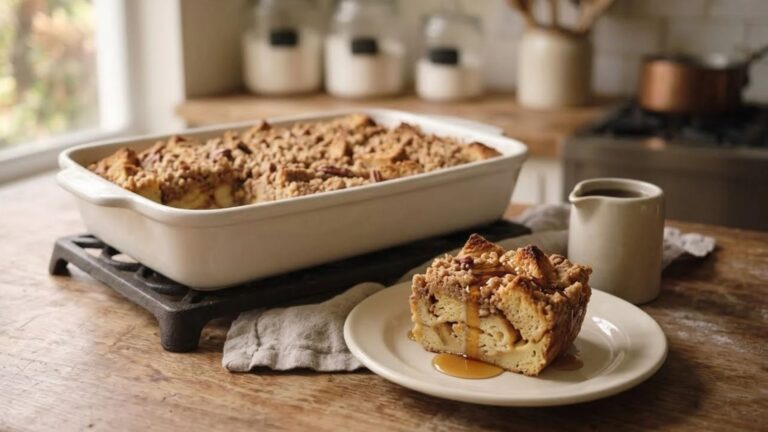
Brown Butter Maple Pecan Sourdough Bread Pudding
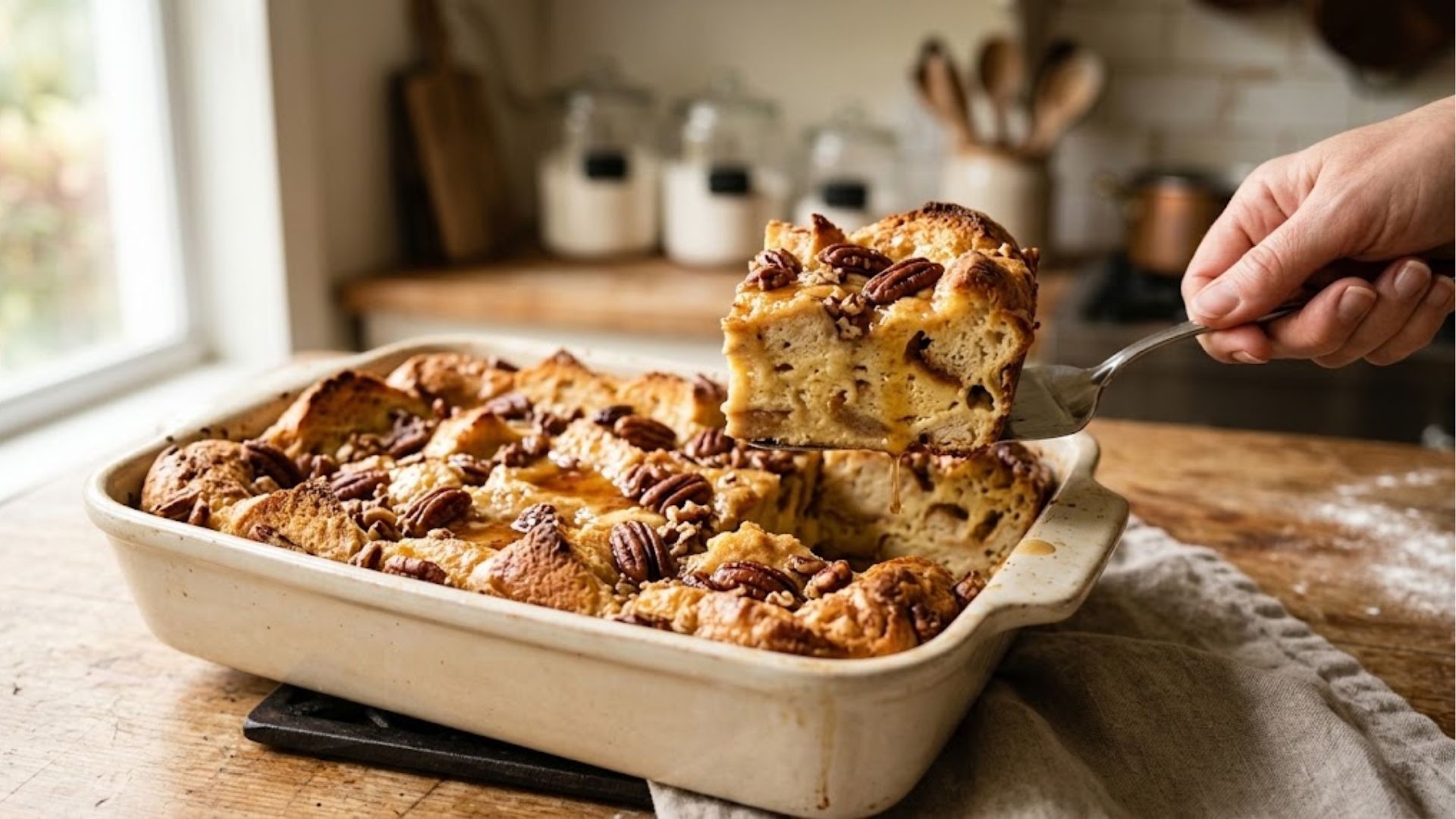
This is the recipe for the heel of the loaf and the last few slices that went a little stale before anyone got to them. Cubed sourdough, a custard built on browned butter and maple syrup, and a scatter of toasted pecans turn day-old bread into something closer to dessert than leftovers.
There is no sourdough fermentation happening here, the starter did its work days ago when the bread was baked. What you are managing in this recipe is a custard and a browned butter, which is a different kind of attention than a dough needs, closer to watching a saucepan than watching a bowl rise.
Which one is this?Compare both bread pudding recipes
Both bread pudding recipes are close cousins. Here is how they differ, so you can pick the right one.
- Sourdough Bread Pudding1 hr 15 min · Makes 8 servings
Torn day-old sourdough in a brown sugar custard of eggs and dairy, finished with a vanilla sauce.
You want a classic pudding with a vanilla sauce.
- Brown Butter Maple Pecan Bread PuddingYou are here1 hr 35 min · Makes 9 squares
Toasted leftover sourdough in a maple custard with browned butter, topped with toasted pecans and a maple glaze.
You want a maple and pecan pudding instead of vanilla.
Why You’ll Love It
- Uses up bread that is a little too stale to eat on its own, nothing here needs to be fresh
- Browned butter does most of the flavor work, with maple syrup reinforcing it rather than competing with it
- One dish, no stand mixer, no dough to shape
- Can be assembled ahead and soaked overnight in the refrigerator if you want to bake it fresh for brunch
- A warm maple glaze at the end instead of a powdered sugar dusting that just sits on top
Ingredients
Volume measurements are included for convenience, but they are approximate, especially for the cubed bread. A kitchen scale gets you a more reliable custard-to-bread ratio than a cup measure does.
Use bread that is genuinely a day or two old, not fresh from the oven. Fresh bread is too soft to toast properly and tends to dissolve into the custard instead of holding its shape.
- Leftover sourdough bread, a day or two stale (450 g / about 8 cups cubed): The base of the pudding. Slightly dry bread soaks up the custard without turning to mush.
- Whole milk (360 g / about 1½ cups): Thins the custard to a pourable consistency.
- Heavy cream (120 g / about ½ cup): Adds richness the milk alone will not.
- Eggs (200 g / about 4 large): Sets the custard as it bakes.
- Unsalted butter (85 g / about 6 tbsp): Browned for the custard base, this is where most of the flavor comes from.
- Maple syrup (120 g / about ⅓ cup): Sweetens the custard and reinforces the browned butter.
- Light brown sugar (50 g / about ¼ cup packed): A second layer of sweetness with a little more depth than maple alone.
- Vanilla extract (8 g / about 2 tsp): Rounds out the brown butter and maple.
- Ground cinnamon (3 g / about 1 tsp): A light background spice.
- Fine sea salt (3 g / about ½ tsp): Balances the sweetness, more important here than in a plain loaf.
- Pecans, roughly chopped and toasted (90 g / about ¾ cup): Folded into the pudding and scattered on top.
- Maple syrup, for the glaze (60 g / about 3 tbsp): Simmered down separately and drizzled on at the end.
Equipment
Gear guides: Sourdough Equipment Guide·Kitchen Scales·Banneton Sizing·Scoring Tools·Storing the Loaf·Pizza Stone vs. Baking Steel·Shop All Picks →
- Kitchen scale: for weighing the bread and the custard ingredients.
- Large mixing bowl: for whisking the custard.
- Whisk: for a smooth, streak-free custard.
- Small saucepan: for browning the butter and simmering the glaze.
- 9 by 9 inch baking dish: or another 2 quart dish of similar size.
- Baking sheet: for toasting the bread cubes.
- Instant-read thermometer: confirms the custard is fully set in the center.
- Aluminum foil: to tent the top if it browns before the center sets.
Sample Schedule (Same Day)
Same Day
- Toast the bread cubes and brown the butter
- Whisk the custard and combine with the bread
- Soak for 30 minutes, or refrigerate up to overnight
- Bake, make the glaze, and serve warm
Brown Butter Maple Pecan Sourdough Bread Pudding
Method
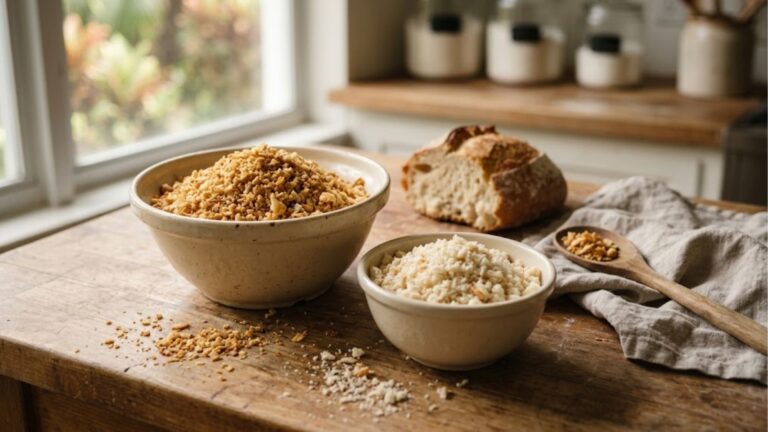
- Cube the bread and toast at 300°F for 10 to 12 minutes, until dried but not deeply browned.
- Melt the butter in a saucepan over medium heat until amber and nutty-smelling, 5 to 7 minutes.
- Whisk the milk, cream, eggs, maple syrup, brown sugar, vanilla, cinnamon and salt, then slowly whisk in the warm brown butter.
- Toss the toasted bread and half the pecans in a buttered baking dish, then pour the custard over and press down gently.
- Let soak 30 minutes at room temperature, or cover and refrigerate up to overnight.
- Scatter the remaining pecans on top and bake at 350°F for 40 to 45 minutes, until set and puffed, at least 165°F in the center.
- Simmer the remaining maple syrup with a pinch of salt for 2 to 3 minutes, until slightly thickened.
- Cool 10 minutes, then drizzle with the warm maple glaze.
Notes
Save This Recipe
Get it emailed to you now, plus new recipes as they go up.
Your email is safe with me. I’ll send this recipe straight over. No spam, ever. You can unsubscribe anytime.
How to Make It
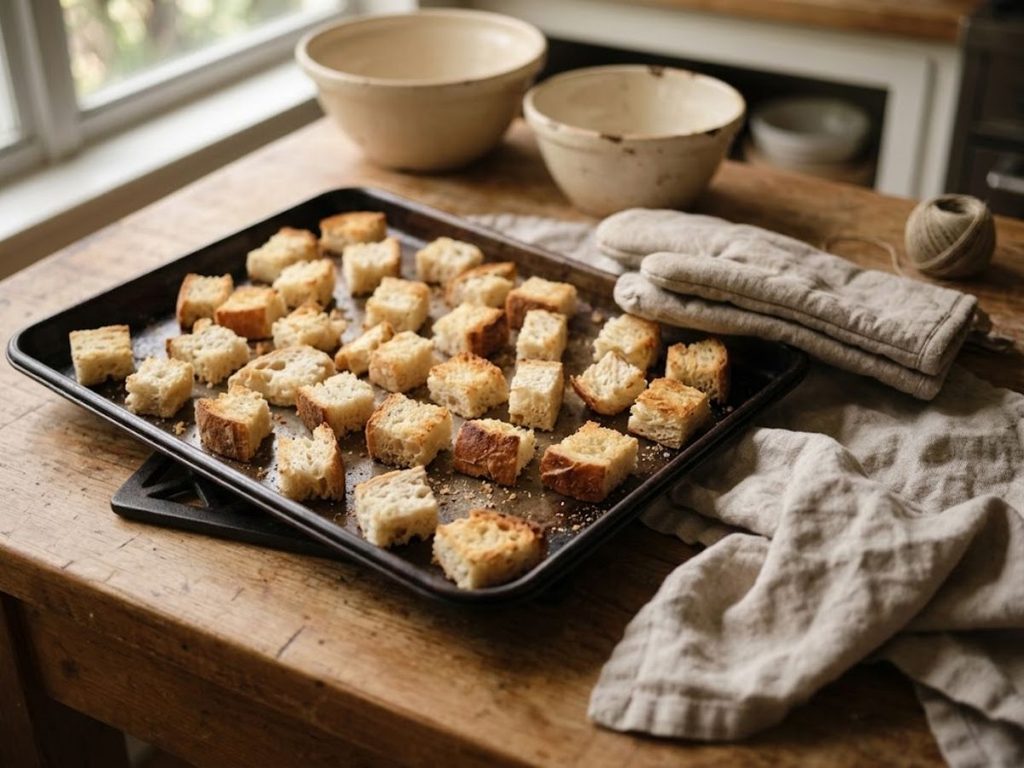
1Cube the bread and toast it. Cut the leftover sourdough into roughly 1 inch cubes and spread them on a baking sheet. Toast at 300°F for 10 to 12 minutes, until the outside feels dry but the inside still gives a little. If your bread is already a few days old and properly stale, you can skip straight to the next step, fresher bread needs the extra drying time or it will turn to paste in the custard.
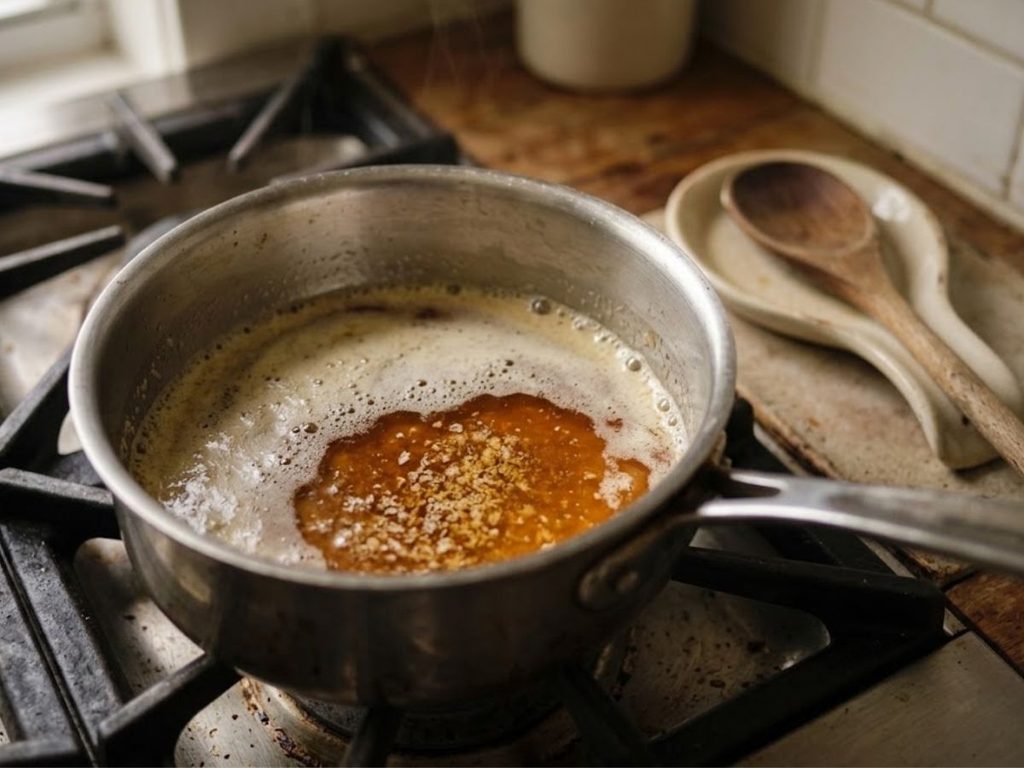
2Brown the butter. Melt the butter in a small saucepan over medium heat, swirling occasionally, until it turns a deep amber color and smells toasted and nutty, 5 to 7 minutes. Watch the milk solids at the bottom of the pan, once they go from foamy white to golden brown flecks, pull the pan off the heat immediately. It goes from perfect to burnt in under a minute.
3Whisk the custard. In a large bowl, whisk the milk, cream, eggs, maple syrup, brown sugar, vanilla, cinnamon and salt, then slowly whisk in the warm browned butter so the eggs do not scramble. The mixture should look smooth and pale amber, with no streaks of egg white left visible.

4Combine and soak. Toss the toasted bread cubes with half the pecans directly in a buttered baking dish, then pour the custard evenly over the top. Press down gently with a spatula so every cube gets some contact with the liquid, some pieces will still poke up above the custard line, and that is what gives the top its texture.

5Let it soak. Let the dish sit at room temperature for at least 30 minutes, or cover and refrigerate for up to overnight if you want to prep this ahead. In a humid kitchen, I would lean toward the fridge option past about an hour so the custard does not sit out too long.
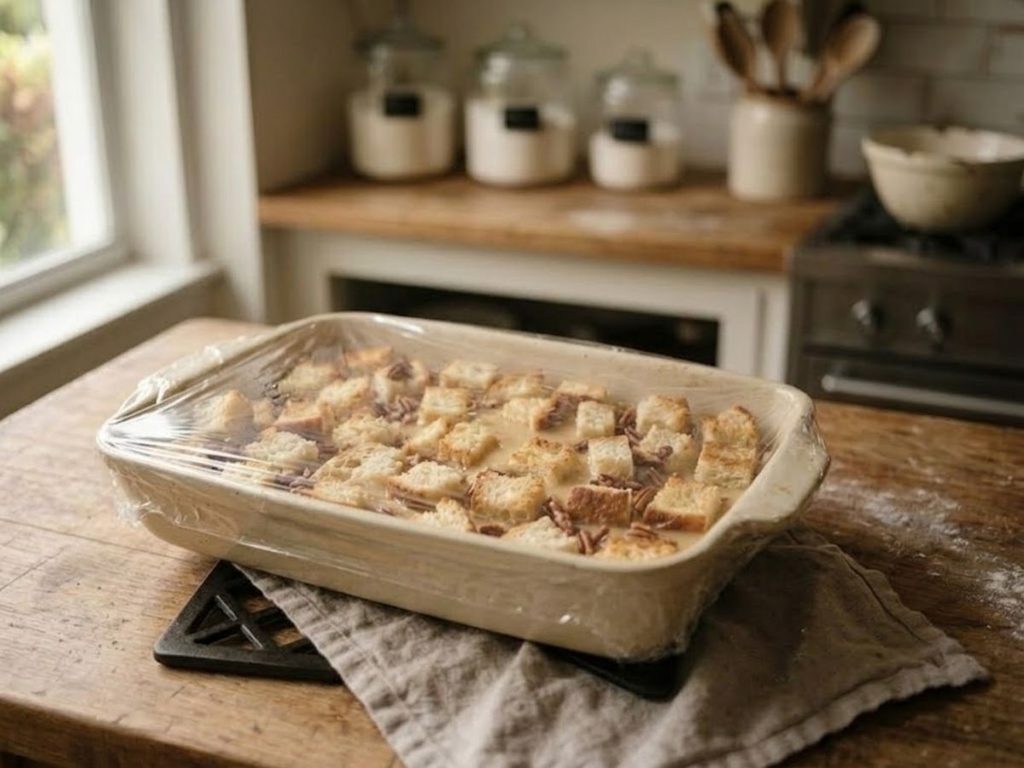
6Bake. Scatter the remaining pecans over the top and bake at 350°F for 40 to 45 minutes, until the pudding is puffed, golden on top, and set at the edges with only a slight jiggle in the center. An instant-read thermometer inserted in the middle should read at least 165°F.
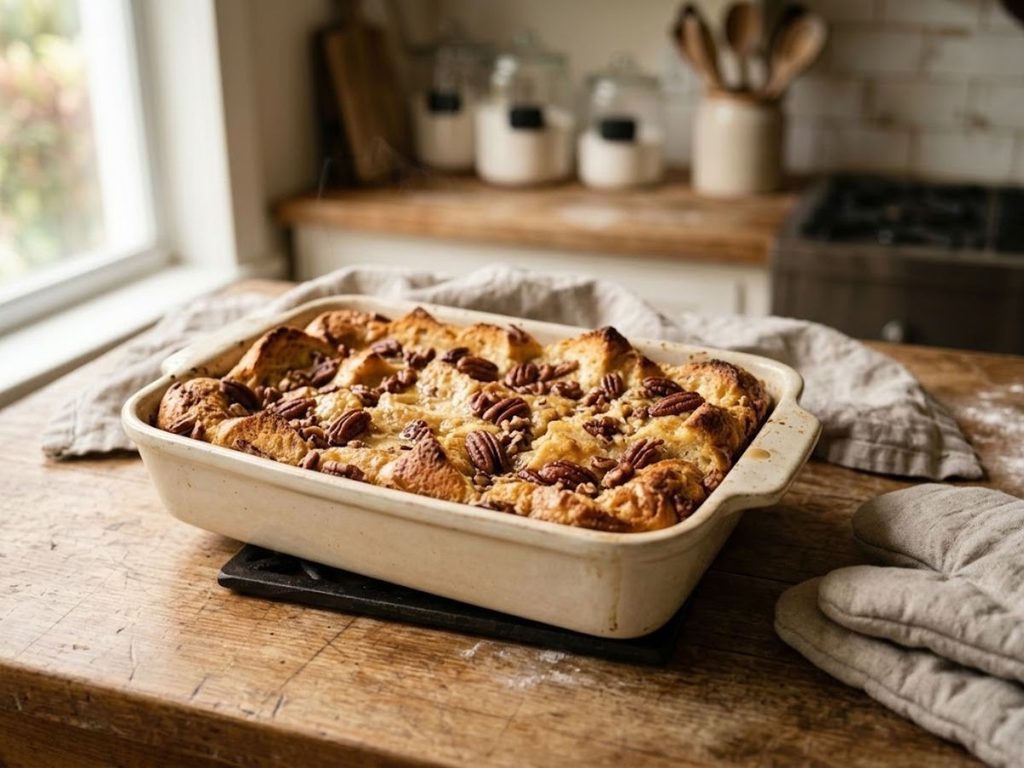
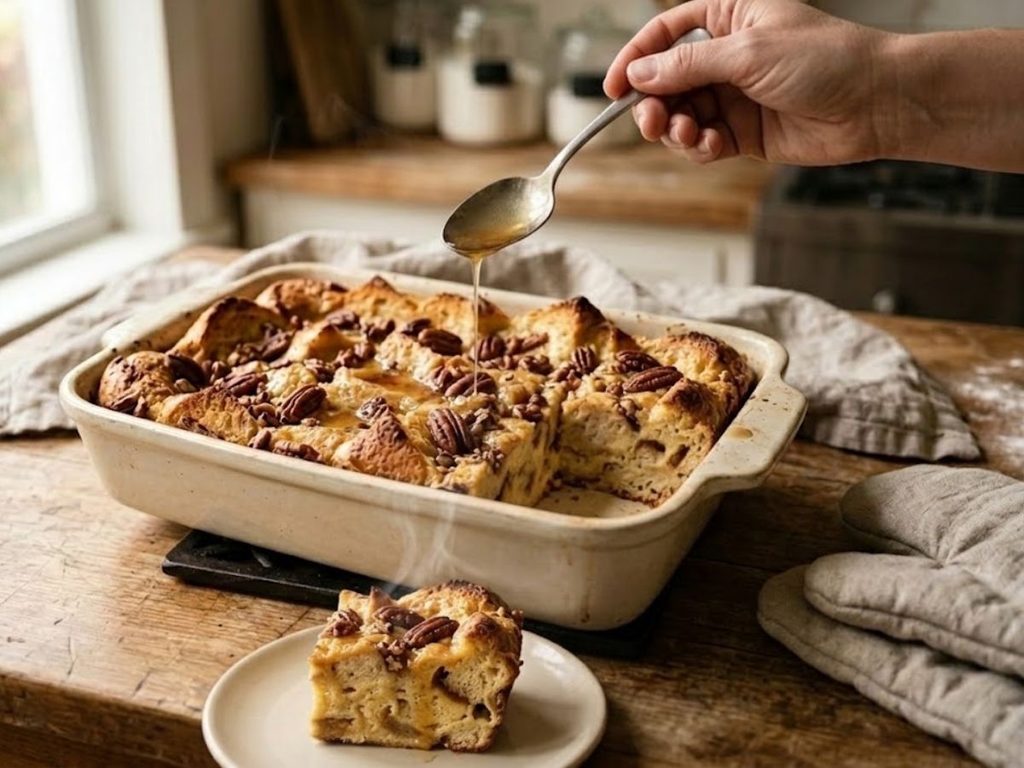
7Make the maple glaze. While the pudding bakes, simmer the remaining maple syrup with a small pinch of salt in a clean saucepan over medium-low heat for 2 to 3 minutes, until it thickens slightly and coats the back of a spoon. Keep an eye on it, maple syrup can go from thin to a hard caramel quickly once it starts to reduce.

8Cool slightly and glaze. Let the pudding rest for about 10 minutes, then drizzle the warm maple glaze over the top. It is best served warm, closer to a spoonable custard than a firm cake, so do not expect clean slices the way you would from a loaf.
Tips & Troubleshooting
- Custard never sets in the middle: Your oven likely runs cool, or the dish is deeper than it looks. Give it another 10 minutes and check again with a thermometer rather than a timer.
- Top is dark before the center is done: Tent loosely with foil for the last 10 to 15 minutes.
- Pudding turned out dense and soggy instead of custardy: The bread was probably too fresh and soft to toast dry enough. Stale, firm bread holds its shape far better here.
- Brown butter smells burnt instead of nutty: It went a little too far on the heat. Start a fresh batch over slightly lower heat and pull it the moment the color changes.
How to Store
To store: Cover and refrigerate for up to 4 days. The texture firms up as it chills, so reheat gently before serving if you want it soft again.
To freeze: Freeze portioned squares for up to 2 months, wrapped tightly. Thaw in the refrigerator overnight and warm in a low oven before serving.
Nutrition
Nutrition values are estimates per square and will vary based on exact ingredients used.
310
CALORIES
28
CARBS (G)
7
PROTEIN (G)
18
FAT (G)
2
FIBER (G)
220
SODIUM (MG)
Desi’s Notes
This is the recipe I keep in my back pocket for the heel and the last few slices of a loaf that did not get eaten in time. Nothing here needs to be fresh bread.
Maple grade matters more than people think. A darker, bolder syrup holds up better against the brown butter than a delicate one does.
I have not tried this with a sweeter enriched bread yet, though I suspect it would need less sugar in the custard to balance out.
Before You Bake
Scaling this recipe up or down? Run your numbers through the Sourdough Calculator. And if you want a printable reference for troubleshooting or timing, browse all six Printable Quicksheets.
New to sourdough? Start with the free course
Seven short lessons over 12 days, from mixing your first starter to baking your first loaf with it. Stop anytime.
One short lesson every couple of days. Seven in all, then you’re done. No spam. See our Privacy Policy.
Already have a starter? Bake your first loaf → · Already baking? Browse recipes →
Tried this recipe? Leave a star rating below. It takes 10 seconds and helps other bakers decide what to make next.
Baked this recipe your way? Share it in Community Bakes and inspire other readers.