
The Cold-Bulk Schedule: Mix Once, Shape When You Are Ready
Most sourdough schedules ask you to be home at two moments, mixing and shaping, and in between they hope you can stay close for folds. The popular overnight method moves the final proof into the fridge. This schedule goes one step further and moves the whole bulk rise into the fridge.
It is called a cold bulk, and it is a favorite for busy weeks because it separates mixing from shaping by a day or more. You mix in five minutes on a weeknight, tuck the dough away, and shape it when your calendar finally lets you.
The Short Answer
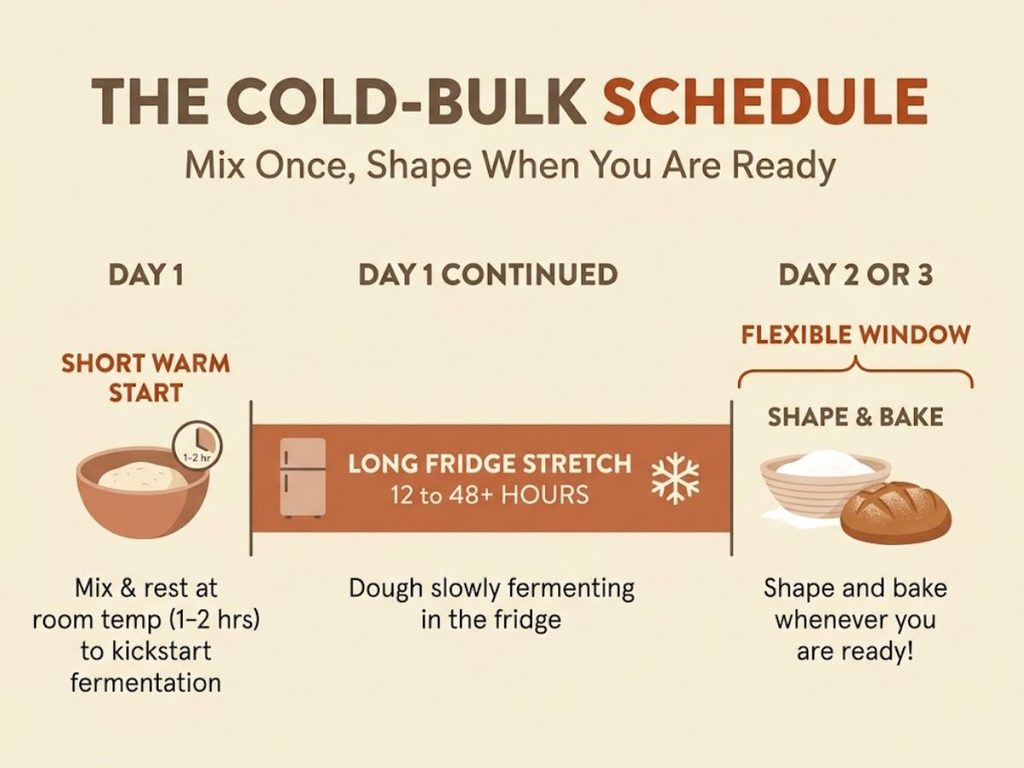
In a cold bulk, you mix the dough with a small amount of levain, give it a short warm start with a couple of folds, and then let it ferment slowly in the fridge for roughly 12 to 36 hours. When you are ready, you take it out, shape it while it is still cold and firm, give it a brief final proof, and bake. The cold slows fermentation so much that you get a flexible window, a more developed flavor and dough that is easy to shape. The key is using less levain than usual so the dough does not over-ferment while it waits.
How a Cold Bulk Differs from the Overnight Schedule
With the familiar overnight method, the dough has its warm bulk rise on the counter, is shaped, and then spends the night in the fridge for the final proof. The warm part of the day still has to happen while you are home.
In a cold bulk, almost all of the fermenting happens cold. That means you only need a short warm period at the start, usually an hour or two. If you want the classic overnight timeline, see The 9-to-5 Sourdough Schedule. This one is for the weeks when you want even less to do on the day you mix.
What You Need
- A smaller levain. Because the dough will sit for many hours, use about 5 to 10% ripe levain (relative to the flour weight) instead of the usual 20%.
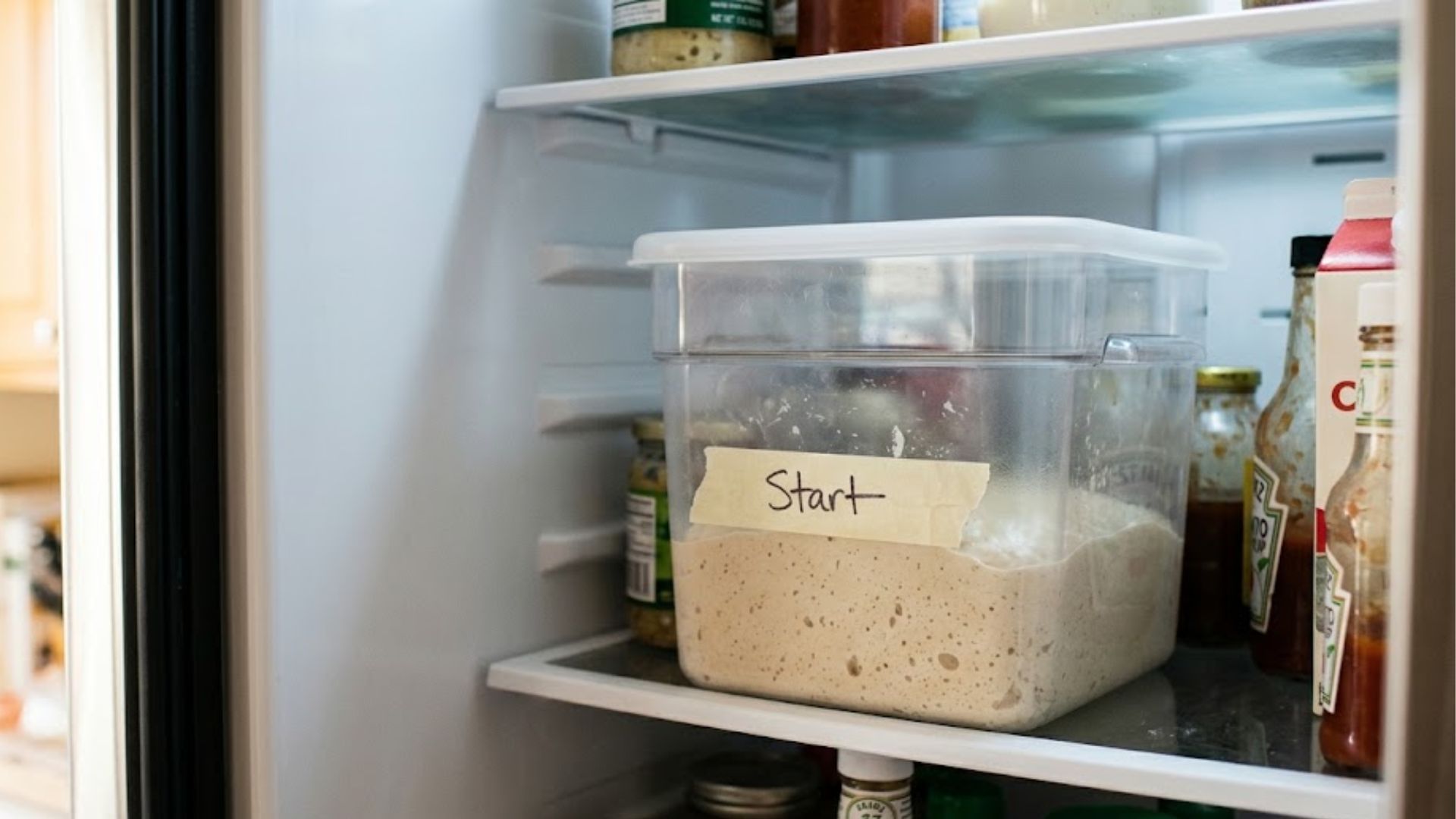
- A straight-sided container with a lid. It makes the rise easy to see. Stick a piece of tape on the outside to mark the starting level.
- A cold fridge. A typical fridge sits around 38 degrees F, which is ideal.
- A little flexibility. Cold bulk gives you a wide window, but not an infinite one.
The Timeline
| When | What to do | Notes |
| Day 1, 6:00 pm | Mix the dough and rest for 30 minutes | Use warm-ish water, about 80 to 85 degrees F, to give it a gentle start |
| 6:30 pm | Add salt and do the first fold | Transfer to your marked container |
| 7:15 pm | Second set of folds | Two sets are enough for most doughs |
| 8:00 pm | Into the fridge | Mark the level of the dough on the container |
| Day 2 or Day 3, any time | Take it out, shape it cold | The dough should have risen by roughly 30 to 50% and show some bubbles |
| Immediately after | Rest and shape | A short bench rest, then shape into a banneton or bowl |
| Then | Proof on the counter for about 45 to 90 minutes, or fridge overnight again | Poke test to check readiness |
| Then | Preheat and bake | Use your usual bake times |
↔ Swipe to see all columns
How to Tell When the Dough Is Ready
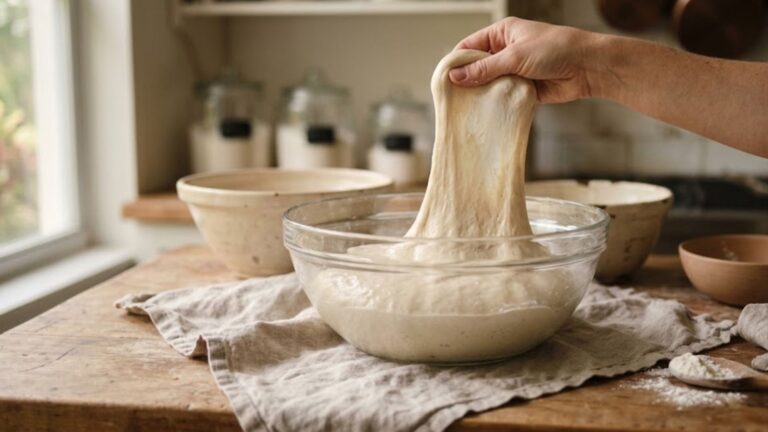
Because it is cold, the dough will not look like a dough from a warm bulk. It will be firm, a little puffy and full of tiny bubbles. Look for a modest rise rather than a doubling, roughly a third to a half, and a jiggle when you move the container.
If it has barely risen, give it a little more time in the fridge or let it sit on the counter for an hour. If it has risen to the top of the container and feels slack and sticky, it has gone a little far. You can still shape it gently and bake it, but use less levain or a shorter wait next time.
Shaping Cold Dough
This is the quiet bonus of a cold bulk. Cold dough is firmer and less sticky, so it is easier to pre-shape and shape. Use a little flour on your surface, work gently so you do not degas it, and finish with a tight surface.
Desi’s Note
If a week is going sideways, a cold bulk is the best insurance I know. Mix on Monday night, forget about it, and shape it when you finally have a calm evening. The dough does not mind. Just keep the levain small and the fridge cold.
Adjusting Your Cold Bulk
- Planning to wait longer than a day: use closer to 5% levain and keep the fridge at its coldest setting.
- Short on time the next day: let the shaped loaf proof at room temperature rather than overnight in the fridge.
- Warm kitchen: a hot start accelerates everything, so chill the dough sooner and keep the warm period short. Our Florida schedule guide explains how heat compresses a schedule.
- More tang: a longer cold ferment tends to build more flavor, which you can read about in Sourness Control.
Common Questions
Can I cold bulk any recipe? Most lean sourdough doughs work well. Enriched doughs with lots of butter or sugar behave differently, so start with a simple loaf.
What if my fridge is warmer than 38 degrees? The dough will ferment faster than expected, so shorten the wait and check on it sooner.
Do I need to bring it to room temperature before shaping? No. Shaping cold is part of the appeal.
Related Reading
- The 9-to-5 Sourdough Schedule
- The Weekend Sourdough Schedule
- Which Sourdough Schedule Fits Your Life?
- Levain vs. Starter
Mix on a busy night and shape when you are ready: the fridge keeps your place.
More Resources
Looking for a printable reference? Browse all six Printable Quicksheets, or dial in your own numbers with the Sourdough Calculator.
Knead to Know?
New recipes and sourdough troubleshooting, delivered before your starter even finishes its next rise.
Get the latest insights with no spam, just new recipes and baking tips. Unsubscribe anytime. See our Privacy Policy.